3.2.1.1-01 Dimensions of globalisation: flows of capital, labour, products, services and information; global marketing; patterns of production, distribution and consumption.A level only
3.2.1.1-02 Factors in globalisation: the development of technologies, systems and relationships, including financial, transport, security, communications, management and information systems and trade agreements.A level only
3.2.1.2-01 Form and nature of economic, political, social and environmental interdependence in the contemporary world.A level only
3.2.1.2-02 Issues associated with interdependence including how: • unequal flows of people, money, ideas and technology within global systems can sometimes act to promote stability, growth and development but can also cause inequalities, conflicts and injustices for people and places • unequal power relations enable some states to drive global systems to their own advantage and to directly influence geopolitical events, while others are only able to respond or resist in a more constrained way.A level only
3.2.1.6-01 The impacts of globalisation to consider the benefits of growth, development, integration, stability against the costs in terms of inequalities, injustice, conflict and environmental impact.A level only
3.2.1.7-01 Students must engage with quantitative and qualitative approaches across the theme as a whole.A level only
‘Unequal flows of technology are the main cause of inequalities in patterns of consumption around the world.’ Critically assess the extent to which you agree with this statement.
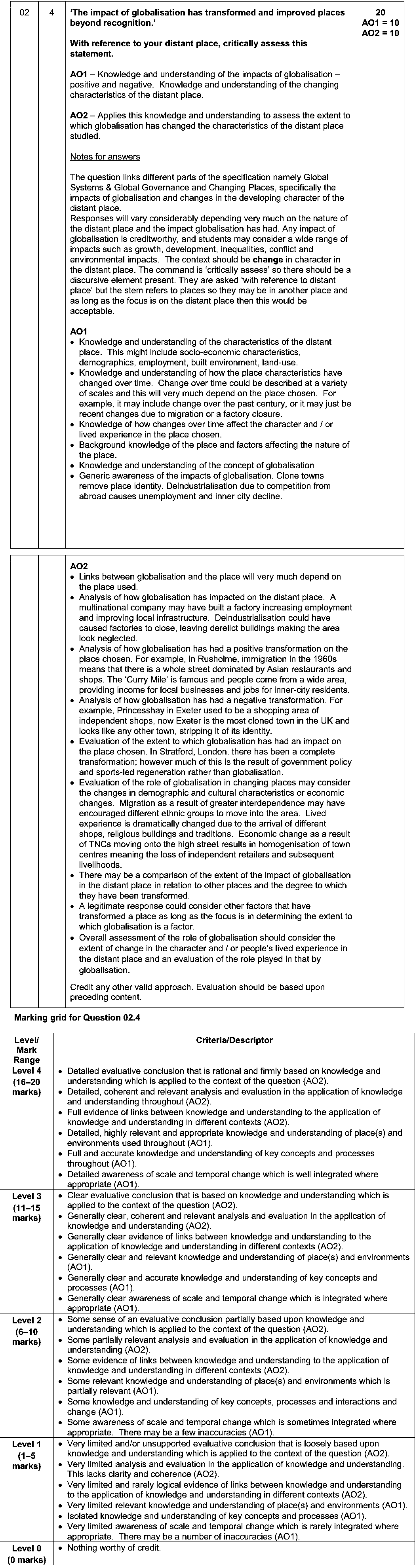
‘The impact of globalisation has transformed and improved places beyond recognition.’ With reference to your distant place, critically assess this statement.
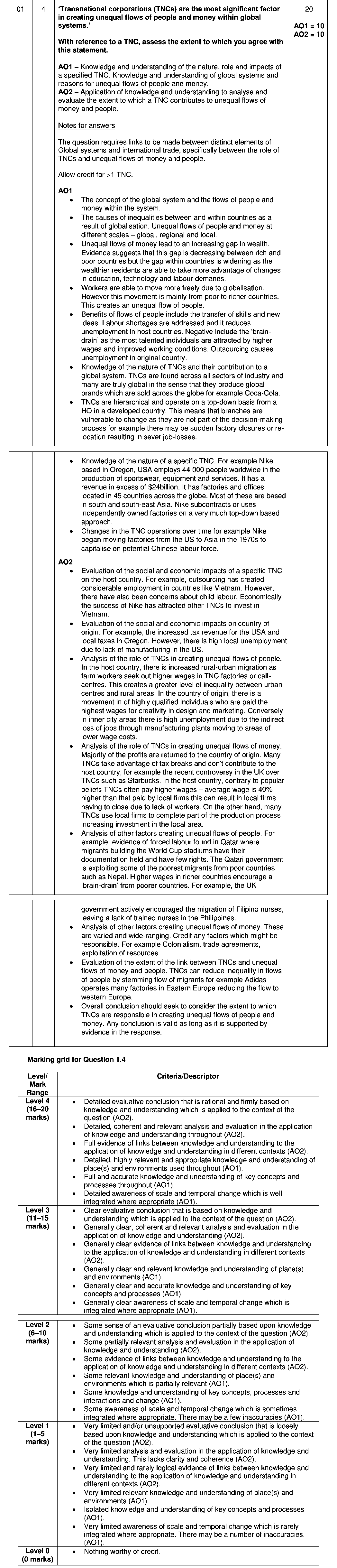
‘Transnational corporations (TNCs) are the most significant factor in creating unequal flows of people and money within global systems.’ With reference to a TNC, assess the extent to which you agree with this statement.
Tap a question to zoom it. The figures open above it; the mark scheme (with its levels and indicative content) and the examiner's comment open underneath.
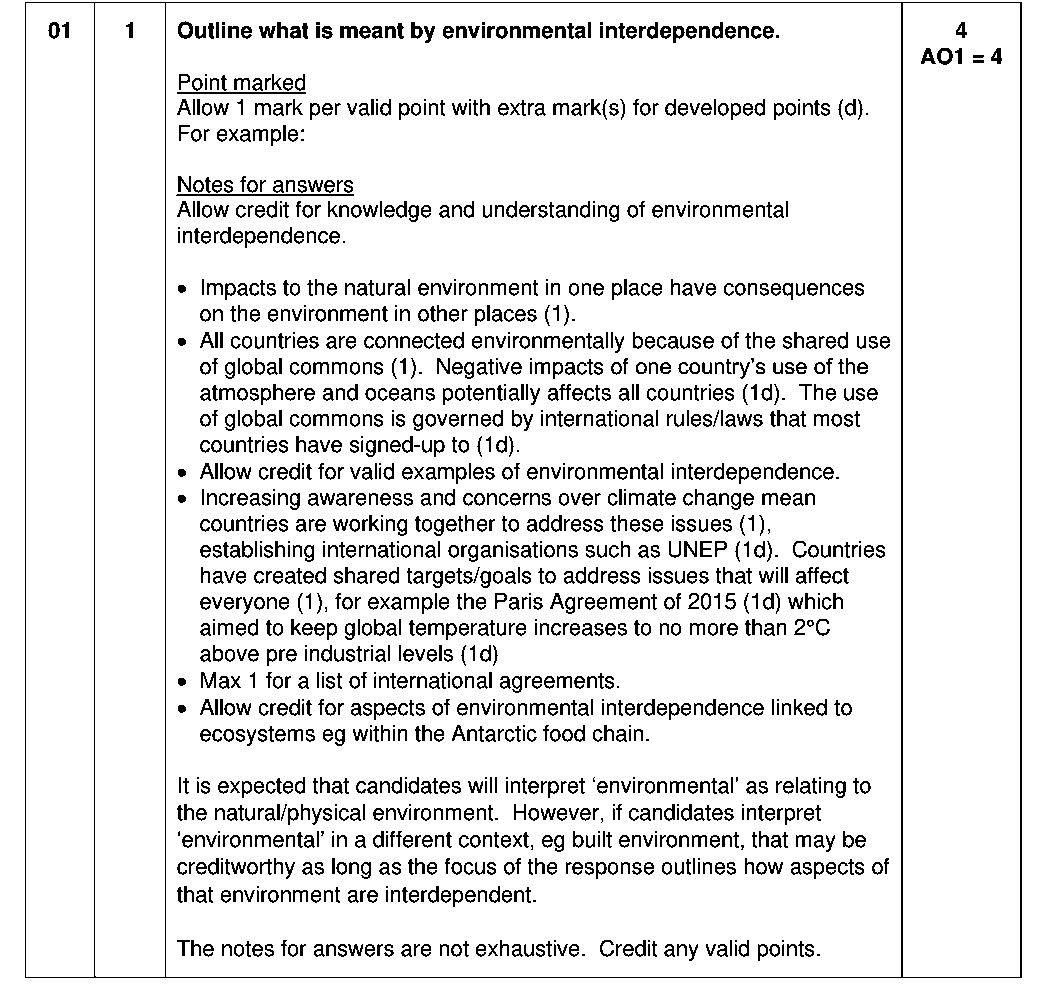
June 2025 · Paper 2 · Q1.14 marksmark schemePoint-marked
Mark scheme
Examiner's comment
Performance on the 4-mark questions assessing AO1 was a particular strength. The key to good marks in the 4-mark, AO1, questions is to make clear, focused responses that directly relate to the part of the specification being assessed. Specific knowledge is vital, and responses should be clear and if appropriate relate to a suitable example. Lower scoring responses to the 4-mark questions tend to show limited knowledge and understanding of the concept being assessed. Responses may make incorrect statements or simply not know enough about the topic. In question 01.1 (AO1, 4 marks) a number of students misread the key terminology in the question, producing responses referring to environmental independence rather than interdependence. This response, from the core theme of Global Systems and Global Governance, is a very good example of a student writing clear, concise focused points about the topic being assessed, in this case environmental interdependence. It includes some details of an example of this interdependence, the Paris agreement of 2015. This answer demonstrates the student shows an understanding of the mutual agendas with environmental issues, effectively linking these to the governance of the global commons, and the shared responsibility in dealing with the issue of climate change. It was also awarded full marks. In this example, from Global Systems and Global Governance, the response gained 1 mark. This was for an overall point about aspects of the environment being linked. However, it connects the environment to trade which is not the thrust of the question. The answer is very brief and demonstrates limited knowledge.
Notes from the mark scheme and report
point marked: environmental impacts in one place affect others, shared global commons, joint action (UNEP, Paris Agreement 2015)
max 1 for a list of agreements
some misread it as 'independence'
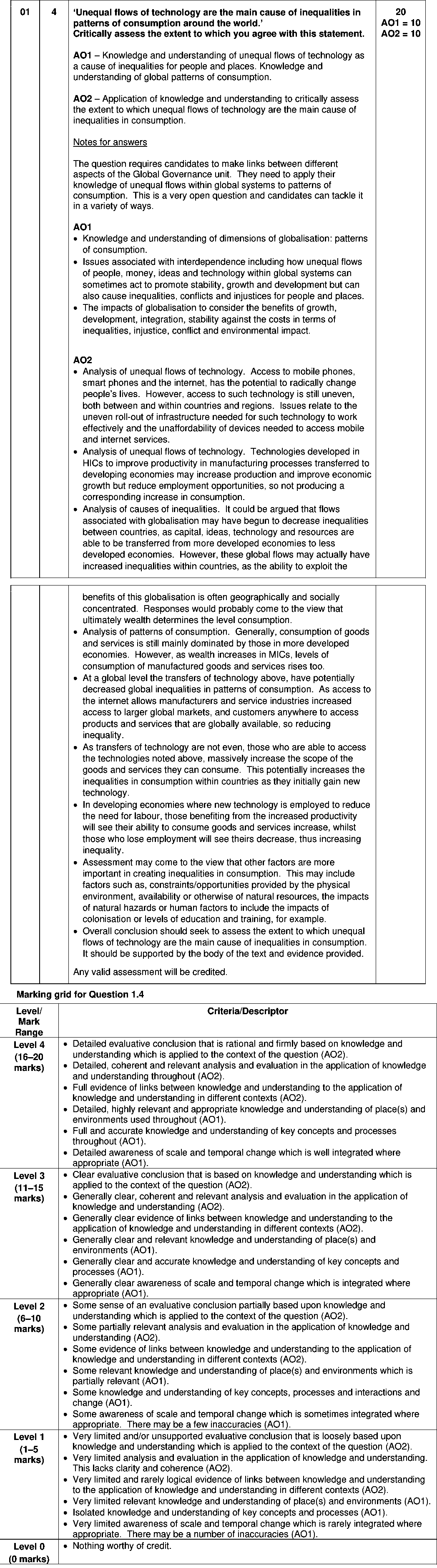
June 2025 · Paper 2 · Q1.420 marksmark scheme20-mark essay
Mark scheme, including the levels and indicative content
Examiner's comment
Student responses to the extended questions (20 marks) were often well structured and presented clear arguments with effective links to case studies. The 20-mark essays did highlight some areas for improvement. When answering 20-mark questions, students were more successful when the response continued with a single line of reasoning, compared to responses that try to offer a balanced argument or approach from different angles. The 20-mark questions assess students’ deeper knowledge of the specification. Responses should be supported with relevant case studies or examples to demonstrate place knowledge. The generic level descriptors and strands within the marking guidance are used to assess student responses. Examiners are looking for a balance of geographical knowledge and understanding (AO1) and application of knowledge and understanding (AO2) to answer the question. Responses should have a clear structure and follow a clear and sustained line of reasoning. The extended responses should come to a clear conclusion based on preceding evidence that summarises the student’s answer to the question. Less successful responses can be attributed to a number of factors. Students may have misread the question or sometimes drifted away from the question focus. In some responses they get rather mixed up with their arguments, threads become intertwined, and clarity is lost. Lower scoring responses often arise from those students determined to include learned case study material in their answers whether it is relevant or not. Using case studies appropriately is a key skill and a feature of higher scoring responses. Question 01.4 (AO1, 20 marks) was a complex question linking unequal flows of technology to inequalities in patterns of consumption. Some students interpreted the term consumption simply in terms of food consumption. Others were determined to repeat their learned knowledge of global trade such as Apple, Coca Cola, bananas or coffee rather than integrate examples into their responses. A number of responses to 1.4 were convoluted and lacked a direction of argument. This example focussed on Global Systems and Global Governance. It required students to critically assess the extent to which they agreed with the statement ‘unequal flows of technology are the main causes of inequalities in patterns of consumption around the world’. The approach to marking the 20-mark questions is to consider the complete response and decide which of the four levels of response is the best match. The final mark is then decided by ‘fine tuning’ up or down within the range of marks for the level. In this example, Level 4 fits the response. It has a nice balance of opinions (AO2) and views to respond to the question, backed up with relevant geographical evidence (AO1). The student discusses aspects of technology (in agriculture) and links economic development to inequalities in consumption. It goes on to consider another factor – trade blocs – and their importance in inequalities of consumption. It is well-written and finishes with a clear conclusion. It shows awareness of spatial and temporal changes. Having decided on Level 4, the final mark was agreed as in the middle of the mark range as some of the AO1 points could have been more specific, rather than making general points about ‘Africa’. It was awarded 18 marks. The response from Q1.4 is very keen to introduce a learned case study of the banana industry in Ecuador but offers some quite simplistic and unsubstantiated views. There are references to some relevant knowledge of factors such as the role of the WTO and the influence of TNCs such as Apple, but the response does not form a convincing argument. There is evidence of some relevant knowledge and understanding of concepts and processes in global systems and some partial knowledge of places. It fits a Level 2 descriptor very well and was awarded 7 marks.
Notes from the mark scheme and report
command 'critically assess'
weigh unequal technology flows (internet, mobile, agricultural technology) against trade, TNCs, trade blocs and wealth as causes of unequal consumption
some read consumption as food only or recited learned trade case studies
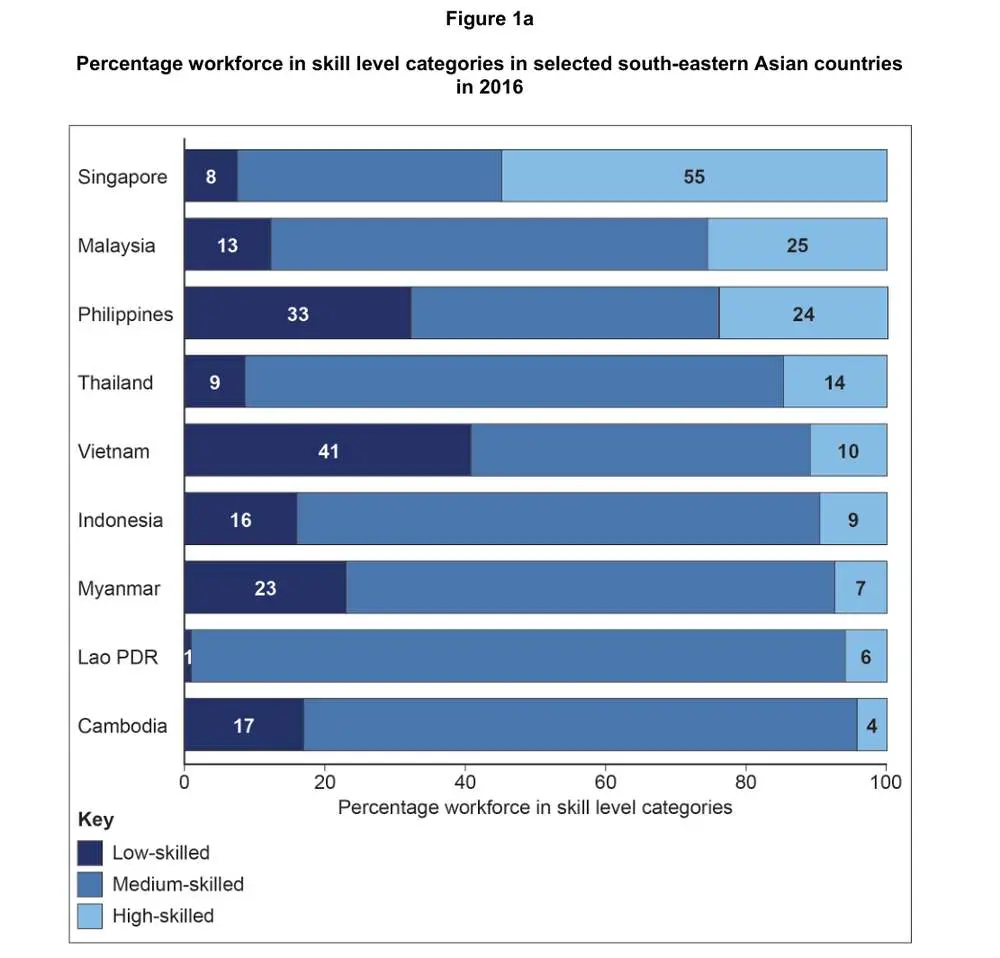
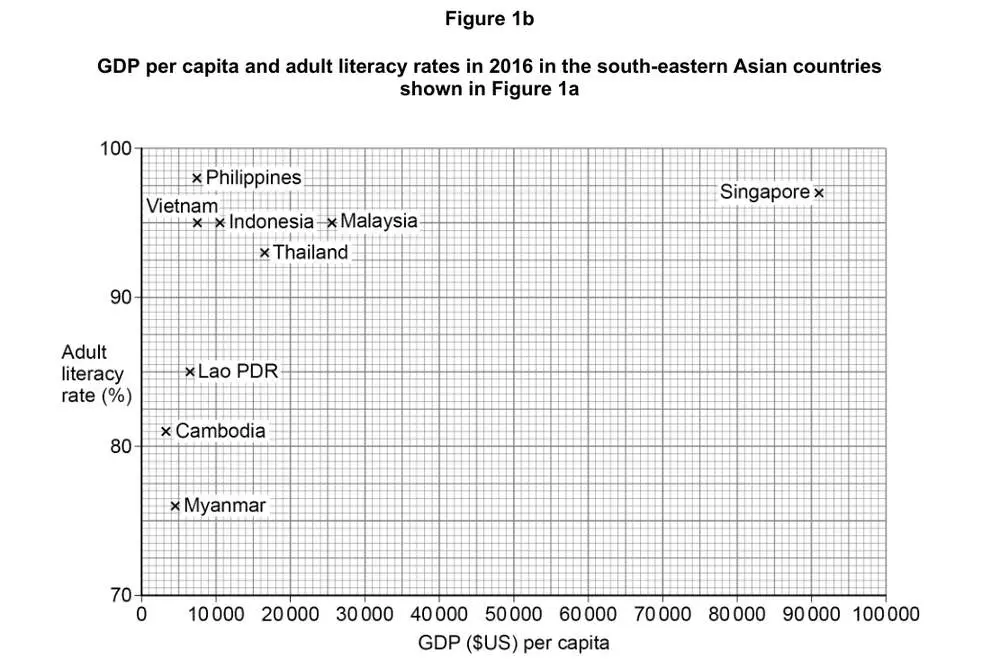
June 2024 · Paper 2 · Q1.26 marksmark schemeData analysis
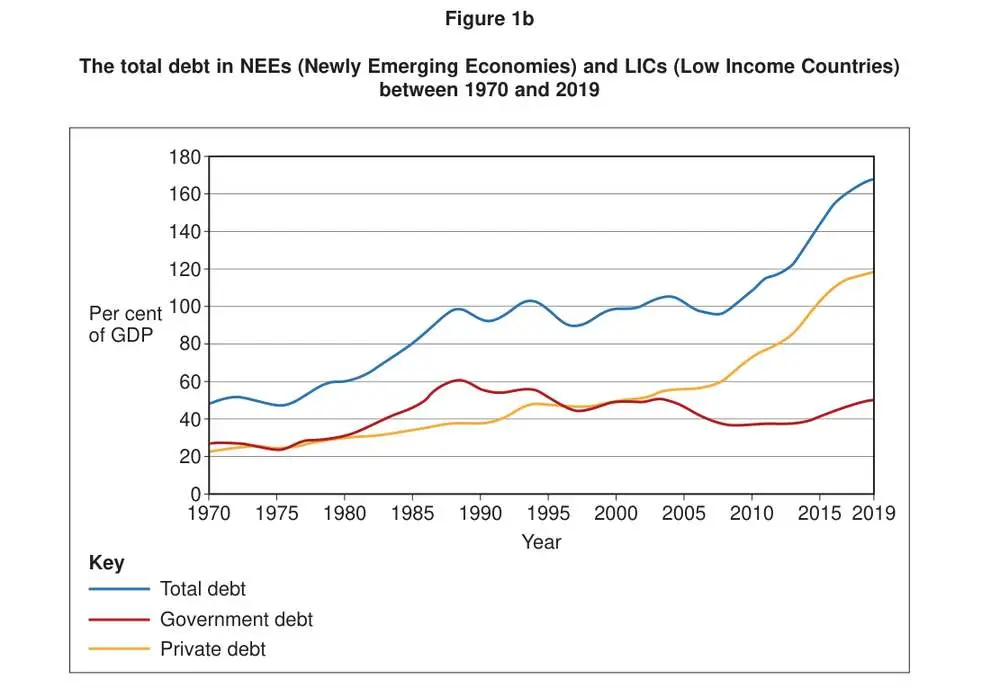
Figures 1a, 1b
Mark scheme, including the levels and indicative content
Examiner's comment
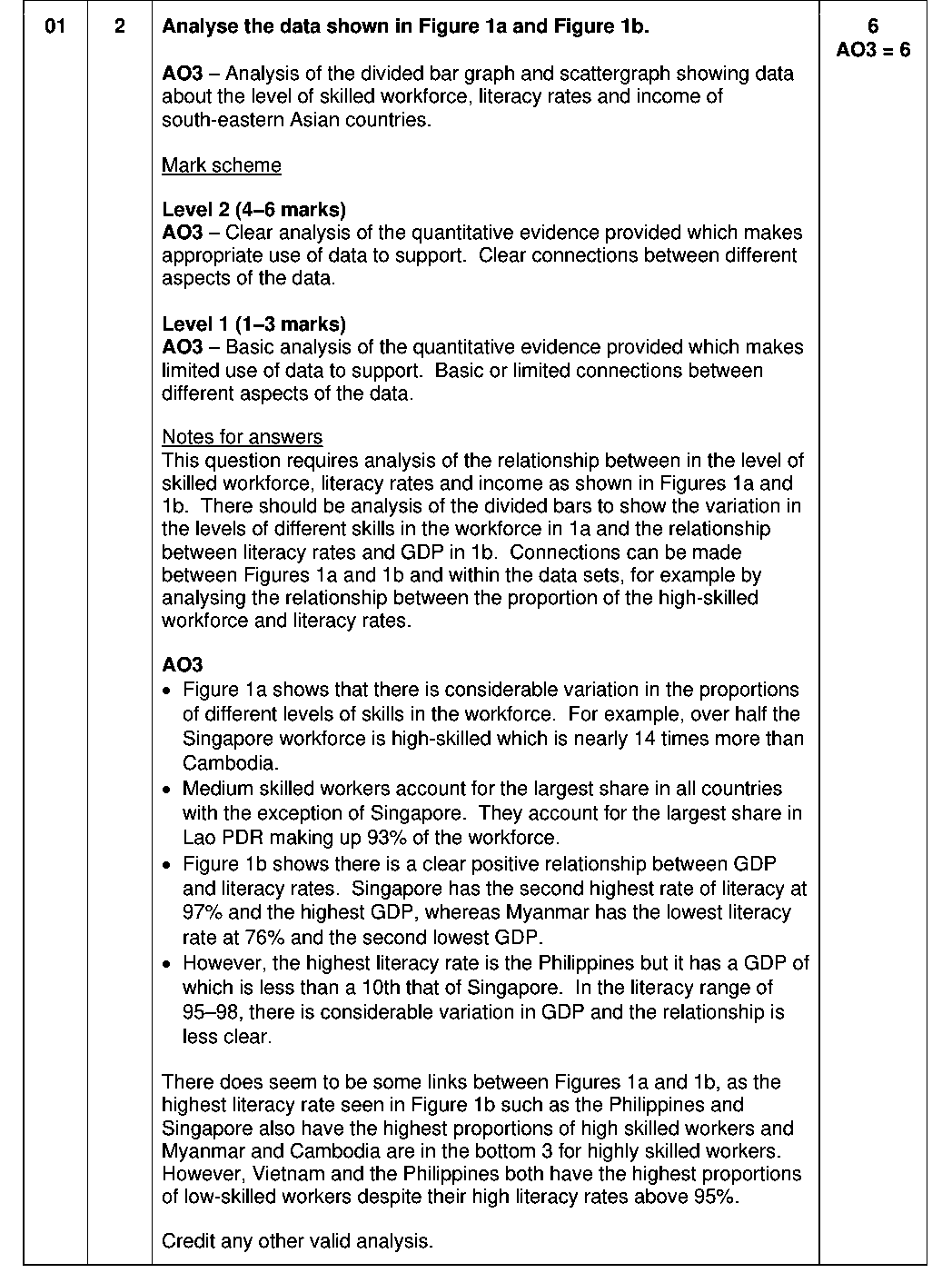
There were also plenty of opportunities in 1.2 and 2.2 for students to demonstrate links within and between the resources. The AO3 (.2) questions provided opportunities for students to demonstrate their geographical skills of analysis and interpretation of a variety of graphical presentations and maps. Level 2 was accessed frequently as students showed an awareness of general patterns and trends, utilising the data for some manipulation and / or identification of anomalies. The resources used in this examination paper included a compound bar graph, scatter graph, maps, dot maps, tables and proportional symbols. There were no calculations or ‘practical tasks’ involved in the AO3 skills this time. In order to gain Level 2 marks, students should draw out the overall patterns or trends of the data, exemplify the points they are making, look for anomalies and try to do more than simply make statements that refer to the basic evidence shown. In many cases it is possible to look at the extremes of the data, provide some basic data manipulation or contrast so that there is evidence of analysis rather than basic description. With the interpretation of the maps, the best answers made use of the map conventions (e.g. scale, direction) and made clear links or contrasts between the two maps. Less successful responses to these questions sometimes fail to identify key trends or patterns, miss clear connections between resources and sometimes not address the question by offering explanation for the data being shown. The example below shows all of these characteristics in that it gives a general overview of both resources, uses some selected data to illustrate this, identifies those countries that do not fit the general pattern and does some data manipulation (difference, percentages). It even provides a little critique of the way the data is presented which is part of the AO3 strand to ‘interpret, analyse and evaluate data and evidence’.
Notes from the mark scheme and report
AO3: compare skill mixes in the divided bars (Singapore over half high-skilled, Lao PDR 93% medium) and the positive GDP–literacy link with anomalies
connect the two figures
no explanation
June 2023 · Paper 2 · Q1.14 marksmark schemePoint-marked
Mark scheme
Examiner's comment
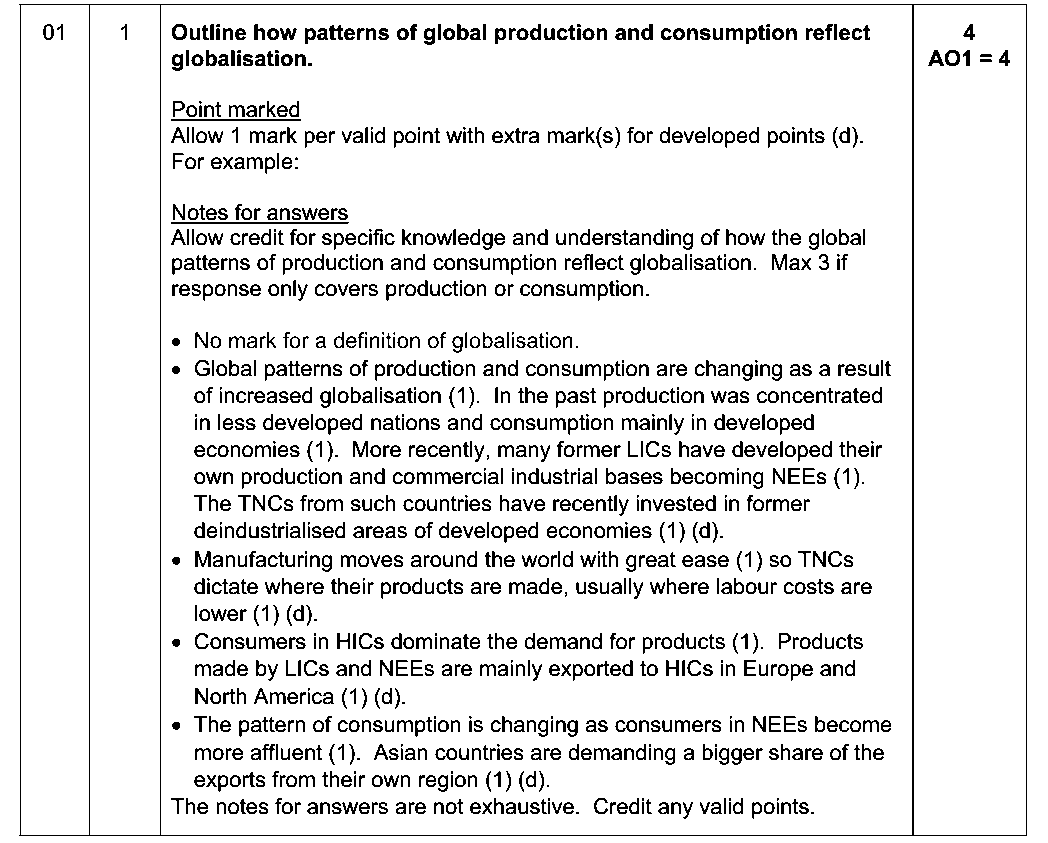
The 4 mark (AO1) questions were answered well by some students but weaker students scored fewer marks as their responses often lacked clarity, purpose and direction - tending to skirt the focus concepts. In order to score well in these questions students should produce clear and straightforward responses that are focused on the concept being assessed. Subject knowledge is therefore paramount and then constructing a concise, focused response – often along the lines of ‘what is it”? Why is it important? Where does it happen? How might it be suitably illustrated? The key issue with the 4 mark AO1 questions is student subject knowledge. If students do not know the key concept then it is very difficult to gain credit. Secondly, answers that are unclear and unconvincing do not score well. A thorough review of all the key terms in the specification is good revision and exam preparation for this type of question. In the Global systems and global governance section Q1.1 proved a challenge to many. Students often gave definitions of globalisation as a concept rather than focusing on patterns of global production and consumption and how globalisation had led to shifts in the old-world order. Some did attempt to show patterns by way of particular products or industries which was a valid approach. Q1.1 needed to focus on patterns of global production and consumption. In this example below, the student gets one mark early on for the observation of food production from LICs and transportation to HICs but then does not make any further clear statements and is rather vague.
Notes from the mark scheme and report
point marked with development: shift of production to NEEs and LICs, TNCs locating where labour is cheap, HIC consumers dominating demand, rising NEE consumption
no mark for defining globalisation
max 3 if only production or only consumption
June 2023 · Paper 2 · Q1.26 marksmark schemeData analysis
Figures 1a, 1b
Mark scheme, including the levels and indicative content
Examiner's comment
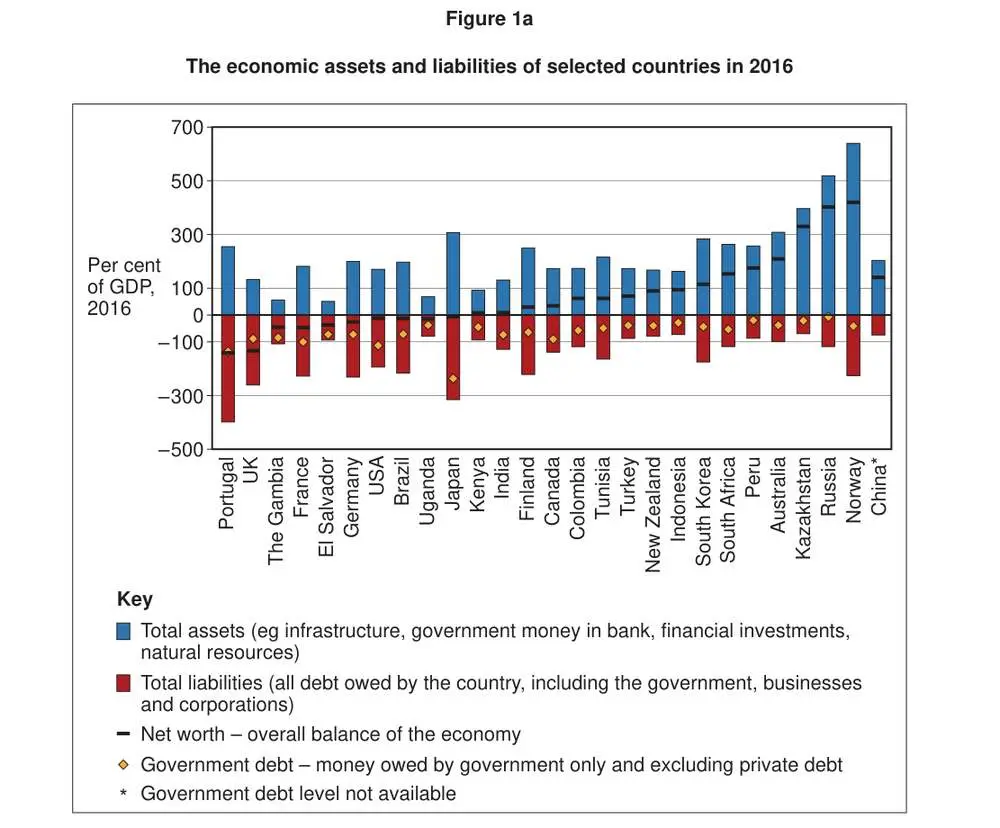
These questions, testing AO3, geographical skills, demand students demonstrate a particular skill, or show the ability to analyse, interpret or evaluate some form of geographical data presented as maps, graphs, tables or infographics. As with all of the questions in the examinations, students are required to ‘think on their feet’ and should be ready to deal with data and skills in any of the ways prescribed in the ‘skills checklist’ of the specification. It appeared that fewer students this year drifted from the analysis of the data into an attempt to explain the information presented. The data used in these questions is drawn from a variety of sources and is often complex, especially when seen for the first time and under the pressure of exam conditions. Students must therefore ensure they have studied the stem of the question and taken enough time to understand what is being shown and how. The should take time to read and understand scales, keys or other contextual information. Responses that have engaged with the data in this way are invariably better. In the AO3 questions, Q1.2 was quite demanding as the amount and complexity of data was significant and some struggled to analyse it successfully. Some had difficulty with Q1.2. The data presented had a lot of information and some students attempted to analyse many aspects of it consequently producing some rather confused responses. In the time and space available to answer these questions the strategy of looking at a ‘big picture’, identifying some useful illustrative data as evidence, showing some manipulation and links is sufficient to access level 2 without the need to comment on every aspect of the data shown
Notes from the mark scheme and report
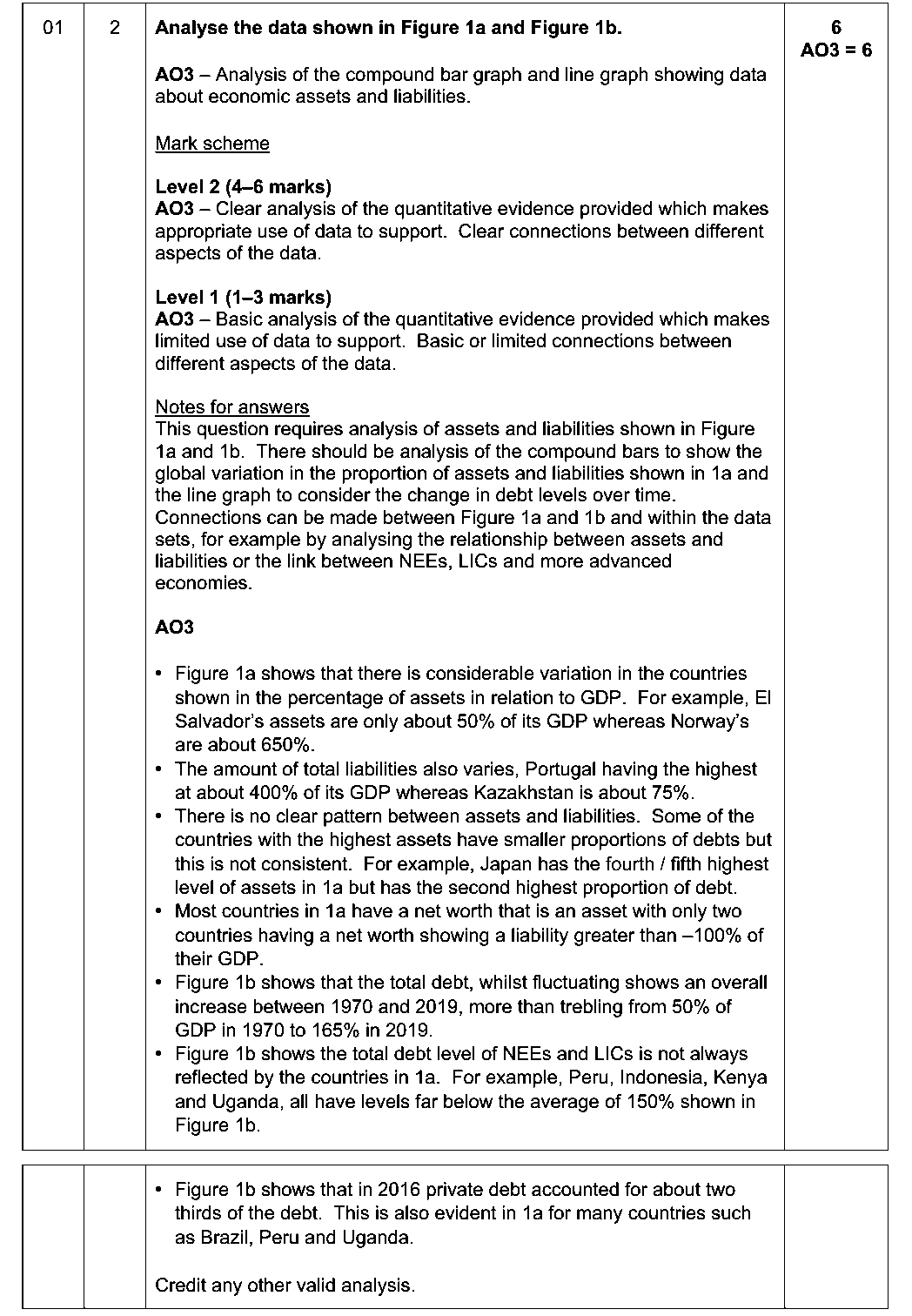
AO3: variation in assets and liabilities as % of GDP (Norway about 650% assets, Portugal about 400% liabilities), no clear assets–liabilities link (Japan), NEE/LIC debt more than trebling 1970–2019, private debt about two-thirds
big picture plus selective data is enough for Level 2
June 2023 · Paper 2 · Q1.36 marksmark schemeStimulus
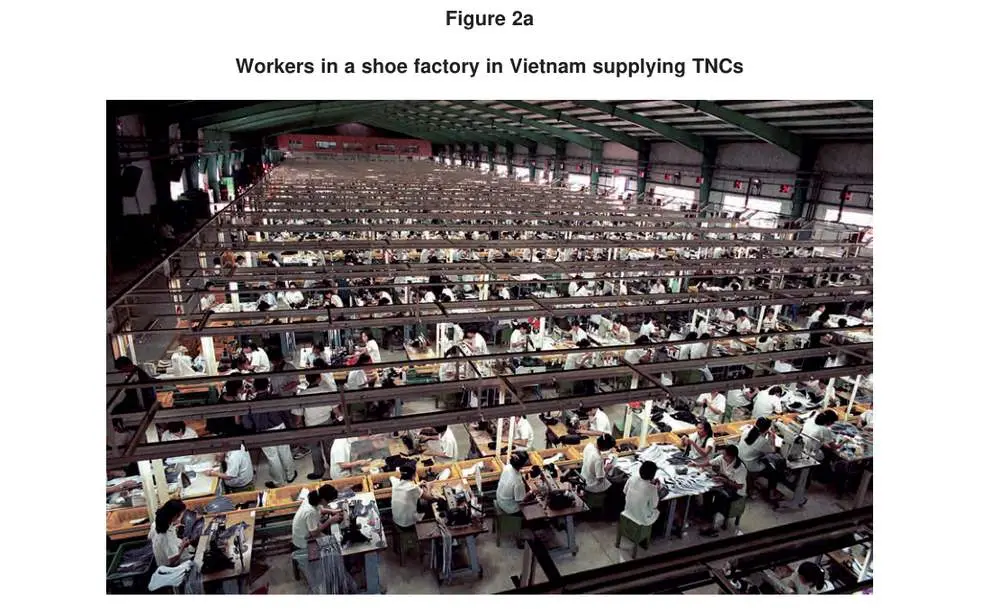
Figures 2a, 2b
A figure for this question was removed from AQA's published paper for copyright reasons.
Mark scheme, including the levels and indicative content
Examiner's comment
Those questions, X.3, which used stimulus resources (photographs, text, infographics) presenting novel situations generated suitable responses balancing use of the novel situation with students’ own knowledge and opinions. The 6 mark questions, X.3, assessing AO1 and AO2 using novel situations gave students the opportunity to assess and evaluate themes using the stimulus material. The resources used (photographs and text) enabled this quite well but some students did drift into an analysis of the resources, addressing AO3 which was not creditable. These questions gave students the platform to put forward informed opinions based upon subject matter they had studied and linking it to the unseen material. This type of question demands students focus on the key command within the question and evaluate, assess or discuss the relevant concept whilst making connections to the resource used. Consequently, students need to be ready to combine their knowledge and understanding with the stimulus material. Less successful responses tended to miss the command word (assess, discuss, evaluate…) and simply write about the topic (producing AO1 heavy answers) or failed to incorporate a link to the stimulus material. In the Global systems and global governance unit, Q1.3 was answered well. Students were able to engage with the novel resource and they used this to develop a clear perspective on the ways that globalisation (especially TNCs) can create injustices through the exploitation of their workers. Many responses quoted examples of particular TNCs or industries in which there had been notable cases of workers being underpaid, exposed to poor working conditions, long hours or labour restrictions, or indeed the victims of commercial building disasters. Some also balanced their answers with reference to the benefits brought by such organisations to workers and low income countries / NEEs. For example in Q1.3 some responses discussed injustices and the problems caused by TNCs without reference to figures 2a and 2b, or they simply described the information presented (lifting from figure 2b) instead of ‘using’ the information as a starting point for a discussion.
Notes from the mark scheme and report
Figure 2b (newspaper article) not reproduced in the published insert
apply knowledge of unequal power and TNC labour conditions to the Vietnam factory and protest
Level 2 must refer to Figure 2a and/or 2b
government policy as a counter-factor
lifting from the resource is not enough
June 2022 · Paper 2 · Q1.36 marksmark schemeStimulus
Mark scheme, including the levels and indicative content
Examiner's comment
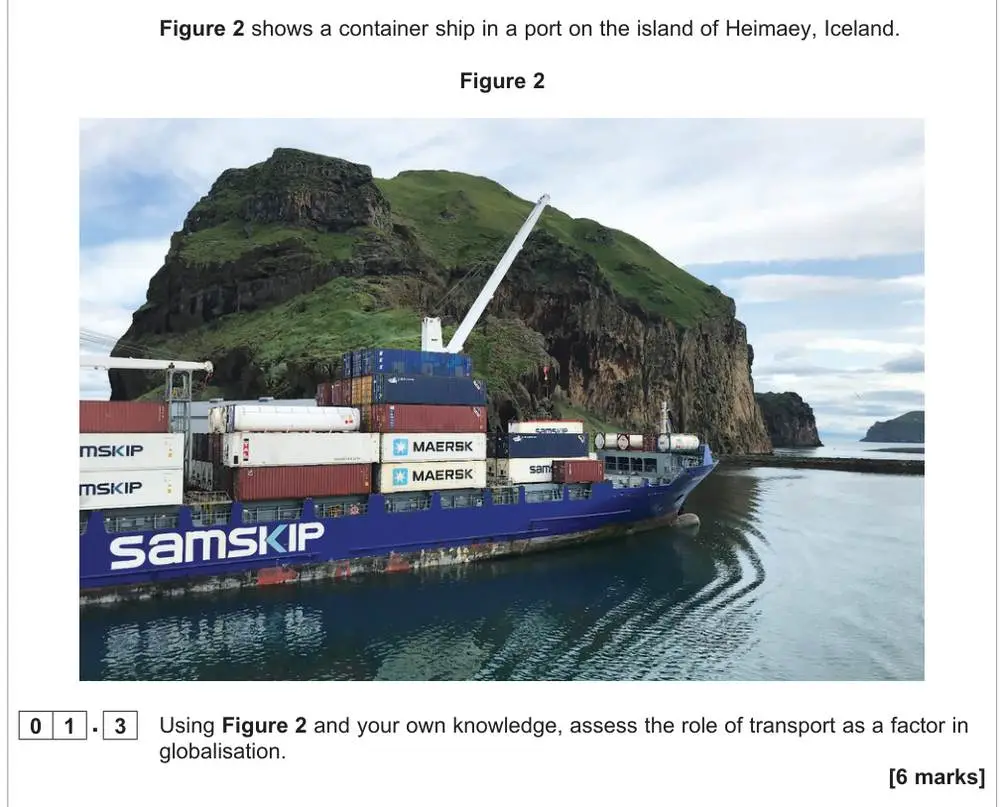
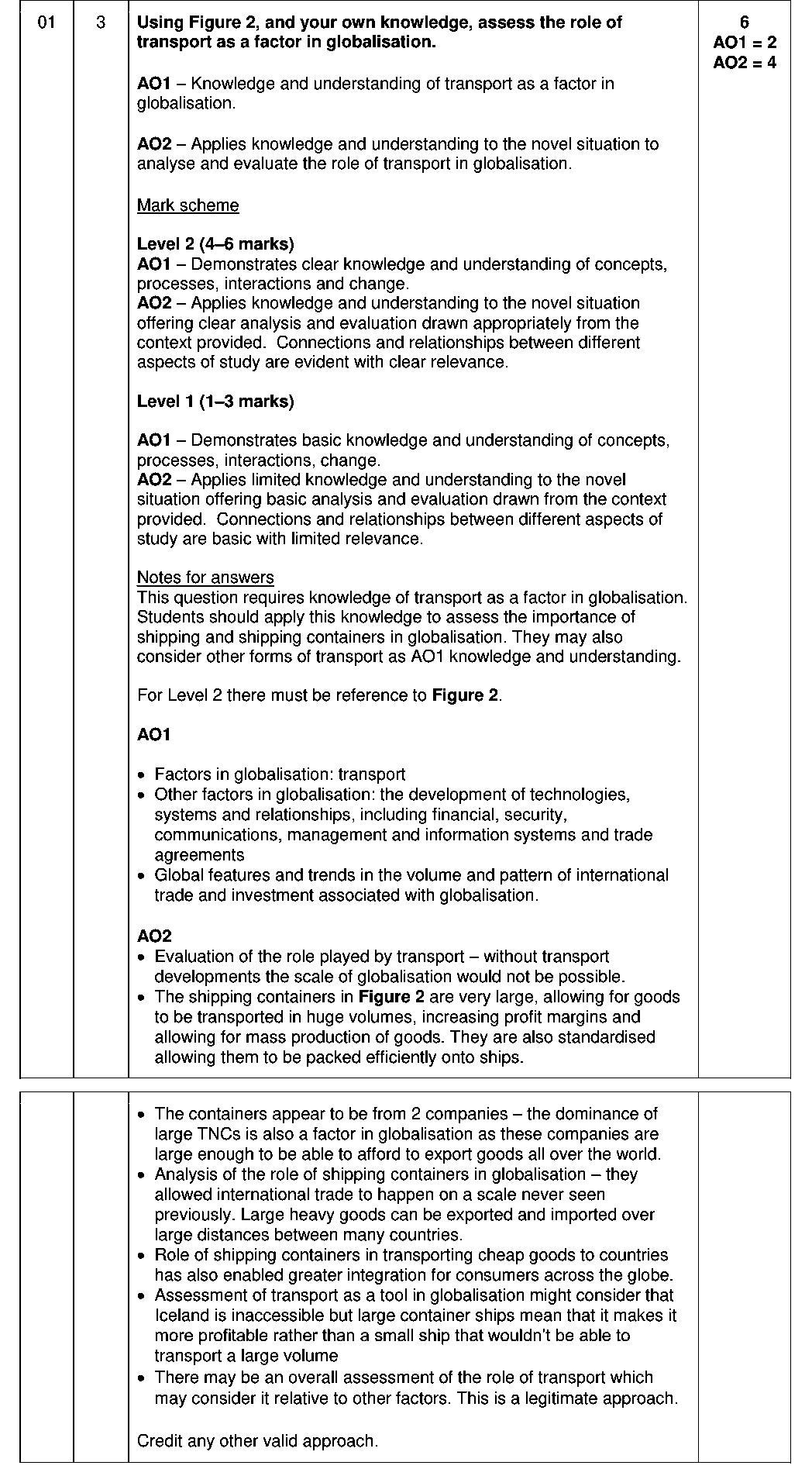
Most students made use of Figure 2, by referring to containerisation. They were able to apply their own knowledge of this to the image and suggest how this had played a role in globalisation. Some students were able to suggest how transport enabled Iceland to have global links despite its geographical isolation. The question discriminated well, weaker answered focussed very heavily on ideas about containerisation, whereas the stronger reponses considered the role of transport in relation to other factors such as communication. The weakest responses failed to refer to Figure 2 explicitly and simply provided generic responses about the links between transport and globalisation.
Notes from the mark scheme and report
apply knowledge of transport (containerisation, large standardised ships, TNC shipping lines) to the photo of a remote Icelandic port and weigh it against other factors such as communications
Level 2 needs reference to Figure 2
generic transport answers scored low
November 2020 · Paper 2 · Q1.26 marksmark schemeData analysis
Figure 1
Mark scheme, including the levels and indicative content
Notes from the mark scheme and report
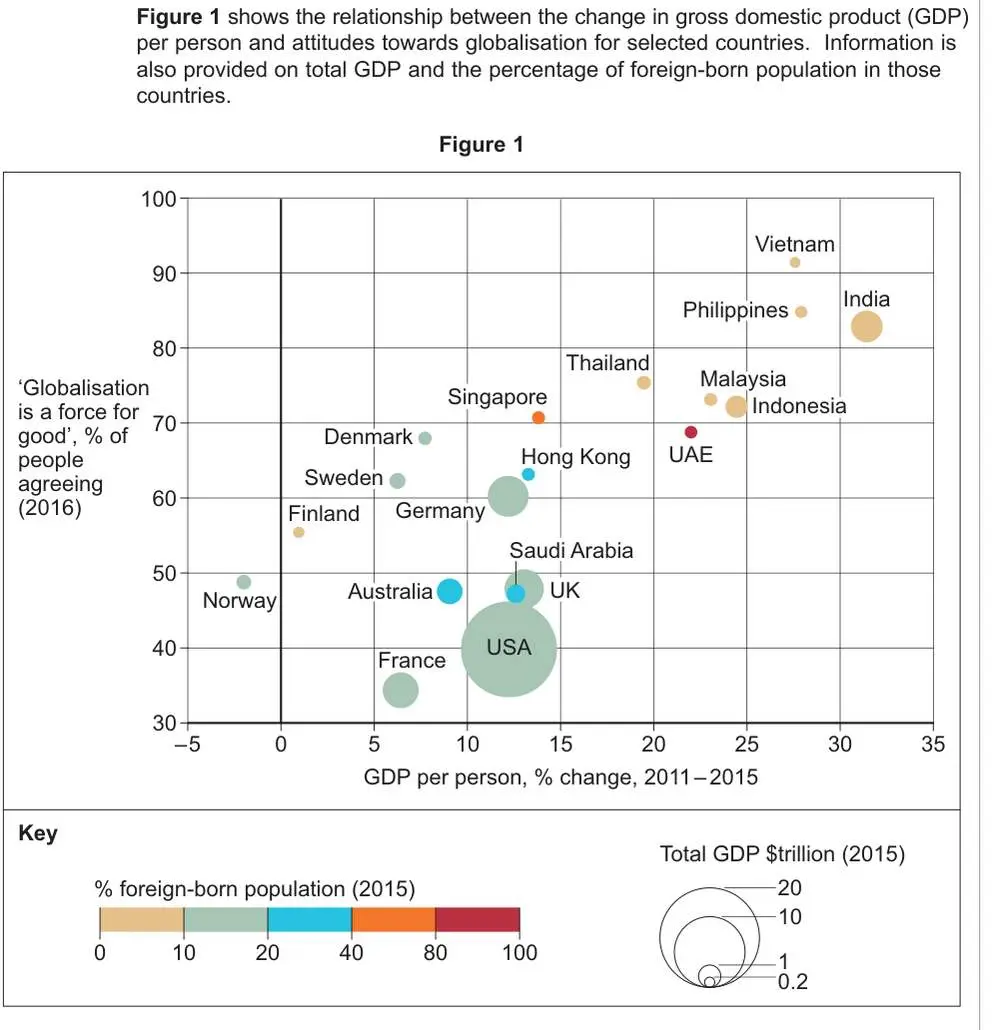
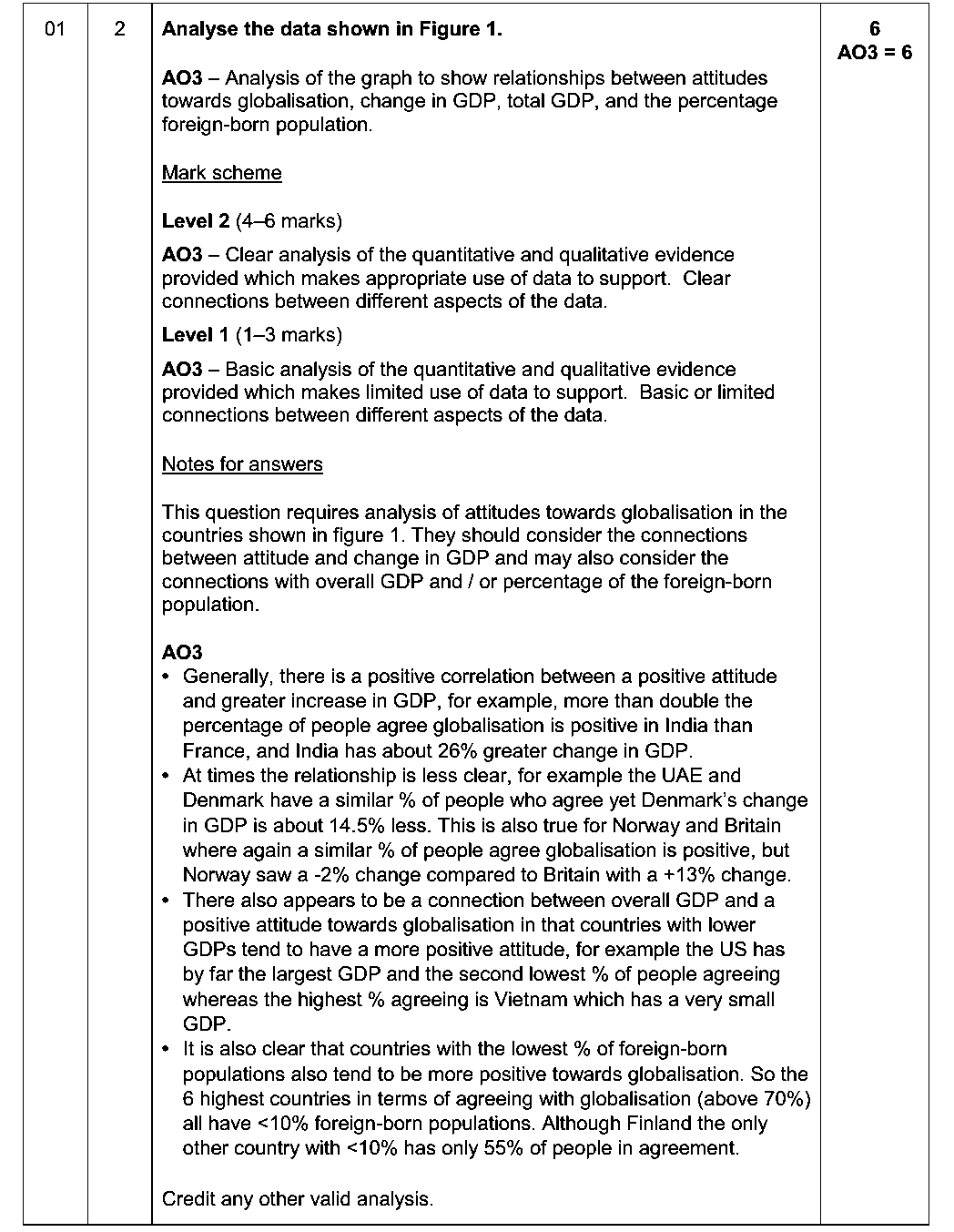
AO3: positive link between GDP growth and agreeing globalisation is good (India v France), exceptions (Norway, UK), larger total GDP and higher foreign-born share tend to be less positive
manipulate data
November 2020 · Paper 2 · Q2.420 marksmark schemeSynoptic
Mark scheme, including the levels and indicative content
Examiner's comment
Many students struggled with Q2.1 and Q2.4. Q2.4 was the cross-specification question where students were asked to apply knowledge from the Global systems and global governance unit to Changing places. Many students were able to do this successfully, drawing on their knowledge of factors in globalisation and applying it to their distant place. Supervising teachers should be reminded that place selection is the key to success. Students perform better where they have investigated the place chosen in depth either through fieldwork or secondary research. Scale of place is critical and studies of an area of a city such as Stratford are often more manageable and provide better outcomes than whole cites such as London. Some students produced very limited responses as they didn’t identify a distant place and instead chose a TNC or a whole country such as China. This is a good example of where students need to consider the question carefully and plan before launching into their response. This was very evident in Changing Places on Q2.4 – some students were able to discuss their distant place in great depth, supported by a wide range of data sources. It was a delight to examine such responses and supervising teachers should be commended for choosing such a diverse range of places and fully engaging their students in the themes of changing places. It was obvious that some students had invested a lot of time in the study of their chosen place.
Notes from the mark scheme and report
cross-specification link to Global systems
command 'critically assess'
must use a distant place, not a TNC or whole country
small, well-researched places (e.g. Stratford) worked best
June 2019 · Paper 2 · Q1.14 marksmark schemePoint-marked
Mark scheme
Examiner's comment
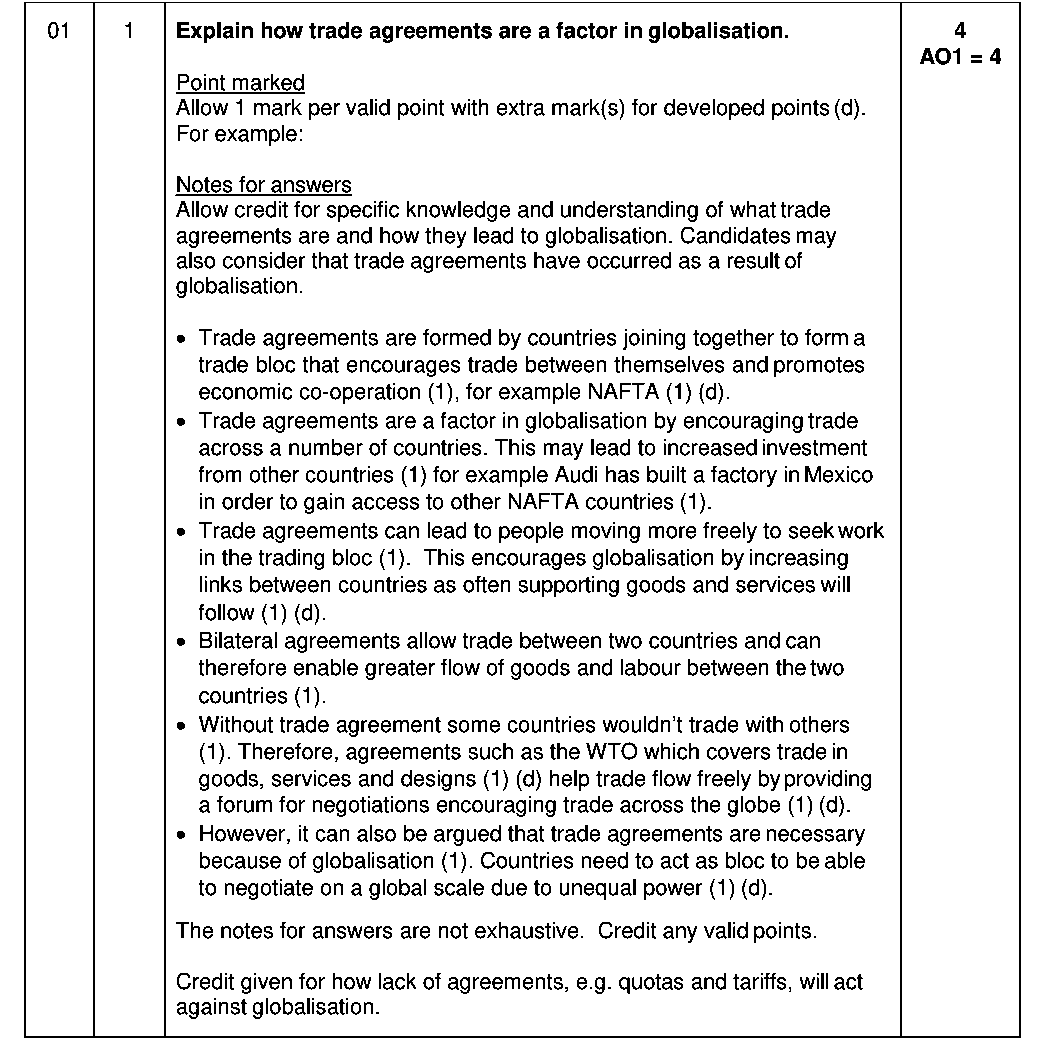
Most students had some knowledge of trade agreements and were able to illustrate it with examples. However, many were unable to explain how they are a factor in globalisation, simply stating the link and thereby failing to score maximum marks. Less effective responses considered the role of trade rather than trade agreements.
Notes from the mark scheme and report
point marked with marks for developed points (d)
credit how trade blocs/WTO/bilateral deals increase flows of goods, investment and labour, or the reverse link (agreements as a result of globalisation)
many only stated the link or wrote about trade rather than trade agreements
June 2019 · Paper 2 · Q3.79 marksmark schemeSynoptic
Mark scheme, including the levels and indicative content
Examiner's comment
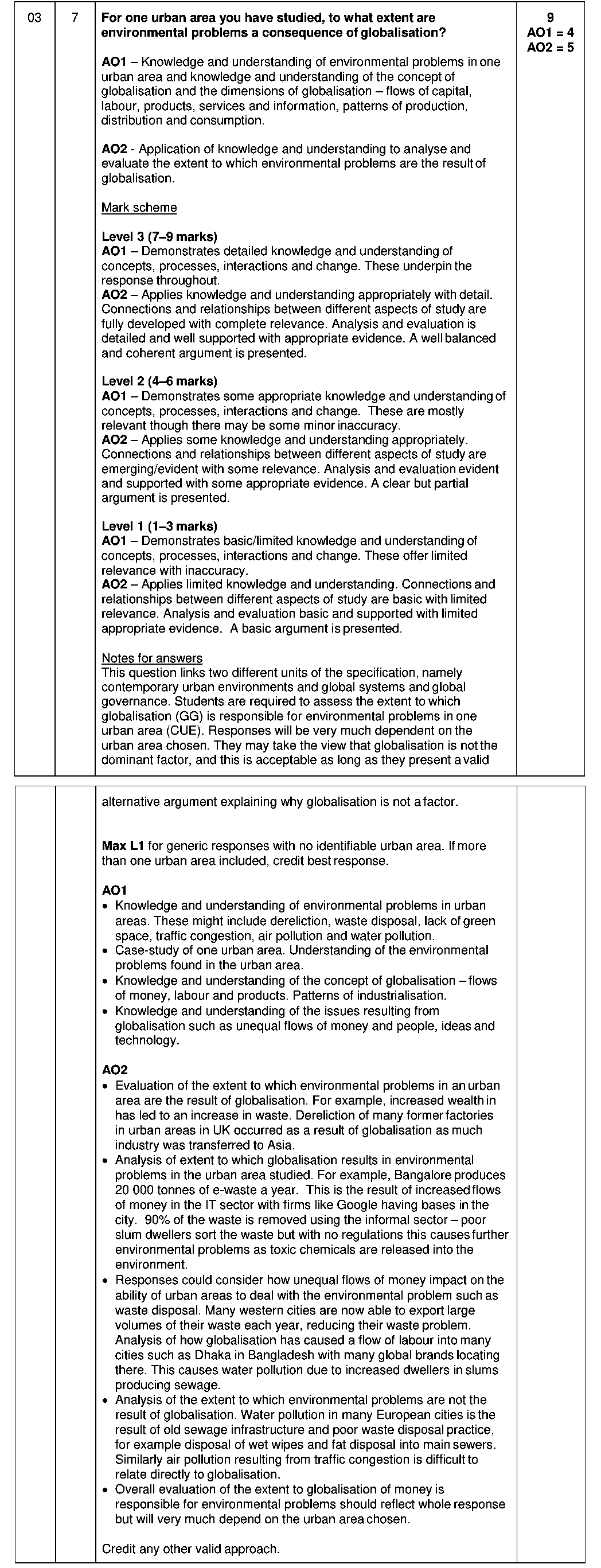
This cross-specification question proved quite challenging, requiring students to link their knowledge of environmental problems in one urban area to the extent to which globalisation was responsible. Many students simply set out AO1 knowledge of environmental problems in their urban area with only passing reference to globalisation. Some students incorrectly used urban microclimates to exemplify environmental problems. The most commonly used urban areas were London and Mumbai. As with 2.4, many students did not note the ‘one’ in bold and covered two urban areas. The most effective responses chose one area and then considered the extent to which globalisation contributed to their environmental problems. In these responses, environmental problems often went beyond air pollution, looking at waste disposal and urban sprawl. These were then linked to effectively to the role played in causing them such as migration, TNCs and transport. These answers frequently incorporated extent by examining the degree to which other factors were responsible, such as government policies. A few students expressed a considered view that globalisation actually reduced environmental problems as it had provided a solution and increased wealth to deal with the problem. As with other questions on this paper, clearer geographical thinking would have raised students’ performances on this question, for example by considering important geographical concepts such as scale and temporal change in their responses.
Notes from the mark scheme and report
synoptic (links Contemporary urban environments with Global systems)
max Level 1 for generic answers with no identifiable urban area
one area only
may argue globalisation is not the main cause
urban microclimate is not an environmental problem here
June 2019 · Paper 2 · Q4.79 marksmark schemeSynoptic
Mark scheme, including the levels and indicative content
Examiner's comment
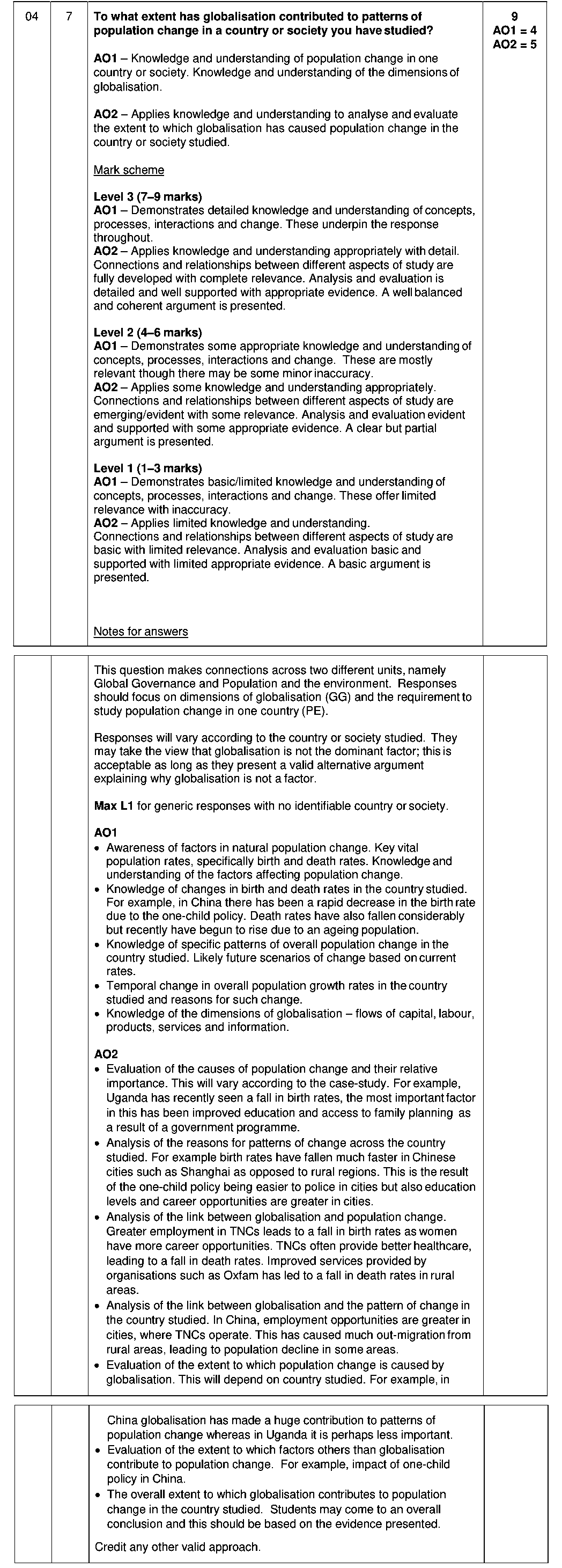
This cross-specification question proved quite challenging, as did comparable questions 3.7 and 5.7. It required students to link their knowledge of patterns of population change in one country or society to the extent to which globalisation was responsible for the pattern. Many students simply described AO1 knowledge of population change with only passing reference to globalisation. Some tried to fit the reasons for change to globalisation - for example by stating that the ‘one child policy’ was an example of globalisation. It would have been better for students to have looked at other influences with reference to globalisation as the question requires students to assess the extent of the contribution made by globalisation. Therefore, it would be perfectly legitimate to show why other factors made a larger contribution. A wide range of countries featured frequently including the UK, China, Japan and Iran. Not surprisingly, the focus tended to be on migratory patterns rather than natural population change. As with other questions on this paper such as 3.7, clearer geographical thinking would have raised performance on this question, for example by considering important geographical concepts such as scale and temporal change in their responses.
Notes from the mark scheme and report
synoptic (links Population and the environment with Global systems)
max Level 1 with no identifiable country or society
assess globalisation against other factors (e.g. government policy)
calling the one-child policy globalisation is wrong
June 2019 · Paper 2 · Q5.79 marksmark schemeSynoptic
Mark scheme, including the levels and indicative content
Examiner's comment
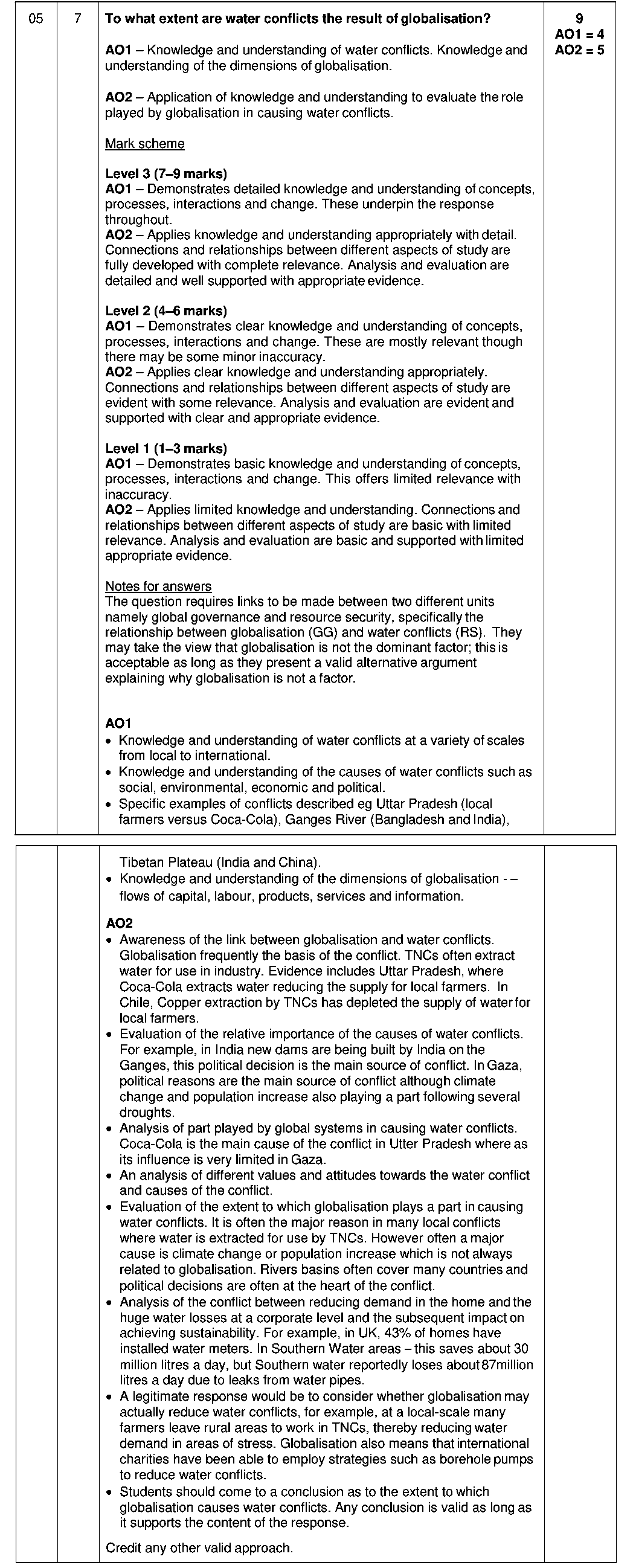
This cross-specification question proved quite challenging, as did comparable questions 3.7 and 4.7, requiring students to link their knowledge of water conflicts or society to the extent to which globalisation was responsible for the conflict. Many students simply set out their AO1 knowledge of water conflicts with only a passing reference to globalisation. The question required students to assess the extent of the contribution made by globalisation, so it would be perfectly legitimate to show why other factors such as climate change made a larger contribution. As with other questions on this paper such as 3.7 and 4.7, clearer geographical thinking would have raised performance on this question, for example by considering important geographical concepts such as scale and temporal change in their responses.
Notes from the mark scheme and report
synoptic (links Resource security with Global systems)
may argue other causes (politics, climate change, population growth) matter more
many only described conflicts with passing reference to globalisation
June 2018 · Paper 2 · Q1.420 marksmark scheme20-mark essay
Mark scheme, including the levels and indicative content
Examiner's comment
Some of the responses to this question were simply outstanding. Students often had extensive knowledge of their chosen TNC (frequently Apple, Nike or Walmart) and were then able to apply this to unequal flows of money and people. The very best answers dealt with all aspects of the question, addressing the relative importance of TNCs in creating unequal flows by considering other factors such as conflict, globalisation or trading blocs. Some of the better answers also considered that TNCs could actually create more equal flows, demonstrating the breadth with which students could tackle these 20 mark questions. Weaker responses frequently relied on knowledge and understanding of the social and environmental impacts of TNCs with very implicit links to unequal flows. This tended to reflect a lack of understanding of the demands of the question.
Notes from the mark scheme and report
links TNCs with unequal flows of people and money
>1 TNC allowed
best answers weighed TNCs against other factors (conflict, trade blocs, globalisation) and noted TNCs can make flows more equal
weaker answers listed TNC impacts with only implicit links to flows
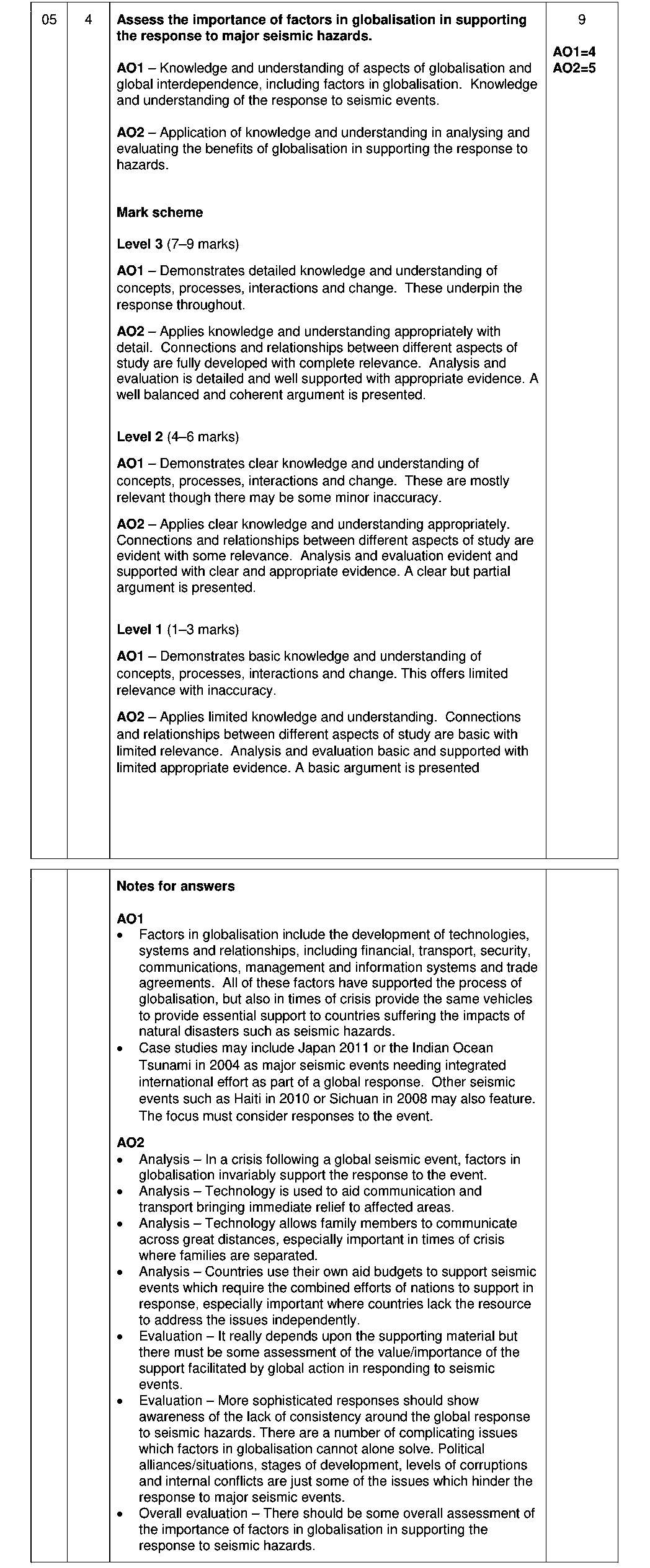
Specimen set 1 · Paper 1 · Q5.49 marksmark schemeSynoptic
Mark scheme, including the levels and indicative content
Notes from the mark scheme and report
synoptic (links Hazards with Global systems): technology, transport, communications, finance and aid systems from globalisation supporting response to major earthquakes (Japan 2011, Haiti 2010)
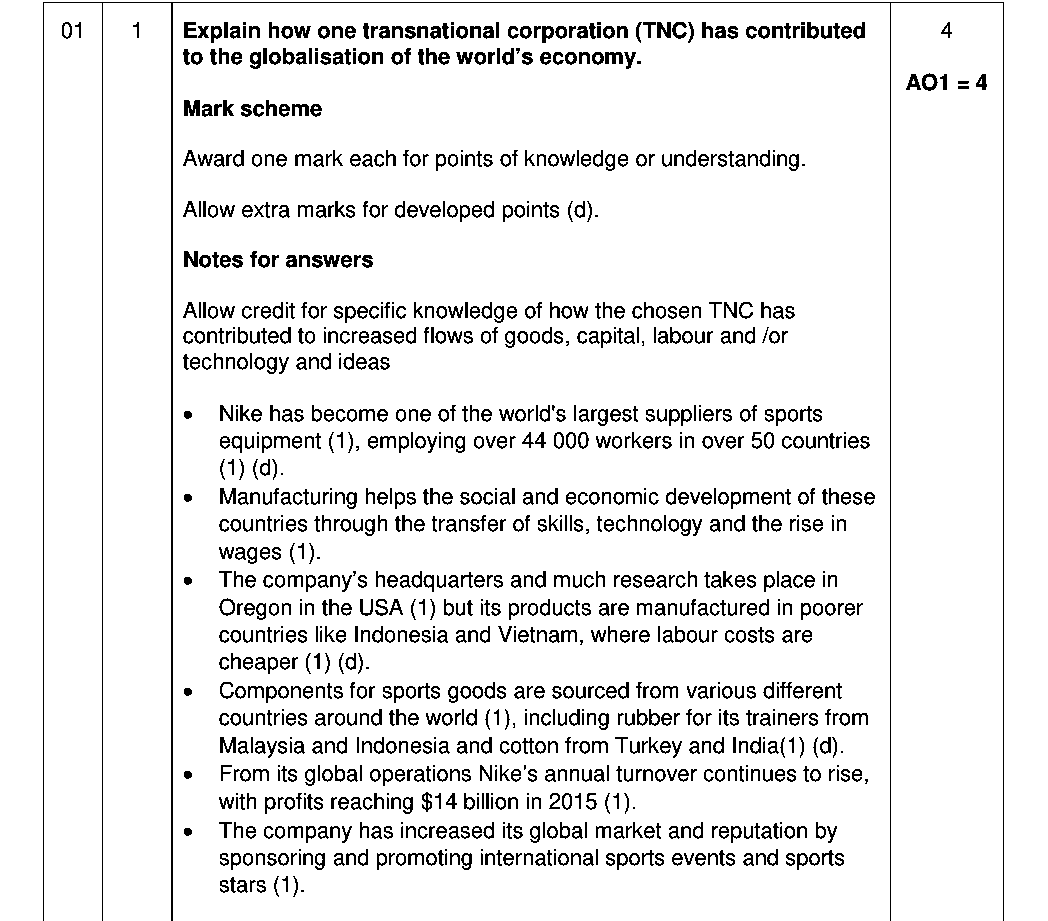
Specimen set 1 · Paper 2 · Q1.14 marksmark schemePoint-marked
Mark scheme
Notes from the mark scheme and report
point marked with developed points (d): one named TNC (e.g. Nike) – global sourcing, offshore manufacturing, HQ/R&D in home country, global marketing and sponsorship, flows of capital, labour and technology
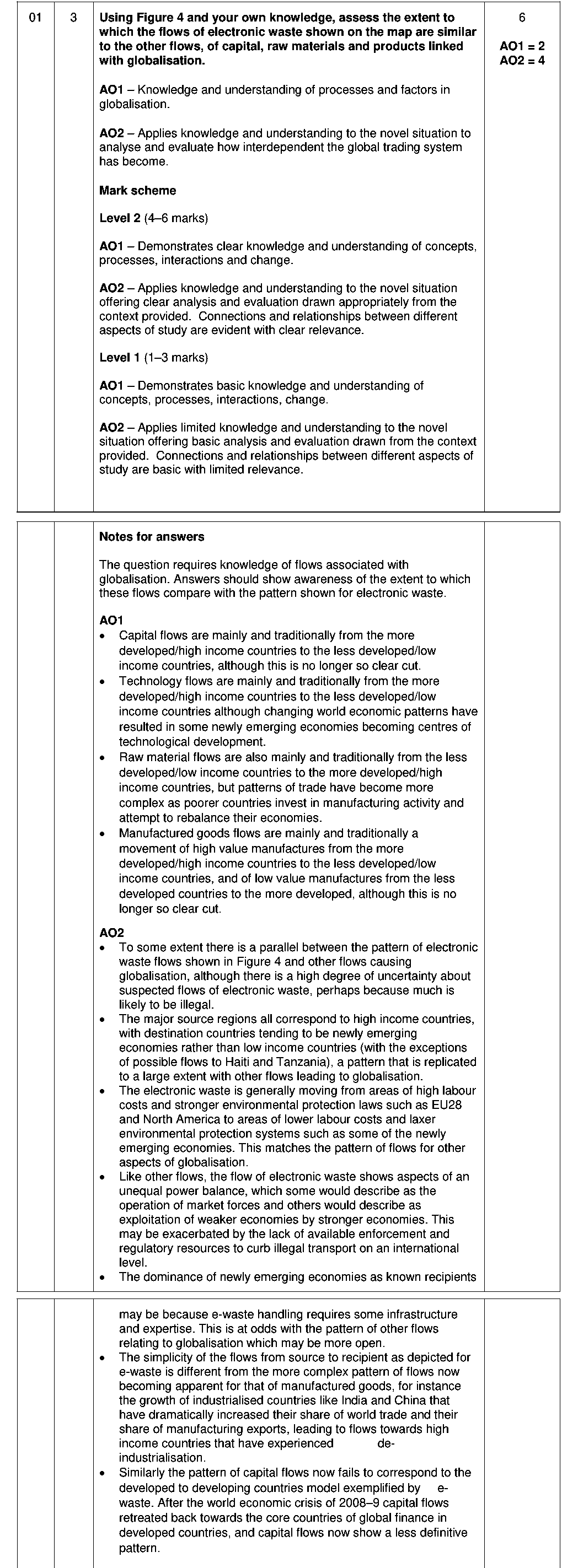
Specimen set 1 · Paper 2 · Q1.36 marksmark schemeStimulus
Figure 4
A figure for this question was removed from AQA's published paper for copyright reasons.
Mark scheme, including the levels and indicative content
Notes from the mark scheme and report
compare e-waste flows (HICs to Africa and Asia) with traditional flows of capital, raw materials and products, noting where they mirror or reverse them
Figure 4 not reproduced in the published paper
Work with an AQA Geography tutor
Essays stuck in the middle levels, or losing marks on the data questions? Book a trial lesson with a specialist AQA Geography tutor.