3.2.4.3-01 Global patterns of health, mortality and morbidity. Economic and social development and the epidemiological transition.A level only
3.2.4.3-02 The relationship between environment variables eg climate, topography (drainage) and incidence of disease. Air quality and health. Water quality and health.A level only
3.2.4.3-03 The global prevalence, distribution, seasonal incidence of one specified biologically transmitted disease, eg malaria; its links to physical and socio-economic environments including impacts of environmental variables on transmission vectors. Impact on health and well-being. Management and mitigation strategies.A level only
3.2.4.3-04 The global prevalence and distribution of one specified non-communicable disease, eg a specific type of cancer, coronary heart disease, asthma; its links to physical and socio-economic environment including impacts of lifestyles. Impact on health and well-being. Management and mitigation strategies.A level only
3.2.4.3-05 Role of international agencies and NGOs in promoting health and combating disease at the global scale.A level only
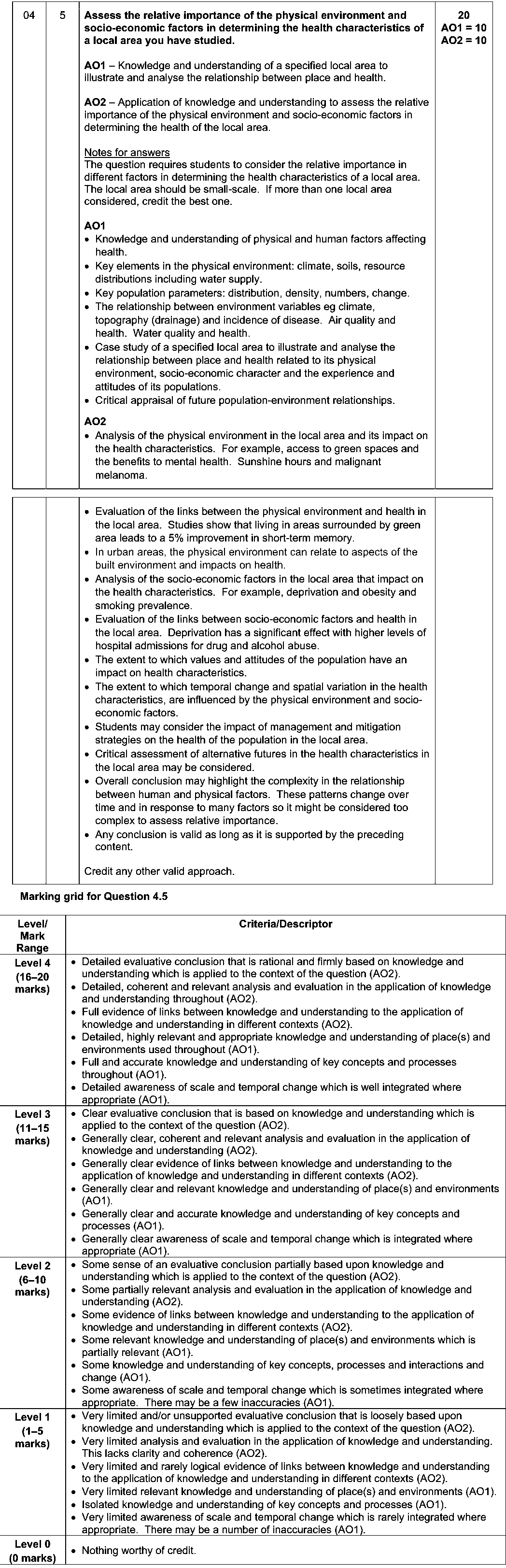
Assess the relative importance of the physical environment and socio-economic factors in determining the health characteristics of a local area you have studied.
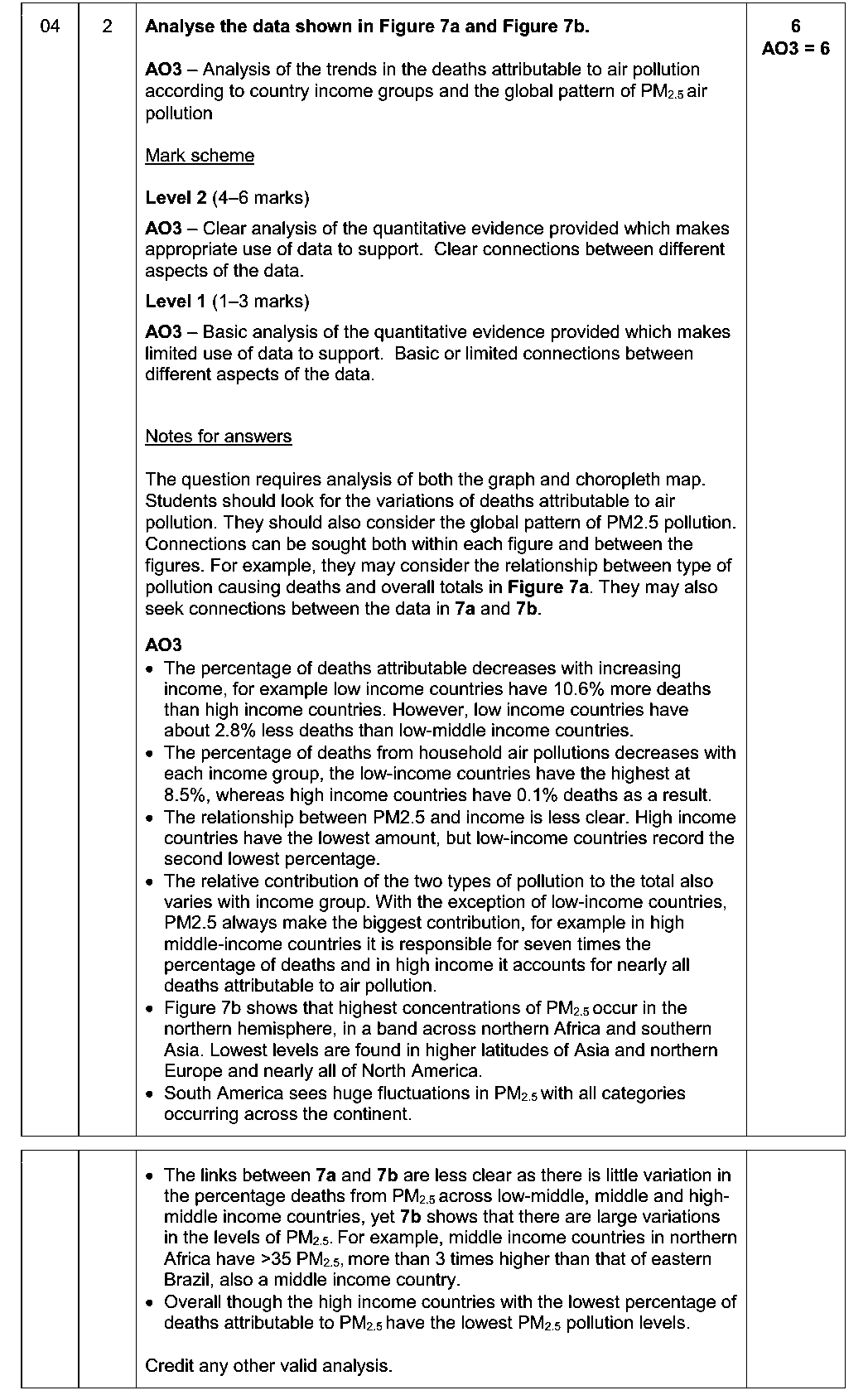
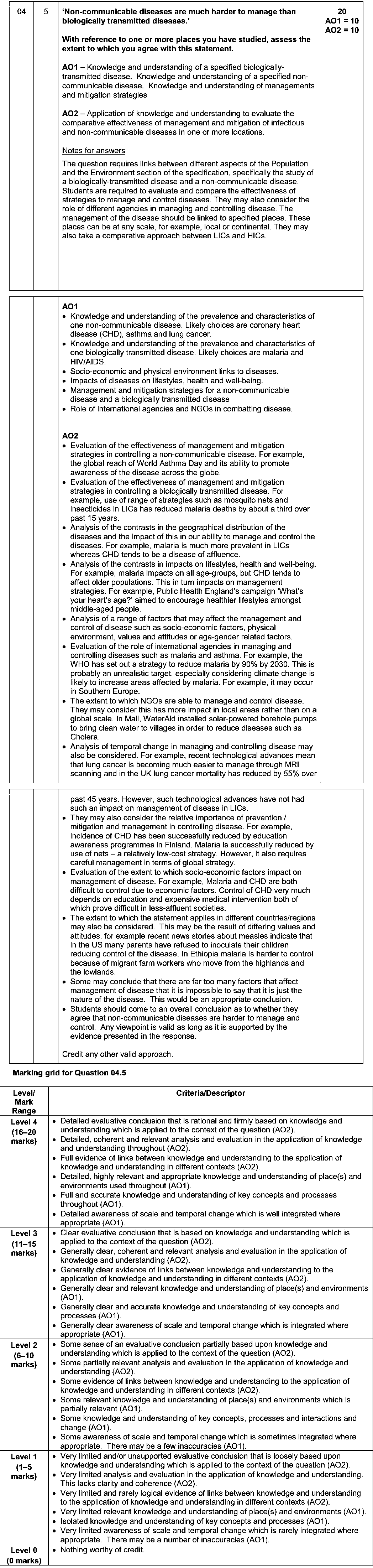
‘Non-communicable diseases are harder to manage than biologically transmitted diseases.’ With reference to one or more places you have studied, assess the extent to which you agree with this statement.
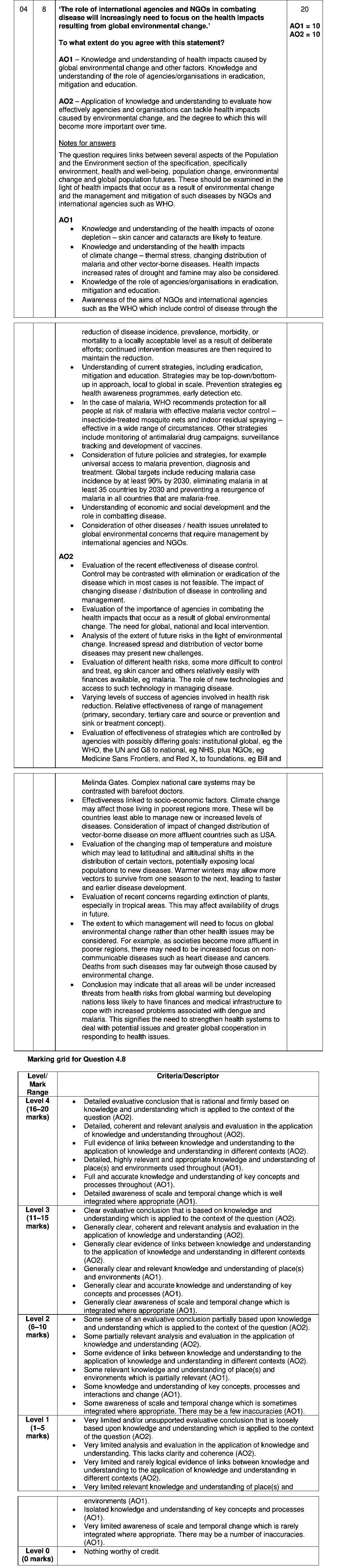
‘The role of international agencies and NGOs in combating disease will increasingly need to focus on the health impacts resulting from global environmental change.’ To what extent do you agree with this statement?
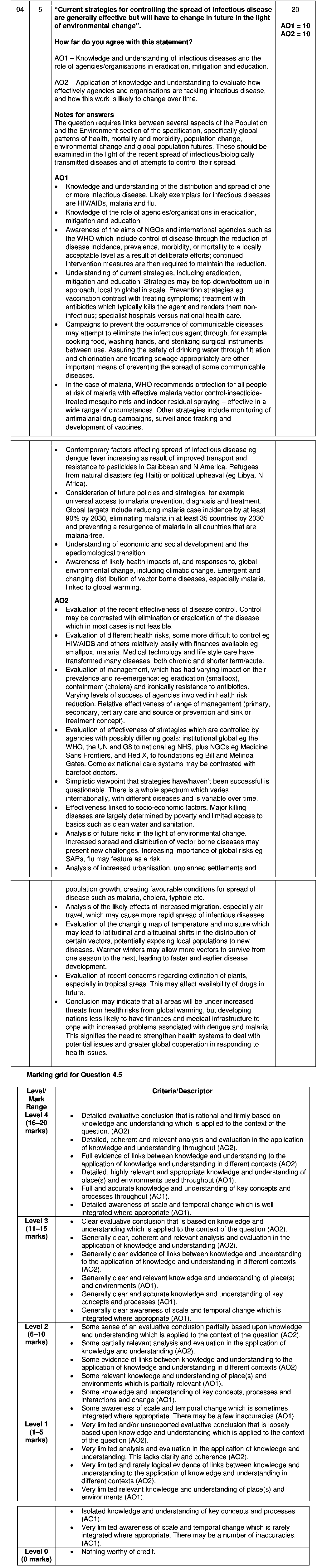
‘Current strategies for controlling the spread of infectious disease are generally effective but will have to change in future as a consequence of environmental change.’ How far do you agree with this statement?
Tap a question to zoom it. The figures open above it; the mark scheme (with its levels and indicative content) and the examiner's comment open underneath.
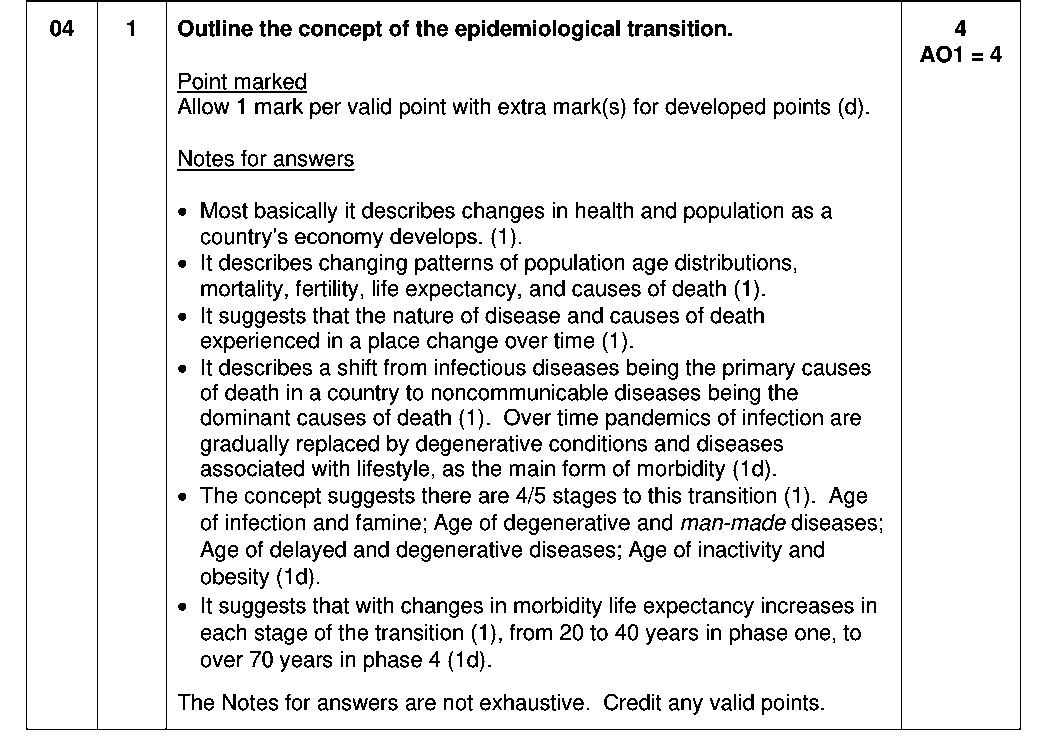
June 2025 · Paper 2 · Q4.14 marksmark schemePoint-marked
Mark scheme
Examiner's comment
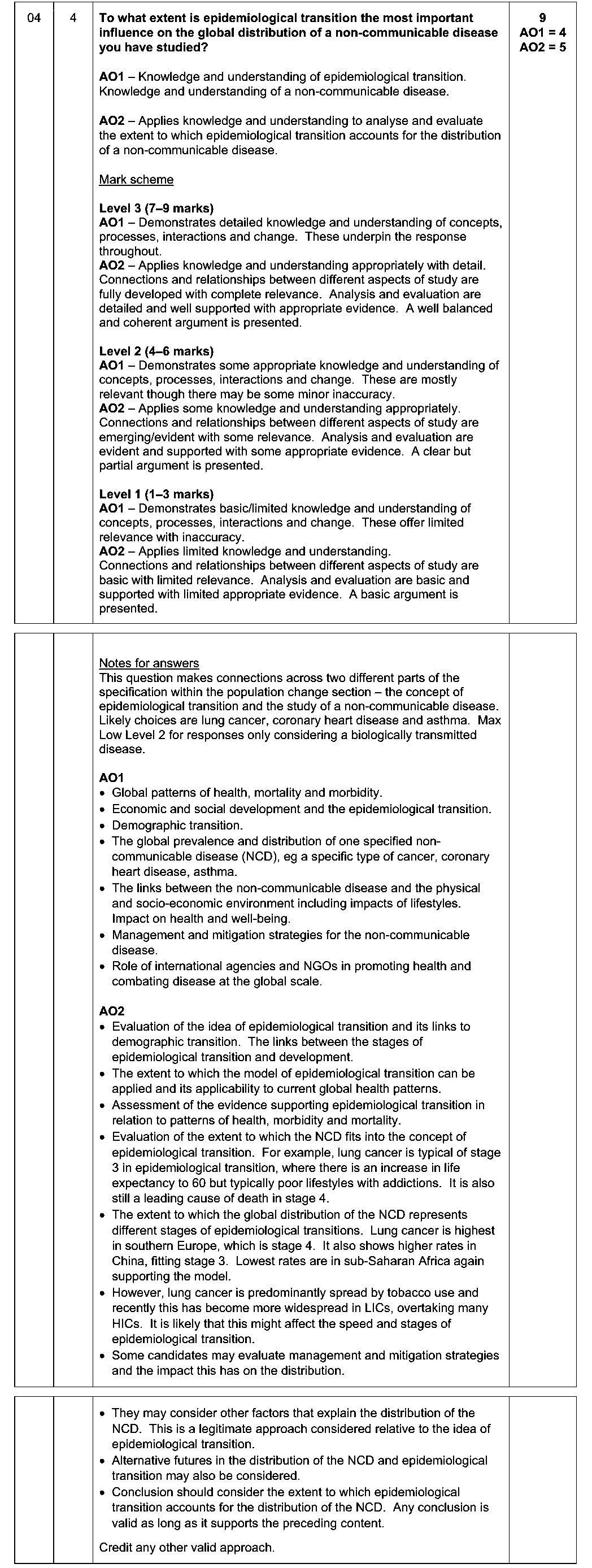
Performance on the 4-mark questions assessing AO1 was a particular strength. The key to good marks in the 4-mark, AO1, questions is to make clear, focused responses that directly relate to the part of the specification being assessed. Specific knowledge is vital, and responses should be clear and if appropriate relate to a suitable example. Lower scoring responses to the 4-mark questions tend to show limited knowledge and understanding of the concept being assessed. Responses may make incorrect statements or simply not know enough about the topic.
Notes from the mark scheme and report
shift from infectious to non-communicable/degenerative disease as countries develop, stages of the transition, rising life expectancy
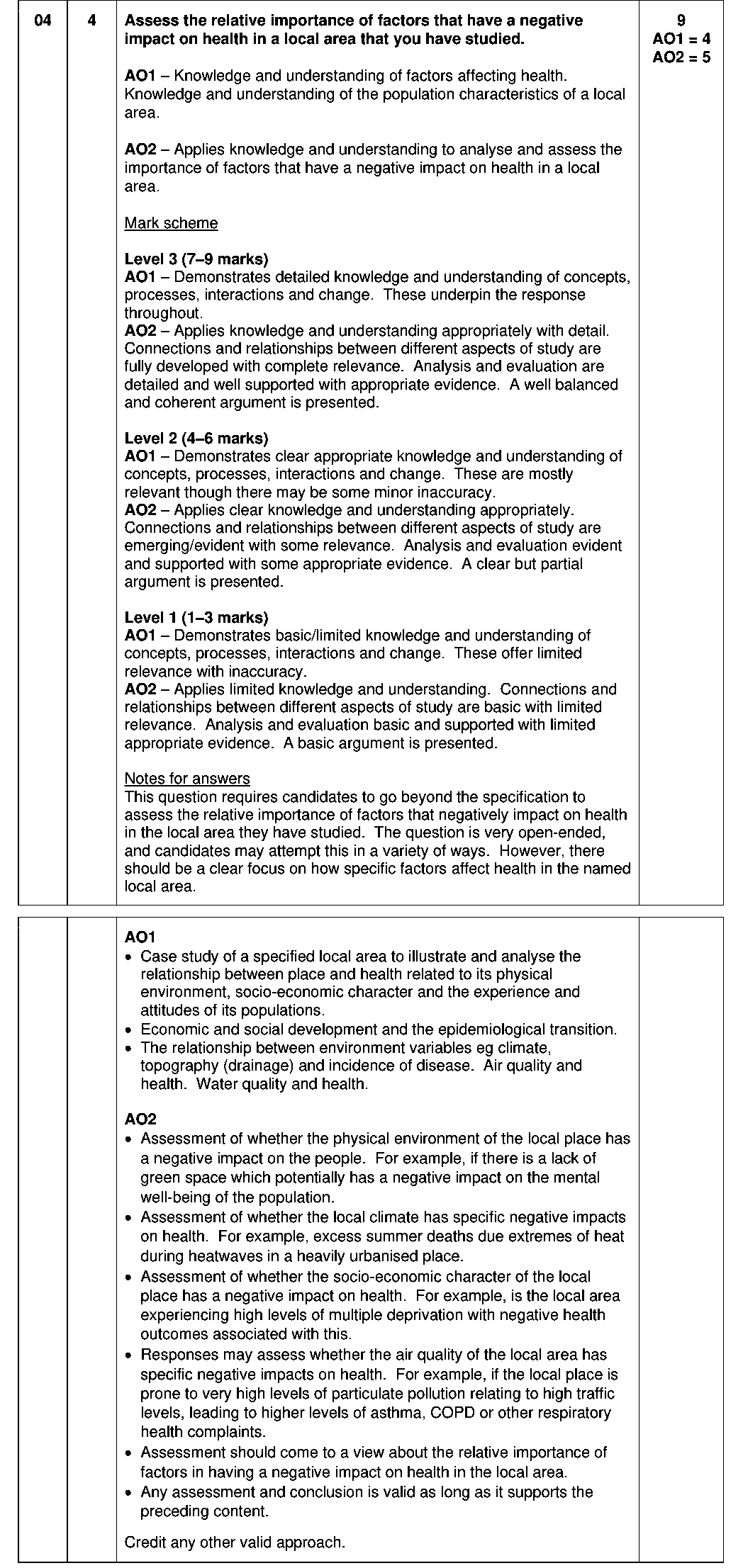
June 2025 · Paper 2 · Q4.49 marksmark scheme9-mark essay
Mark scheme, including the levels and indicative content
Examiner's comment
Most of the 6- and 9-mark questions evidenced some good subject knowledge and application. However, students could achieve higher marks within Level 2 or 3 by making their assessments and evaluations more explicit. The 9-mark questions, without the use of resources, test students’ subject knowledge and application in the optional themes. Responses should balance knowledge (AO1) with evaluation and assessment (AO2) to answer the question posed. Level 3 answers demonstrate detailed knowledge and understanding, make clear connections and views are well supported with evidence and examples. Responses that did not score well either lacked knowledge and understanding of the area of the specification being assessed, for example - sustainable cities, health factors at a local scale or mineral resource security - or a failed to really address the commands of the question (e.g. assess, to what extent). In Section C, each of the 9-mark questions showed mean scores of over 5.0, indicating mid-level 2 performance. Students showed knowledge and evaluation of sustainable cities, local-scale factors negatively impacting health, and the geopolitics of mineral resources. In this example, from the Environment and Population topic, the question requires an understanding of the relative importance of factors having a negative impact on health in a local area. This response does refer to Glasgow, the area studied, and shows some knowledge and understanding of life expectancy in different parts of Glasgow, as well as reference to health-related factors of drug use and absence of green spaces. However, whilst AO1 is evidenced, AO2 is partial. This response was assessed as being in mid-Level 1 and was given 2 marks.
Notes from the mark scheme and report
named local area: air quality, deprivation, lack of green space, climate extremes
must judge relative importance, not just describe (Glasgow example only Level 1)
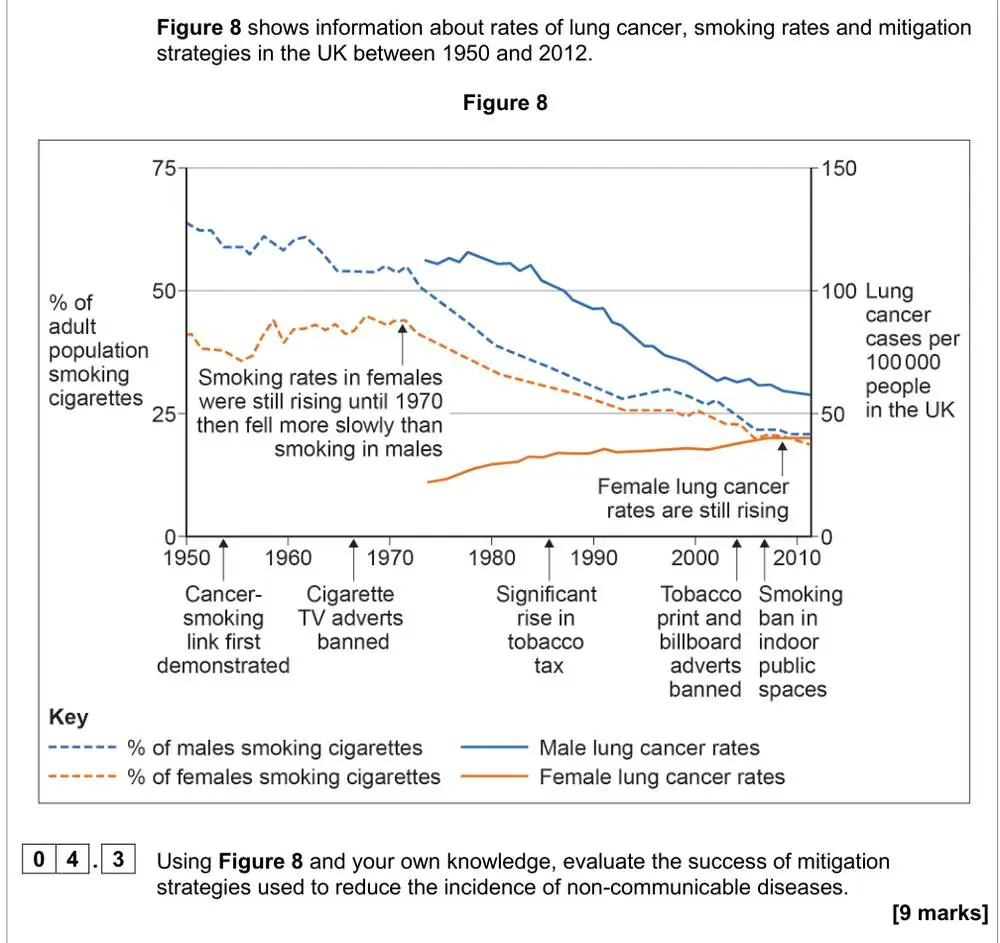
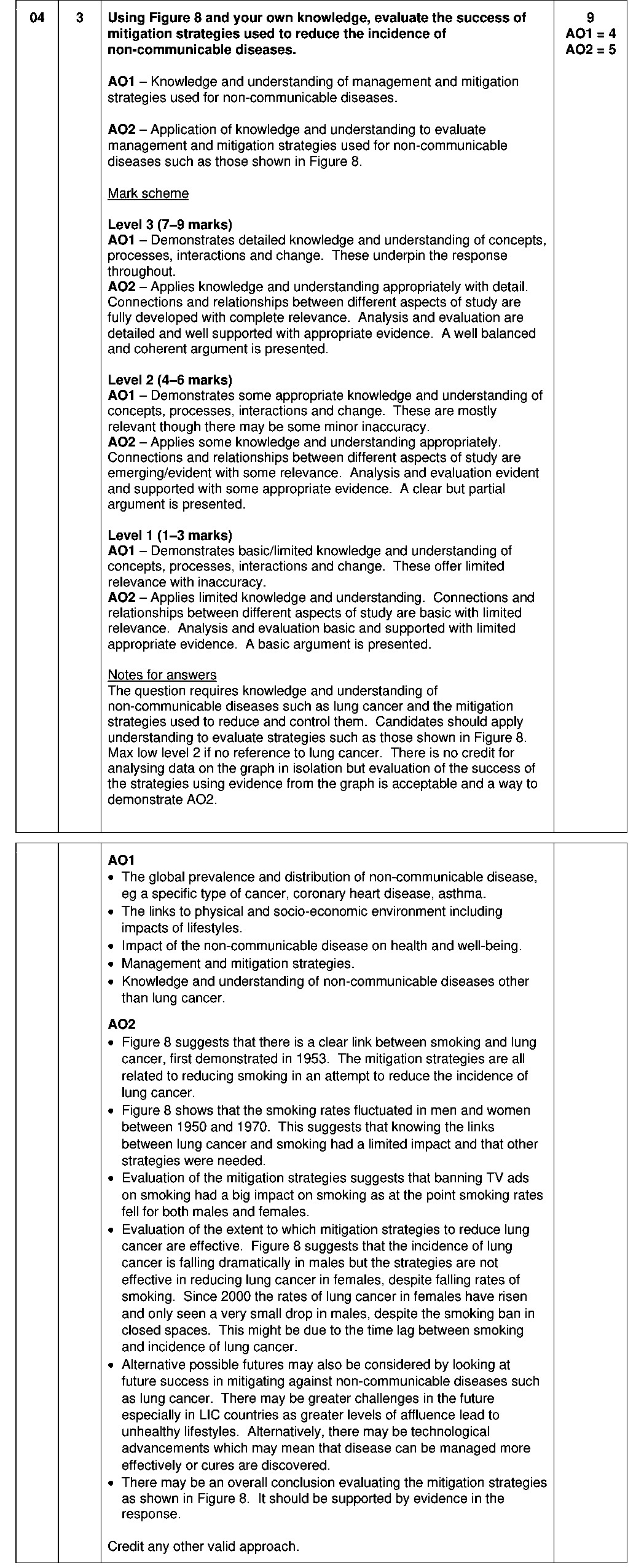
June 2024 · Paper 2 · Q4.39 marksmark schemeStimulus
Mark scheme, including the levels and indicative content
Examiner's comment
The 6- and 9-mark questions in each section referring to stimulus material (.3) were attempted with some confidence. Students used their own knowledge and understanding alongside the resources to answer the question and this was most effectively done in the options (3.3, 4.3 and 5.3). Each scenario required students to consider an area of the specification (mitigation strategies for non-communicable diseases, edge cities and the environmental impacts of dams / barrages), link the resource and utilise their own knowledge. Students are clearly well prepared for these questions and relatively few gave descriptive or analytical responses based solely on the novel resource. The AO1/AO2 questions using a novel resource, aim to test students’ abilities to apply their knowledge of a key idea to the situation presented and bring in some of their own knowledge to support their argument. In these questions, AO2 is more heavily weighted than AO1 and therefore the argument along with the application from the resource is key but ‘own knowledge’ as well also gains credit. When students do not score so well on these questions it can usually be put down to one of three things. Either, they analyse the resource (doing what they should be doing with the .2 questions), only comment on the resource as a route towards answering the question (so use none of their ‘own knowledge’) or the reverse where they use only their own knowledge (AO1) and do not interface with the resource (AO2). Relatively few students gave solely descriptive accounts of the novel resources provided in the .3 questions. Where this did occur, students only obtained credit in Level 1.
Notes from the mark scheme and report
evaluate anti-smoking strategies using Figure 8 (falling male rates, female lung cancer still rising) plus own knowledge of other NCD strategies
max low Level 2 with no reference to lung cancer
graph analysis alone not credited
June 2023 · Paper 2 · Q4.49 marksmark scheme9-mark essay
Mark scheme, including the levels and indicative content
Examiner's comment
The 9 mark questions in the option sections (.3 and .4) also gave students opportunity to evaluate, discuss and assess themes. Successful responses demonstrated familiarity with relevant concepts (such as urban recycling schemes, end uses of resources). These 9 mark questions in Section C required an understanding of links with the option units as the cross-specification question was the 20 mark question on Section A. The keys to good marks here were knowledge of the topic (AO1), the ability to link the parts of the question and evaluate the components and having an awareness of a context through well-chosen examples. Good answers tend to be focused and respond effectively to the question within the answer space on the paper. As explained above, a lack of understanding of the subject matter is an important element in successful answers. Making statements without substance and not having the subject knowledge or place knowledge to back up these statements also limits the level and mark awarded. Q4.4 proved a challenge for those students who either did not know the concept of epidemiological transition or those who referred to a communicable disease rather than a non-communicable one. It was however still possible to access the lower parts of Level 2 in this case. Q4.4 connected the epidemiological transition with a knowledge of a non-communicable disease (most frequently coronary heart disease, asthma or diabetes). Even where students were unsure of the concept of epidemiological transition they could often link economic and social development to the prevalence of their chosen disease and make some form of evaluation as to the extent to which they are connected.
Notes from the mark scheme and report
weigh the epidemiological transition against lifestyle, environment and other factors for one non-communicable disease (CHD, asthma, lung cancer, diabetes)
max low Level 2 if a communicable disease is used
June 2023 · Paper 2 · Q4.520 marksmark scheme20-mark essay
Mark scheme, including the levels and indicative content
Examiner's comment
The 20 mark responses in all 5 questions produced some interesting and considered responses from many students although some leaned very heavily on some outdated and clichéd views of places or made contrasts between places that were difficult to compare in a meaningful way. As mentioned in the introduction, there were some very clear and focused 20-mark responses and it is apparent that students are well-trained for these questions. Good practice was seen with responses that start with a clear position statement and then developed a clear thread with evidence from valid examples. This balance of AO1 and AO2 is the way to good marks. There should be a final conclusion that clearly links back to the question set. Where students did not perform as well in the essay questions, the opposite characteristics were often evident - namely, no clear position statement, copious AO1 retelling case study knowledge without application and an absent, vague or unsubstantiated conclusion. Q4.5, the responses to the 20 mark question were positive with some strong local case study knowledge or well-used text book case study material used to support students’ responses. Q4.5 also had some rather stereotypical ideas that were simplistic and suggested a lack of real understanding.
Notes from the mark scheme and report
one small-scale local area: physical environment (green space, air and water quality) vs socio-economic factors (deprivation, lifestyle) in health outcomes
avoid simplistic stereotypes
June 2022 · Paper 2 · Q4.520 marksmark scheme20-mark essay
Mark scheme, including the levels and indicative content
Examiner's comment
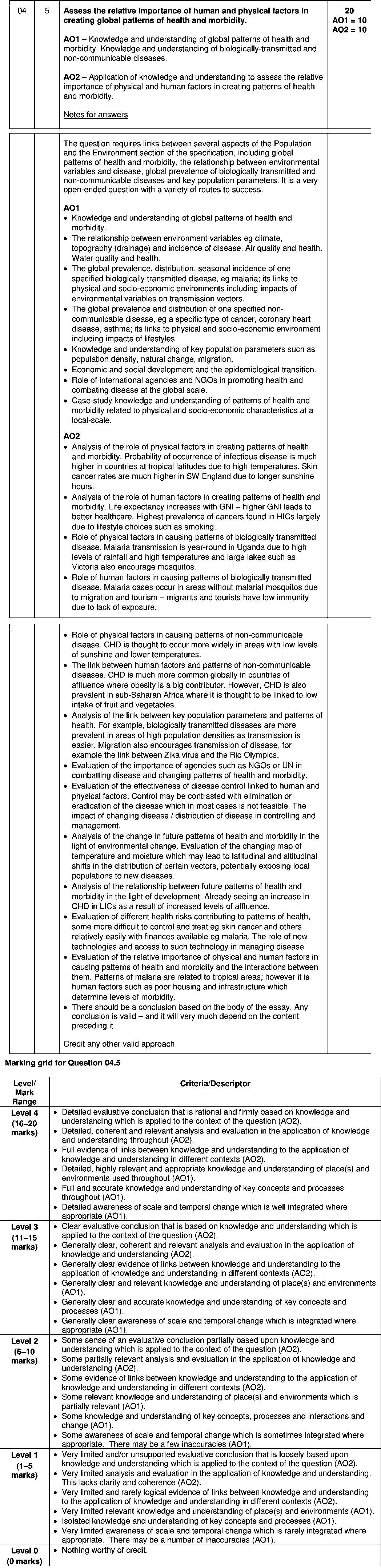
This question requires students to consider the importance of physical and human factors in creating global patterns of diseases. A common route was to consider the different patterns and causes of non-communicable diseases such as Coronary Heart Disease and biologically- transmitted diseases such as Malaria. The more sophisticated responses featured relative importance and noted the complexity between them; even when the causes appear to be related to physical factors, management relates to human factors. The best students stood out when they also considered temporal change and how the patterns of disease have changed over time, due to human factors or climate change. On the whole, the question seemed to be very accessible. The differentiator was the ability to consider the impact on global patterns and relative importance of physical and human factors. This question demonstrates the importance of reading the question carefully as some students failed to access L3 because they failed to consider the global aspect of the question. They wrote lengthy answers relating to their local health case-study and this didn’t fully address the question.
Notes from the mark scheme and report
relative importance of physical vs human factors in global patterns of disease (e.g. malaria vs coronary heart disease), including change over time
must stay at the global scale — long local health case studies held answers below Level 3
November 2021 · Paper 2 · Q4.39 marksmark schemeStimulus
Figure 8
A figure for this question was removed from AQA's published paper for copyright reasons.
Mark scheme, including the levels and indicative content
Notes from the mark scheme and report
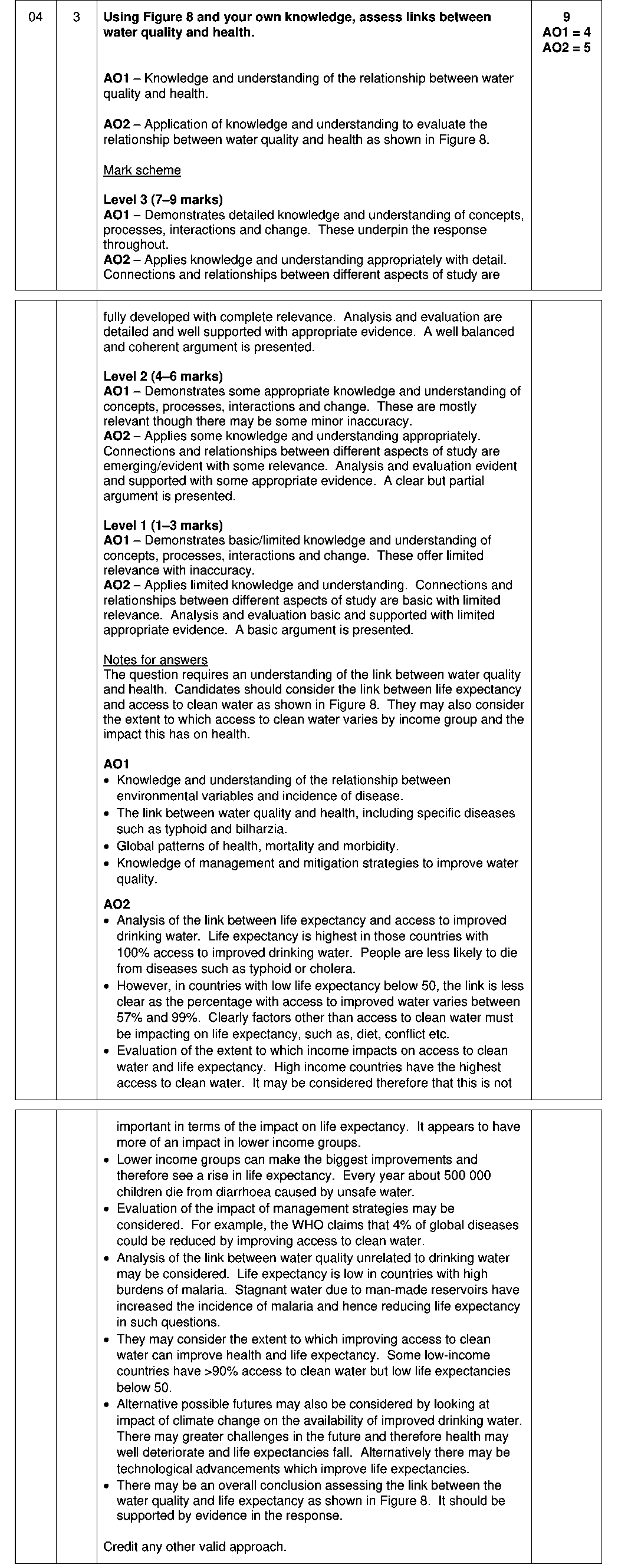
life expectancy highest where access to improved water is near 100%, link weaker in low-income countries with life expectancy under 50
water-borne disease (cholera, typhoid) and income as linked factors
Figure 8 not reproduced in the published paper
November 2020 · Paper 2 · Q4.14 marksmark schemePoint-marked
Mark scheme
Examiner's comment
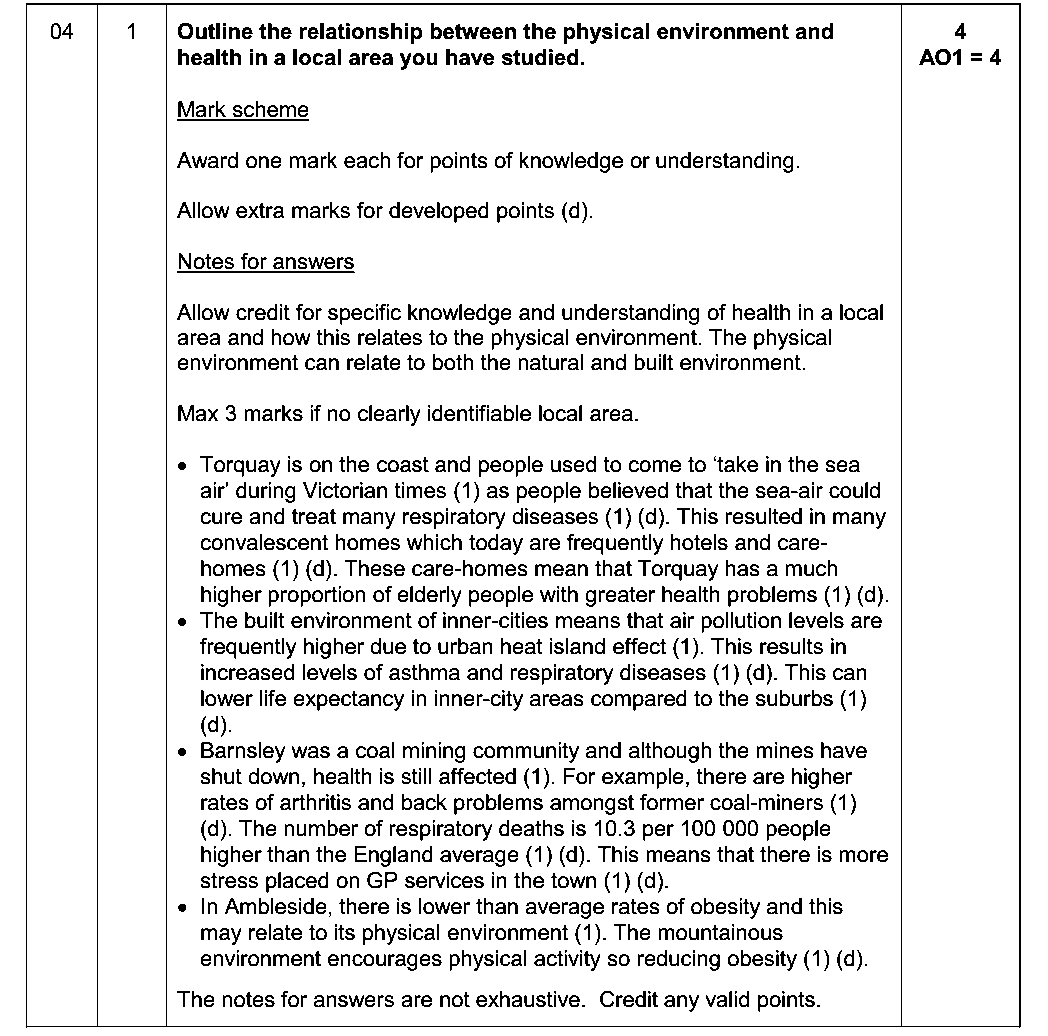
Q4.1 differentiated very well. Better responses showed a good understanding of the link between health and the physical environment of the local area, using specific place detail to support and develop their points.
Notes from the mark scheme and report
max 3 without an identifiable local area
natural or built environment links to health (air quality, former mining, upland activity)
place detail differentiated
November 2020 · Paper 2 · Q4.26 marksmark schemeData analysis
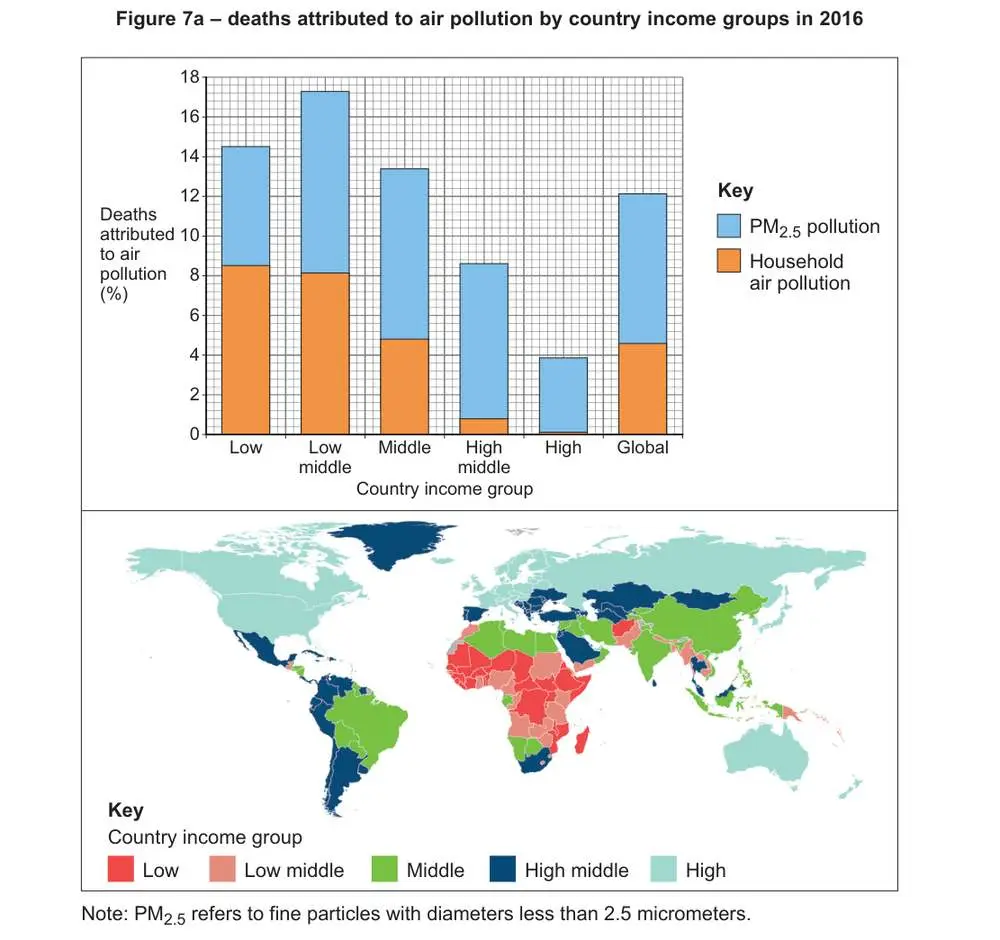
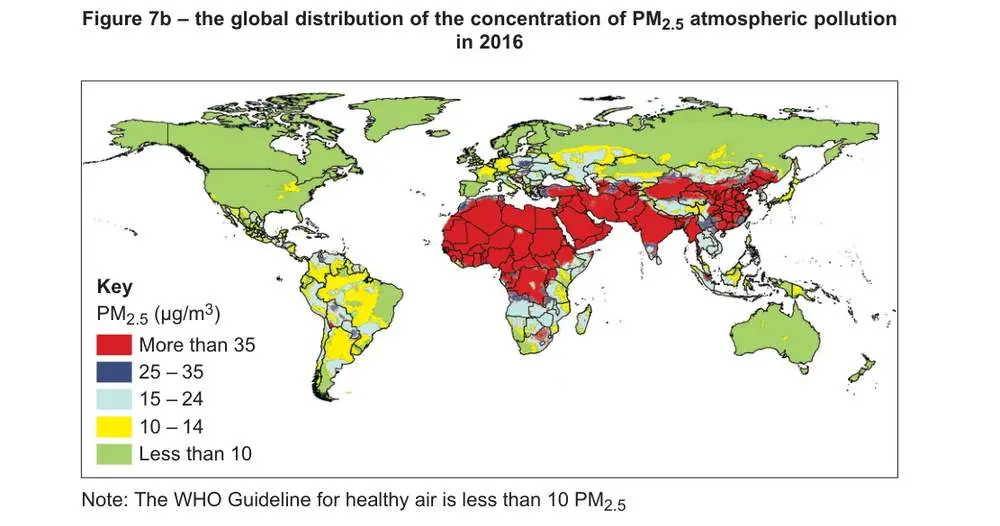
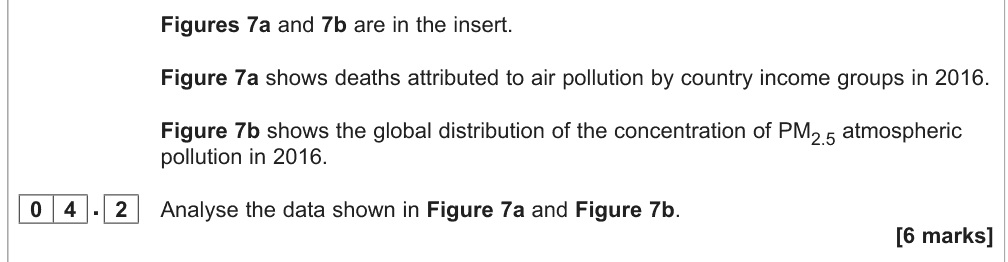
Figures 7a, 7b
Mark scheme, including the levels and indicative content
Notes from the mark scheme and report
AO3: deaths from air pollution fall with income, household pollution falls sharply, PM2.5 highest in a band across N Africa and S Asia
connect the two figures
no explanation
November 2020 · Paper 2 · Q4.520 marksmark scheme20-mark essay
Mark scheme, including the levels and indicative content
Examiner's comment
Q4.5 showed large variation in quality of responses. Many students had good knowledge and understanding of the distribution and causes of diseases but were less well-prepared for how these diseases are managed. This led to partial, descriptive responses lacking in evaluation. The best responses featured comparative evaluations of the effectiveness of management strategies using place at a variety of scales. For example, some looked at the effectiveness of the ‘5-a-day fruit and veg’ campaign in the UK compared to managing Zika virus in Brazil, whilst others compared the effectiveness of strategies to manage asthma and malaria in HICs versus LICs. These were equally valid approaches.
Notes from the mark scheme and report
compare management of a non-communicable and a biologically transmitted disease in named places (e.g. asthma v malaria, 5-a-day v Zika)
many described distribution and causes but not management
June 2019 · Paper 2 · Q4.56 marksmark schemeData analysis
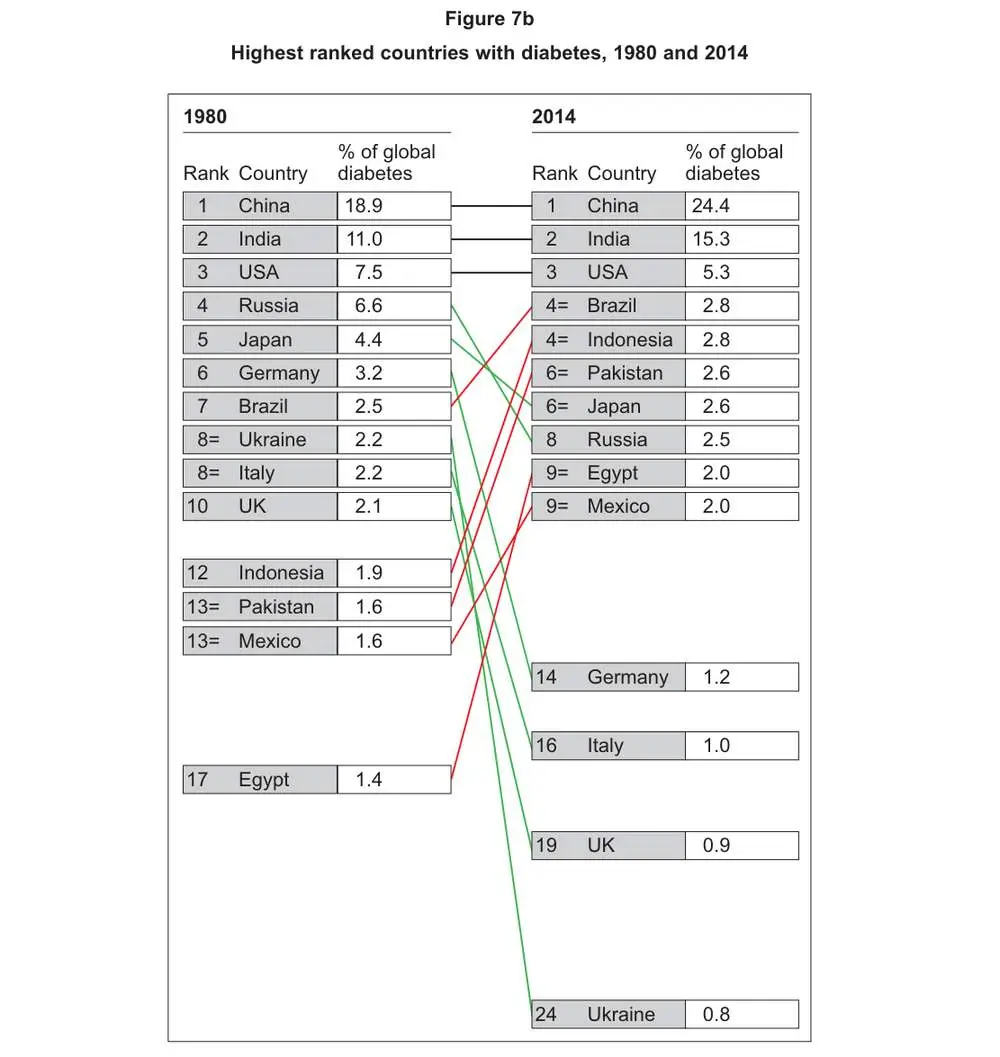
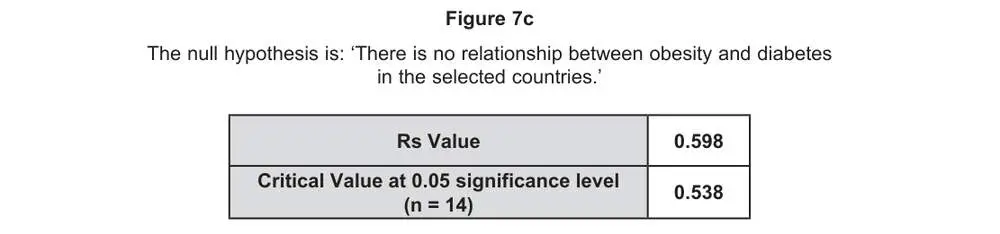
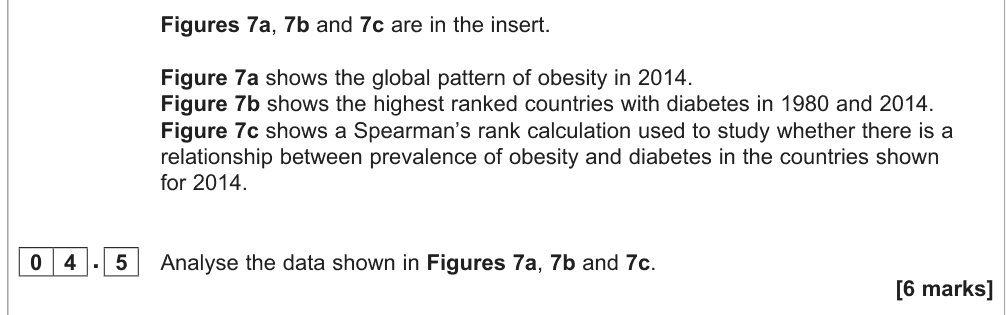
Figures 7a, 7b, 7c
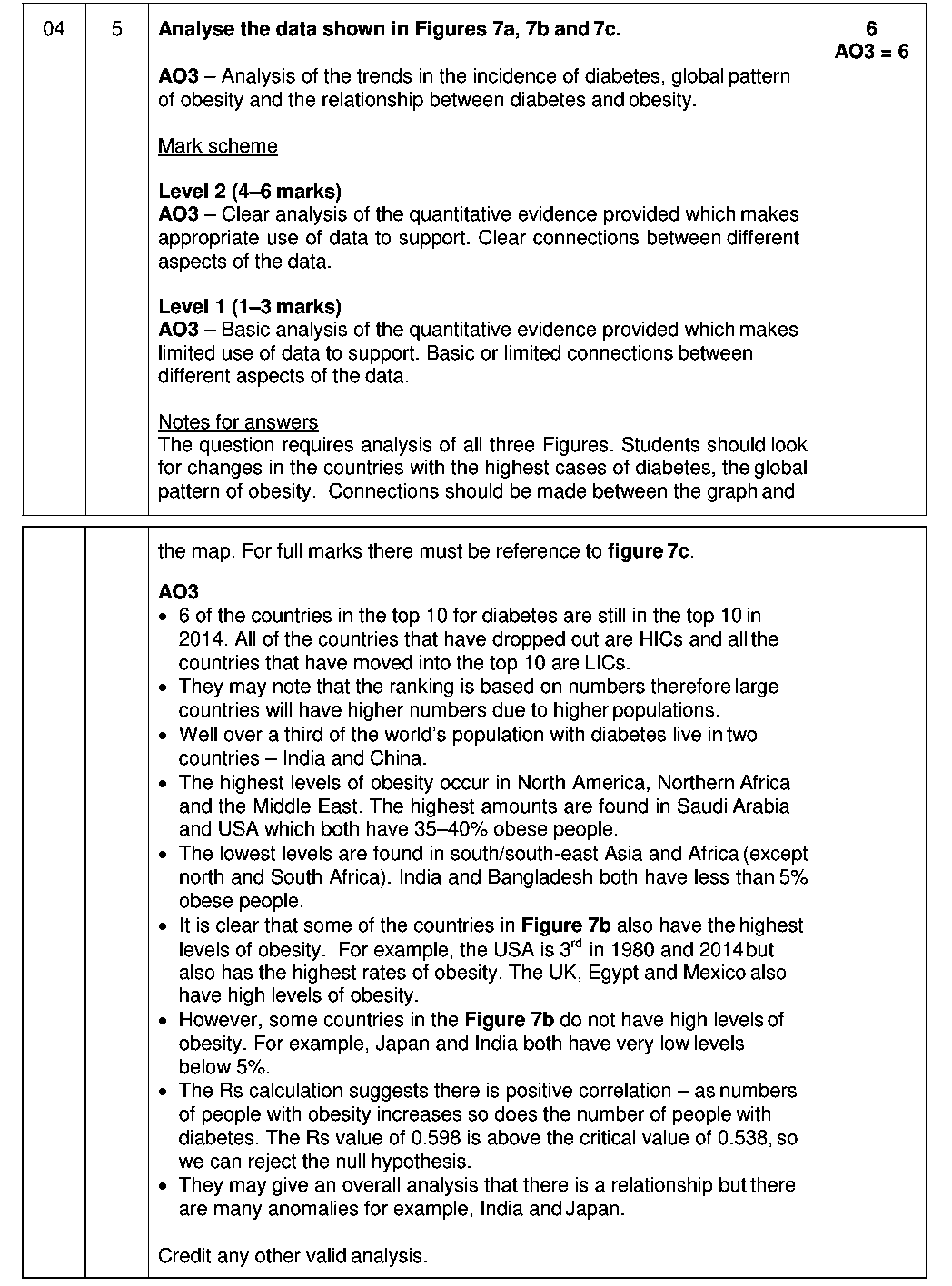
Mark scheme, including the levels and indicative content
Examiner's comment
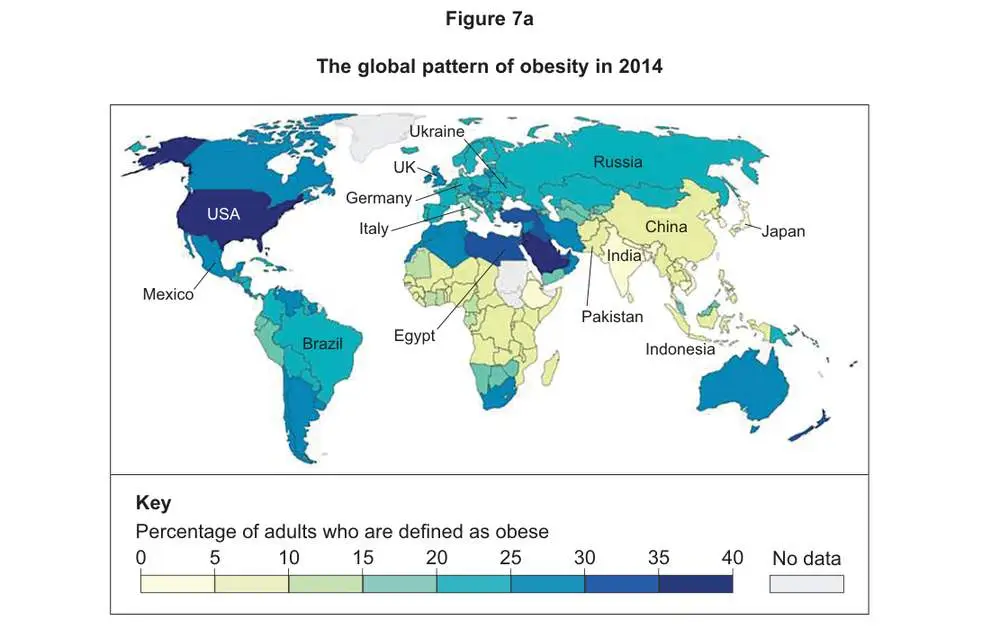
AO3 skills were tested in this examination paper on the first 6 mark question in each unit, for example 1.2, 2.2, 3.5, 4.5 and 5.5. In this series the command ‘analyse’ was used on these questions. The command ‘analyse’ in this context simply required students to interface with the data and deconstruct the information. They needed to look for patterns and trends and analyse the connections both within the figure and between Figures where applicable. Students need to be encouraged to manipulate data rather than simply describing it, as this does not constitute analysis. The most successful responses on this question looked for the connections between Figures 7a and 7b and then stated whether the Spearman Rank Coefficient calculation in 7c supported them. These more effective responses looked at spatial patterns in 7a and changing positions in 7b, as well as the relationship between them. For example, many noted that the highest levels of obesity occur in North America and northern countries of Africa. However, the only countries with levels of obesity over 30% to appear in 7b are the USA and Egypt. Many considered patterns of development, although this is not a clear relationship. 7c suggests that there is a positive correlation and the null hypothesis can be rejected. Some students showed impressive geographical thinking by realising that 7b shows the percentage share of global diabetes rather than the percentage of diabetes in each country. Those students who noted this often went on to produce very clear and concise analysis, scoring full marks. This shows the importance of full engagement with the nature of the data. Some students misinterpreted the Rs calculation and then sought to explain this by looking for connections in 7a and 7b. Whilst they scored credit for seeking connections, these responses often lacked precision and showed only basic analysis. Some students failed to use the Rs calculation at all. Whilst they could not score maximum marks, with clear analysis of Figures 7a and 7b they were still able to achieve level 2.
Notes from the mark scheme and report
AO3: link obesity choropleth with diabetes rankings
Rs 0.598 above critical value 0.538 so reject the null hypothesis
must use Figure 7c for full marks
Figure 7b is share of global cases, so populous countries rank high
anomalies India and Japan
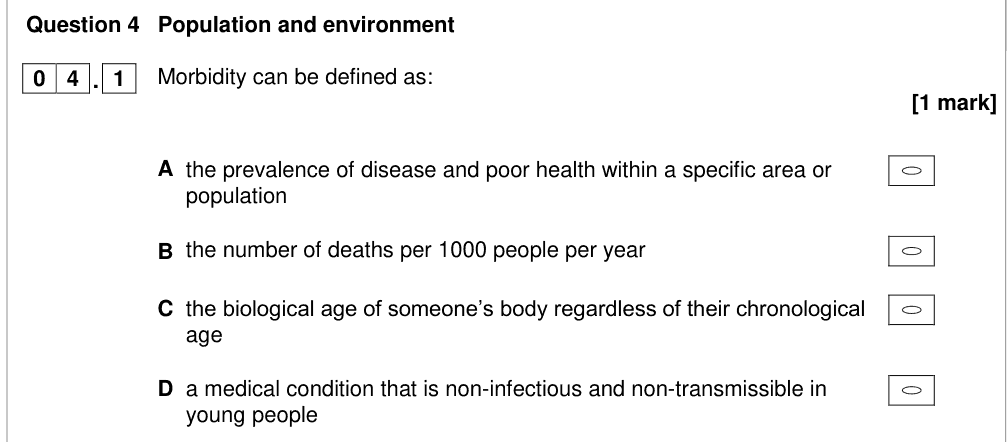
June 2018 · Paper 2 · Q4.11 markmark schemeMultiple choice
Answer
A
Mark scheme
Examiner's comment
About 75% of students correctly identified A as the answer. Those who chose an incorrect answer, most frequently chose B. This shows the importance of learning key terms as B is the definition for death rate.
Notes from the mark scheme and report
Answer: A
about 75% correct
B (death rate) was the usual wrong choice
June 2018 · Paper 2 · Q4.820 marksmark scheme20-mark essay
Mark scheme, including the levels and indicative content
Examiner's comment
Malaria was the most common disease considered for the response, but there was a wide variety seen such as cataracts, asthma, and skin cancer. Students were generally able to link diseases such as malaria to global environmental change. However, few students were able to discuss the impact or role of NGOs in preventing the disease from spreading. Very few considered the role of international agencies. The best responses demonstrated detailed knowledge of diseases and their links to global environmental change. They were then able to consider the current role NGOs play and how this might have to change in the future. They included evidence-based conclusions to consider the extent to which NGOs would need to focus on diseases caused by global environmental change. There were some well-considered arguments, many students suggesting that non-communicable diseases occurring as a result of ageing populations would actually be more important.
Notes from the mark scheme and report
links agencies/NGOs with health impacts of climate change and ozone depletion (malaria, skin cancer)
few discussed international agencies
strong answers argued non-communicable diseases of ageing may matter more
Specimen set 1 · Paper 2 · Q4.520 marksmark scheme20-mark essay
Mark scheme, including the levels and indicative content
Notes from the mark scheme and report
effectiveness of current control of an infectious disease (e.g. malaria, HIV) by WHO/NGOs, and how climate change may shift vector ranges and require new strategies
Work with an AQA Geography tutor
Essays stuck in the middle levels, or losing marks on the data questions? Book a trial lesson with a specialist AQA Geography tutor.