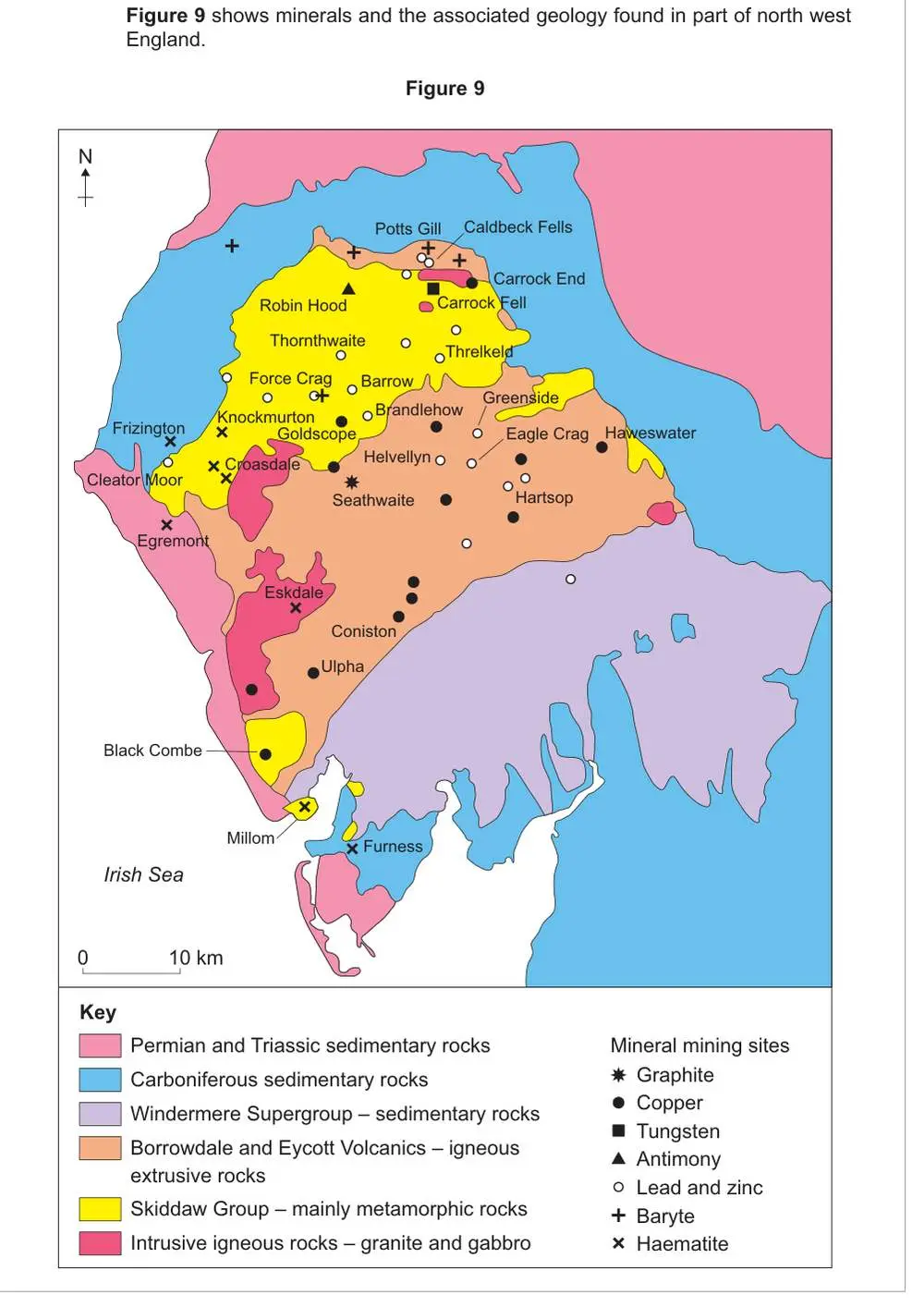
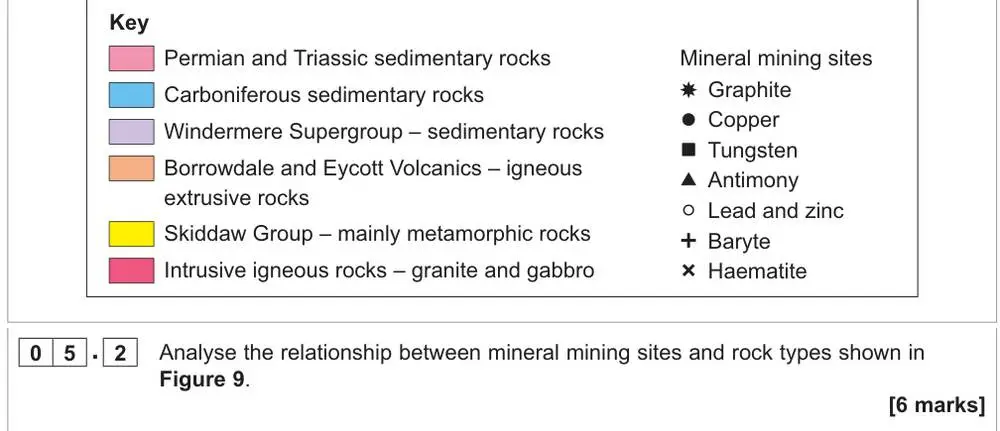
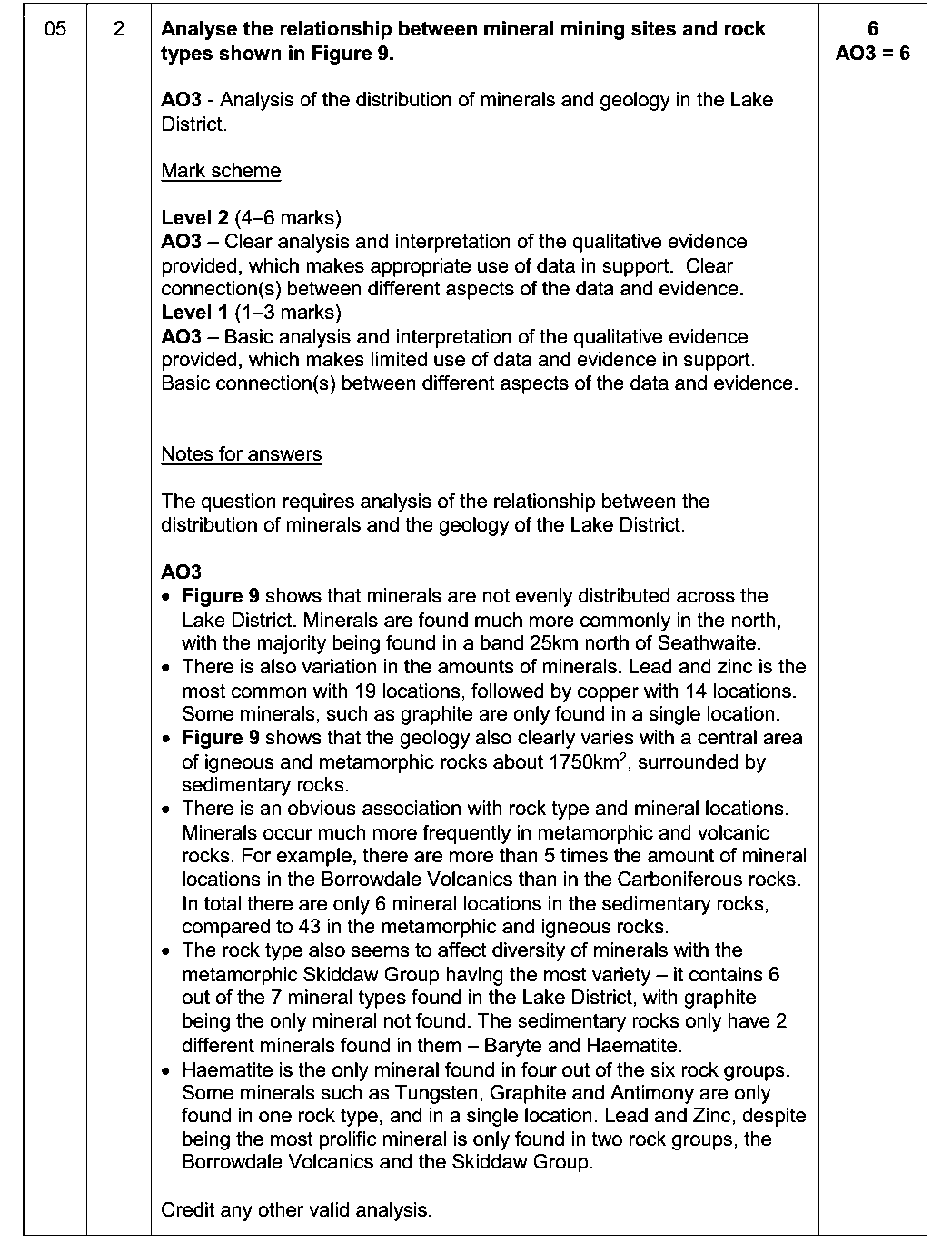
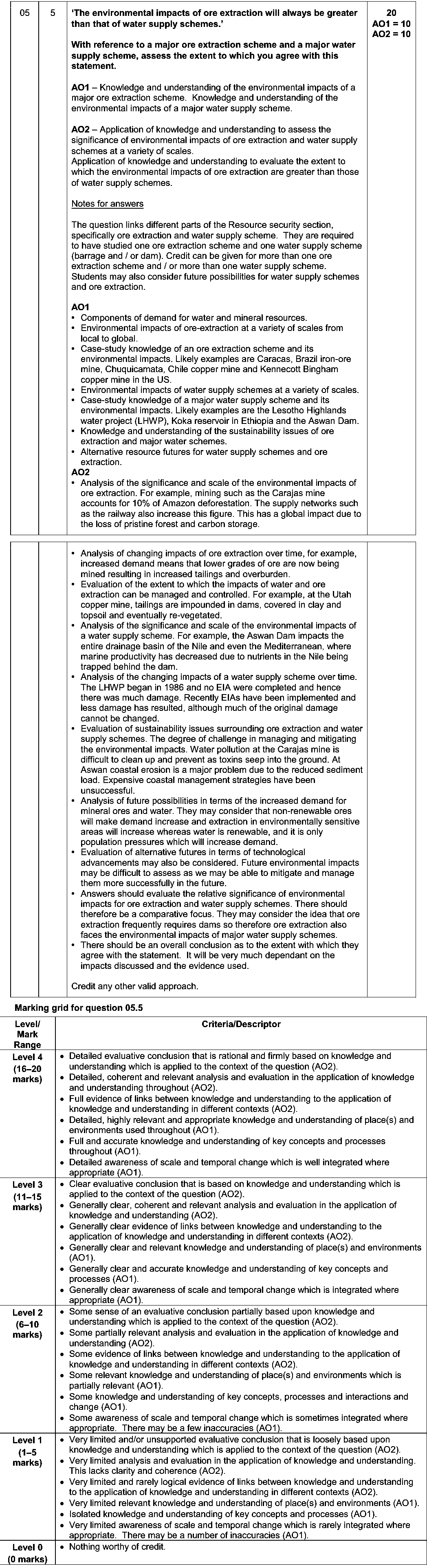
Figures 9a, 9b
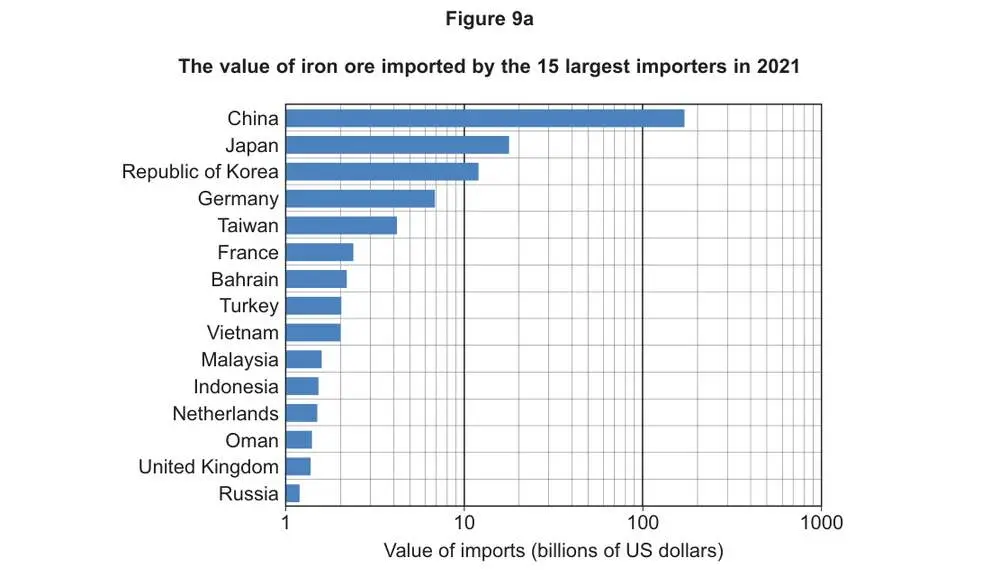
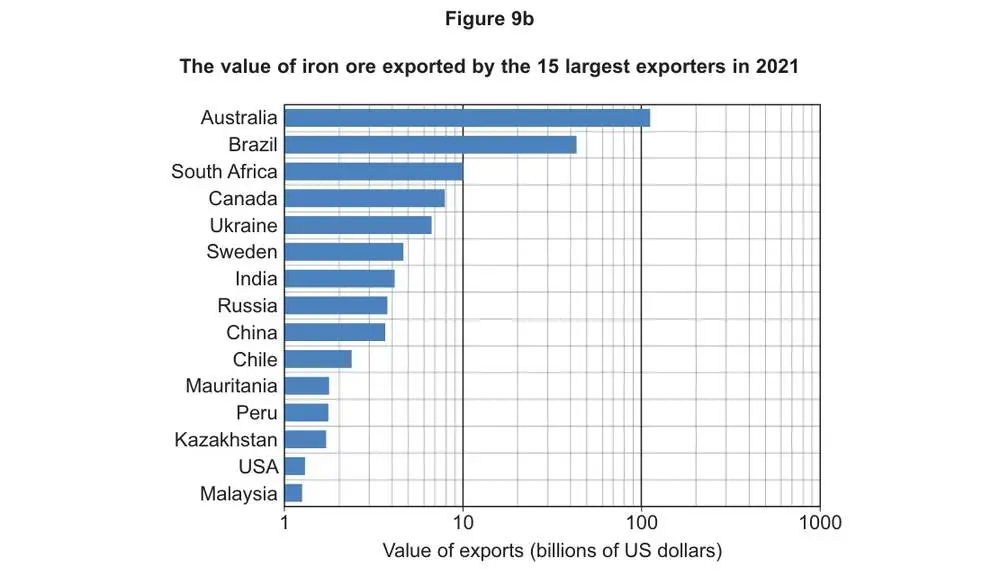
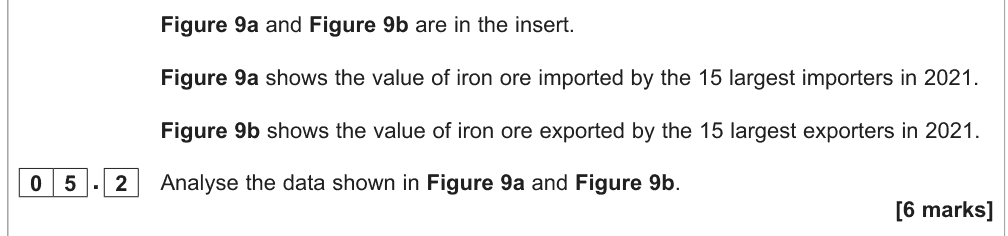
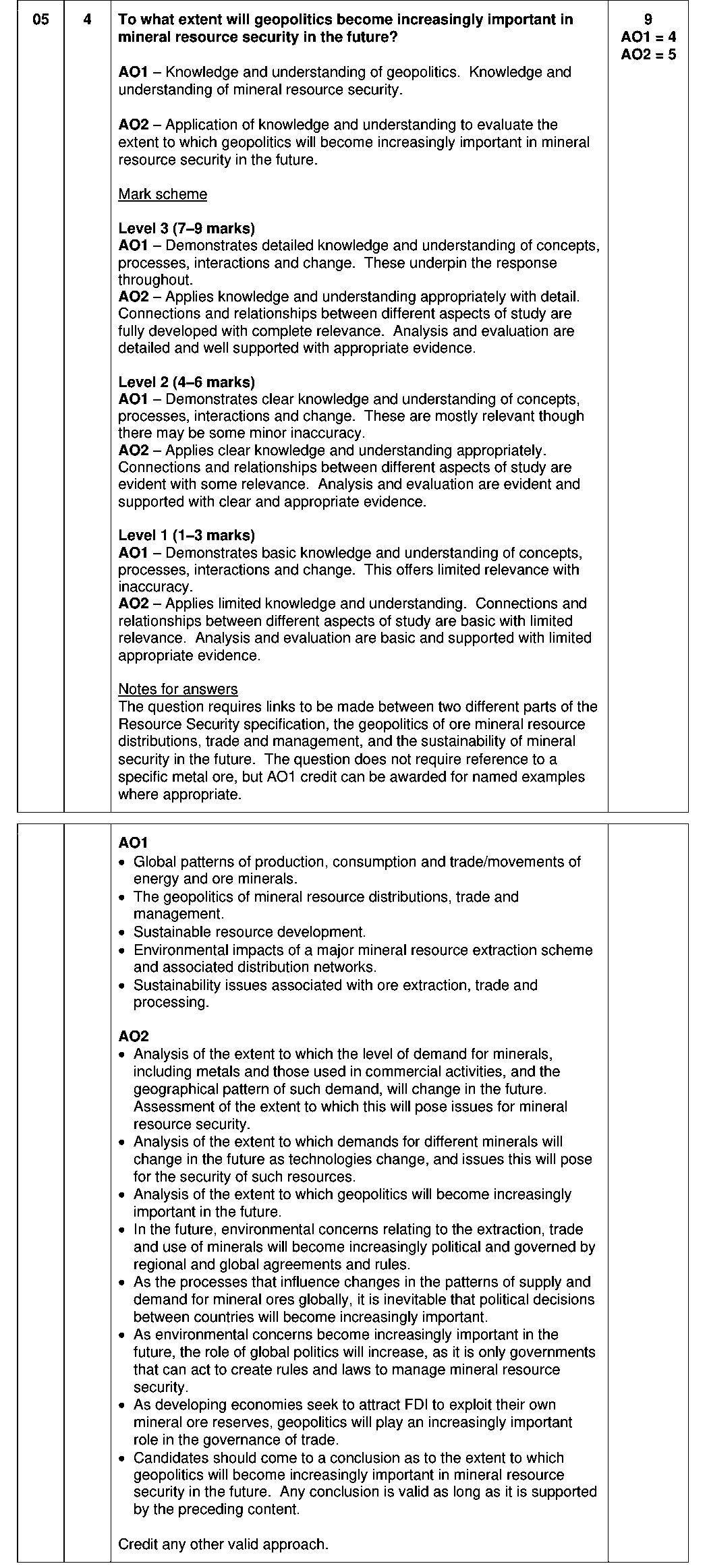
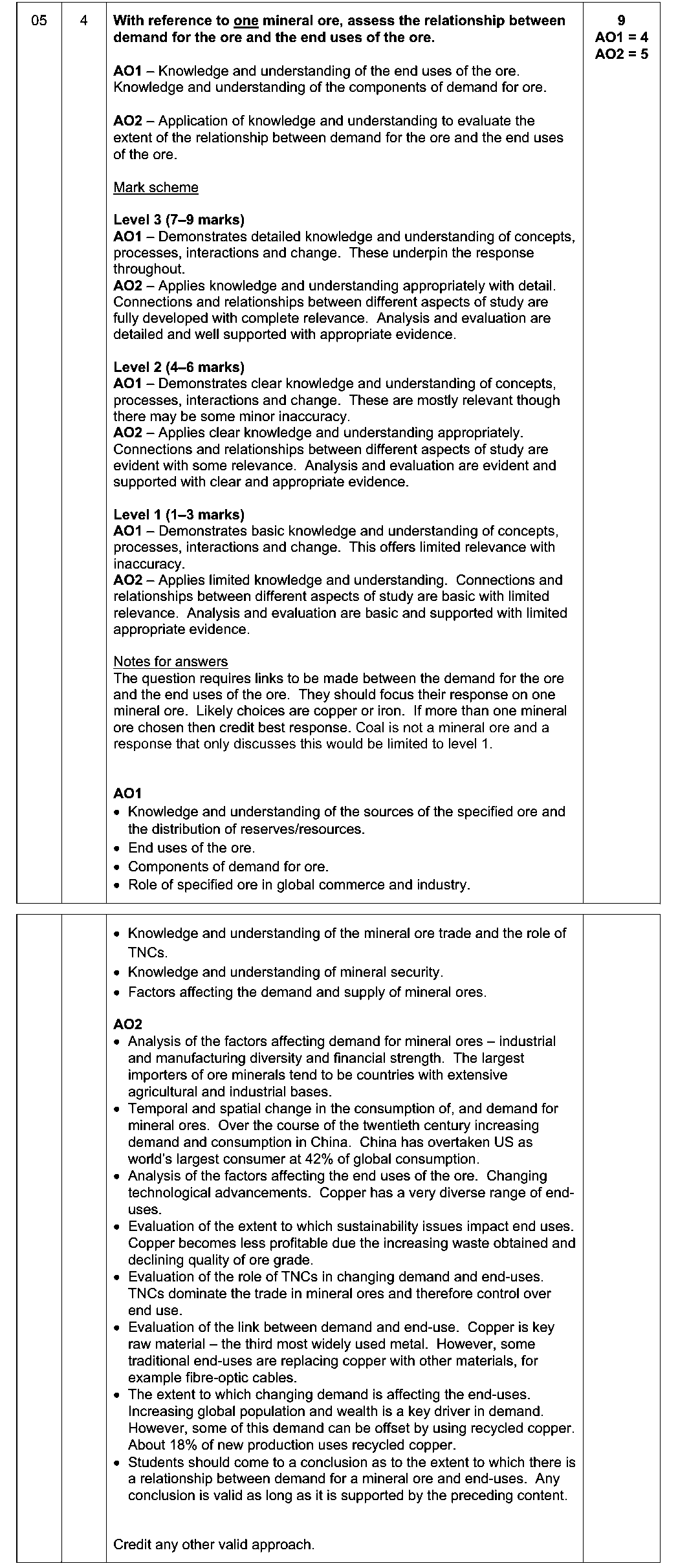
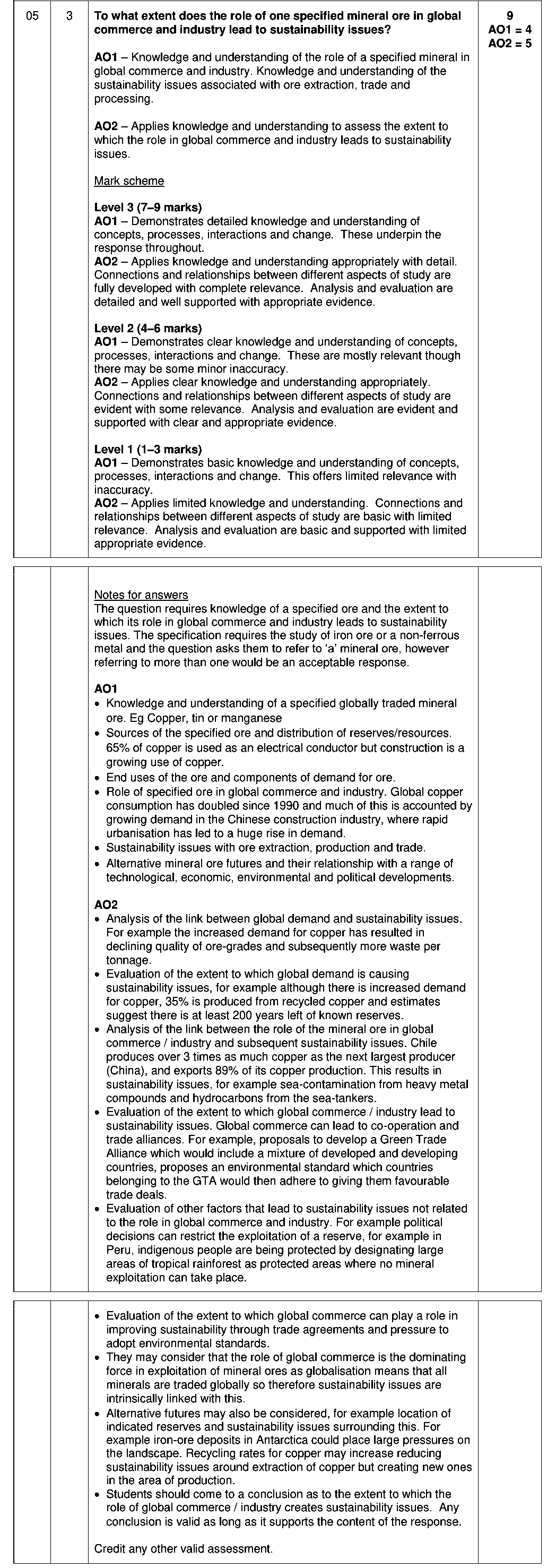
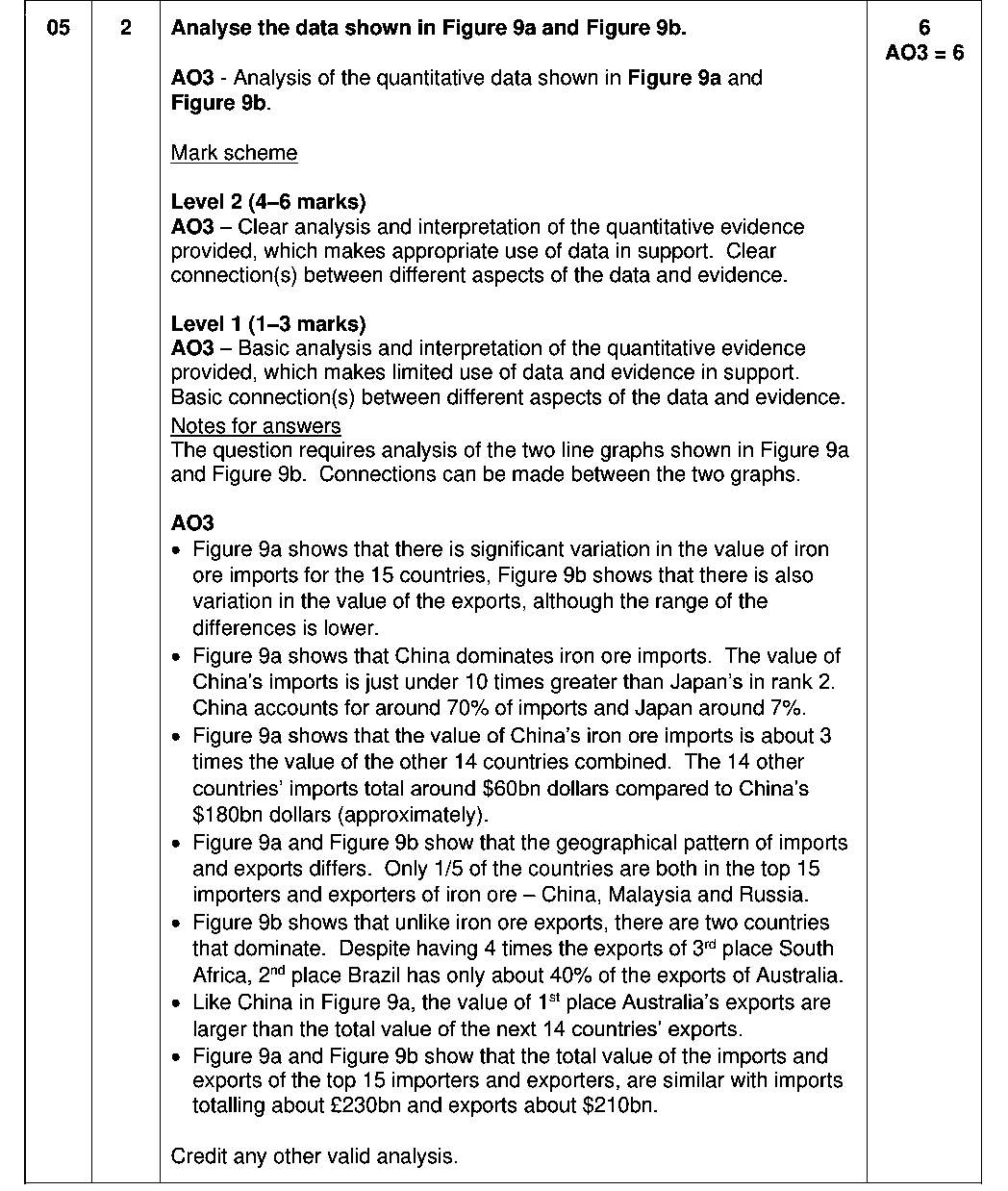
Mark scheme, including the levels and indicative content
Examiner's comment
AO3 questions provide students with the opportunity to apply geographical skills of analysis and interpretation to a variety of resources presenting geographical information. Many students accessed Level 2 by demonstrating analytical skills such as identifying overall patterns and trends, data manipulation, picking out anomalies, making connections between resources, and accurately interpreting scales and legends. In general, there were some errors made by students on the resources questions (AO3). The resources from the skills checklist used to present geographical information in this paper included bar graphs (simple, compound and comparative, using both linear and logarithmic scales), maps and comparative line graphs. To score well in the skills questions students should aim to apply relevant skills directly to the data provided. These skills may include identifying overall patterns (‘the big picture’), recognising trends within the data, accurately reading scales and interpreting values, exemplifying key points and reporting on anomalies and manipulating data further to add depth to their analysis. Less successful responses to these questions can have a somewhat disjointed feel to them, lacking a clear sense of the bigger picture. They may also contain errors due to reading the data incorrectly. In question 05.2, many students understood the logarithmic horizontal scale; however, some did not, and as a result, their analysis was incorrect and limited to Level 1.
Notes from the mark scheme and report
- AO3: China about 70% of imports, roughly three times the other 14 combined
- Australia and Brazil dominate exports
- only China, Malaysia and Russia in both lists
- misreading the log scale limited answers to Level 1