A-level Paper 1 Section A (compulsory); AS Paper 1 Section A (option)
Level
AS and A level
Specification
3.1.1.4, 3.1.1.5, 3.1.1.6, 5 content points
Since 2017
37 question parts, 24 of them essays
Specification
3.1.1.4-01 The key role of the carbon and water stores and cycles in supporting life on Earth with particular reference to climate. The relationship between the water cycle and carbon cycle in the atmosphere. The role of feedbacks within and between cycles and their link to climate change and implications for life on Earth.
3.1.1.4-02 Human interventions in the carbon cycle designed to influence carbon transfers and mitigate the impacts of climate change.
3.1.1.5-01 Students must engage with a range of quantitative and relevant qualitative skills, within the theme water and carbon cycles. Students must specifically understand simple mass balance, unit conversions and the analysis and presentation of field data.
3.1.1.6-01 Case study of a tropical rainforest setting to illustrate and analyse key themes in water and carbon cycles and their relationship to environmental change and human activity.
3.1.1.6-02 Case study of a river catchment(s) at a local scale to illustrate and analyse the key themes above, engage with field data and consider the impact of precipitation upon drainage basin stores and transfers and implications for sustainable water supply and/or flooding.
‘Climate change will significantly affect flooding and/or the potential for sustainable water supply.’ With reference to a local scale river catchment you have studied, how far do you agree with this statement?
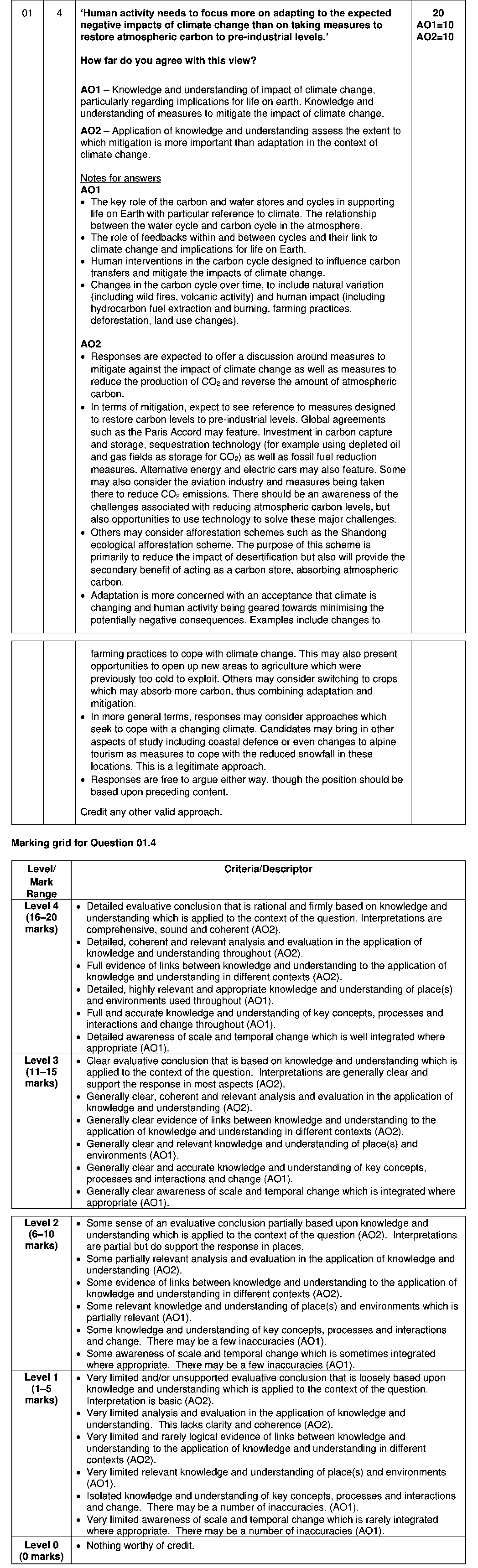
‘Human activity needs to focus more on adapting to the expected negative impacts of climate change than on taking measures to restore atmospheric carbon to pre-industrial levels.’ How far do you agree with this view?
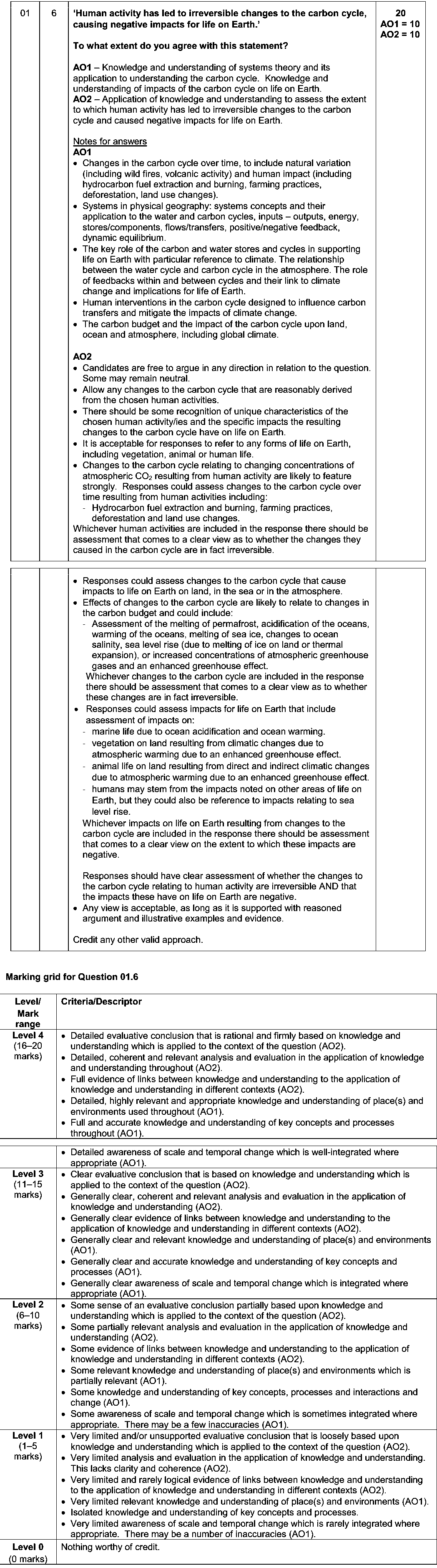
‘Human activity has led to irreversible changes to the carbon cycle, causing negative impacts for life on Earth.’ To what extent do you agree with this statement?
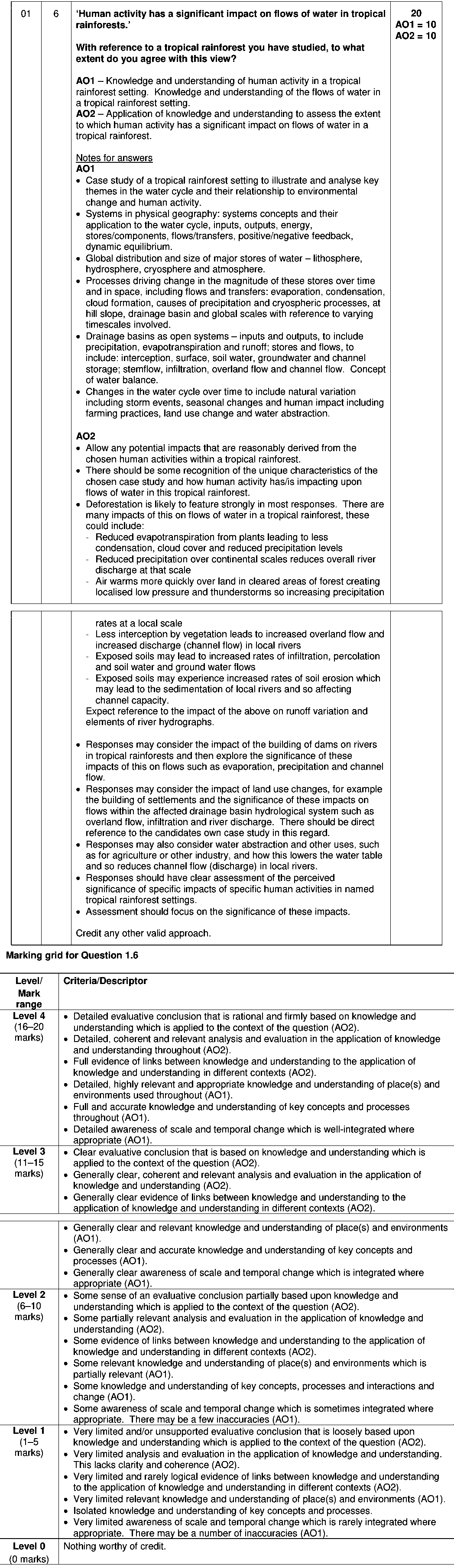
‘Human activity has a significant impact on flows of water in tropical rainforests.’ With reference to a tropical rainforest you have studied, to what extent do you agree with this view?
Assess the extent to which there are inter-relationships between processes in the water cycle and factors driving change in the carbon cycle. END OF SECTION A
Tap a question to zoom it. The figures open above it; the mark scheme (with its levels and indicative content) and the examiner's comment open underneath.
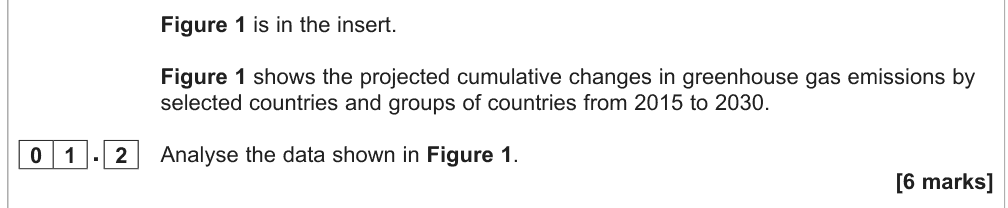
June 2025 · Paper 1 · Q1.26 marksmark schemeData analysis
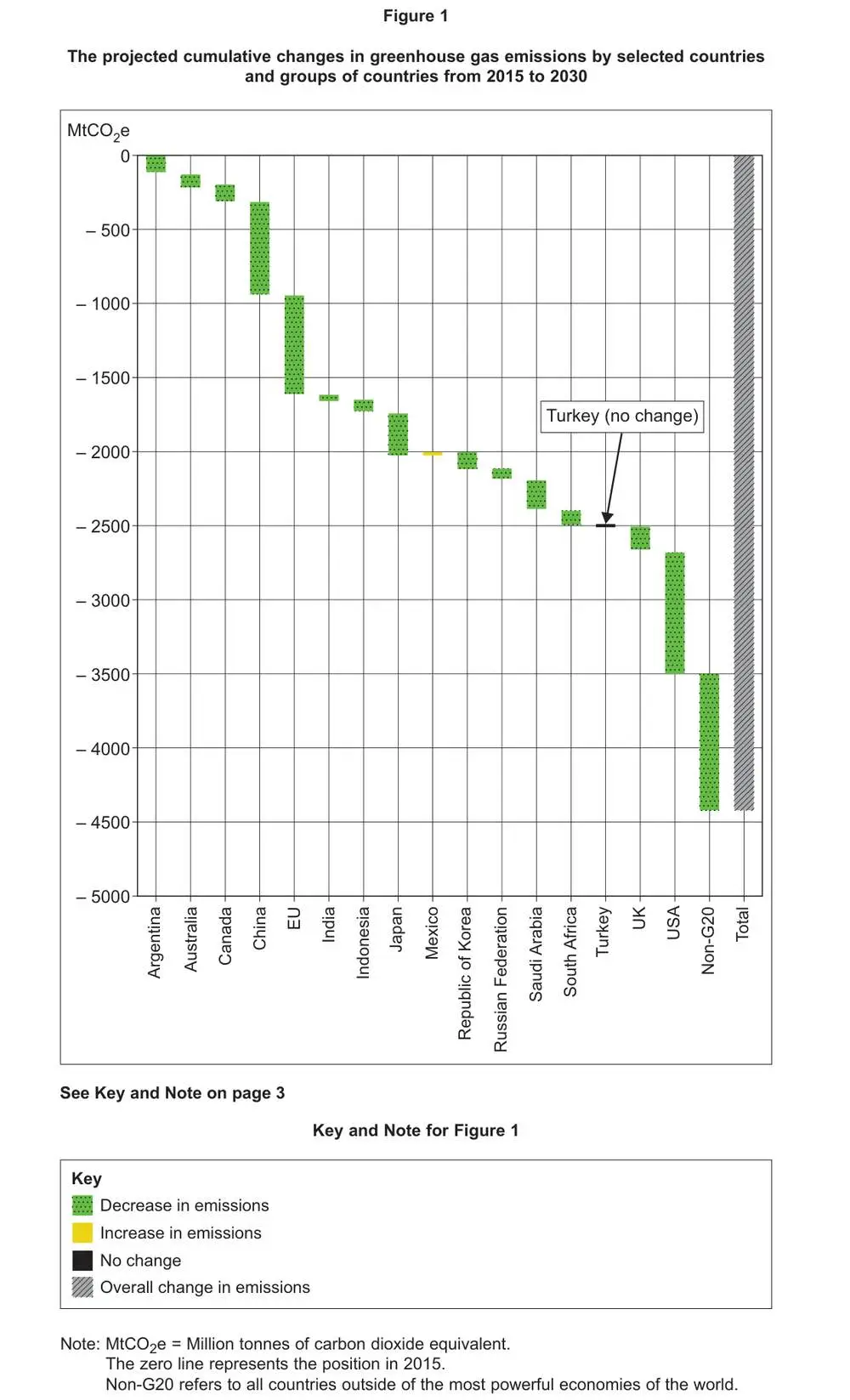
Figure 1
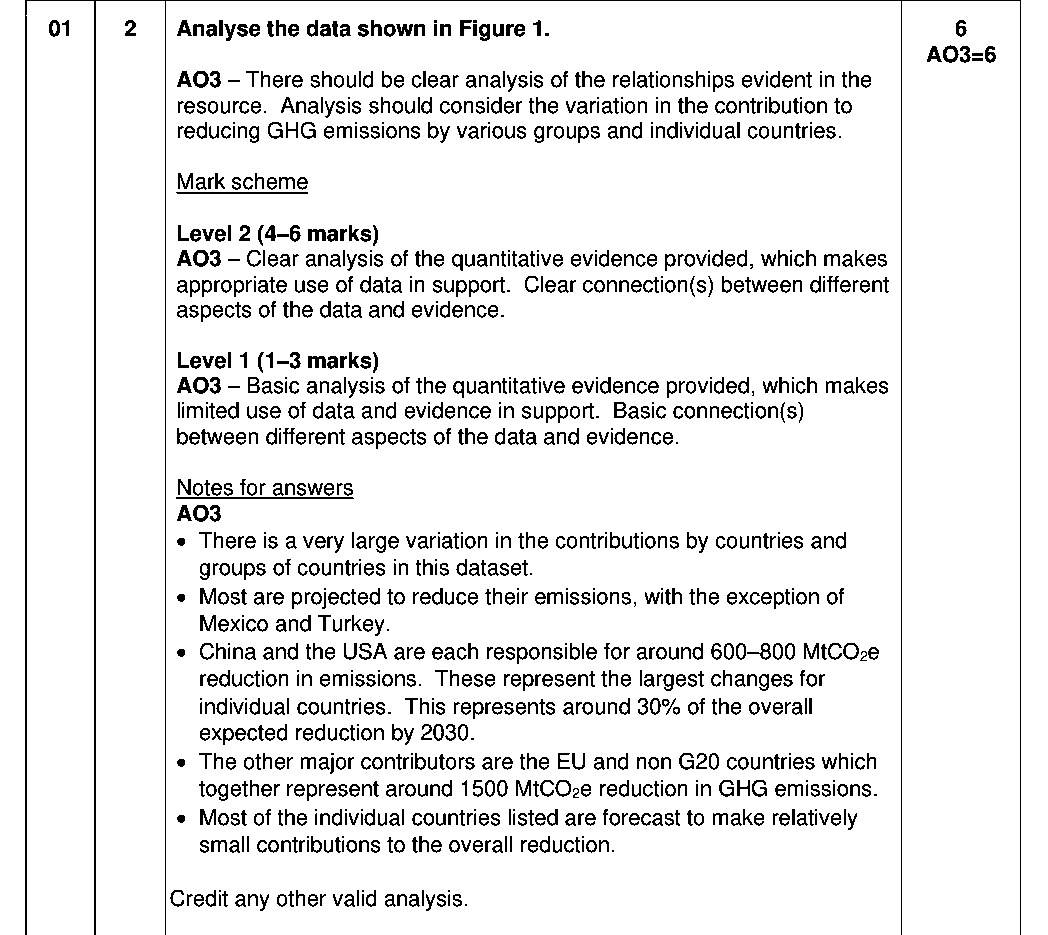
Mark scheme, including the levels and indicative content
Examiner's comment
These questions assess how students interpret, analyse and evaluate data, evidence and resources. In general, analysis and interpretation of map evidence requires further development. Question 01.2, 04.2 and 06.2 were very accessible. Students coped with these graphically based questions, identifying patterns, manipulating data and picking out anomalies in support. In Question 01.2 (AO3) (6 marks) it’s evident that students are now well used to working with data, interpreting map information and analysis using data to support. The key to success was in understanding that this was a compound, cumulative bar graph showing how global emissions are predicted to fall by 2030. There was plenty to analyse here including the identification of Turkey and Mexico as obvious anomalies. Whilst there is never any credit for applying knowledge, this question did allow students to note that generally richer more developing counties were forecast to make bigger contributions to the reduction in greenhouse gases. This was because such information was hinted at in the resources through reference to G20 and non-G20 countries. This response is brief, but purposeful, picking out lots of key information showing a solid understanding of what the resource showed. Level 2 (6 marks)
Notes from the mark scheme and report
AO3: cumulative (waterfall) bar chart of projected emission cuts to 2030
China, USA, EU and non-G20 make the largest reductions, Mexico and Turkey are the anomalies
no credit for applying knowledge
very accessible
June 2025 · Paper 1 · Q1.420 marksmark scheme20-mark essay
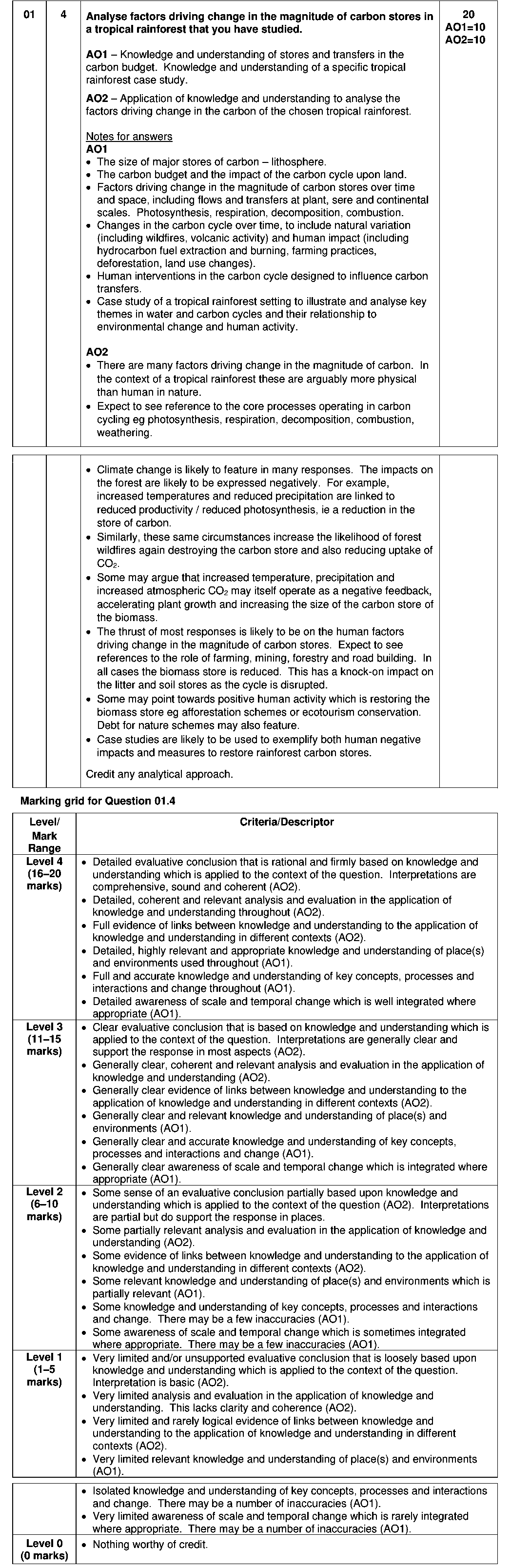
Mark scheme, including the levels and indicative content
Examiner's comment
These questions assess knowledge, understanding and application: constructing arguments and drawing conclusions. These questions are designed to allow students to demonstrate links within different areas of the specification unit. Examiners expect to see secure underpinning knowledge and understanding as well as depth of support including case study material as appropriate. This should then be used to craft a balanced argument with a sustained line of reasoning. Students often look at more than one side of an argument. This is to be encouraged, but examiners would really hope to see a sustained argument which considered these different viewpoints, i.e. that they hold their own, well supported position throughout. Question 01.4 performed better than expected this year. The vast majority of students understood that deforestation was a major factor driving change in the magnitude of carbon stores. With some development, this factor alone produced generally clear answers. On question 01.4, students did analyse a number of factors driving change in the magnitude of carbon stores. In question 01.4, this response, though a little narrow, did analyse a number of factors driving change in the magnitude of carbon stores. The case study was good and offered some useful contextual information from the outset. The response then considered cattle farming and mining as key factors driving change in the magnitude of the carbon stores. It also considered afforestation as a factor increasing the carbon store. However, there was limited consideration of natural factors, such as wildfire, drought or floods and the associated impacts on soil and biomass stores driving change. There was enough focus and detail for mid-Level 4. It would have also been improved with a little more detail on process. For example, how deforestation might have knock-on effects beyond the biomass and into the soil store of carbon. Level 4 (18 marks)
Notes from the mark scheme and report
factors changing carbon stores in a named rainforest: photosynthesis, respiration, decomposition, combustion, deforestation, farming, mining, wildfire, drought, climate change, afforestation
deforestation was the main route to credit
stronger answers also used natural factors and the soil store
June 2025 · AS Paper 1 · Q1.620 marksmark scheme20-mark essay
Mark scheme, including the levels and indicative content
Examiner's comment
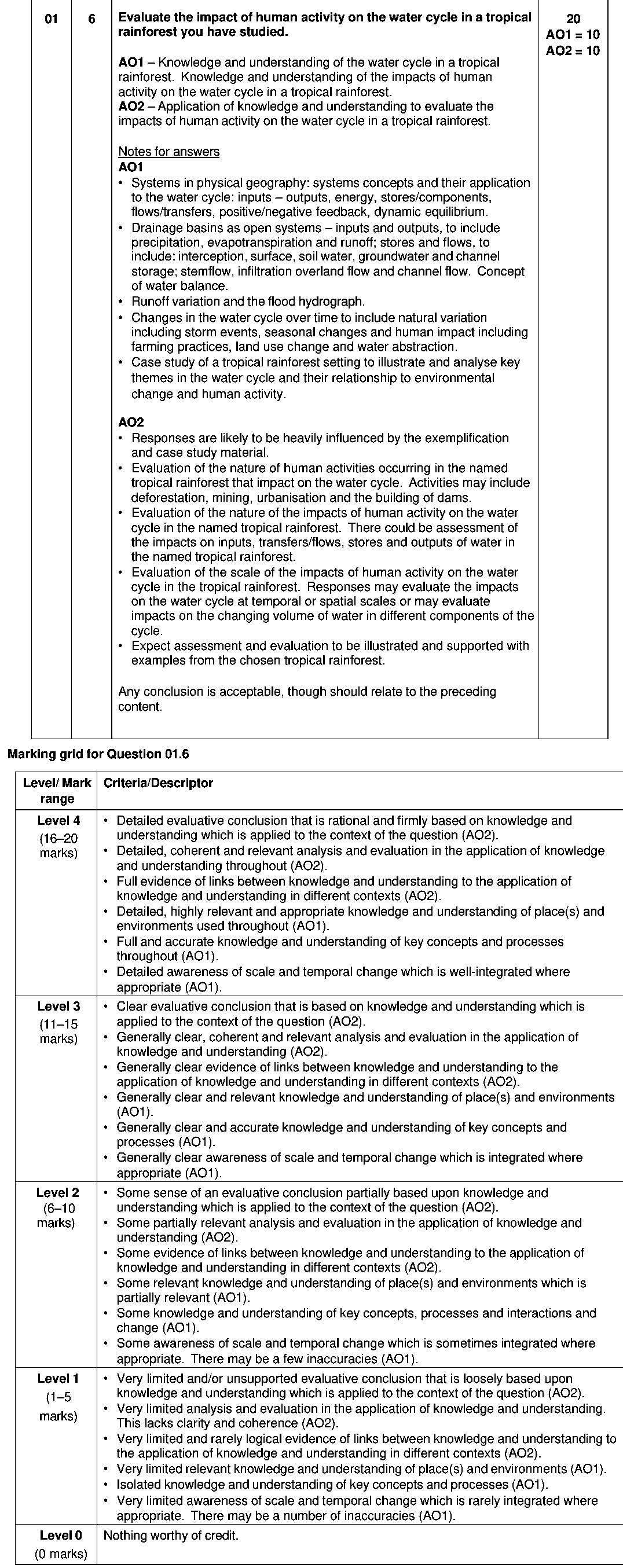
This question proved very accessible and around 75% of students provided clear and /or detailed responses achieving in Level 3 or higher. These generally scored well with respect to AO1, with clear and detailed knowledge of specific human activities happening in a specific named tropical rainforest. Clearly some responses failed to go beyond making sweeping statements about whole continental scale forests, for example “deforestation in the Amazon leads to increased runoff.” However, some gave very clear details about specific locations within a named rainforest and were able to quantify the impacts of the human activity, for example naming specific dams and the impact they had had on the discharge of a river, or changes in specific rates of evapotranspiration. There were many interesting case studies used to support answers and most did focus on the Amazon. Some students struggled as they had little focus on specific aspects of the water cycle, with limited knowledge and understanding shown of specific inputs, flows, stores, and outputs.
Notes from the mark scheme and report
named rainforest case study
specific activities (deforestation, dams, mining) and quantified impacts on inputs, flows, stores and outputs
continental-scale generalisations limited marks
~75% reached Level 3+
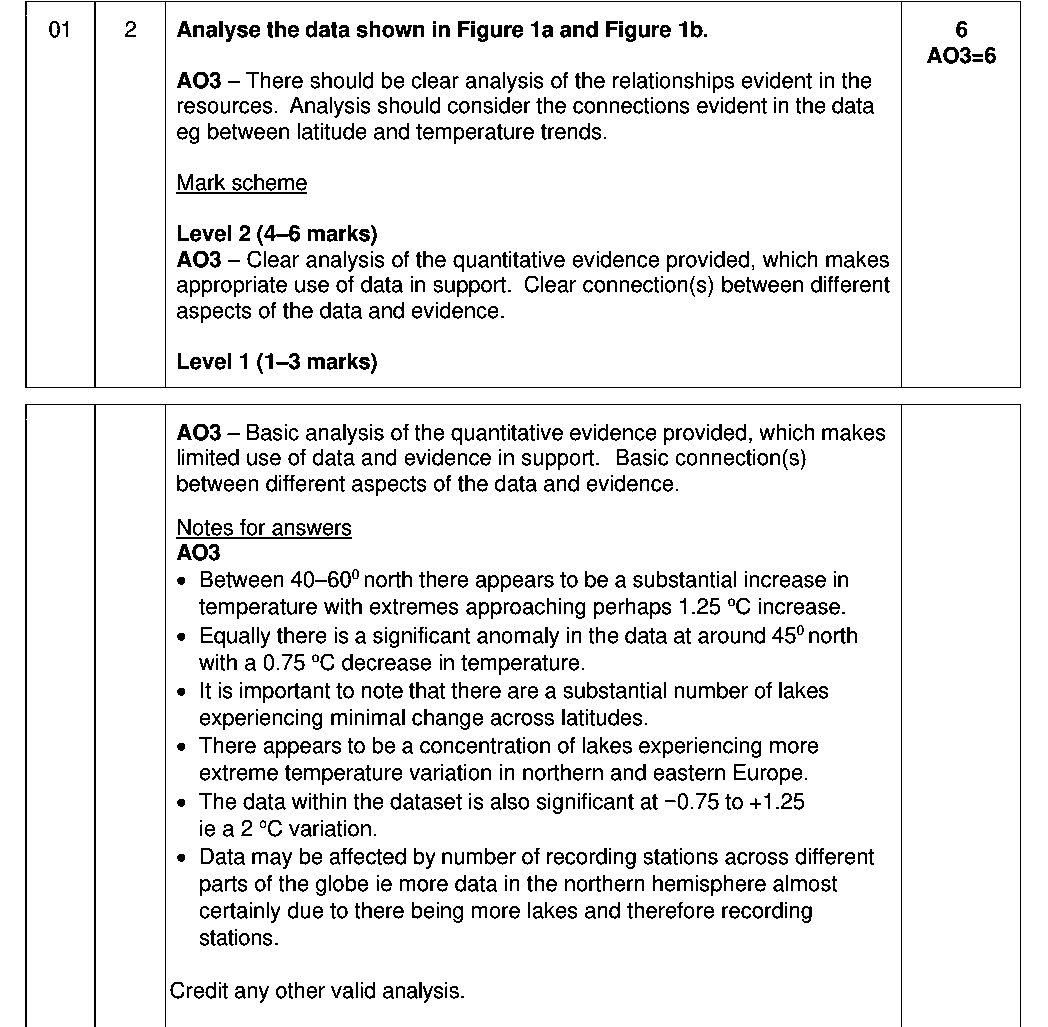
June 2024 · Paper 1 · Q1.26 marksmark schemeData analysis
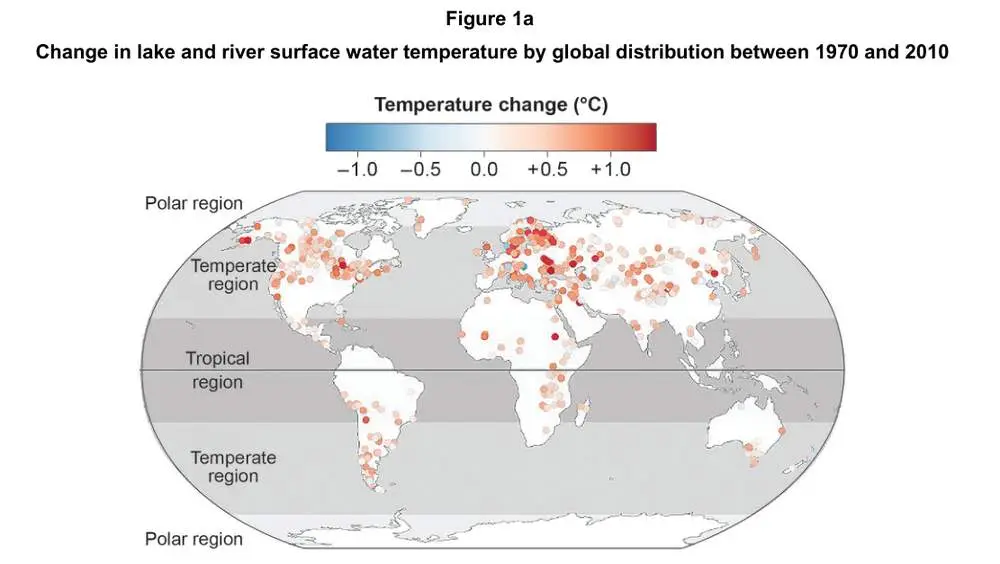
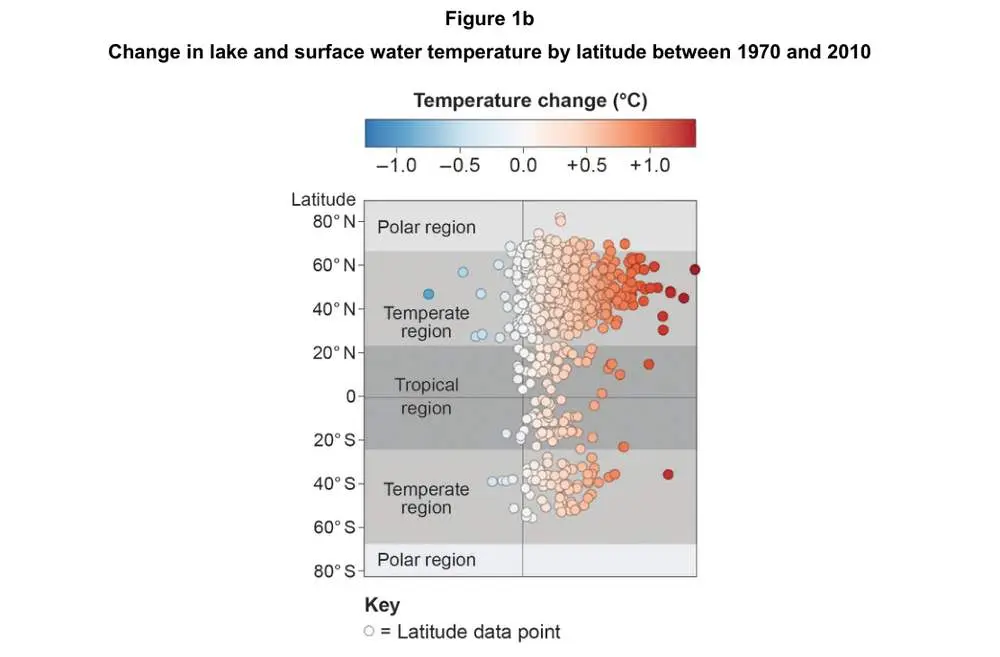
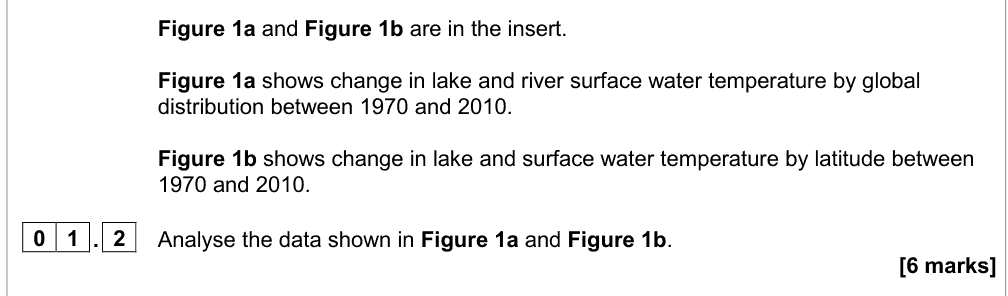
Figures 1a, 1b
Mark scheme, including the levels and indicative content
Examiner's comment
In terms of the skills questions, many required a degree of map interpretation. Where students were able to identify broad patterns as well as anomalies, Level 2 was readily accessed. There was also some opportunity to work with the data provided which many did successfully. For the skills questions (the .2 questions on each unit) we still had some who sought to explain patterns. This constituted AO2 and not AO3. There are still too many making this fundamental error. The best responses work the data and evidence in a concise fashion drawing out patterns in the data at the headline level i.e. the big picture. They are less focused on the minutiae of the data, except to exemplify the big picture. They often look for anomalies and try to exemplify them, explaining why they do not fit with the main trend. They do not attempt to explain them as this is not relevant to the Assessment Objective (AO3) being examined. Where possible data is used in support, even better where it is manipulated. Least successful responses fail to identify the major patterns, anomalies and often drift into explanations for the pattern, which is clearly AO2. Where there were opportunities to manipulate data, these were rarely taken or at best are only dealt with in a simplistic fashion.
Notes from the mark scheme and report
AO3 only: analyse patterns, connections and anomalies in the data, using figures in support
explaining the patterns is AO2 and gains no credit
manipulate data where possible
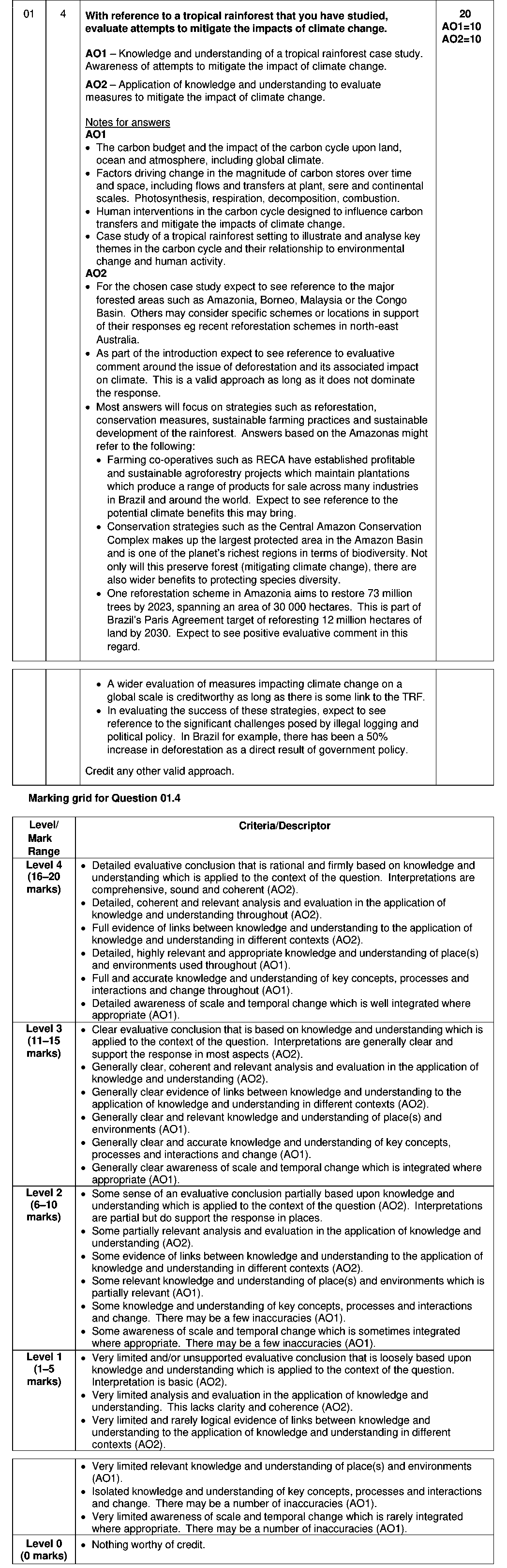
June 2024 · Paper 1 · Q1.420 marksmark scheme20-mark essay
Mark scheme, including the levels and indicative content
Examiner's comment
The 20-mark questions are a major differentiator on this paper. In this series, it was also very evident that those who prepared well gained access to the full range of marks. The best responses evidence a deep and secure knowledge and understanding of the specification area/s being tested. Attention to detail is always strong and case study support is almost always very accurate. Less successful responses tend to fall down for a number of reasons. Students sometimes misread the question or, in the heat of examination, may not fully grasp what is required. In such circumstances they may tend towards knowledge recital and only touch on what is required to actually answer the question. Similarly, on Q1.4, we were looking for measures in the forest which could help reduce / reverse the impact of climate change. This required students to consider measures such as conservation, diversified farming practice and reforestation. Wider consideration of global action such a Paris 2015 was fine as long as it linked back to the rainforest in some way. Evaluation could link to the challenges facing the rainforests, as long as there was some evidence of attempts to improve the situation. Too many focused only on the challenges associated with climate change and its impact in the forest without considering measures to improve things. For these responses, Level 2 was typically awarded as the question was not really answered despite some useful case study support and knowledge of issues. This response has not engaged with the actual question, though has shown some understanding of the context (tropical rainforest) with an awareness of mitigation strategies. Level 2 – 7 marks.
Notes from the mark scheme and report
needs measures in the forest that reduce or reverse climate change (conservation, reforestation, diversified farming)
global action such as Paris 2015 credited only if linked back to the rainforest
answers that only described deforestation and climate-change impacts were capped around Level 2
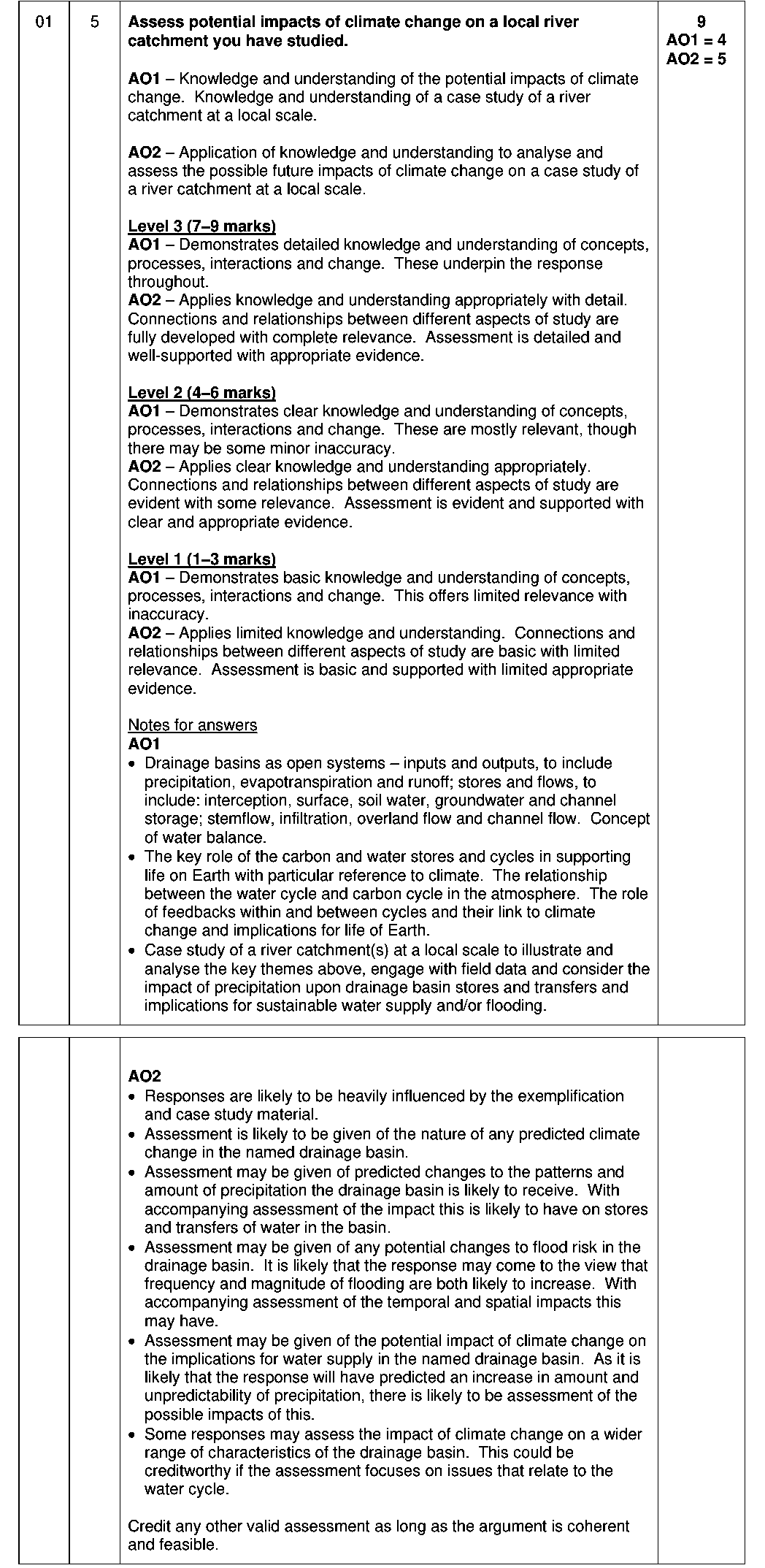
June 2024 · AS Paper 1 · Q1.59 marksmark scheme9-mark essay
Mark scheme, including the levels and indicative content
Examiner's comment
This question combined both AO1 and AO2 elements. This required students to make links within the Water and Carbon Cycles specification, with specific reference to the local river catchment they had studied. The majority of students were able to identify an appropriate scale example. The wording of the specification does indicate that students should be able to address the catchment as a whole, so a smaller, “local” scale, example was more appropriate. Initial sampling of scripts prior to the main marking period indicated that very few students understood “potential” as relating to the future, to things that could or will happen. Many responses were therefore limited due to poor quality of written communication in terms of accurate reference to the past, present, or future tense. Whilst the highest level of the mark scheme was reserved for answers that explicitly referenced possible future impacts, credit was awarded for evaluation of accurate and specific impacts that may have recently happened, or be happening in the present, with the implication that they will continue to have an impact in the immediate future. Following the approach to marking outlined above, the average mark of 5.2 showed that most students did have some good knowledge and understanding of a range of impacts of climate change on the named catchment. With less than 1/4 of responses reaching Level 3, most students struggled to give specific detail of predicted climate change, for example reference to possible 1-3 oC of warming and details of possible specific changes to weather or human use of the catchment that would result from this, with some detailed support. As has been the case in previous series some weaker students do not score well as they have clearly studied case studies which are completely unfamiliar to them. This led to many unconvincing responses where geographical and place detail did not “ring true.” For example many responses referring to the River Eden flowing through the Lake District fall into this camp. The wording of the specification suggests students study a catchment local to them and gain some familiarity with it.
unfamiliar or too-large case studies did not ring true
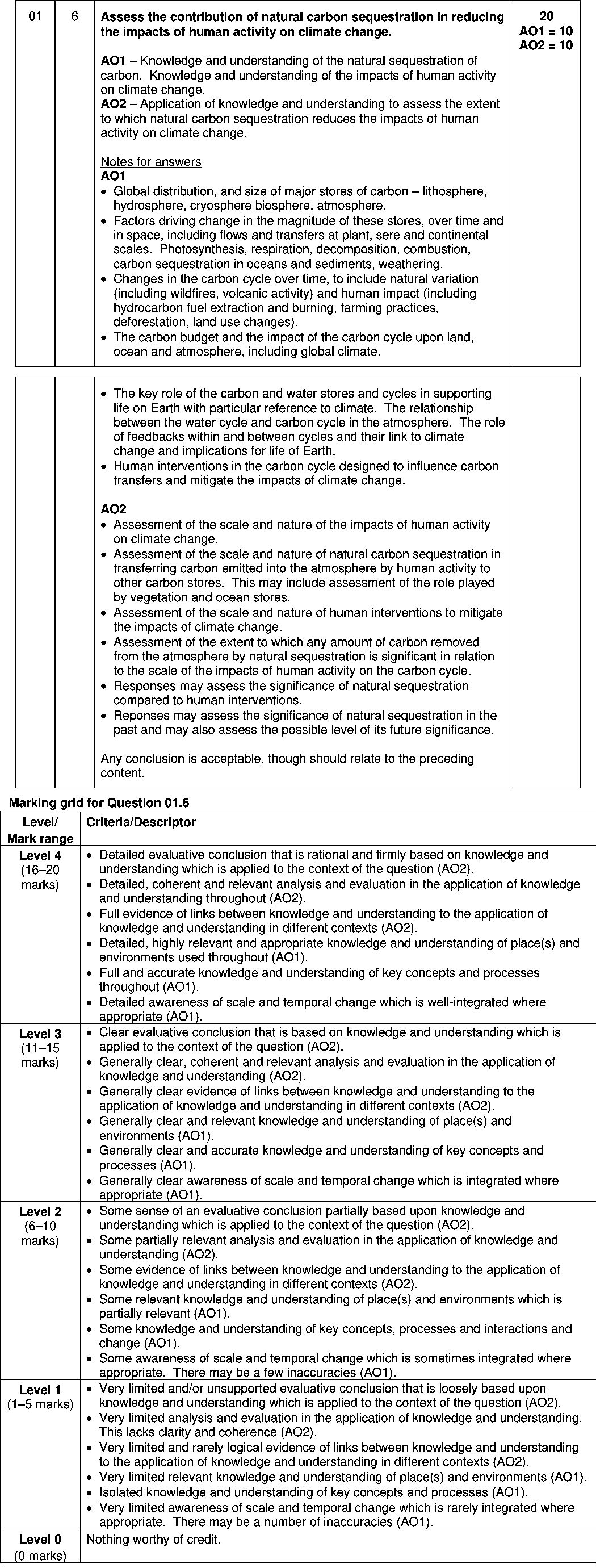
June 2024 · AS Paper 1 · Q1.620 marksmark scheme20-mark essay
Mark scheme, including the levels and indicative content
Examiner's comment
Over 2/3 of students engaged well with this question, providing clear responses achieving marks in Level 3 or higher. These students generally scored well with respect to AO1, with clear and detailed knowledge of carbon sequestration and human activity that has, and does, contribute to climate change. The key to scoring well with respect to AO2 was the quality and clarity of the judgements made about the extent to which natural carbon sequestration has, can and will reduce the impacts of human activity on climate change. Some of the best responses supported points with details about natural sequestration that occurs at different spatial and temporal scales. Some students struggled as they had very limited understanding of what carbon sequestration was. However, where appropriate, credit was given for accurate knowledge and understanding of human activities that impact climate change.
Notes from the mark scheme and report
weigh natural sequestration (oceans, vegetation, soils, sediments) against the scale of human emissions and human interventions, past and future
best answers used different spatial and temporal scales
some did not know what sequestration was
June 2024 · Paper 1 · Q5.49 marksmark schemeSynoptic
Mark scheme, including the levels and indicative content
Examiner's comment
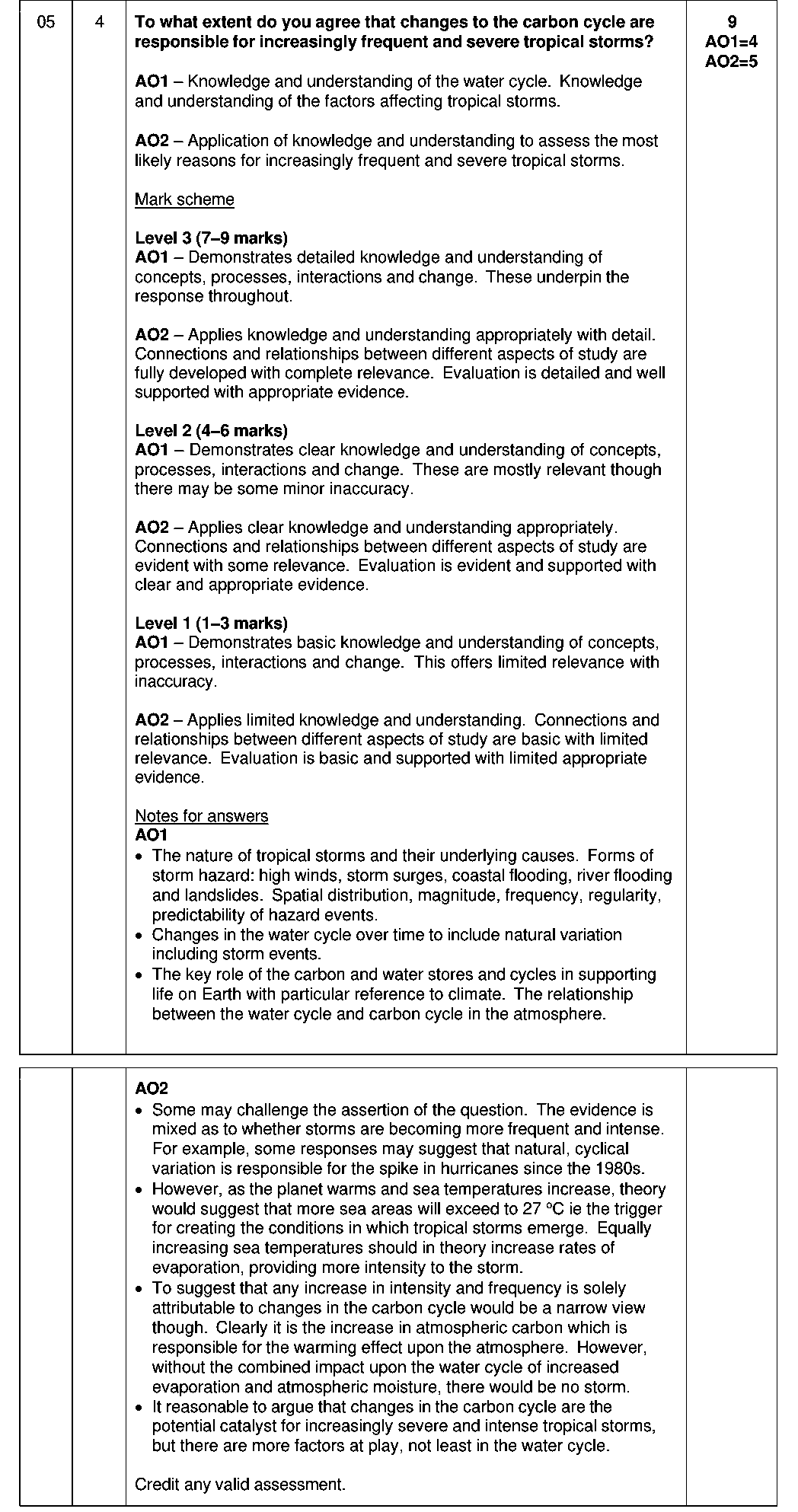
For the 9-mark cross-specification questions this series (Q5.4 and Q6.4), it was really pleasing to see how many students readily attacked the questions with confidence and secure knowledge. Whilst the specification ‘fit’ was quite a natural one in both cases (links to the carbon cycle), it was really impressive to see so many students produce really strong responses with good underpinning knowledge. This series the cross-spec question was a very natural link between tropical storms and changes in the carbon cycle (Q5.4) or coral vulnerability and changes in the carbon cycle (Q6.4). We saw plenty of strong responses which clearly argued well with good support and a sustained line of reasoning. Weaker responses tend to rely too heavily on AO1 knowledge of content, concepts and processes. They are usually not well focused on the question and may fail to offer any assessment or evaluation where it is invariably required. The response below focused more upon contrasting two storm events having clearly put in a lot of time and effort into revising this material. Whilst it was valid to do this, it needed to be much more focused on the carbon cycle element of the question knowledge recital. However, it did gain L2 - 4 marks (just).
Notes from the mark scheme and report
synoptic question (links Hazards with water and carbon cycles)
may challenge the premise — evidence on storm frequency is mixed
warmer seas above 27 °C
weaker answers compared two storms without focusing on the carbon cycle
June 2024 · Paper 1 · Q6.49 marksmark schemeSynoptic
Mark scheme, including the levels and indicative content
Examiner's comment
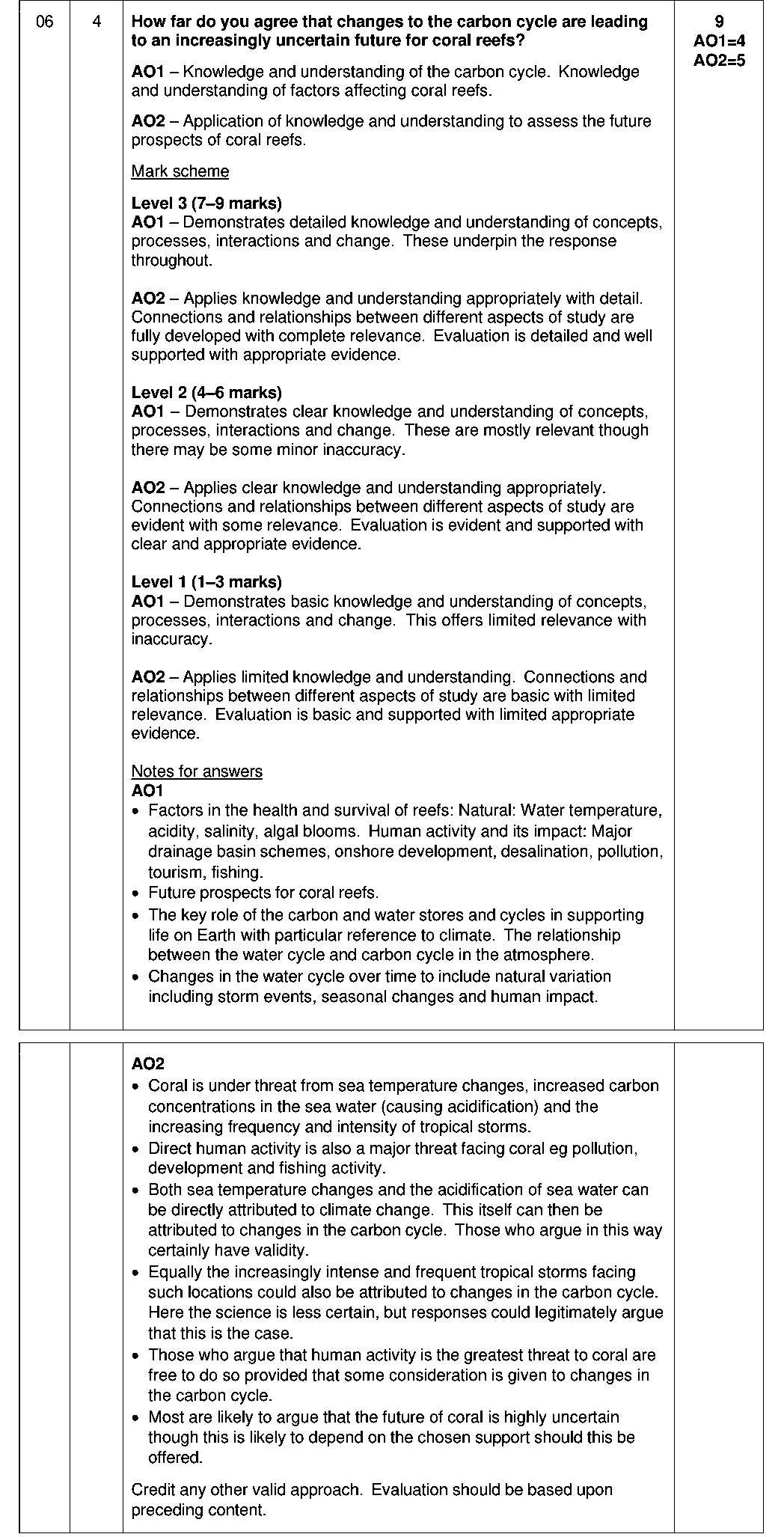
For the 9-mark cross-specification questions this series (Q5.4 and Q6.4), it was really pleasing to see how many students readily attacked the questions with confidence and secure knowledge. Whilst the specification ‘fit’ was quite a natural one in both cases (links to the carbon cycle), it was really impressive to see so many students produce really strong responses with good underpinning knowledge. This series the cross-spec question was a very natural link between tropical storms and changes in the carbon cycle (Q5.4) or coral vulnerability and changes in the carbon cycle (Q6.4). We saw plenty of strong responses which clearly argued well with good support and a sustained line of reasoning. Weaker responses tend to rely too heavily on AO1 knowledge of content, concepts and processes. They are usually not well focused on the question and may fail to offer any assessment or evaluation where it is invariably required. The response below considers the impact of climate change on the Great Barrier Reef. Support is strong and other factors are also considered in a well-balanced response. Overall this scored Level 3 and 7 marks.
Notes from the mark scheme and report
synoptic question (links Ecosystems with water and carbon cycles): warming seas, acidification, storm damage plus direct human threats
balanced answers considering other factors scored well (Level 3, 7 marks example)
June 2023 · Paper 1 · Q1.36 marksmark schemeStimulus
Figure 2
Mark scheme, including the levels and indicative content
Examiner's comment
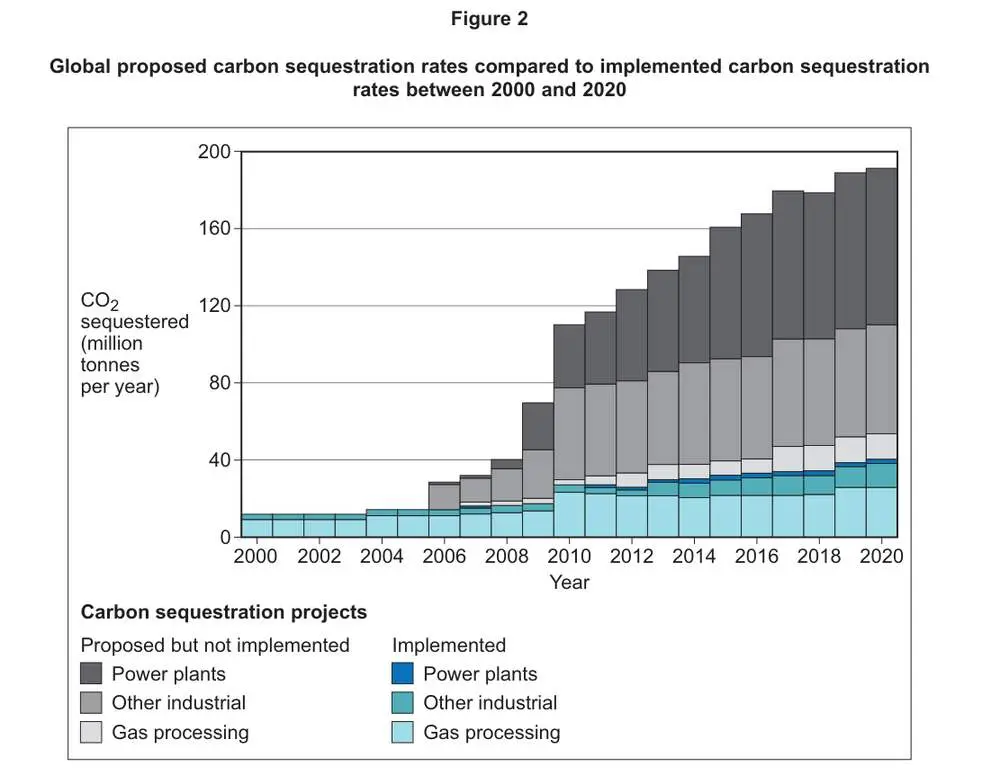
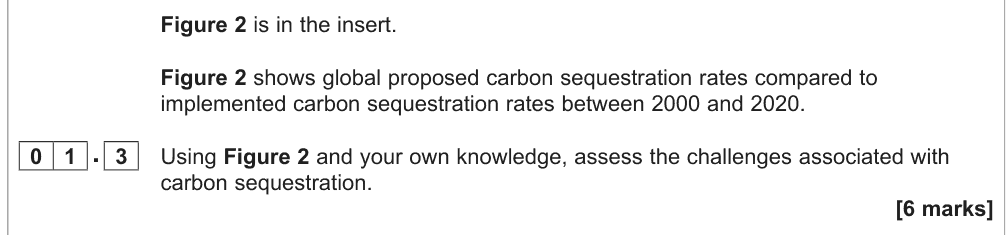
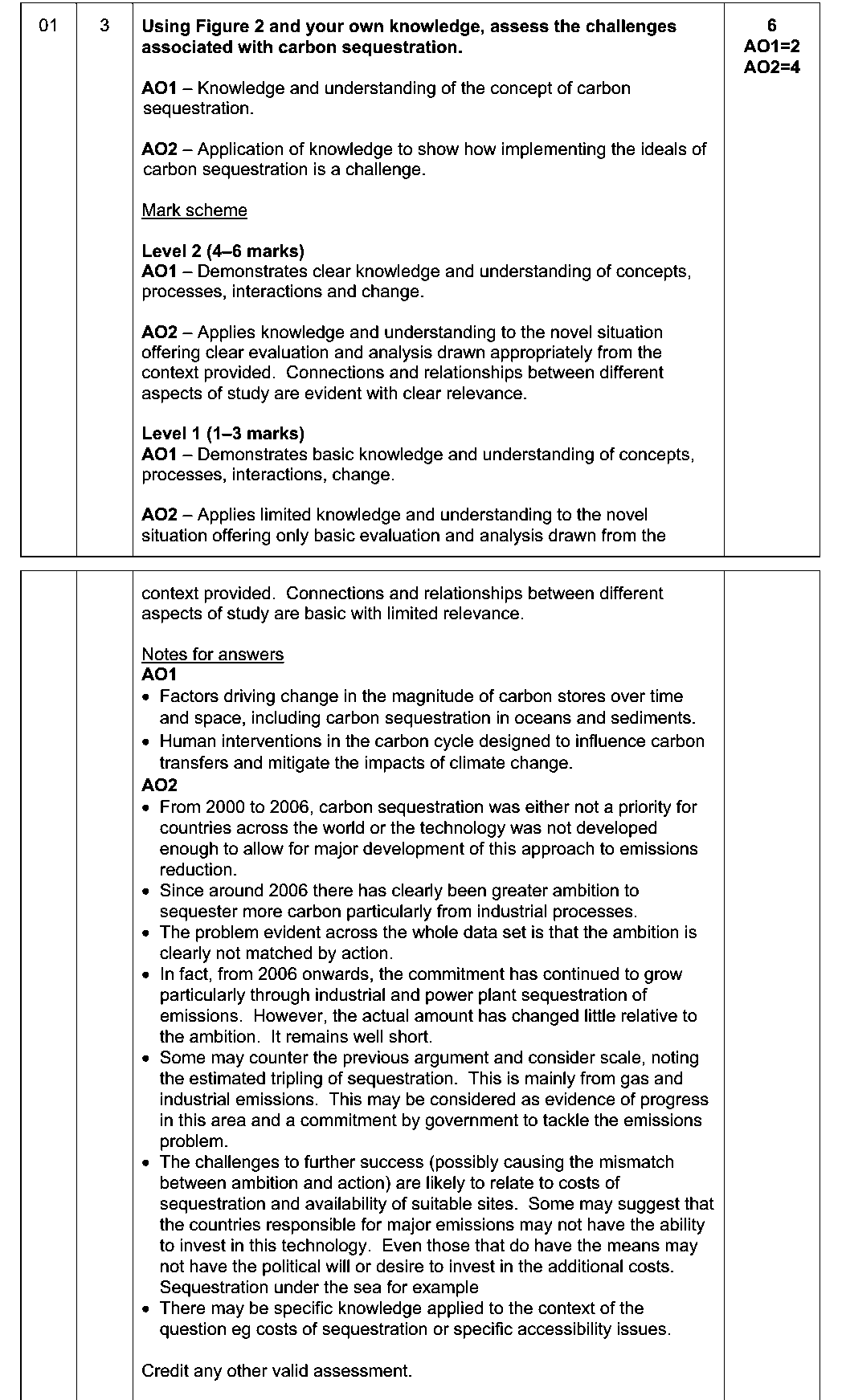
Understanding the focus of the novel situations questions and how the assessment objectives AO1 and AO2 are applied, still remains an issue for some students. This was specifically the case with the ‘x.3’ questions on all core and optional units. Many are still analysing data rather than applying knowledge to the resource provided. These questions require students to think on their feet. Students cannot simply interface with data in the resource, nor can they simply recite learned content. Instead they have to apply their learned knowledge and understanding to the novel situation. Less successful responses were those who simply regurgitated the data / information presented without drawing on their specification content. Similarly, there were some who recited knowledge without applying this to the context of the resource. For example, in response to Q1.3 many failed to consider the challenges around carbon sequestration and instead simply analysed the compound bar graph. For Q.1.3 many struggled to with the concept of carbon sequestration and instead simply analysed the data. For instance, on Q.1.3 many failed to show understanding of the concept of carbon sequestration. In the response below the student did not seem to understand what carbon sequestration is, scoring L1 – 2 marks.
Notes from the mark scheme and report
proposed sequestration far exceeds implemented
challenges of cost, suitable storage sites and political will
many did not understand carbon sequestration and just analysed the compound bar graph (L1 2-mark example)
June 2023 · Paper 1 · Q1.420 marksmark scheme20-mark essay
Mark scheme, including the levels and indicative content
Examiner's comment
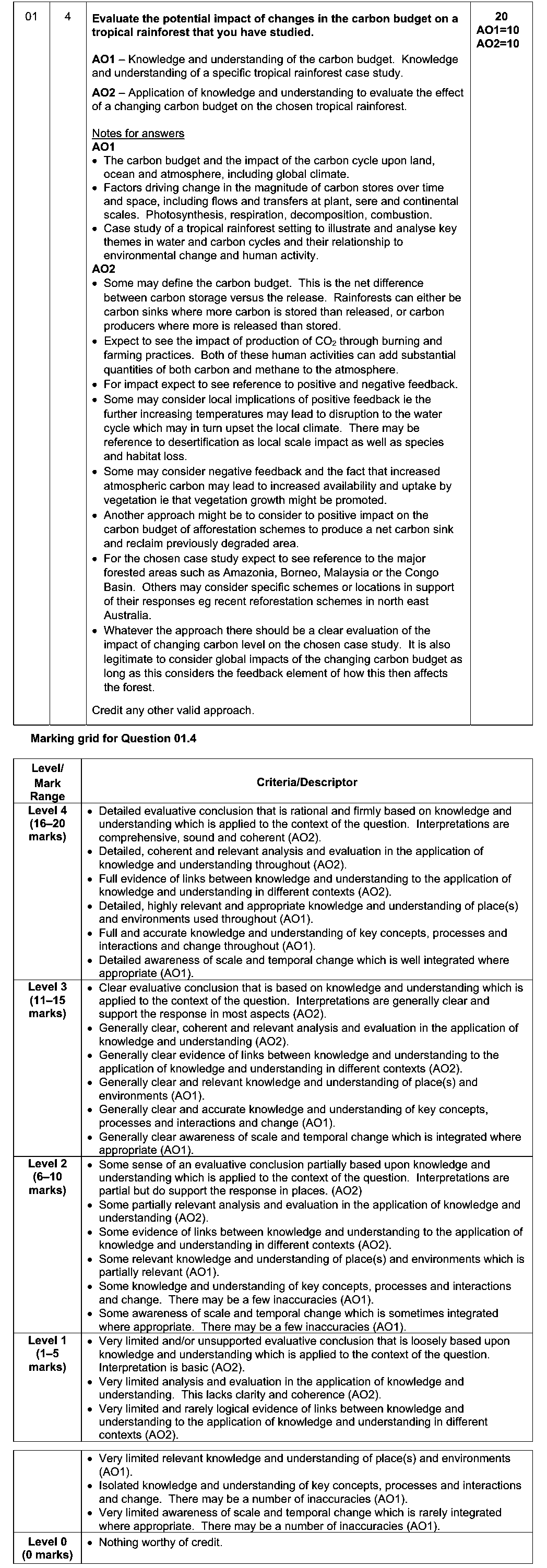
For the 20-mark questions there was a more physical focus to most of the questions in this series. Those that prepared well (and, crucially, those that read the questions carefully), comfortably scored Level 3/4. It was pleasing to see so many well-constructed essays. Typically many students asserted their own position in relation to the question at the outset (AO2 – argument) before proceeding to argue their points (AO2) and back this up with solid subject knowledge (AO1). Their conclusions then often returned to the theme of the question and pulled together the previously argued points into one closing paragraph. Generally, new content should not be introduced into the conclusion. Also supporting knowledge and understanding should be relevant and be used to help articulate the position in relation to the question. Those who read the questions carefully, answered the question in a clear structure and supported this with detailed knowledge easily accessed Level 3/4. Students who read the essay question (Q.1.4) carefully, generally accessed Level 3/4 comfortably. They were required to consider how changes to the carbon budget affected a named tropical rainforest. Some misread the Q and considered how changes in the forest affected the carbon budget. As the question was effectively about positive and negative feedback, it was still possible to find credit with this approach. The answer below (Q.1.4) shows a strong response. This response achieved full marks as it was wholly focused on the impacts in the forest of changes to the carbon cycle i.e. it was strong on both elements. On Q.1.4 some students read the question the wrong way around and wrote about the impact of changes in the rainforest on the carbon cycle. This was still potentially creditworthy but needed to then complete the feedback loop(s) and consider how these then affected the forest. Those responses which did not complete the loop(s) were held to L2, partial answer.
Notes from the mark scheme and report
impact of a changing carbon budget ON a named rainforest via positive/negative feedback (drying, fire, species loss, CO2 fertilisation, reforestation)
reading it the other way round held to L2 unless the feedback loop back to the forest was completed
June 2023 · AS Paper 1 · Q1.59 marksmark scheme9-mark essay
Mark scheme, including the levels and indicative content
Examiner's comment
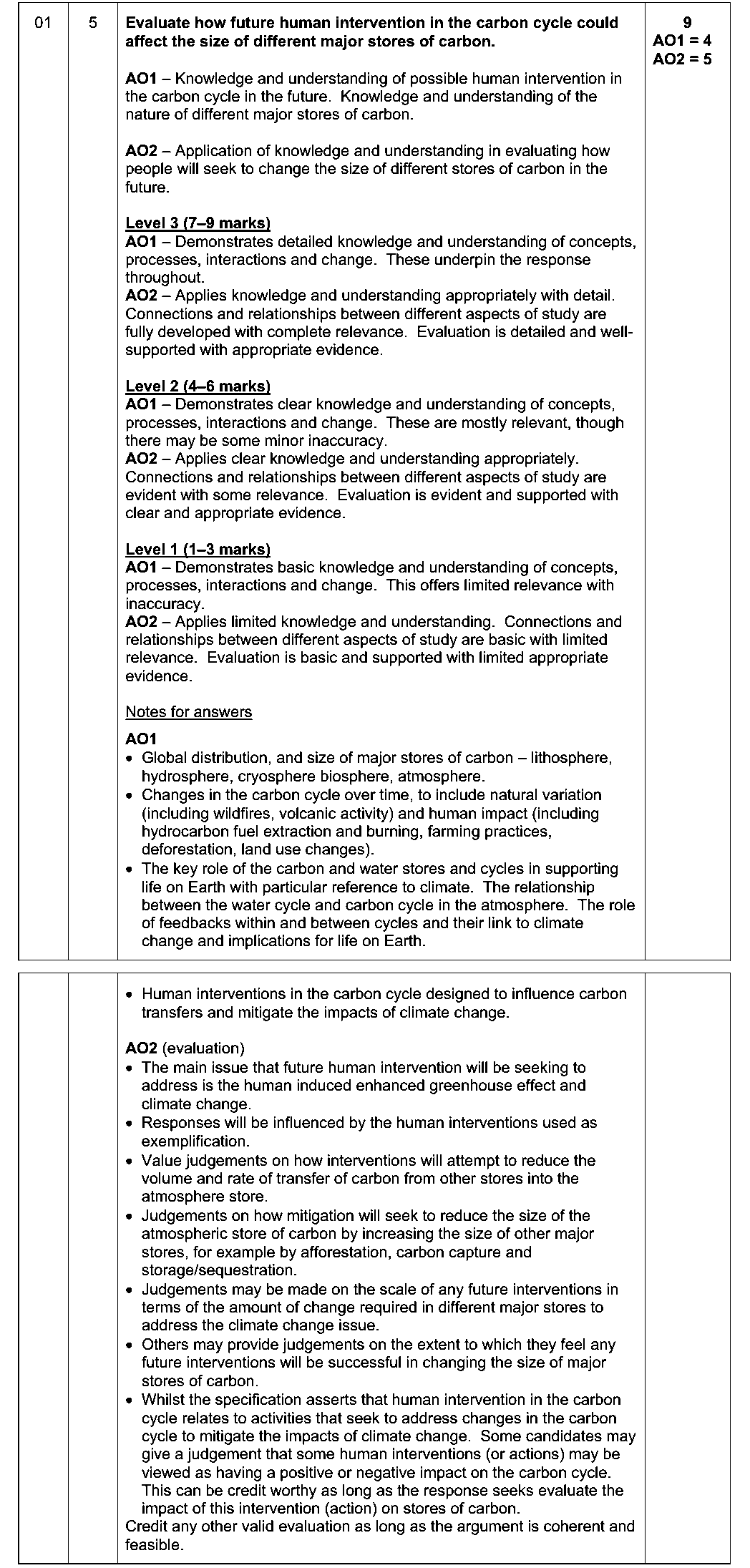
This question combined both AO1 and AO2 elements. This required students to make links within the Water and Carbon Cycles specification. Students had to make an evidence base assessment of the potential scale of the impact of future human intervention in the carbon cycle on major stores of carbon. Scrutiny of a sample of scripts prior to the main marking period indicated that very few students had interpreted “human intervention in the carbon cycle” as it is framed in the specification. The expectation was that students would evaluate positive actions by people to mitigate carbon transfers in order to mitigate the impacts of climate change. Whilst the highest level of the mark scheme was reserved for such answers, credit was awarded for evaluation of accurate and specific human activities having an effect on major stores of carbon. Following the approach to marking outlined above, meant most students were rewarded for demonstrating good knowledge and understanding of a range of human activities that affect the carbon cycle and impact on the major stores. With around 2/3 of responses reaching Level 3 many students were able to give clear evaluation with some detailed support. As has been the case in previous series on questions on the carbon cycle, some weaker responses were limited by a lack of differentiation between the different states of carbon in different stores, and often simply referred to “CO2”, when it would have been more accurate to simply refer to carbon.
Notes from the mark scheme and report
top level reserved for deliberate interventions to mitigate climate change (afforestation, carbon capture and storage, protecting peat and soils) and their effect on named stores
general human activities affecting stores still credited lower
weaker answers wrote 'CO2' rather than carbon in different states/stores
June 2023 · AS Paper 1 · Q1.620 marksmark scheme20-mark essay
Mark scheme, including the levels and indicative content
Examiner's comment
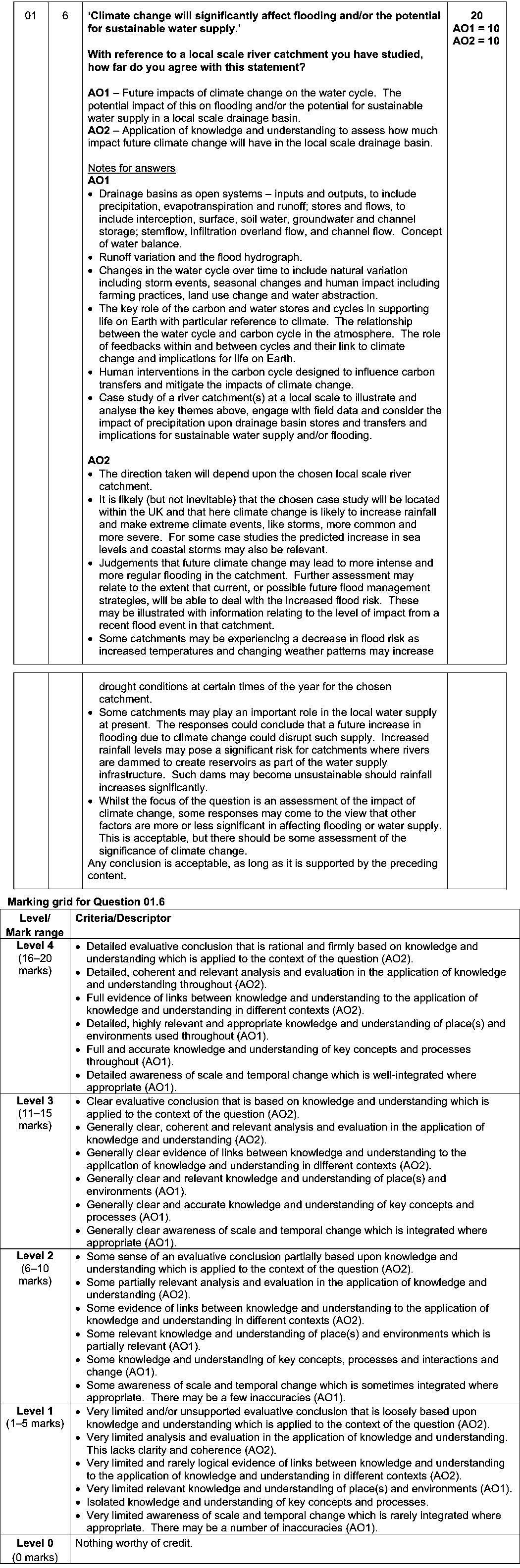
Over 2/3 of students engaged well with this question, providing clear responses achieving marks in Level 3 or higher. These students generally scored well with respect to AO1, with clear and detailed knowledge of possible future climate change and specific detail from their local scale river catchment. The key to scoring well with respect to AO2 was the quality and clarity of the judgements made about the extent to which possible future climate change will have specific impacts on the named catchment. Some of the best responses supported their points with details about possible climate change predictions for the area of their named river catchment, and showed accurate knowledge and understanding of how this might affect the specific flood risk or future water supply there. Some assessed the extent to which other factors are significant in the flood risk or water supply in the catchment. This was valid, as long as these were assessed relative to the possible impact of climate change. Unlike in some previous series the majority of students did use an appropriate “local” scale example, which helped students achieve well.
Notes from the mark scheme and report
must use a local-scale river catchment
judge how far predicted climate change (wetter winters, more intense storms, drier summers) will affect flood risk and/or sustainable water supply there, weighed against other factors such as land use
best answers used local climate projections
June 2023 · Paper 2 · Q1.420 marksmark schemeSynoptic
Mark scheme, including the levels and indicative content
Examiner's comment
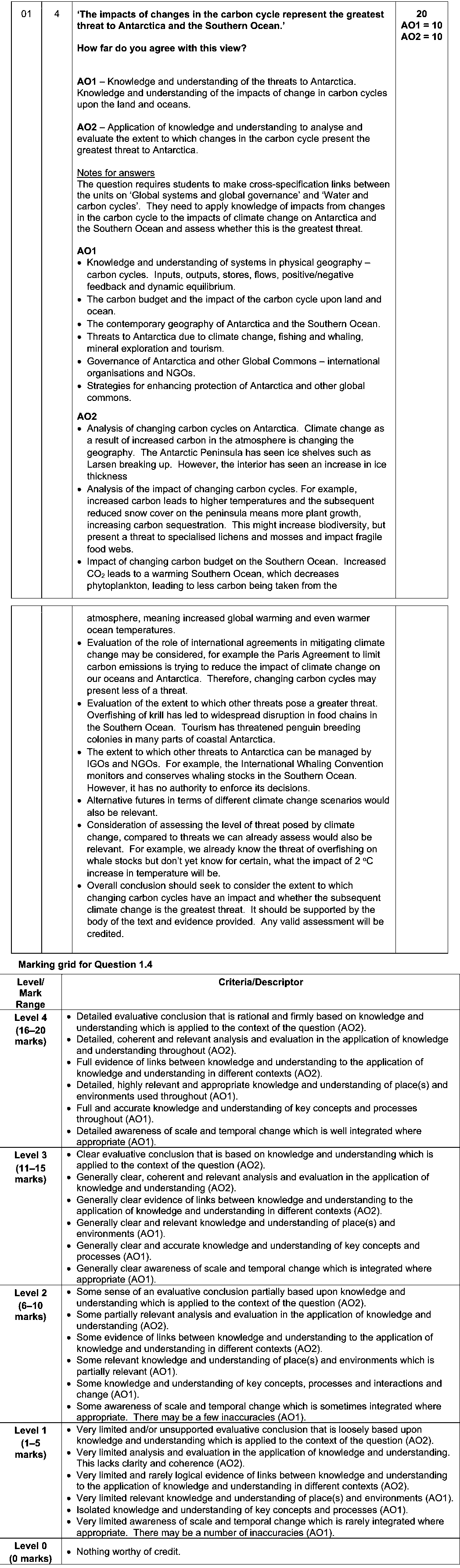
The 20 mark responses in all 5 questions produced some interesting and considered responses from many students although some leaned very heavily on some outdated and clichéd views of places or made contrasts between places that were difficult to compare in a meaningful way. As mentioned in the introduction, there were some very clear and focused 20-mark responses and it is apparent that students are well-trained for these questions. Good practice was seen with responses that start with a clear position statement and then developed a clear thread with evidence from valid examples. This balance of AO1 and AO2 is the way to good marks. There should be a final conclusion that clearly links back to the question set. Where students did not perform as well in the essay questions, the opposite characteristics were often evident - namely, no clear position statement, copious AO1 retelling case study knowledge without application and an absent, vague or unsubstantiated conclusion. The cross-specification synoptic question this series appeared in unit 1 - 20 mark question Q1.4 was a particularly well-answered question. Many students relished the opportunity to discuss the threats posed by climate change, tourism, fishing and whaling, scientific research and potential future resource exploitation student and they were clearly able to link this part of the Human Geography specification to the Water and Carbon unit of Paper 1. Arguments were often well-constructed with good AO1 knowledge of the threats and strategies to manage them. For example, in Q1.4 there was plenty of detailed knowledge of Antarctica and the Southern Ocean, the threats from both climate change and the changing carbon budget along with other issues such as fishing and whaling, tourism, scientific research and the future prospect of resource exploitation. Students were also conversant with the organisations and agreements in place to manage Antarctica and could provide effective critique. The example below illustrates all of these characteristics and was awarded Level 4, 18 marks. In Q1.4 some students failed to consider threats beyond climate change or drifted into a discussion of the causes of climate change such as deforestation of the rainforests. (The existence of polar bears in Antarctica was an all too frequent worry!). The example below is a student response to Q1.4 and whilst is presents a view it is clear there is a lack of depth and detail with regard to the subject content. It just gets into Level 2 and was awarded 6 marks. The synoptic question appears once each series in either Paper 1 or Paper 2 and makes links across specification content. The question illustrated above was the synoptic question linking between the Physical and Human geography content of the specification. It was approached well by the vast majority of students and scored the highest mean mark of all the 20 mark questions. Students were able to make the links between the carbon cycle, climate change and the extent of the threats to Antarctica and the Southern Ocean as well as considering other threats facing the region. In Q1.4 there was often very detailed knowledge of the threats alongside the organisations and policies / agreements being put in place. Many students could make effective connections to the physical side of the changes with good knowledge of systems, feedback loops and dynamic equilibrium. The longer-term future was also a feature of many responses and students considered the possibility of Antarctica being ‘opened up’ to exploitation of fossil fuel and mineral resources as more ice melts and protocols come to the end of their life span. There was certainly good evidence of synoptic thinking in the responses to this question. Those students who did not respond so well in this question often had a very basic or absent understanding of the carbon cycle and its effects on Antarctica, sometimes their discussion was directed more to the worldwide causes of climate change or they failed to appreciate the range of other threats in the region.
Notes from the mark scheme and report
synoptic question (links Global governance with Water and carbon cycles): carbon-cycle change (ice-shelf break-up, ocean warming and acidification, phytoplankton feedback) weighed against fishing, whaling, tourism, research and future mining, with governance
highest-mean 20-mark question
do not drift into causes of climate change
June 2022 · Paper 1 · Q1.14 marksmark schemePoint-marked
Mark scheme
Examiner's comment
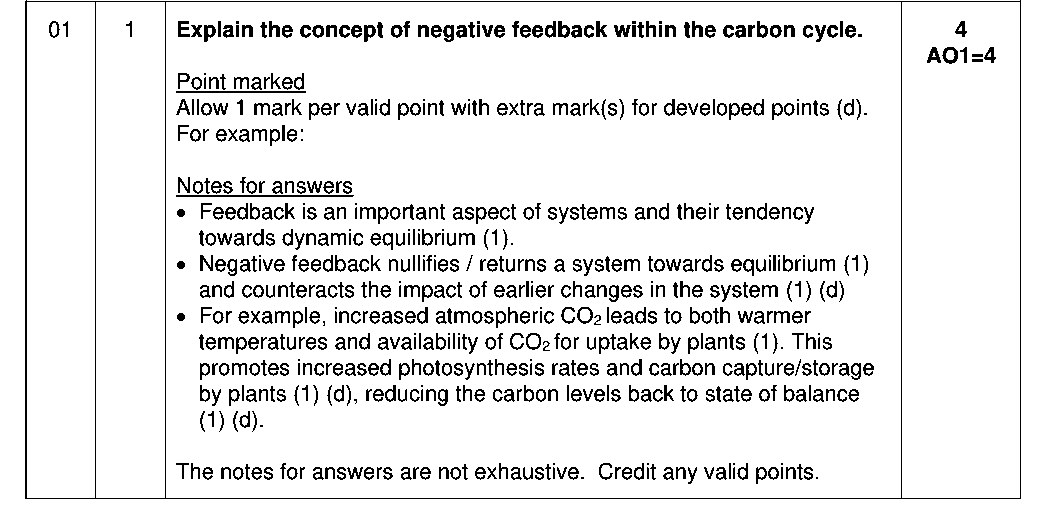
This question was very accessible, scoring an average mark of 2.19. Most understand the concept of negative feedback with a clear definition. The typical approach was then to offer an example. Most went with the idea of increased carbon promoting vegetation growth and returning carbon to the biosphere. Other considered the role of phytoplankton in restoring the dynamic equilibrium of the carbon cycle. This was also valid.
Notes from the mark scheme and report
point marked with marks for developed points (d)
define negative feedback (returns system towards dynamic equilibrium) then develop an example such as more CO2 boosting photosynthesis and carbon uptake
phytoplankton example also valid
mean 2.19
June 2022 · Paper 1 · Q1.420 marksmark scheme20-mark essay
Mark scheme, including the levels and indicative content
Examiner's comment
Most understood that this was essentially a question about mitigation versus adaptation in relation to increased atmospheric carbon. Those arguing for mitigation considered a whole range of strategies ranging from electric cars, carbon capture and storage as well as global agreements. Adaptation was probably less well covered. Students mainly considered agricultural changes, coastal management and changes in settlements to cope with warmer temperature and less predictable weather patterns.
Notes from the mark scheme and report
weigh adaptation (farming change, coastal management, settlement change) against mitigation that restores atmospheric carbon (CCS, sequestration, renewables, Paris Agreement)
adaptation was less well covered
June 2022 · AS Paper 1 · Q1.59 marksmark scheme9-mark essay
Mark scheme, including the levels and indicative content
Examiner's comment
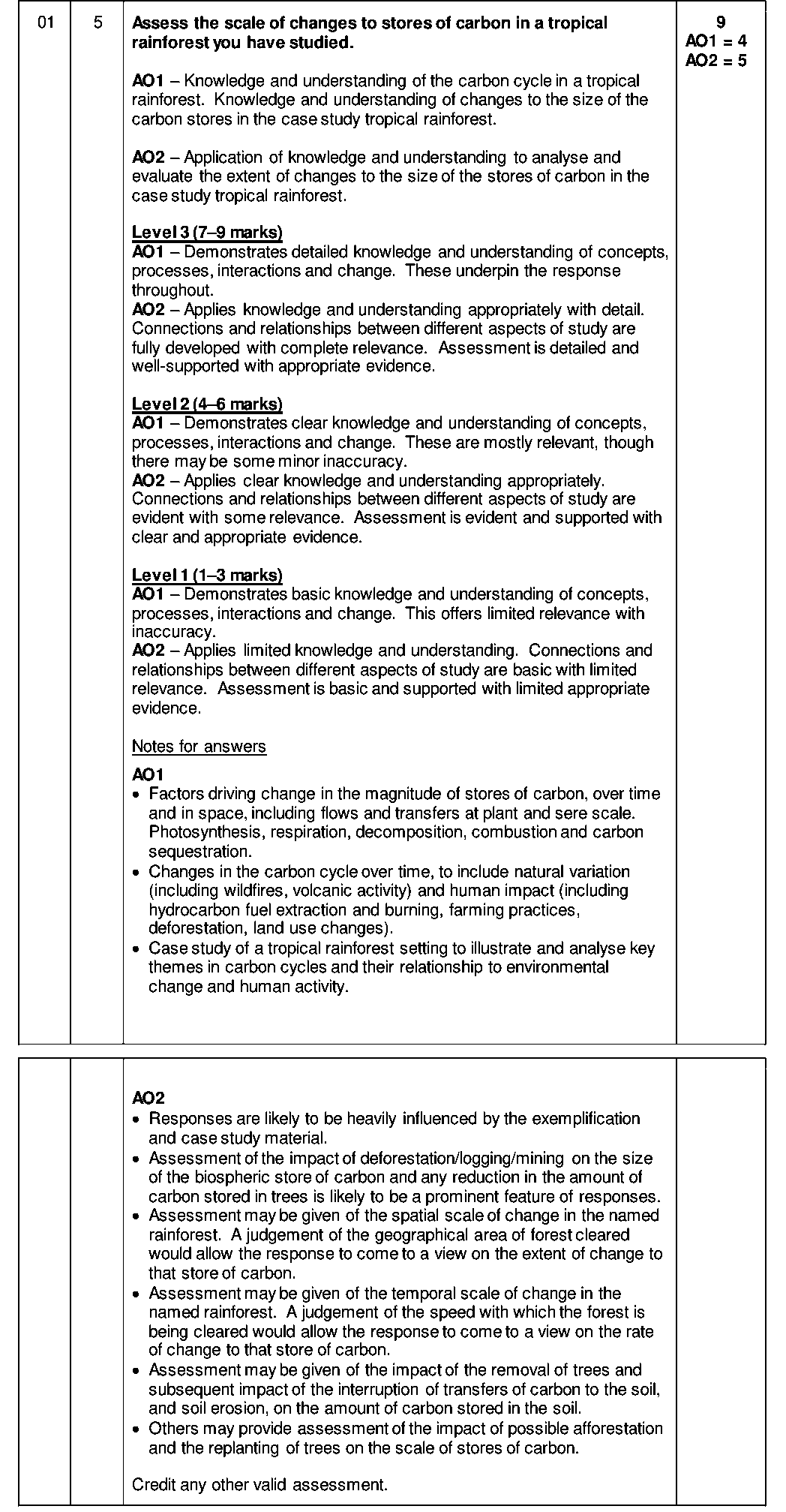
This question combined both AO1 and AO2 elements. This expected students to make links beyond the Water and Carbon Cycles specification content. Students had to make an evidence- based assessment of the scale of changes to stores of carbon in their named tropical rainforest case study. This question proved accessible to many, and over 40% of students scored in Level 3. These high-level responses gave clear detailed support to the points made, with good use of specific illustrative material. Some weaker responses were limited by a lack of differentiation between the different states of carbon in different stores, and often simply referred to “CO2”, when it would have been more accurate to simply refer to carbon.
Notes from the mark scheme and report
judge spatial and temporal scale of changes to carbon stores (deforestation, logging, mining) in a named rainforest
weaker answers wrote 'CO2' for all carbon stores
over 40% Level 3
June 2022 · Paper 2 · Q5.49 marksmark schemeSynoptic
Mark scheme, including the levels and indicative content
Examiner's comment
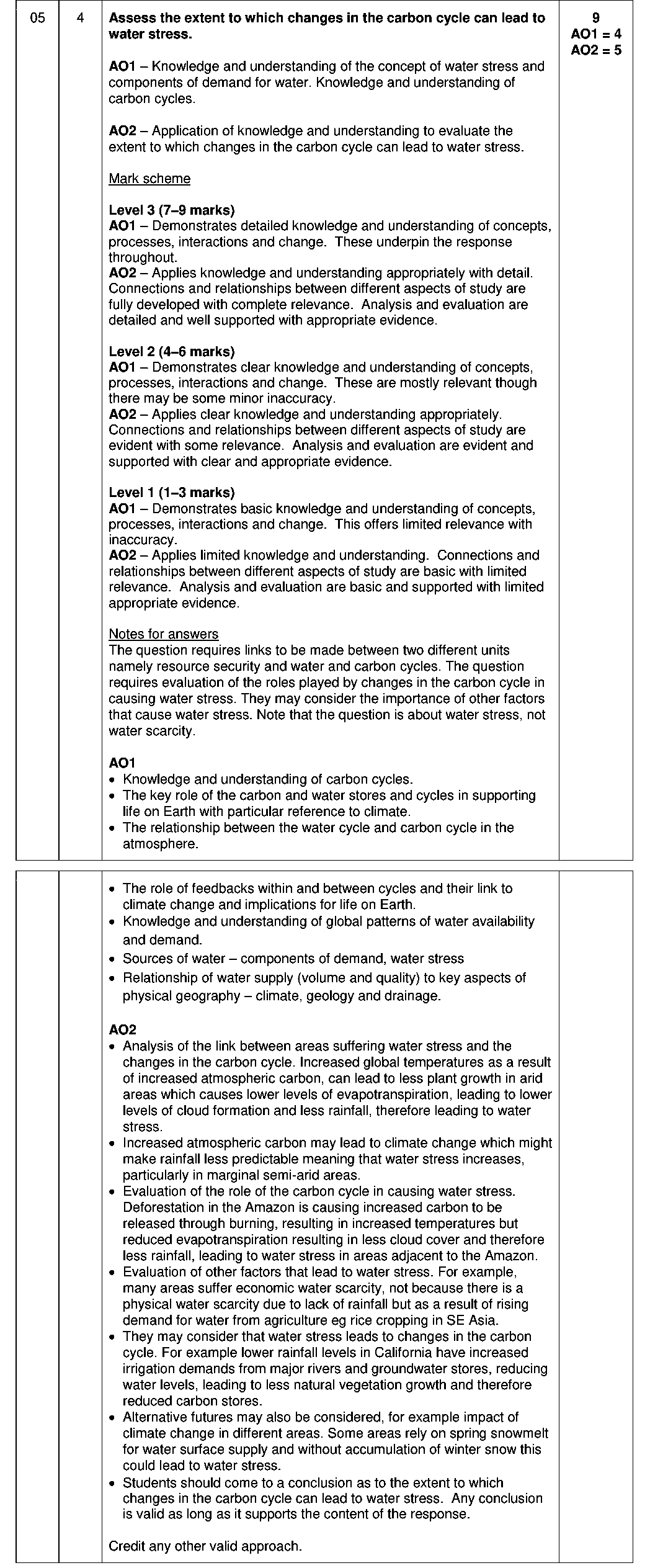
The cross-specification question within the optional sections (3.4, 4.4 and 5.4) was evidence of this and stuents seemedless-well prepared for this type of question. As with 3.4 and 5.4, many students seem unprepared for this cross-specification question. They were asked to apply knowledge of the carbon cycle to causes of water stress. Many students found this very challenging. Many responses were very generic and did not use evidence in support. The best responses used examples of locations suffering water stress and were able to use their knowledge of the location to suggest how changes in the carbon cycle might affect the level of water stress. Teaching concepts through use of examples, certainly provides students more to develop in all exam questions. Weaker responses tended to focus on changes in the carbon cycle with simple links to increased evaporation or more droughts.
Notes from the mark scheme and report
cross-specification link to water and carbon cycles: rising atmospheric carbon, warming and less reliable rainfall in named water-stressed places, weighed against demand-side causes
about water stress not scarcity
generic evaporation/drought links scored low
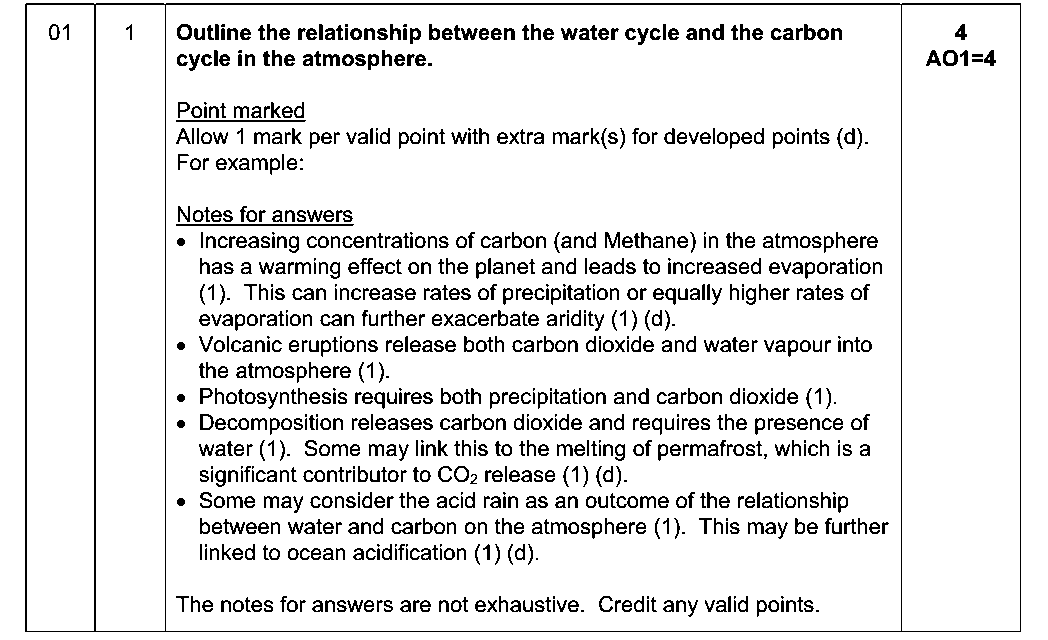
November 2021 · Paper 1 · Q1.14 marksmark schemePoint-marked
Mark scheme
Notes from the mark scheme and report
point marked: more atmospheric carbon warms and raises evaporation (more rain or more aridity), volcanic CO2 and water vapour, photosynthesis and decomposition need both, acid rain/ocean acidification
no examiners' report for this series
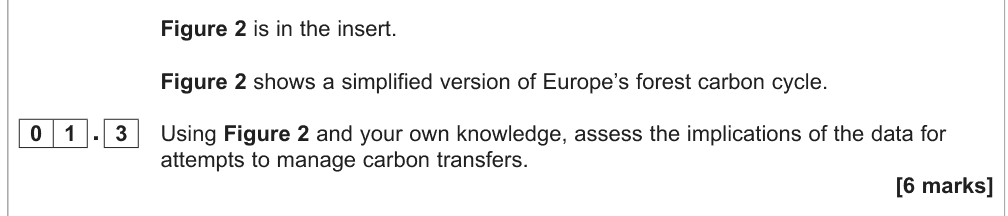
November 2021 · Paper 1 · Q1.36 marksmark schemeStimulus
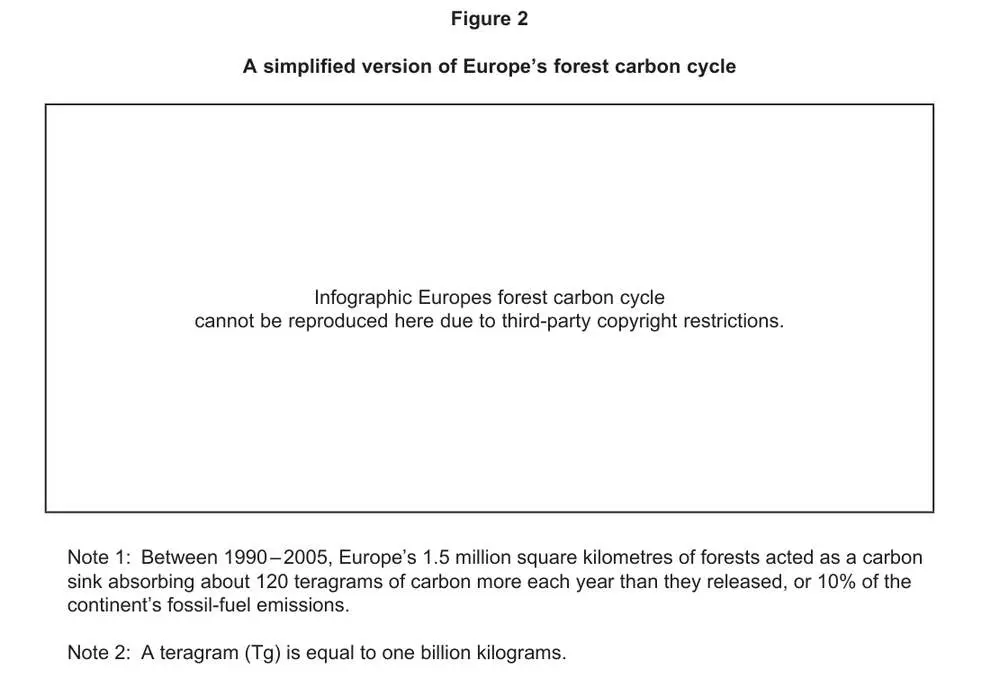
Figure 2
A figure for this question was removed from AQA's published paper for copyright reasons.
Mark scheme, including the levels and indicative content
Notes from the mark scheme and report
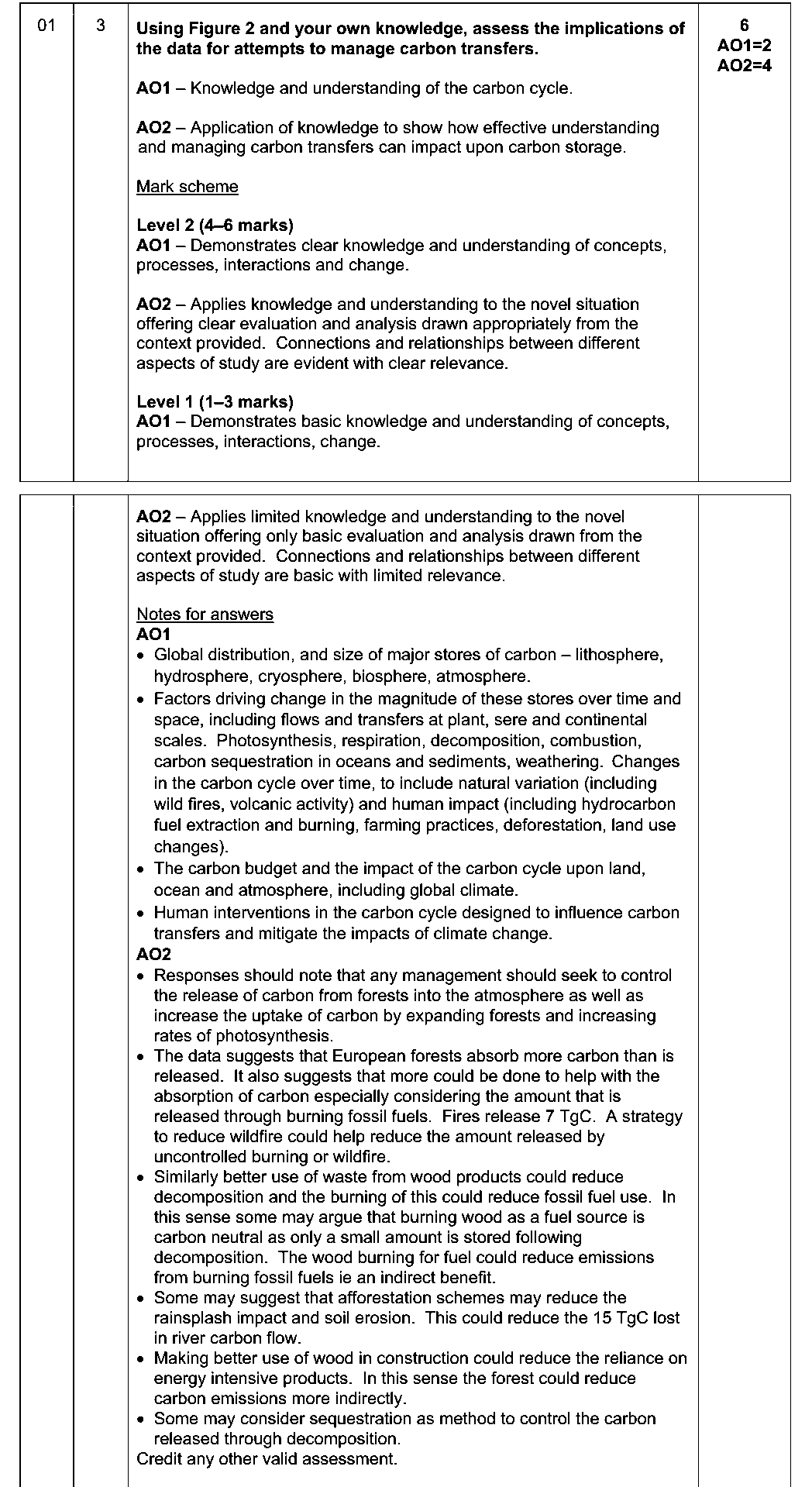
AO1 2, AO2 4: European forests a net sink (about 120 TgC a year)
manage transfers by cutting wildfire and decomposition losses, using wood in construction or as fuel, afforestation
Figure 2 not reproduced in the published paper (only its notes)
November 2021 · Paper 1 · Q1.420 marksmark scheme20-mark essay
Mark scheme, including the levels and indicative content
Notes from the mark scheme and report
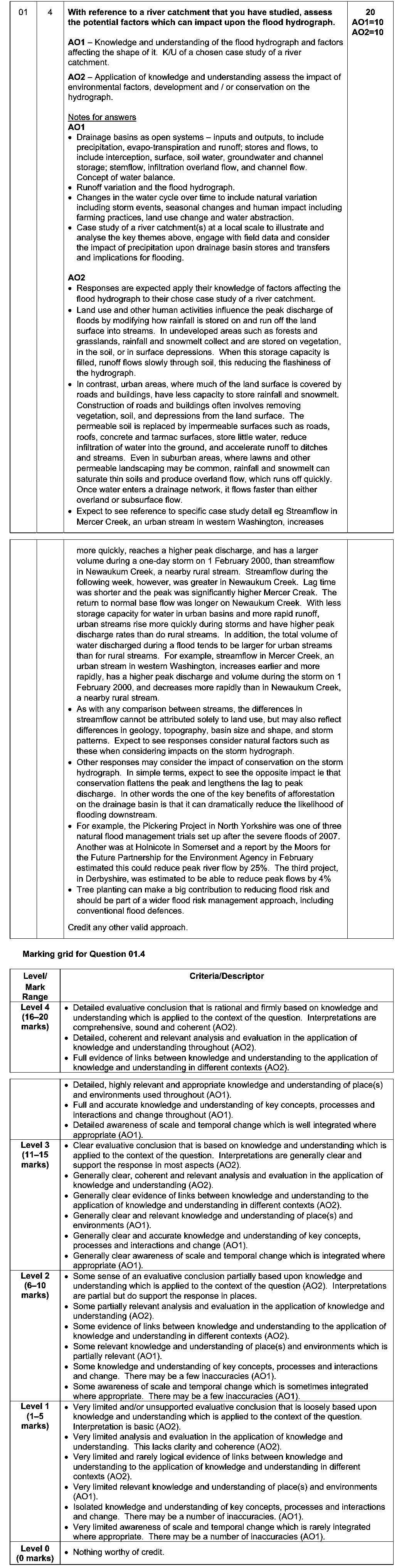
apply factors (land use, urbanisation, vegetation, soils, geology, relief, antecedent conditions, management) to the shape of the hydrograph in a named catchment
November 2020 · Paper 1 · Q1.36 marksmark schemeStimulus
Figure 2
A figure for this question was removed from AQA's published paper for copyright reasons.
Mark scheme, including the levels and indicative content
Examiner's comment
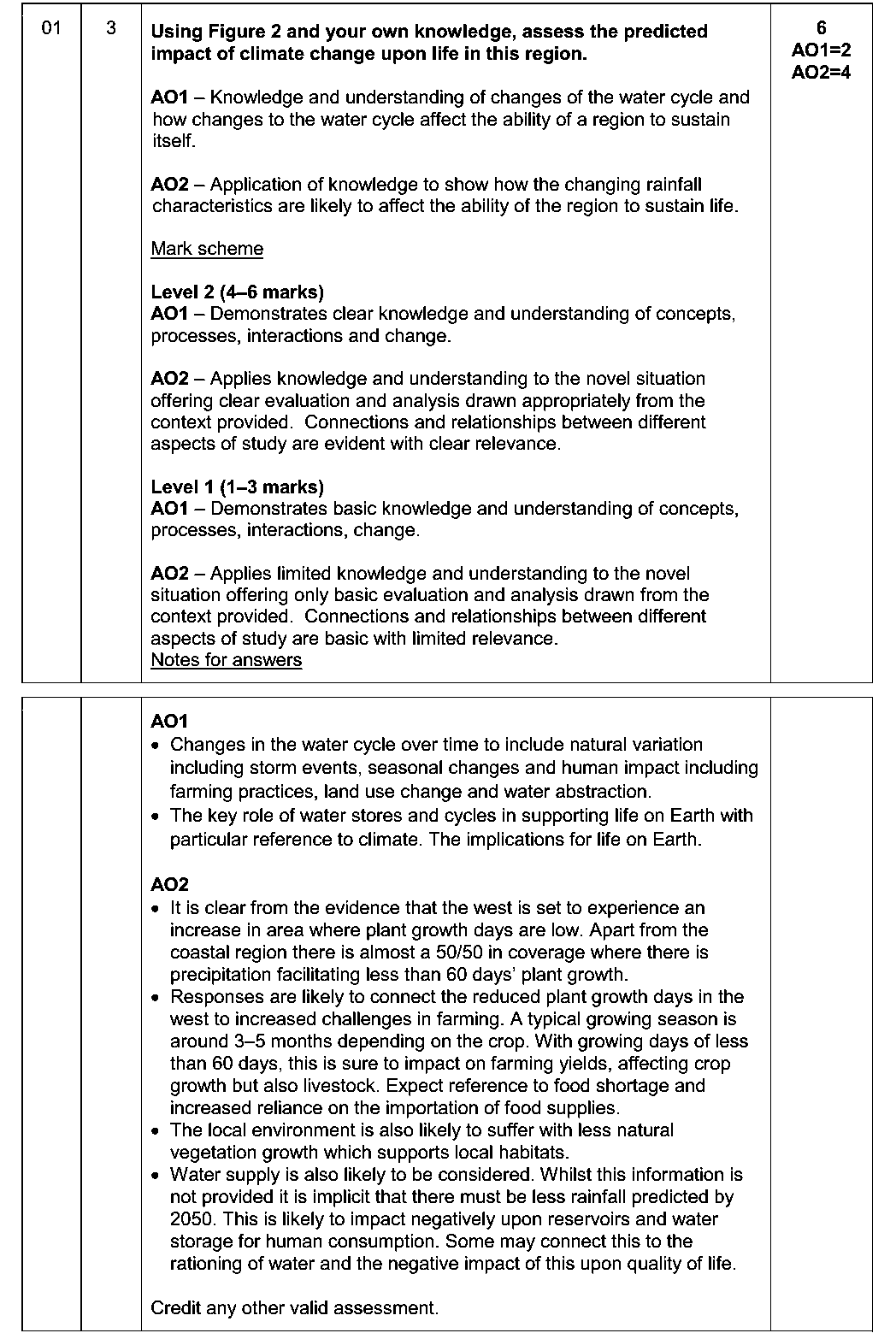
This question differentiated well overall. In Q1.3 too many tried to analyse the data presented rather than consider the implications of the expected drier conditions on life in the region.
Notes from the mark scheme and report
apply fewer plant-growth days in the west to farming, food supply, habitats and water storage
too many analysed the data instead of the implications for life
figure not reproduced in the published paper (copyright)
November 2020 · AS Paper 1 · Q1.620 marksmark scheme20-mark essay
Mark scheme, including the levels and indicative content
Notes from the mark scheme and report
judge whether human changes to the carbon cycle (fossil fuels, deforestation, farming) are irreversible and only harmful to life, using systems ideas, feedbacks and mitigation
any reasoned view credited
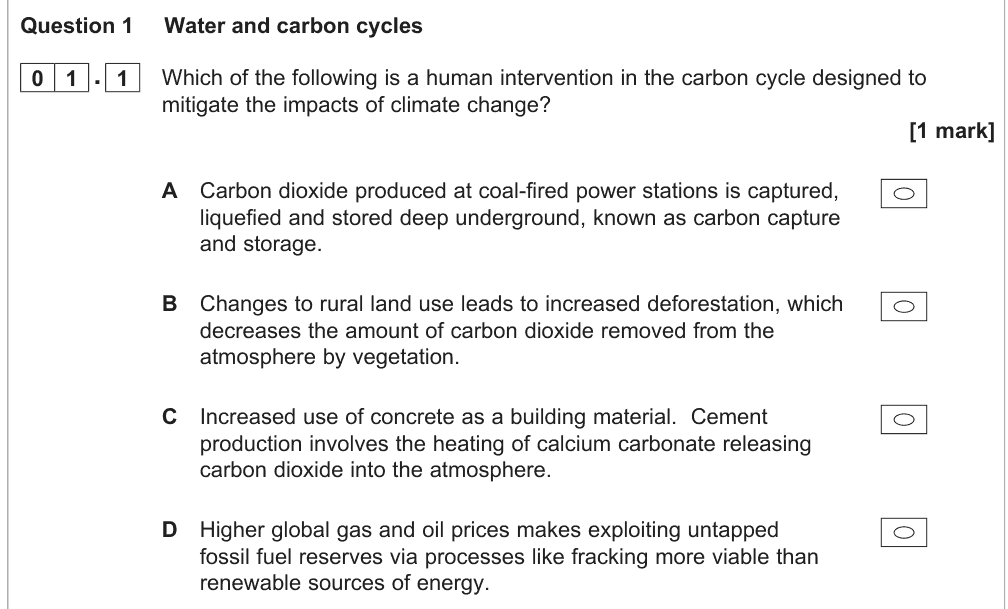
June 2019 · AS Paper 1 · Q1.11 markmark schemeMultiple choice
Answer
A
Mark scheme
Notes from the mark scheme and report
Answer: A (carbon capture and storage)
June 2019 · Paper 1 · Q1.420 marksmark scheme20-mark essay
Mark scheme, including the levels and indicative content
Examiner's comment
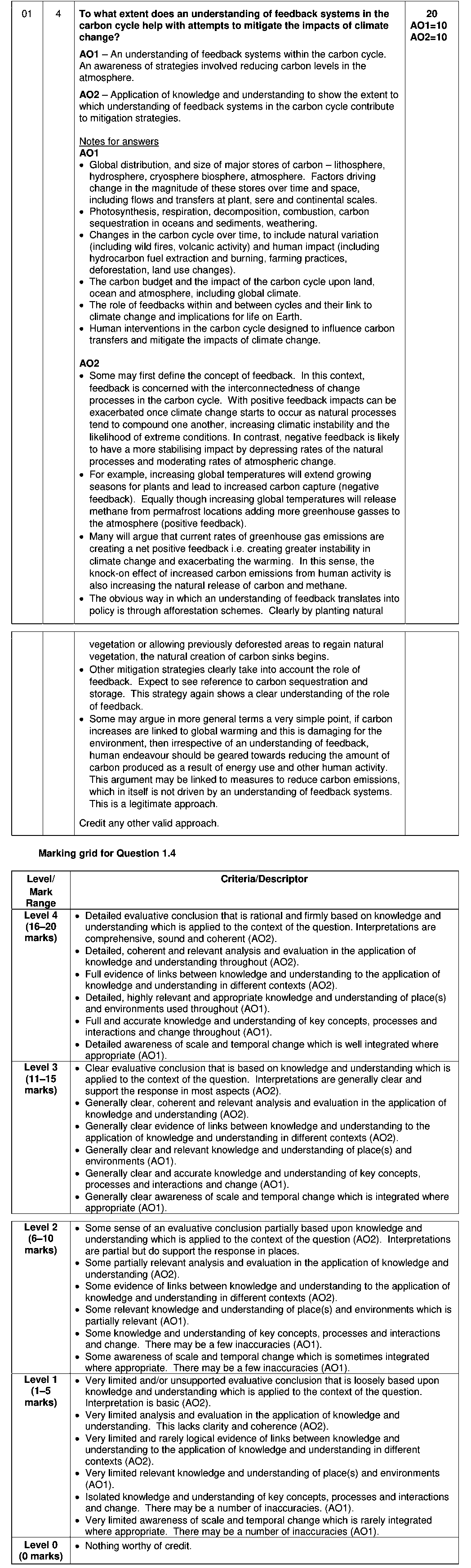
It was pleasing to see that so many students grasped the concept of positive and negative feedback. This is an integral part of the systems approach to physical geography. Many responses used the concepts well and understood the links to mitigation with good application. Even those who did not explicitly show understanding of feedback could still score credit if they were able to apply ideas around mitigation. These responses scored credit by implying knowledge and understanding without explicit reference to the terms. Less effective responses tended to recite just one case study (usually Amazonia), with a protracted narrative around human impact upon the forest. In such instances, it was hard to tease out material relevant to the thrust of the question.
Notes from the mark scheme and report
define positive and negative feedback and link to mitigation (afforestation, carbon capture and storage)
may argue emissions cuts need no understanding of feedback
reciting an Amazon case study of human impact scored poorly
June 2019 · AS Paper 1 · Q1.620 marksmark scheme20-mark essay
Mark scheme, including the levels and indicative content
Notes from the mark scheme and report
named rainforest: deforestation reduces interception and evapotranspiration, raises overland flow and discharge
dams, settlement, abstraction
assess significance against natural flows
June 2018 · AS Paper 1 · Q1.33 marksmark schemeShort answer
Mark scheme
Examiner's comment
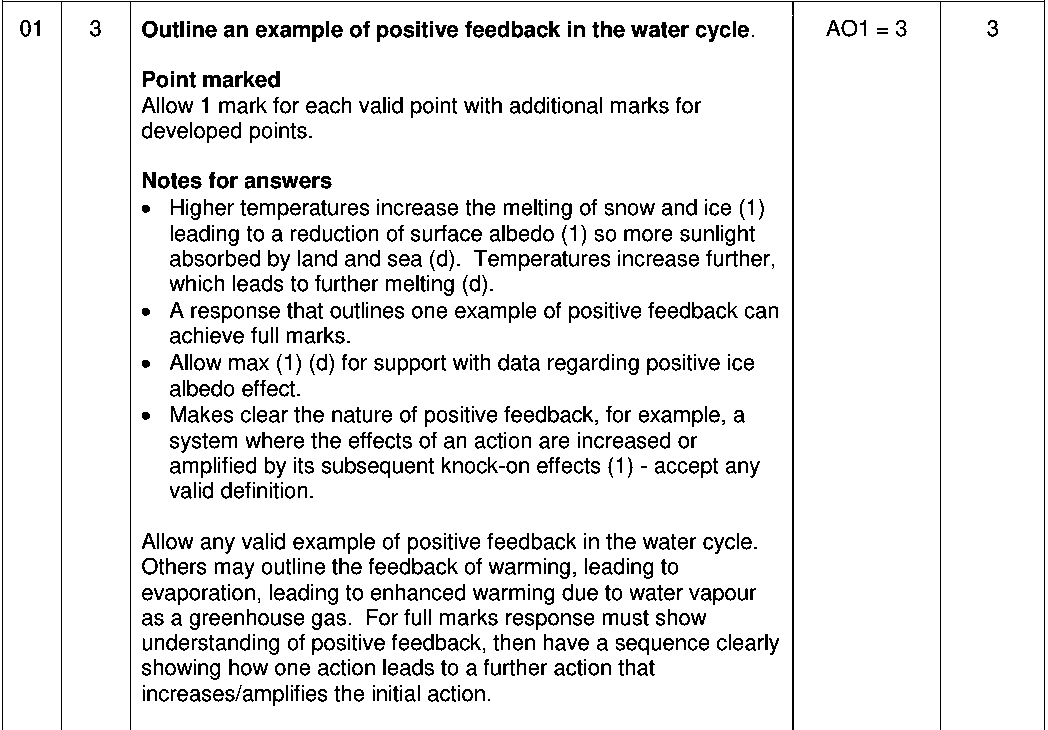
Students found this question quite challenging, with 33% scoring no marks, and only 27% achieving full marks. The key to achieving maximum marks was to show clear understanding of the concept of positive feedback. Most achieved credit by making links between elements of the water cycle. For example, many linked higher atmospheric temperatures to melting ice, but failed to ‘close the circle’ of positive feedback and show how this could lead to further warming and then more melting.
Notes from the mark scheme and report
point marked with developed points
full marks need a clear idea of positive feedback plus a sequence that amplifies the first change (e.g. melting ice lowers albedo, more warming, more melting
or water vapour as a greenhouse gas)
one example can earn full marks
33% scored 0 as many did not close the loop back to further warming
June 2018 · Paper 1 · Q1.36 marksmark schemeStimulus
Mark scheme, including the levels and indicative content
Examiner's comment
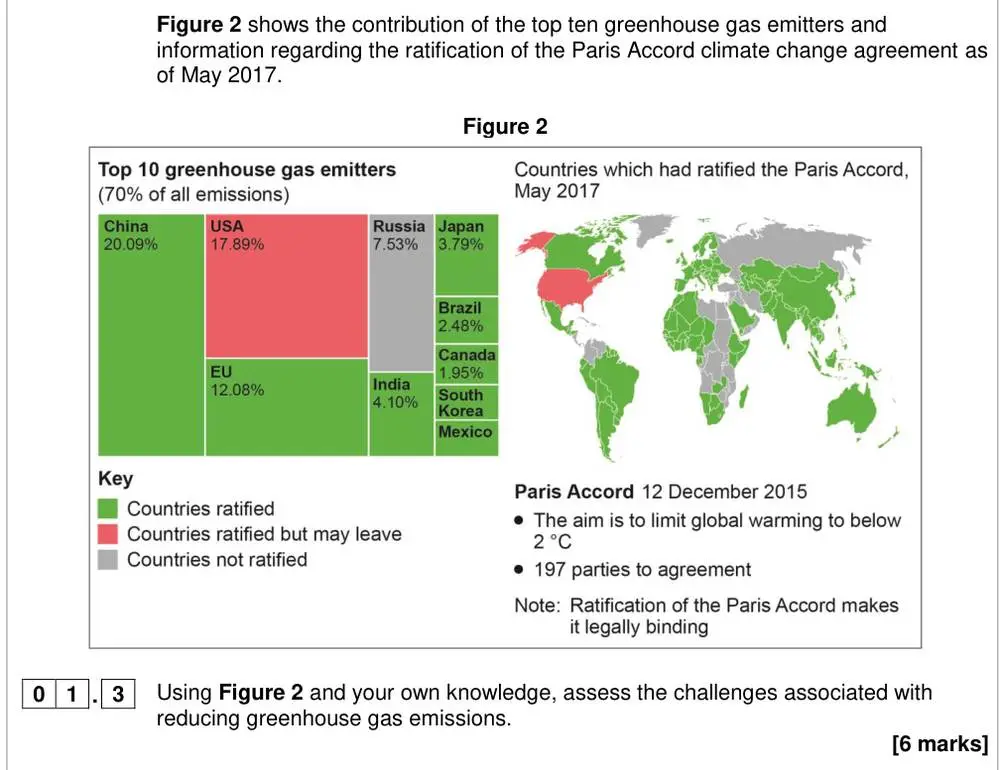
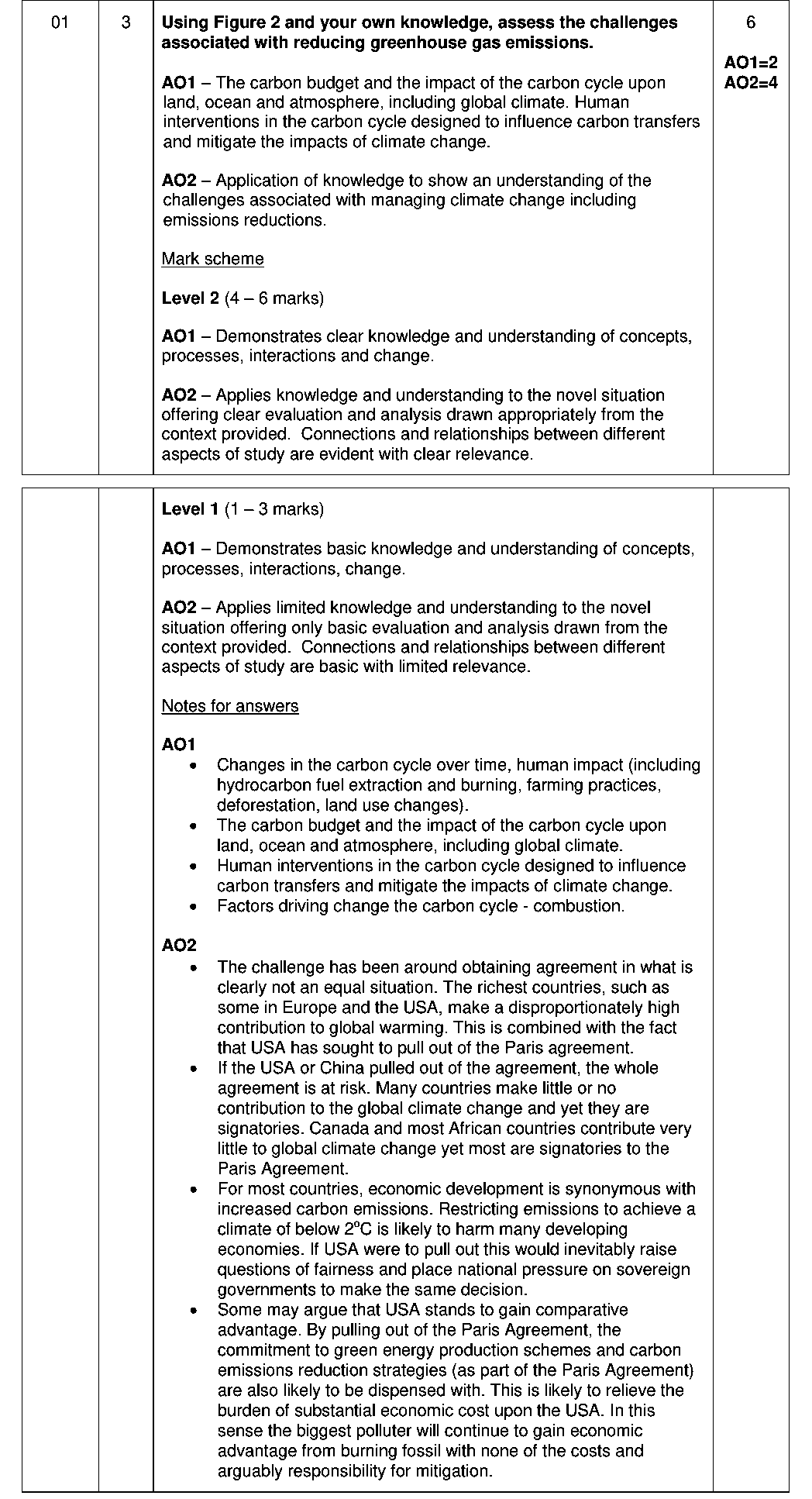
This question was not particularly well answered. There was ample scope to explore a range of issues related to the graphic presented. Some considered the potential unfairness of large wealthy countries pulling out of the Paris Accord. Others considered the challenges of ‘going green’ whilst also trying to develop economically. Others compared Russia, China and the USA in relation to their relative positions on the Paris Accord. Others did little more than lift data and present information which was already given. This was accepted as application of knowledge. In simple terms, for knowledge to be applied something new has to brought which is not presented in the data. Anything else is either description of analysis and not credited here under AO1 and AO2.
Notes from the mark scheme and report
apply knowledge of carbon budget and mitigation to the Paris Accord resource: unequal contributions, USA threatening to leave, development vs emissions cuts, fairness
lifting data from the figure is not application
not well answered
June 2018 · Paper 1 · Q1.420 marksmark scheme20-mark essay
Mark scheme, including the levels and indicative content
Examiner's comment
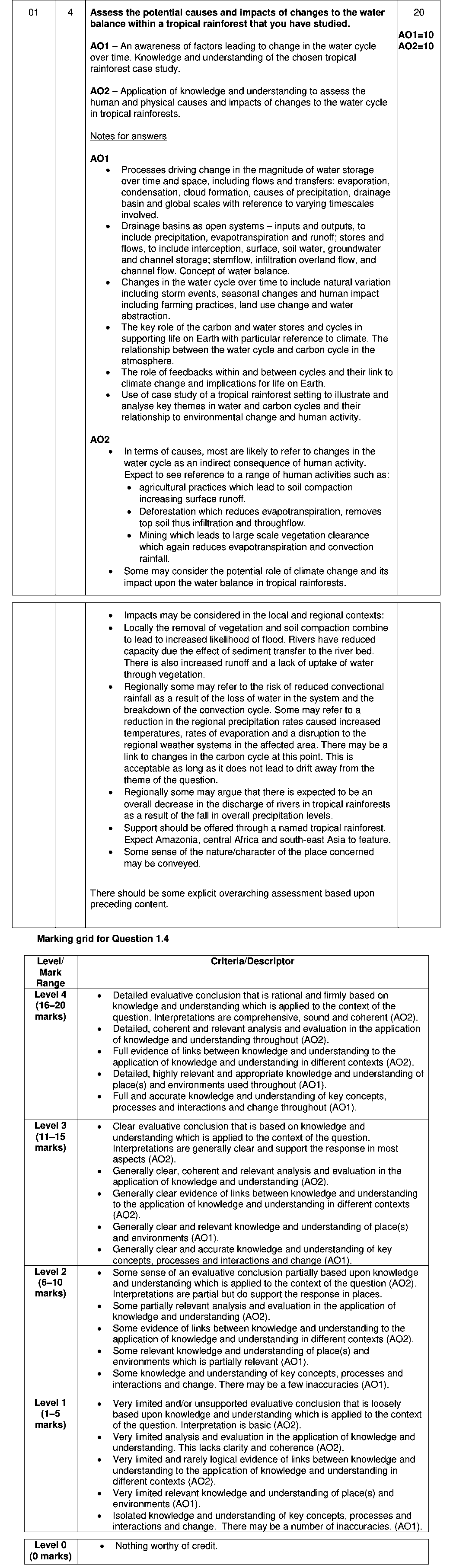
Most students did show understanding that human activity and natural variation can affect the water cycle in tropical rainforests. Many considered Amazonia and the major issues of deforestation and global warming. Links were often strong and processes considered in good detail. As long as the response clearly related back to the water cycle, credit was available. Some drifted into the carbon cycle with limited relevance. Also, whilst many referenced Amazonia, there was often very limited place support. Reference to the damaging impact of dam building or the positive impact of afforestation schemes (designed to restore the water balance) were specific ways that students could have been more place specific.
Notes from the mark scheme and report
human and natural causes (deforestation, farming, mining, climate change) and local/regional impacts (runoff, flooding, reduced convectional rainfall, lower discharge) on the water balance of a named rainforest
must stay on the water cycle, drifting into the carbon cycle had limited relevance
place detail often thin
June 2018 · AS Paper 1 · Q1.59 marksmark scheme9-mark essay
Mark scheme, including the levels and indicative content
Examiner's comment
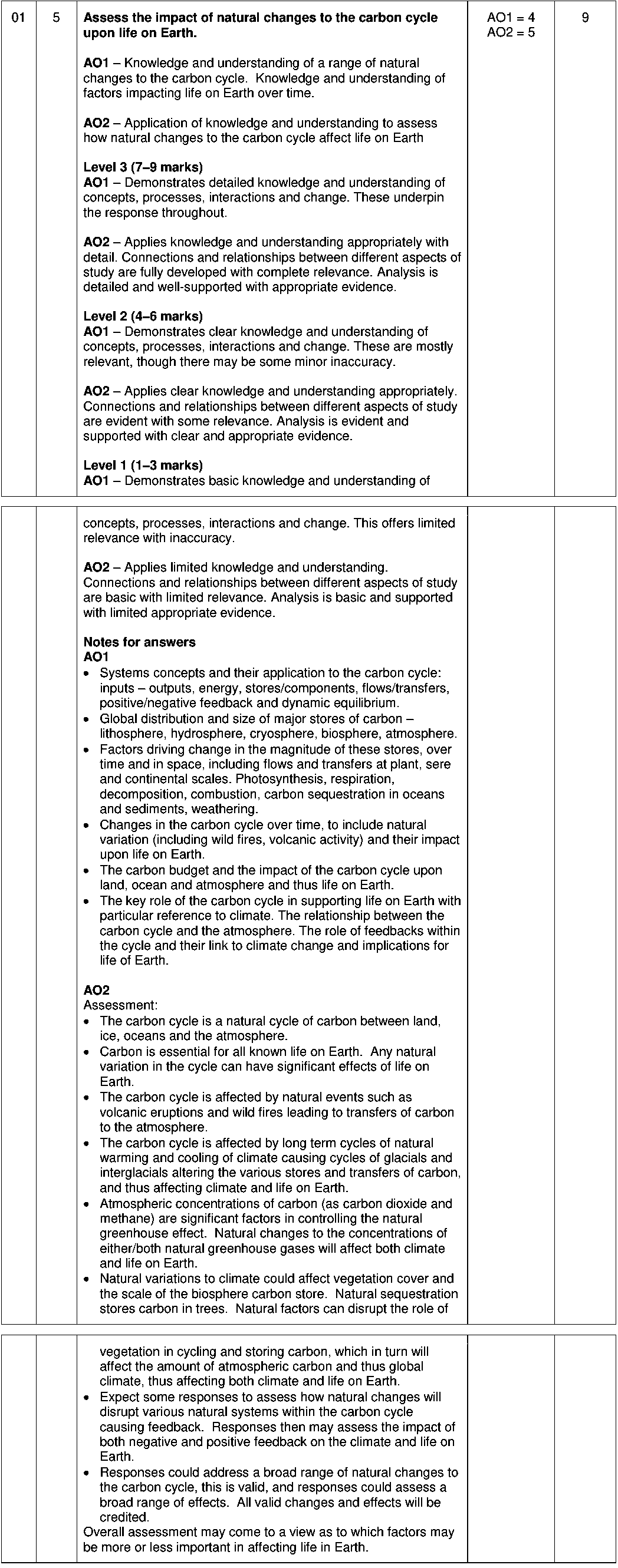
This question combined both AO1 and AO2 elements. The question expected students to make links between two areas within the water and carbon cycles specification. Students had to make an evidenced assessment of any impacts to life on Earth resulting from natural changes to the carbon cycle. Many limited the credit available to them by making human impacts on the greenhouse effect and enhanced global warming the focus of their argument, rather than natural changes. A number of the better responses explored long-term change in the carbon cycle and the role of natural processes in controlling concentrations of carbon the atmosphere, which impacts on life on Earth by controlling temperatures. Others explored shorter-term impacts, for instance the impact on vegetation as carbon is transferred from biosphere stores to the atmosphere via wildfires. The average mark for the question was 3.9 suggesting that students need more preparation in the application of knowledge to questions which require them to make links between different elements of the specification.
Notes from the mark scheme and report
natural changes only (volcanic activity, wildfires, glacial–interglacial cycles, feedbacks) and their effect on climate and life
answers built around human enhanced greenhouse effect limited themselves
links two parts of the unit
mean mark 3.9
June 2017 · AS Paper 1 · Q1.59 marksmark scheme9-mark essay
Mark scheme, including the levels and indicative content
Examiner's comment
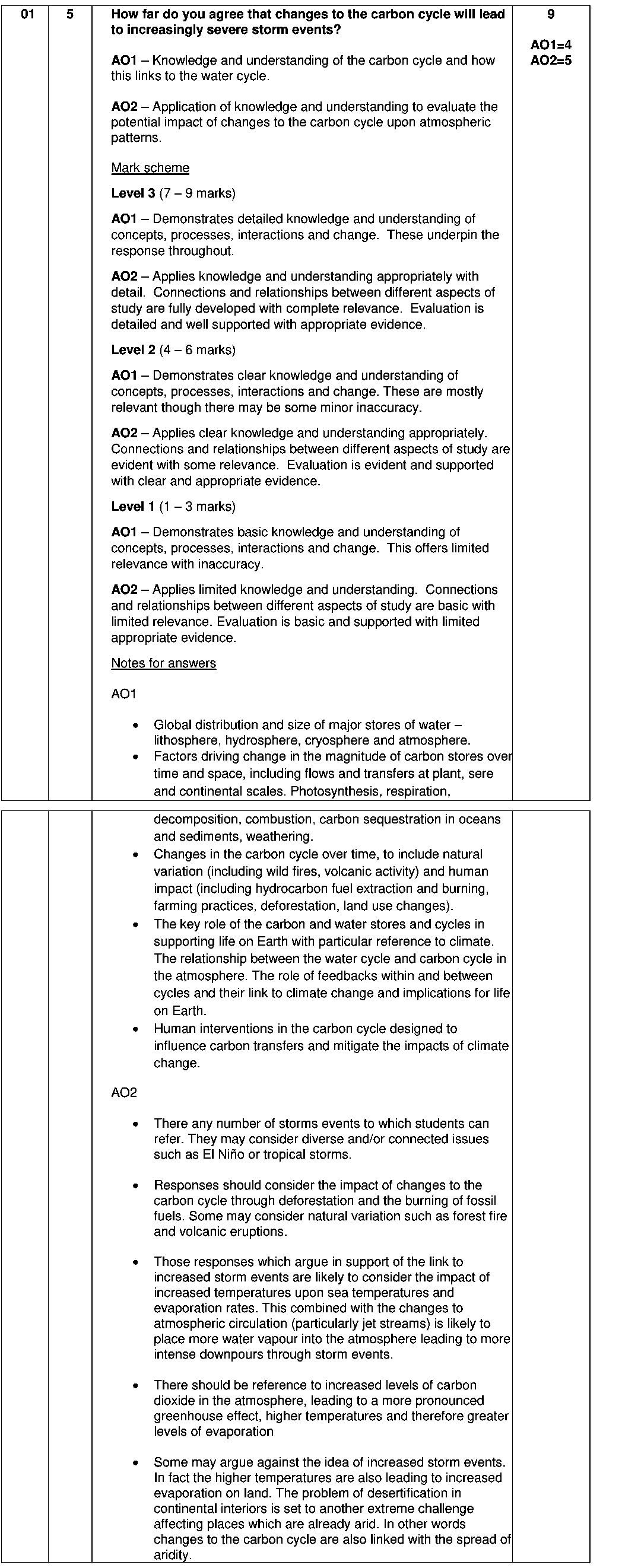
This was the first combined AO1/AO2 based question. This meant that the thrust of the question did not lie explicitly stated in the specification. Students had to make an evidence based assessment as to whether storm events are likely to become more severe because of changes to the carbon cycle. Many argued that this was the case. This was due to increased temperatures caused by global warming, itself caused by increased CO2 emissions. The increased temperatures were argued to lead to increased sea temperatures and increasing likelihood of tropical storms. Others suggest increased evaporation would lead to increased storms do to the increased water vapour in the atmosphere. Although this approach did not deal particularly well with the notion of severity. The average mark for this question was 4.3 suggesting students need more preparation in the application of knowledge to questions which do not arise explicitly out of one area of specification content.
Notes from the mark scheme and report
link more CO2 to warming, warmer seas, more evaporation and water vapour, so more intense storms
may argue aridity spreads instead
many ignored the idea of severity
mean 4.3
June 2017 · AS Paper 1 · Q1.620 marksmark scheme20-mark essay
Mark scheme, including the levels and indicative content
Examiner's comment
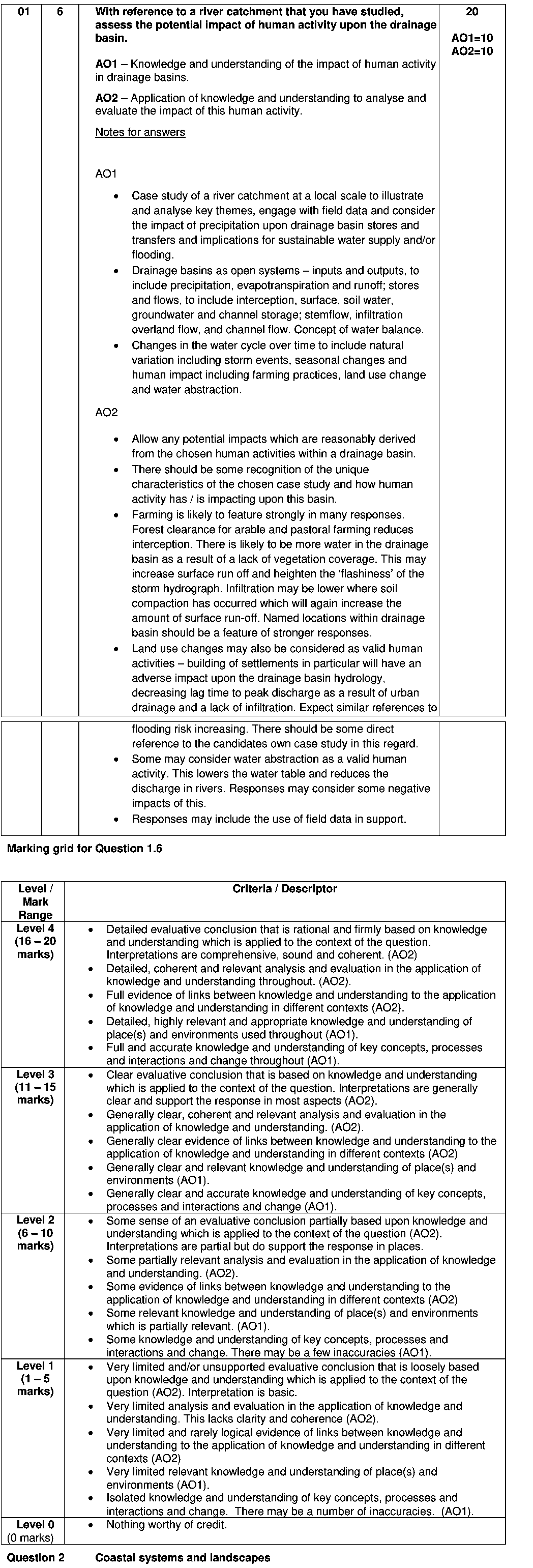
This question was reasonably well engaged with. Almost 50% of the candidature accessed Level 3, producing clear responses to the question set. The key to a successful answer was in producing a response which was clearly rooted in a chosen place with logical potential human impacts. There is no specification requirement to study human impacts in the chosen catchment and so this constituted the AO2 element. If the impacts were geographically sound and logical, credit was available. Many students referred to dam building, deforestation, the impact of farming practices and urban development. This was all creditworthy and gained more credit if it was rooted in place. Weaker responses were vague and generalised. Many could only cite basic impacts of human activity in drainage basins e.g. rivers are more likely to flood flowing storms in urban areas due to increased surface run off compared to rural areas. Whilst creditworthy this was considering as only a partial response.
Notes from the mark scheme and report
human impacts (farming, deforestation, urbanisation, dams, abstraction) on stores, transfers and hydrograph must be rooted in the chosen catchment
vague generic answers seen as partial
field data credited
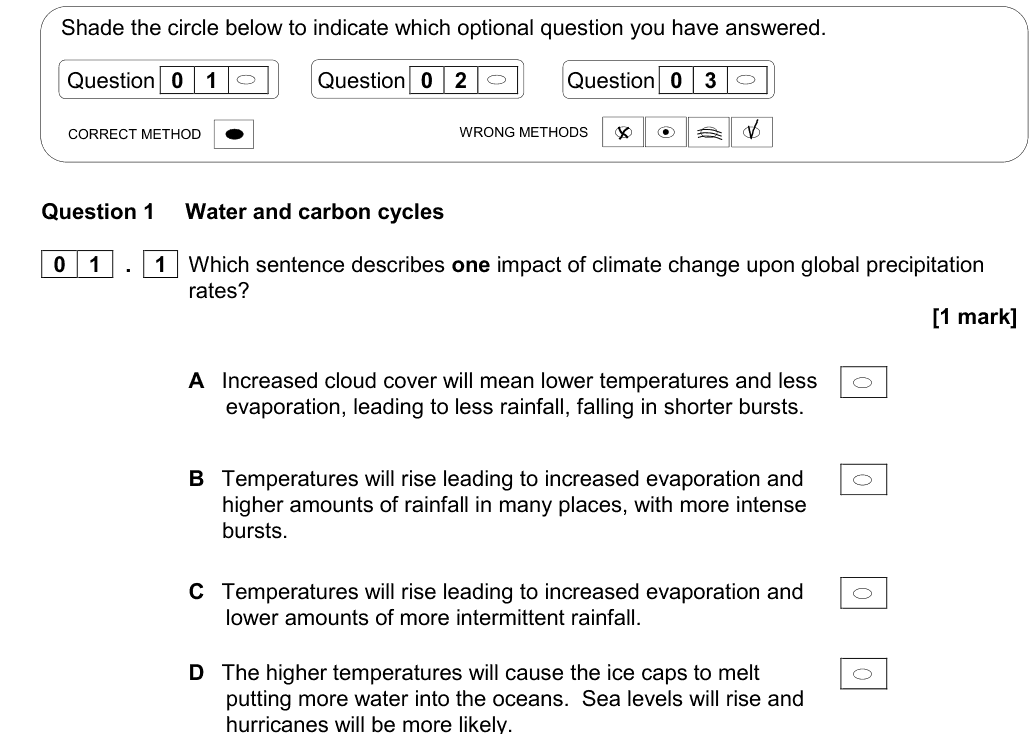
Specimen set 1 · AS Paper 1 · Q1.11 markmark schemeMultiple choice
Answer
B
Mark scheme
Notes from the mark scheme and report
Answer: B
warming increases evaporation, giving more rainfall in many places in more intense bursts
specimen paper, no examiners' report
Specimen set 1 · Paper 1 · Q1.26 marksmark schemeData analysis
Mark scheme, including the levels and indicative content
Notes from the mark scheme and report
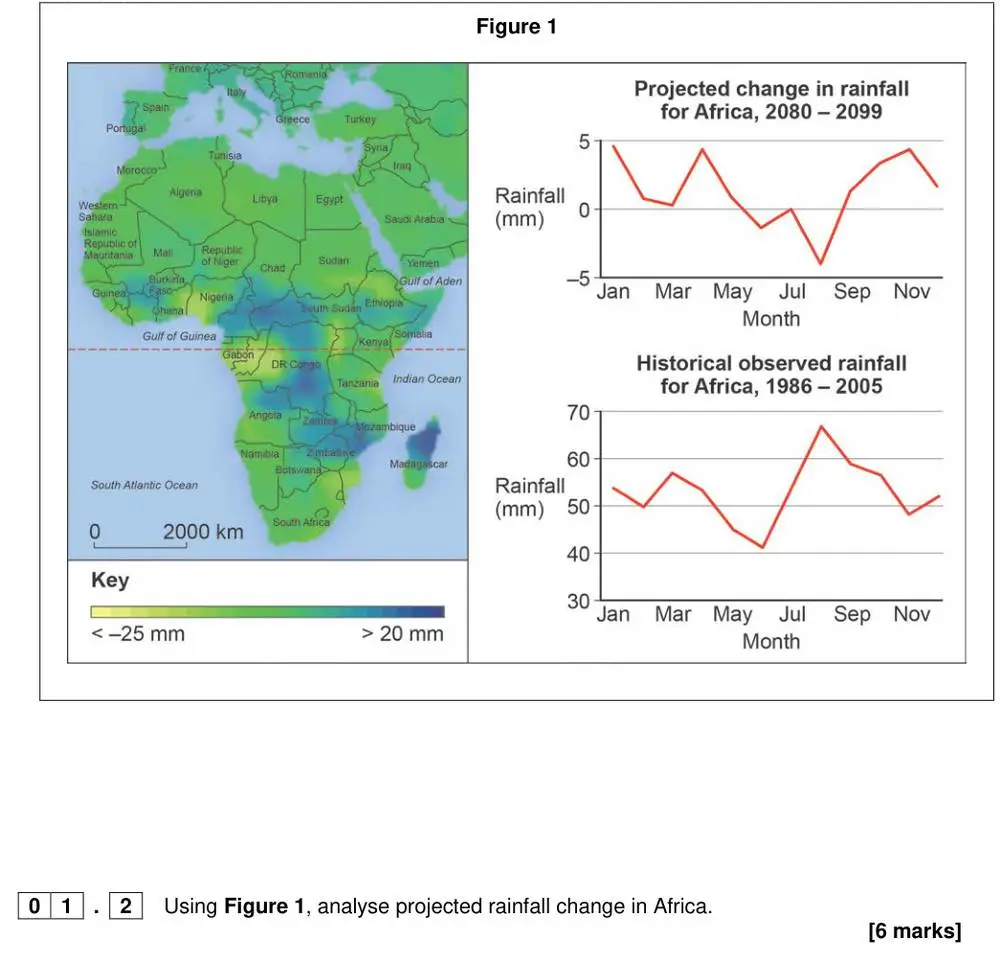
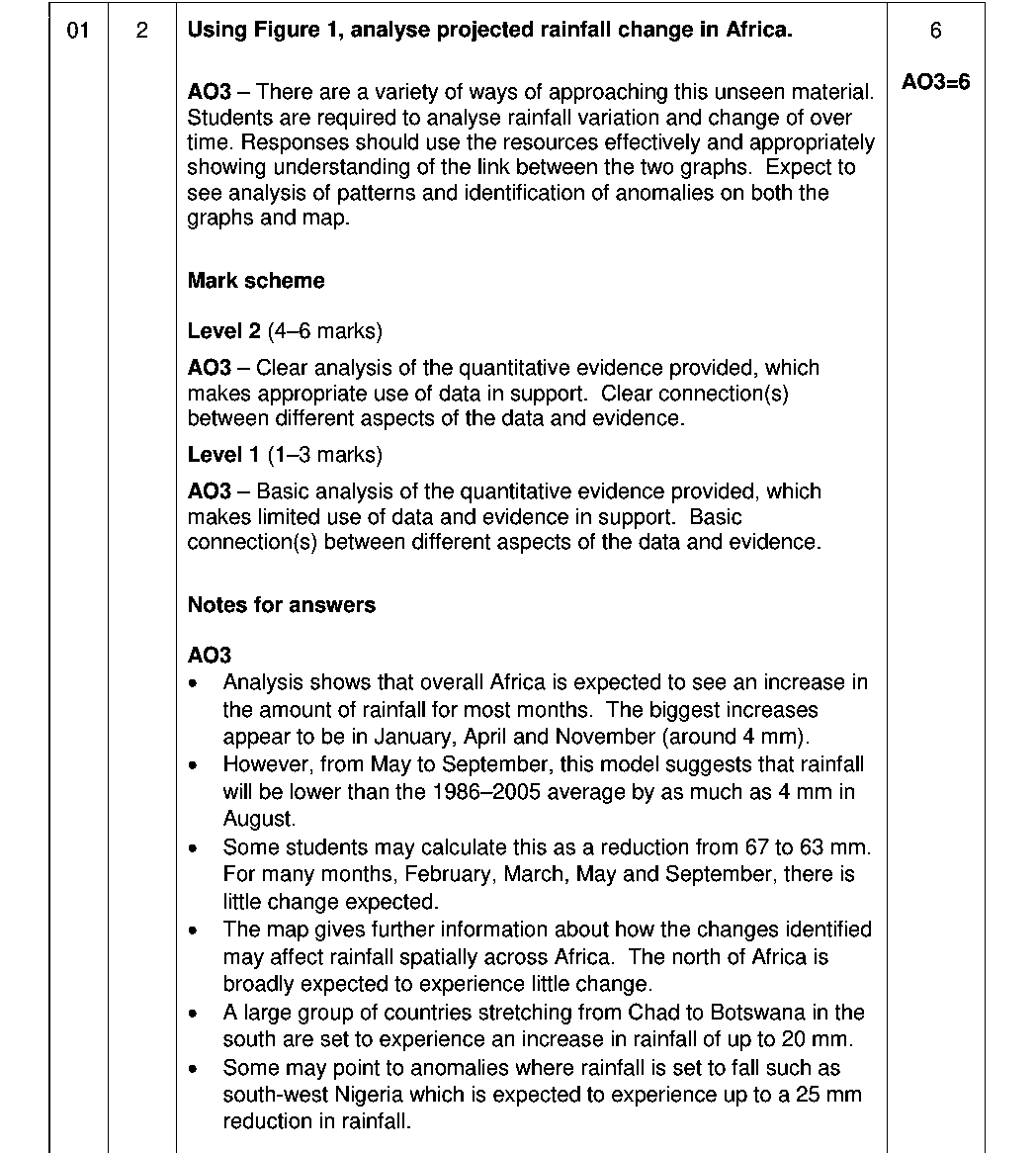
AO3: projected rises in most months (about +4 mm Jan, Apr, Nov) but falls May–Sep (−4 mm Aug, 67 to 63 mm)
spatial increase Chad–Botswana up to 20 mm, little change in the north, anomaly SW Nigeria −25 mm
link map and graphs
Specimen set 1 · Paper 1 · Q1.36 marksmark schemeStimulus
Figure 2
Mark scheme, including the levels and indicative content
Notes from the mark scheme and report
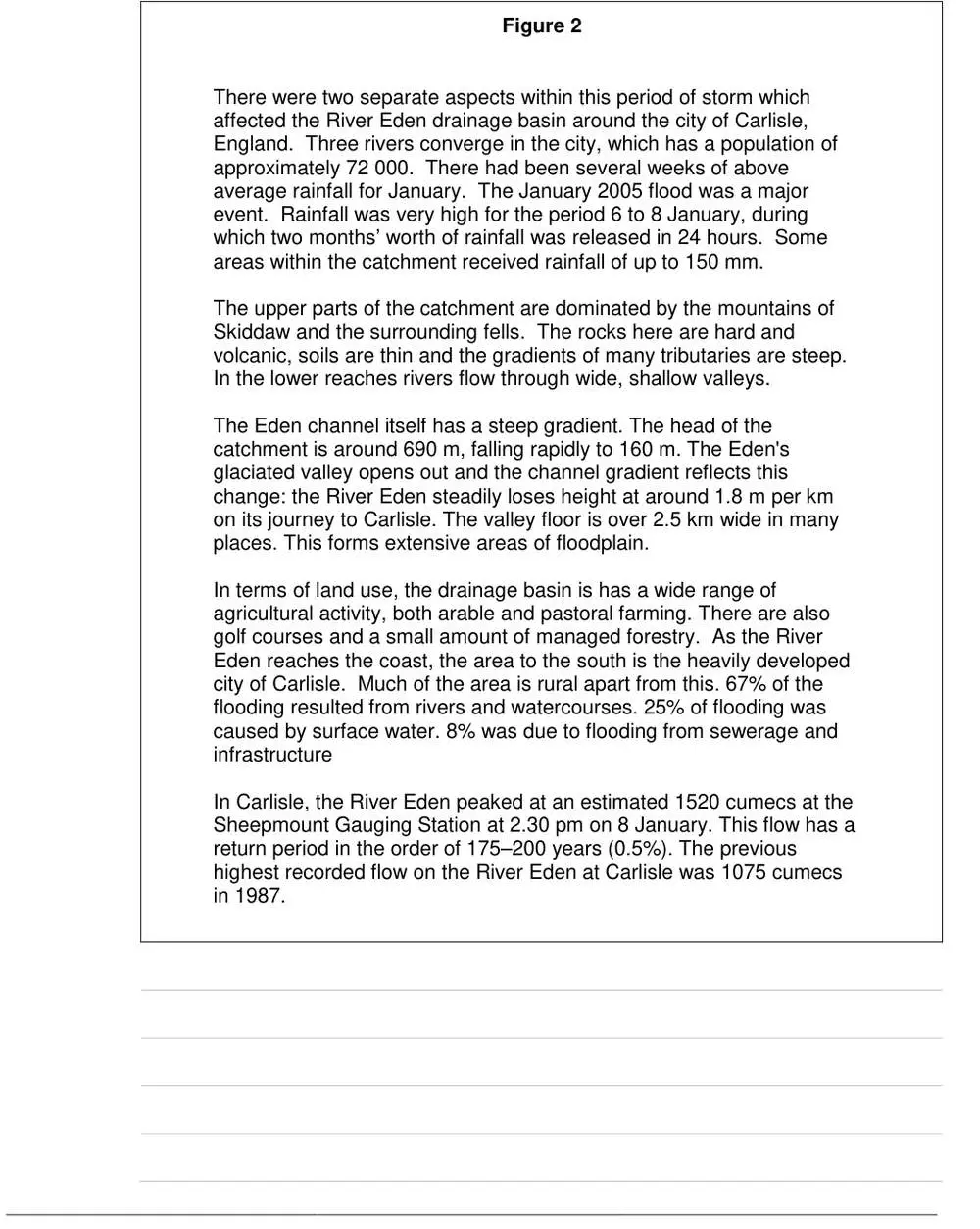
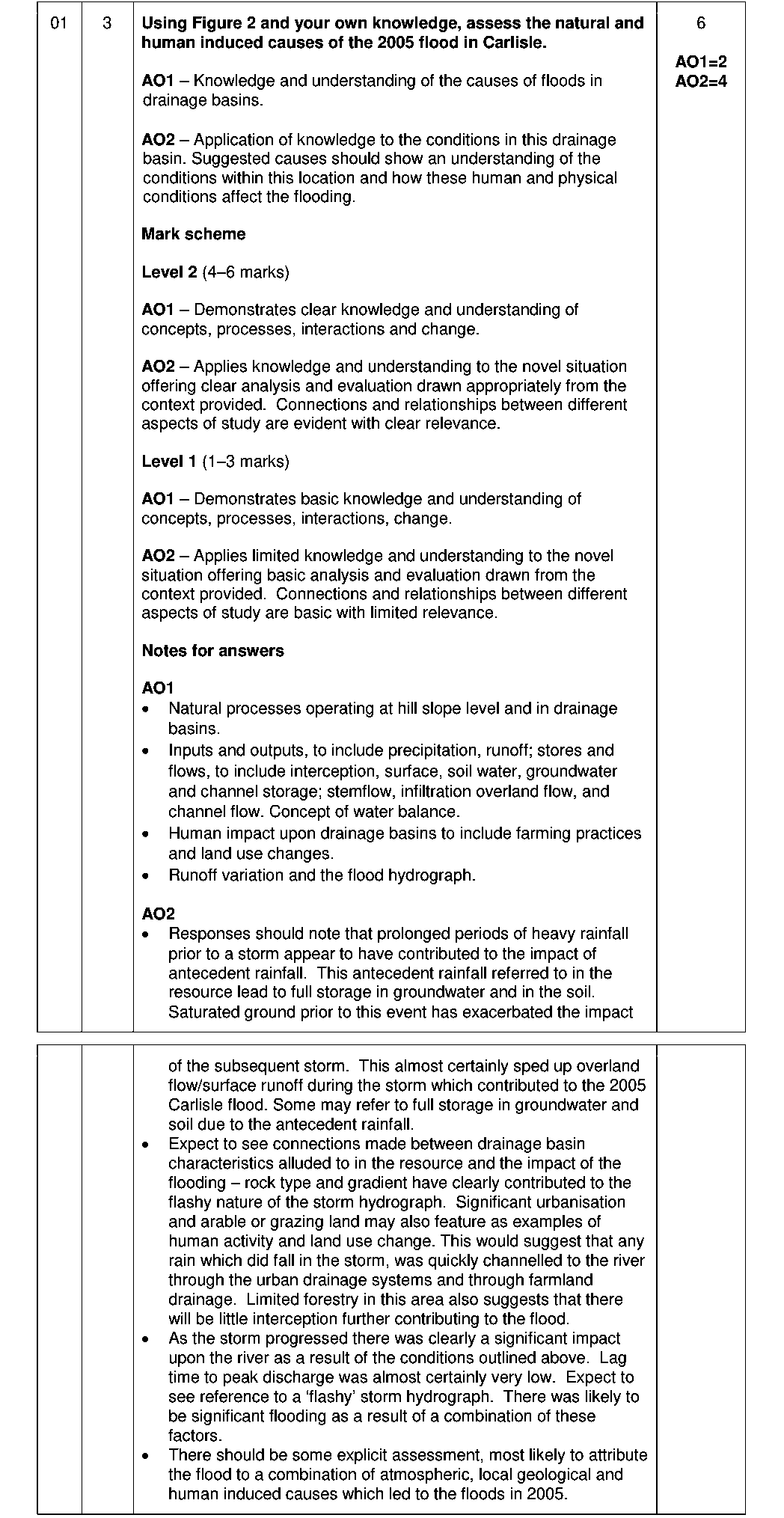
apply flood causes to the Eden basin text: antecedent rain and saturated stores, 150 mm in 24 h, hard volcanic rock, steep gradients, urban Carlisle and farming
weigh natural against human causes
Specimen set 1 · Paper 1 · Q1.420 marksmark scheme20-mark essay
Mark scheme, including the levels and indicative content
Notes from the mark scheme and report
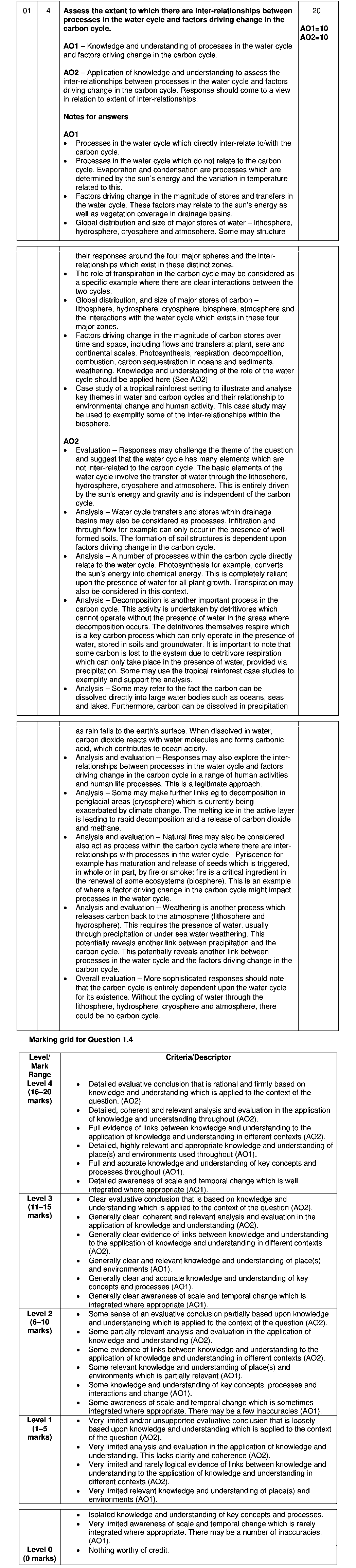
assess links between water-cycle processes (evaporation, transpiration, precipitation, weathering) and carbon-cycle drivers (photosynthesis, ocean sequestration, decomposition), and where processes are independent
Specimen set 1 · AS Paper 1 · Q1.620 marksmark scheme20-mark essay
Mark scheme, including the levels and indicative content
Notes from the mark scheme and report
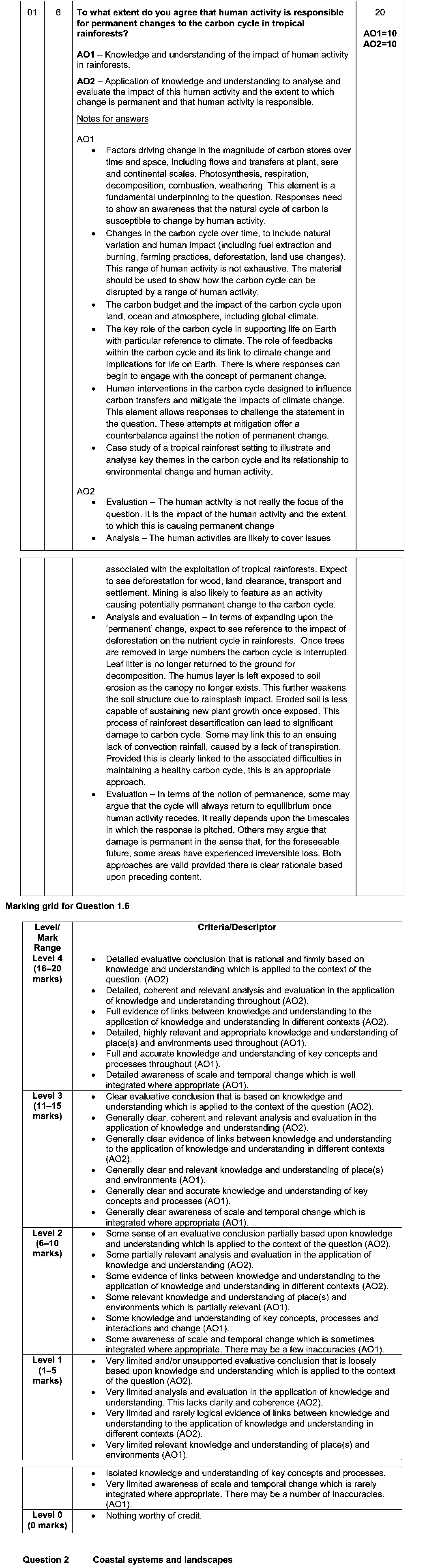
judge both whether human activity (deforestation, farming, land-use change) is responsible and whether the changes to rainforest carbon stores and flows are permanent (recovery, feedbacks, natural variation)
must reach a view on extent
Work with an AQA Geography tutor
Essays stuck in the middle levels, or losing marks on the data questions? Book a trial lesson with a specialist AQA Geography tutor.