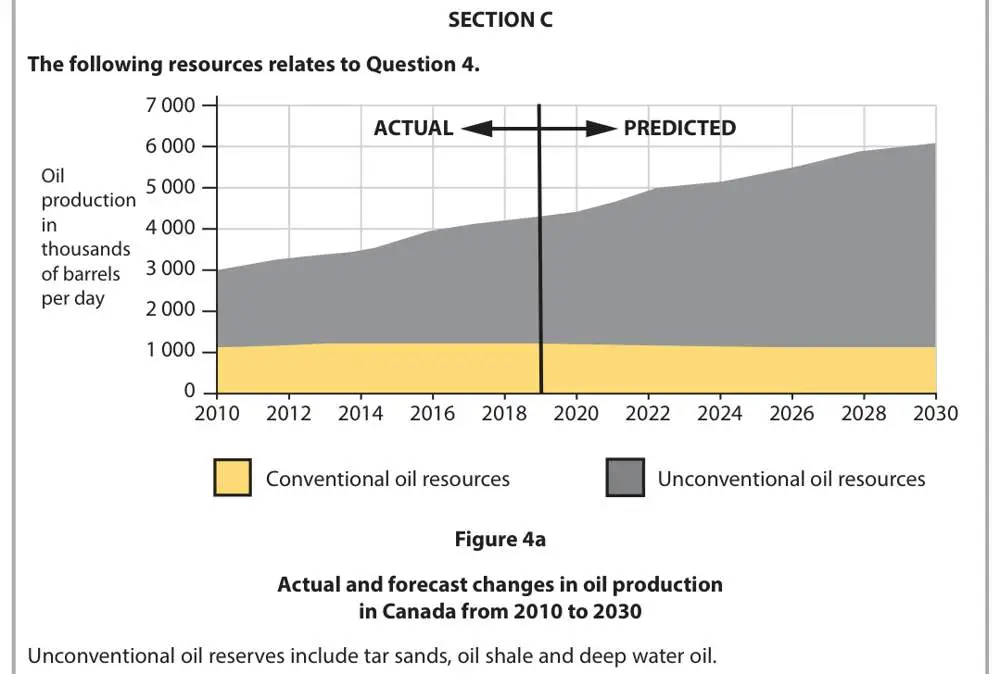
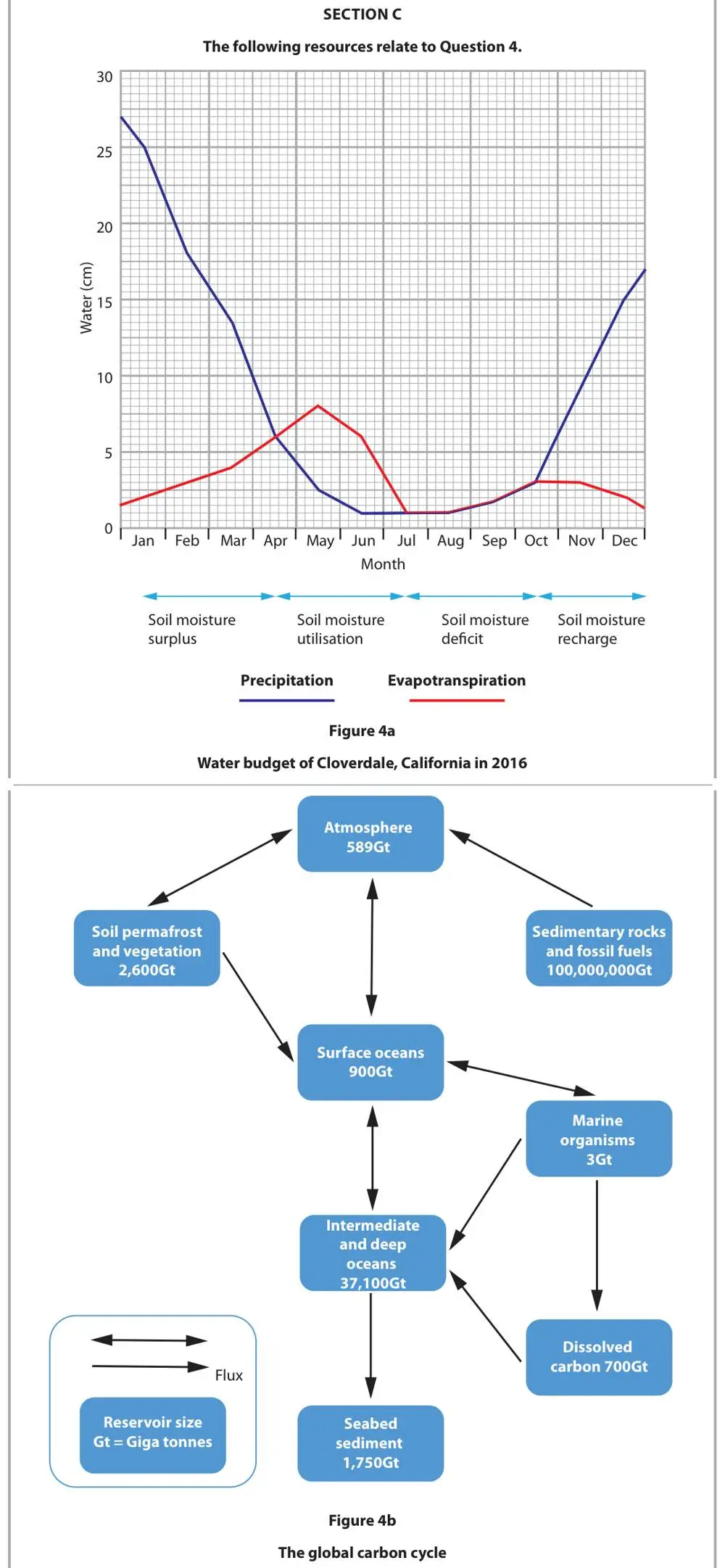
Resources for question 4
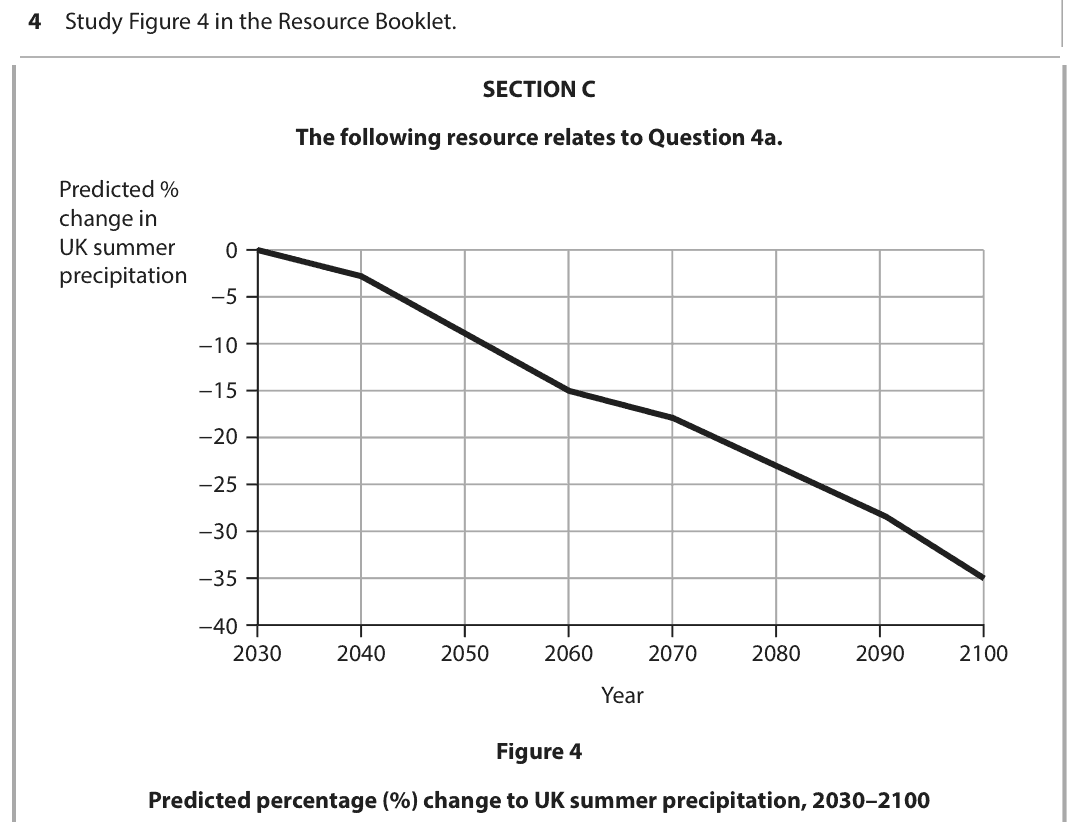

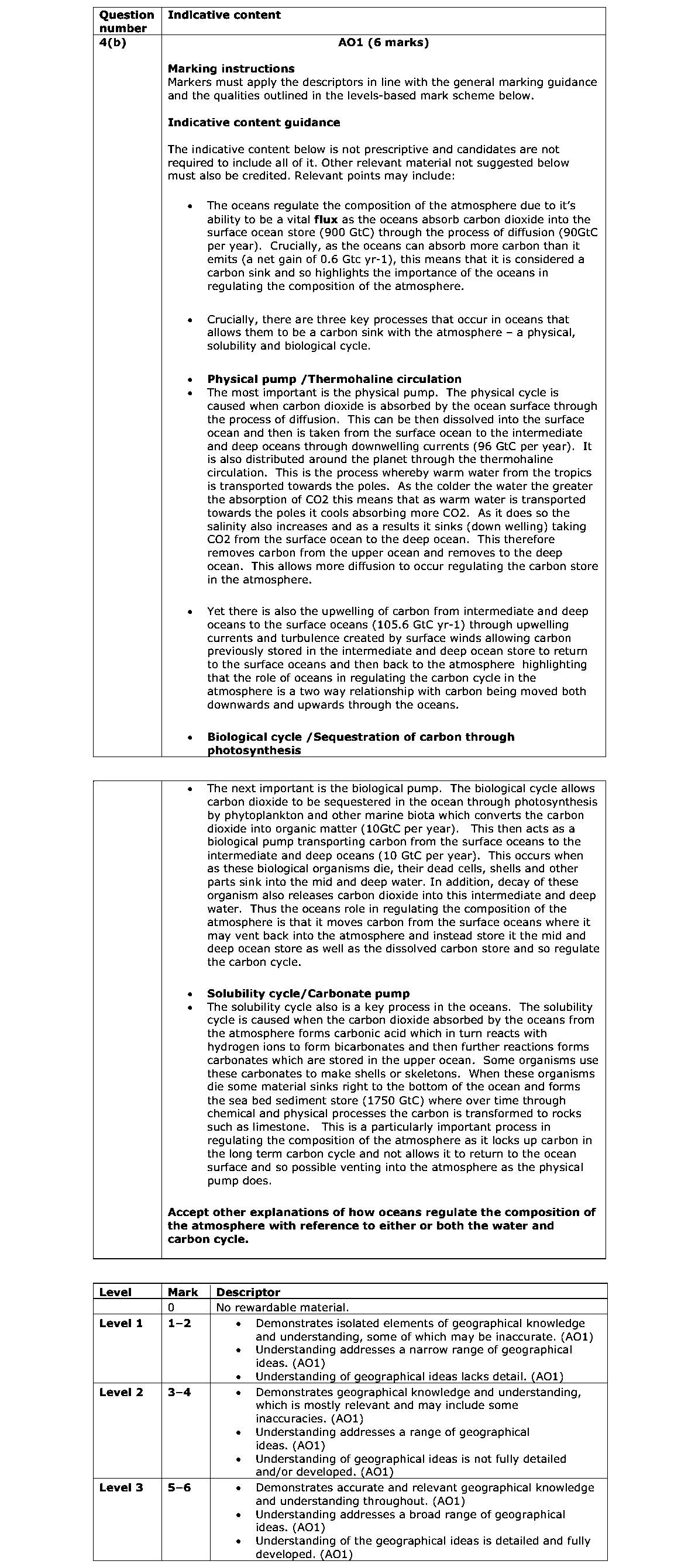
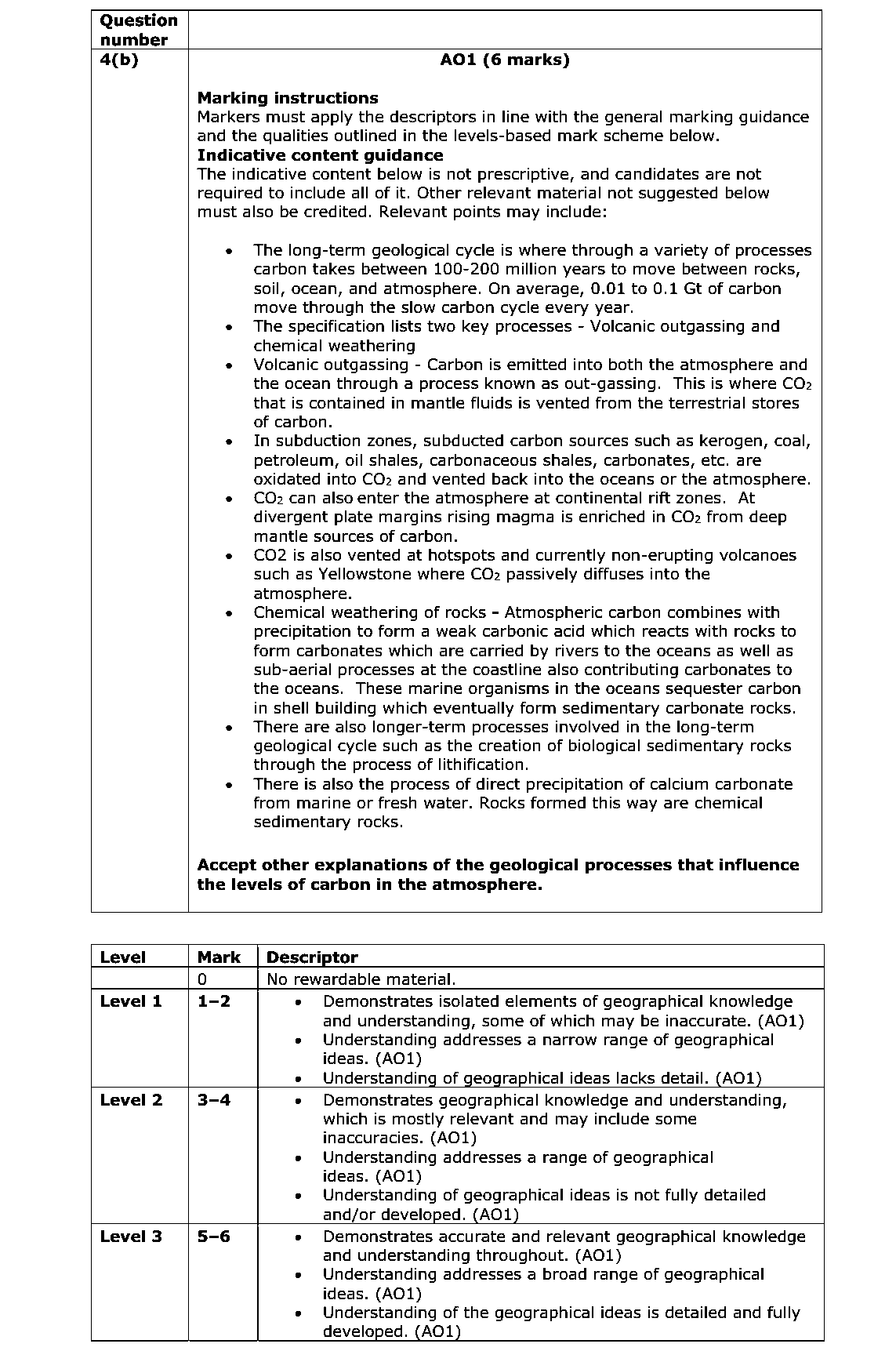
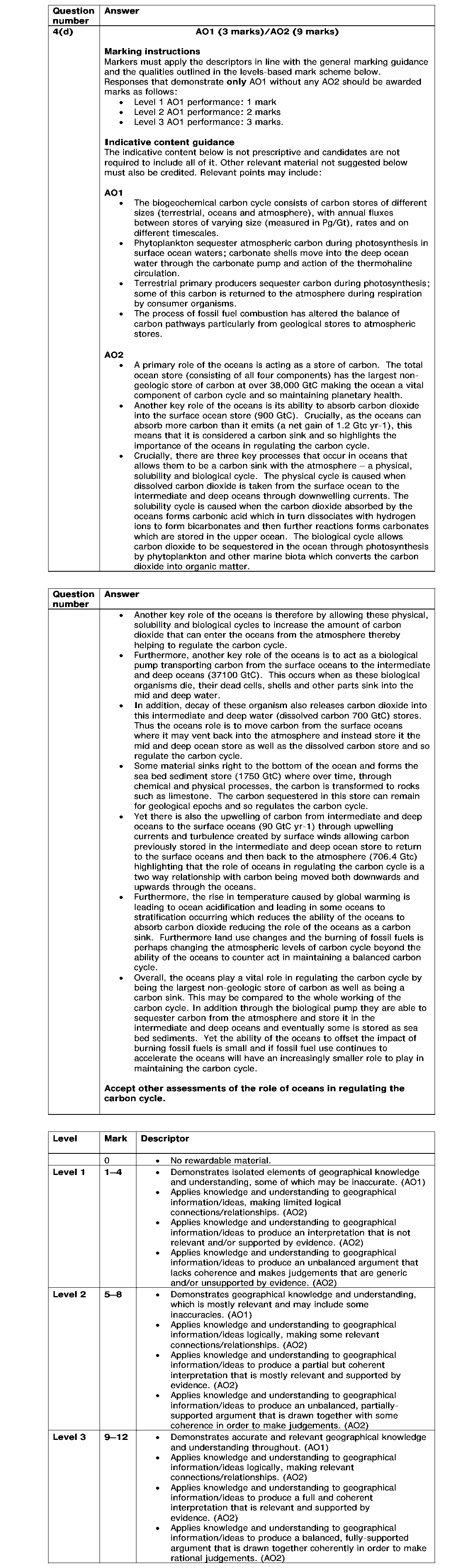
Mark scheme, including the levels and indicative content
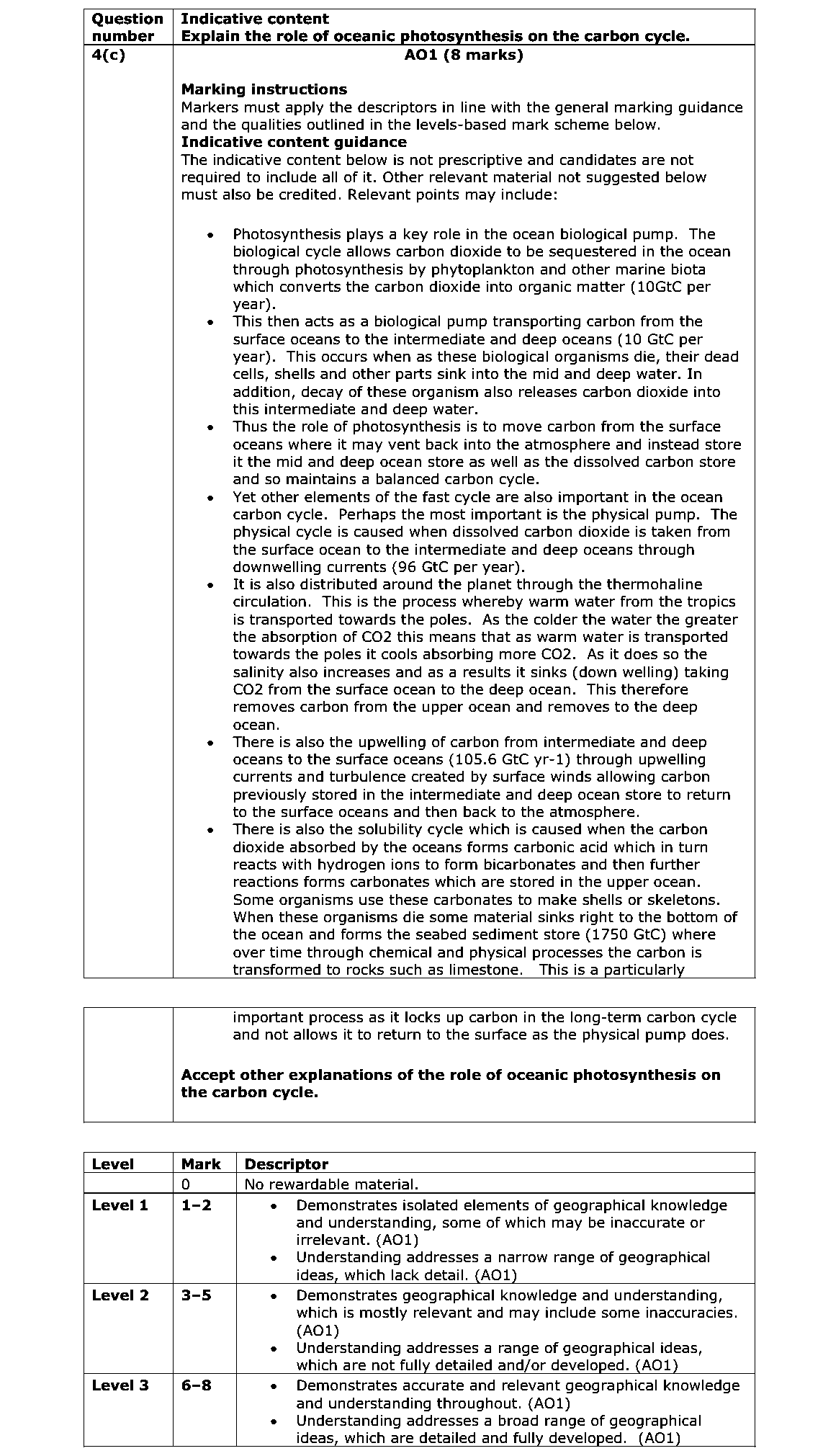
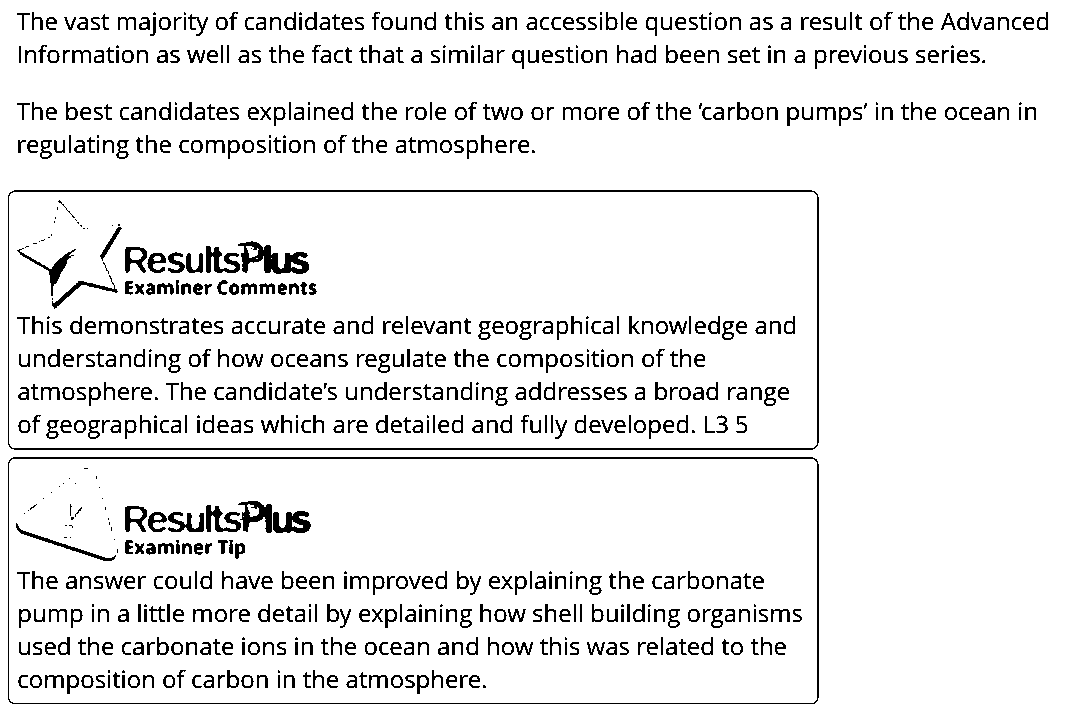
Examiner's comment
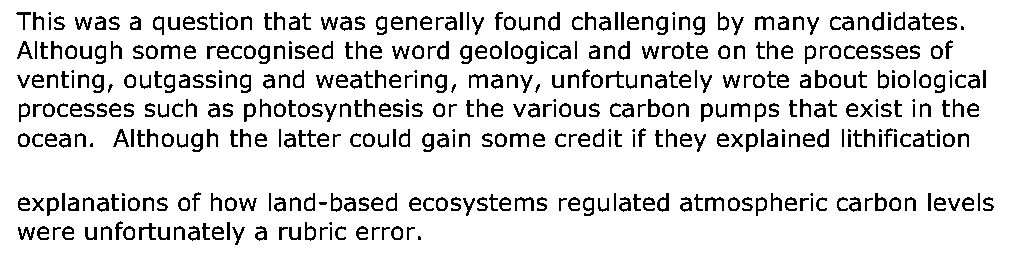
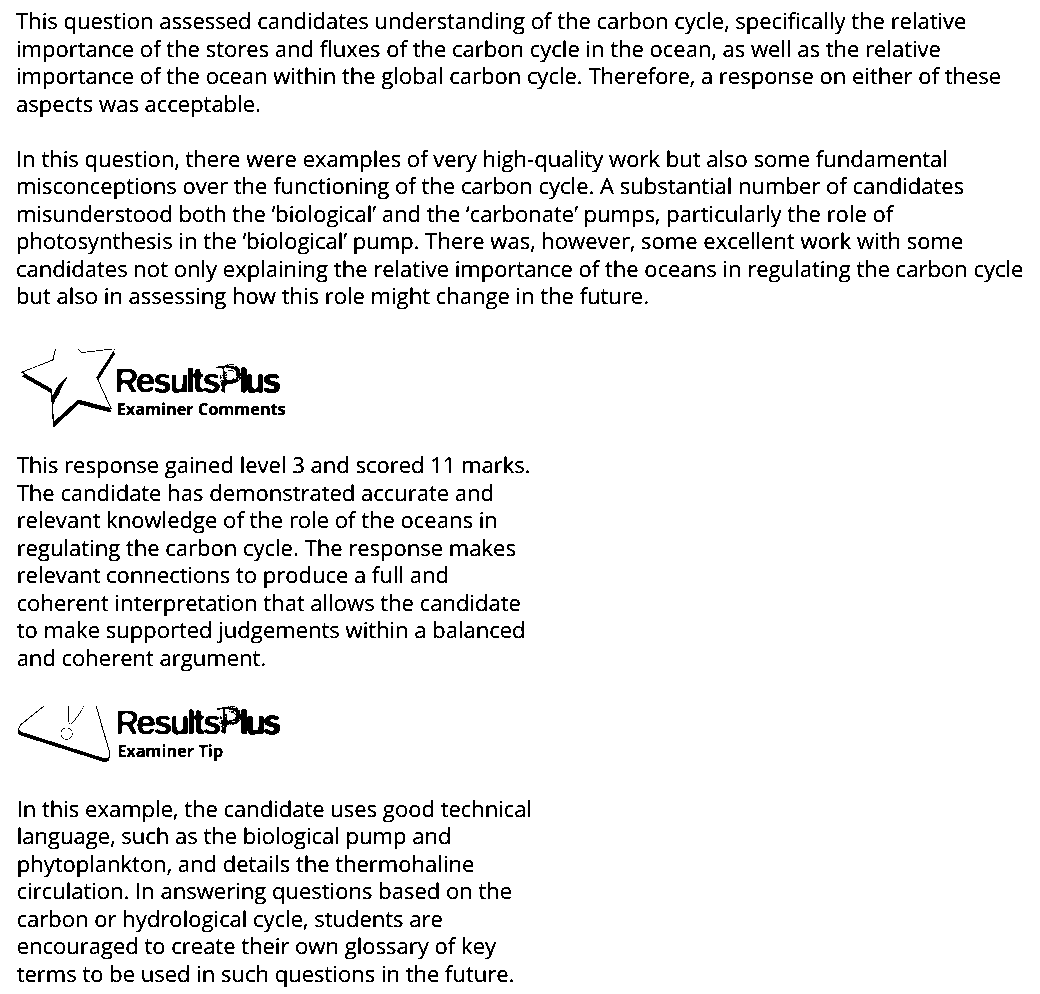
As with question 4a this was answered well by the majority of candidates. It was pleasing to see that what had appeared to be a challenging question when a similar question was set in 2018 was found to be accessible for most students in 2024 and is testament to the teaching of this ‘new’ topic in the last 6 years. The best answers explained the variety of the pumps in the ocean as well as making some comparison with the size of stores/fluxes with other parts of the carbon cycle. This demonstrates accurate and relevant geographical knowledge and understanding of the role of photosynthesis in the ocean on the carbon cycle. The response addresses a broad range of geographical ideas, which are detailed and fully developed. Level 3, 8 marks. The response correctly explains the biological pump and uses good technical language in doing so. The solubility pump is briefly explained and then the long term or slow carbon cycle is explained. Candidates are reminded that in such questions the use of terminology such as sequestration and primary producers aids the explanation of such scientific processes.
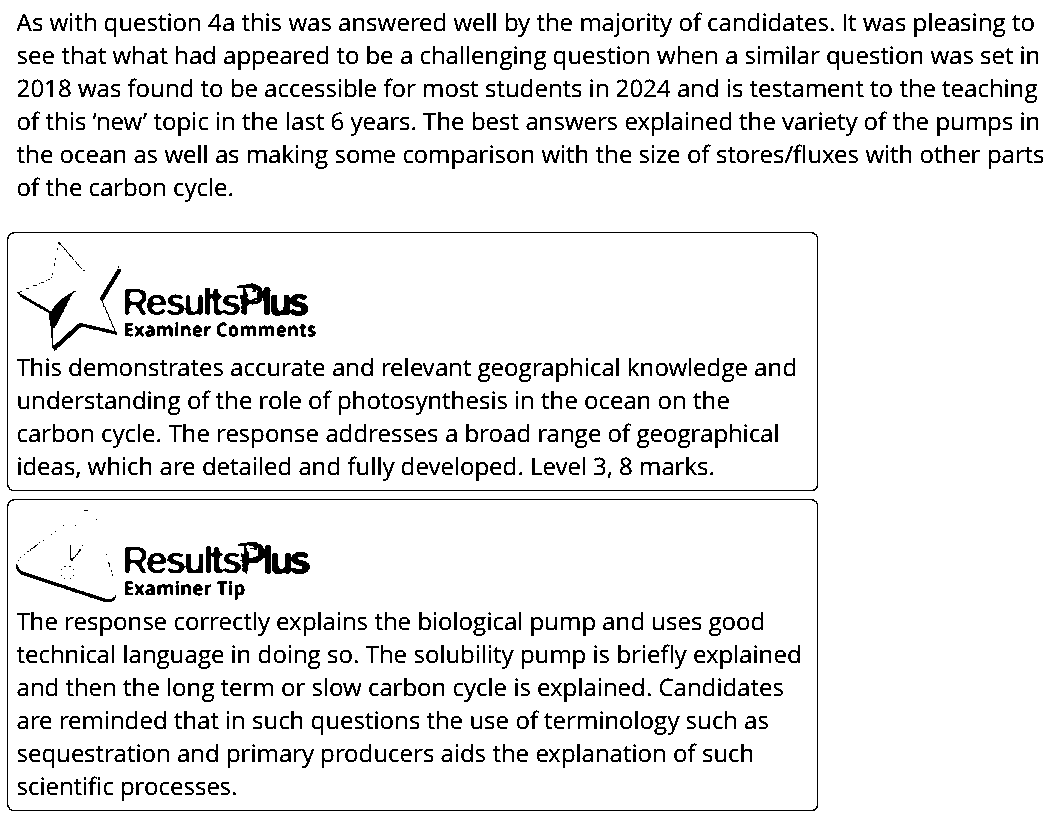
Notes from the mark scheme and report
- Phytoplankton fix CO2 by photosynthesis (biological pump), carbonate shells sink to the deep ocean and sediments
- ocean as a carbon sink