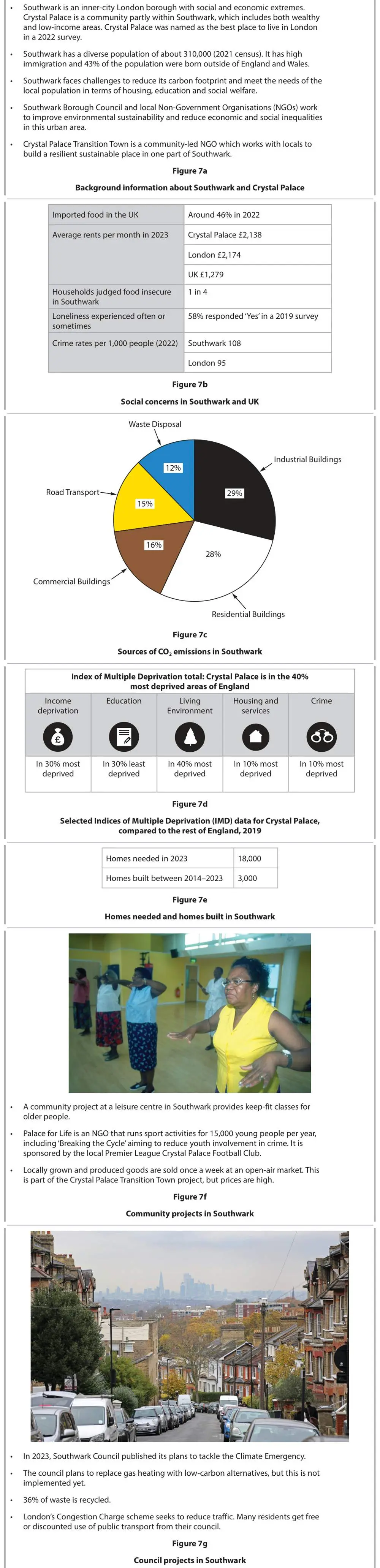
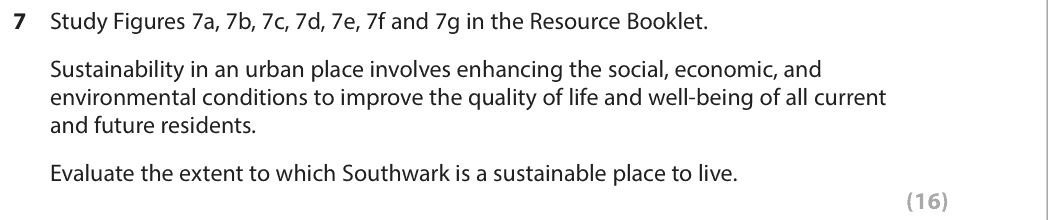
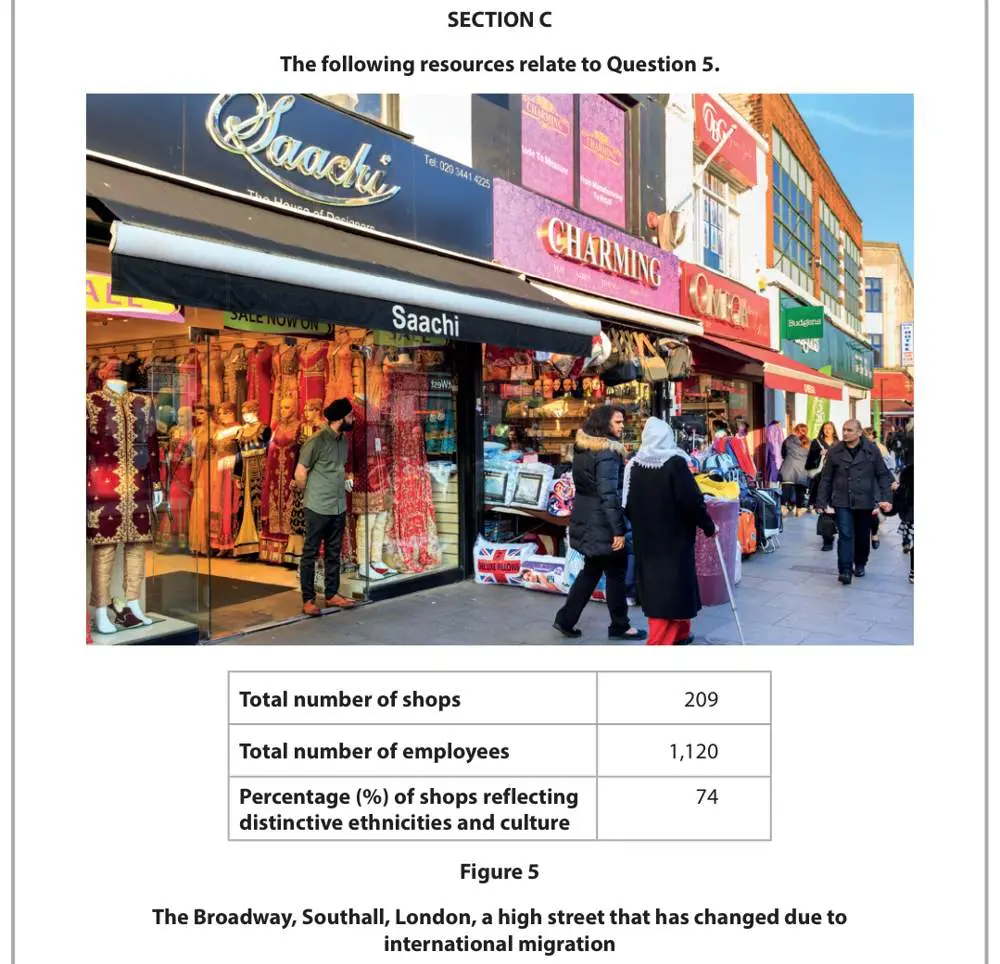
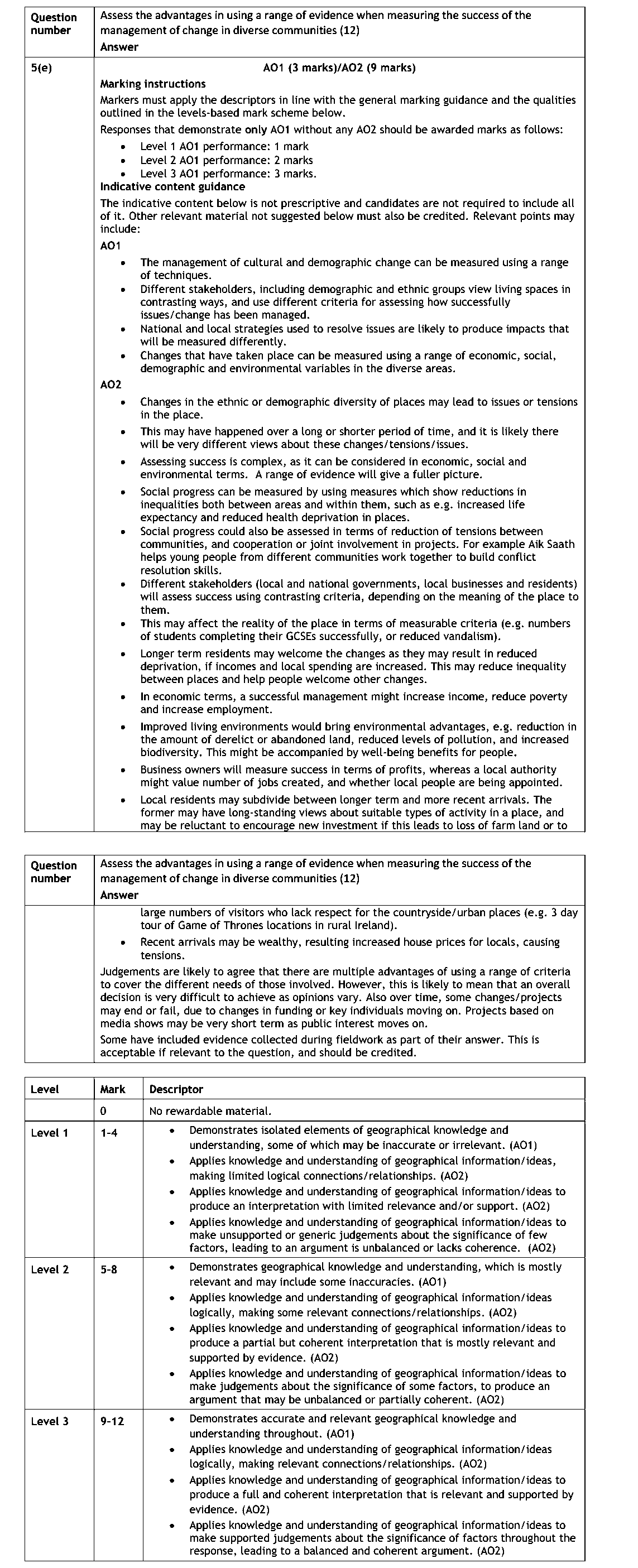
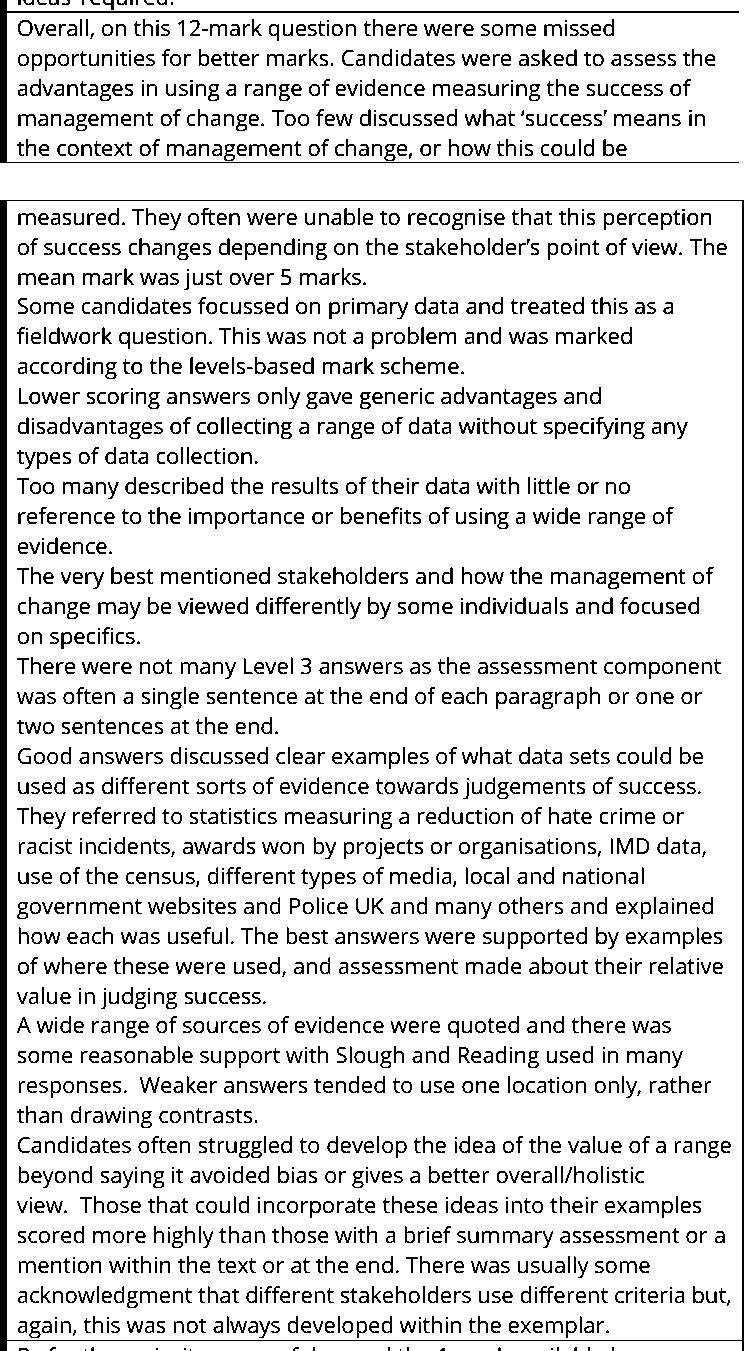
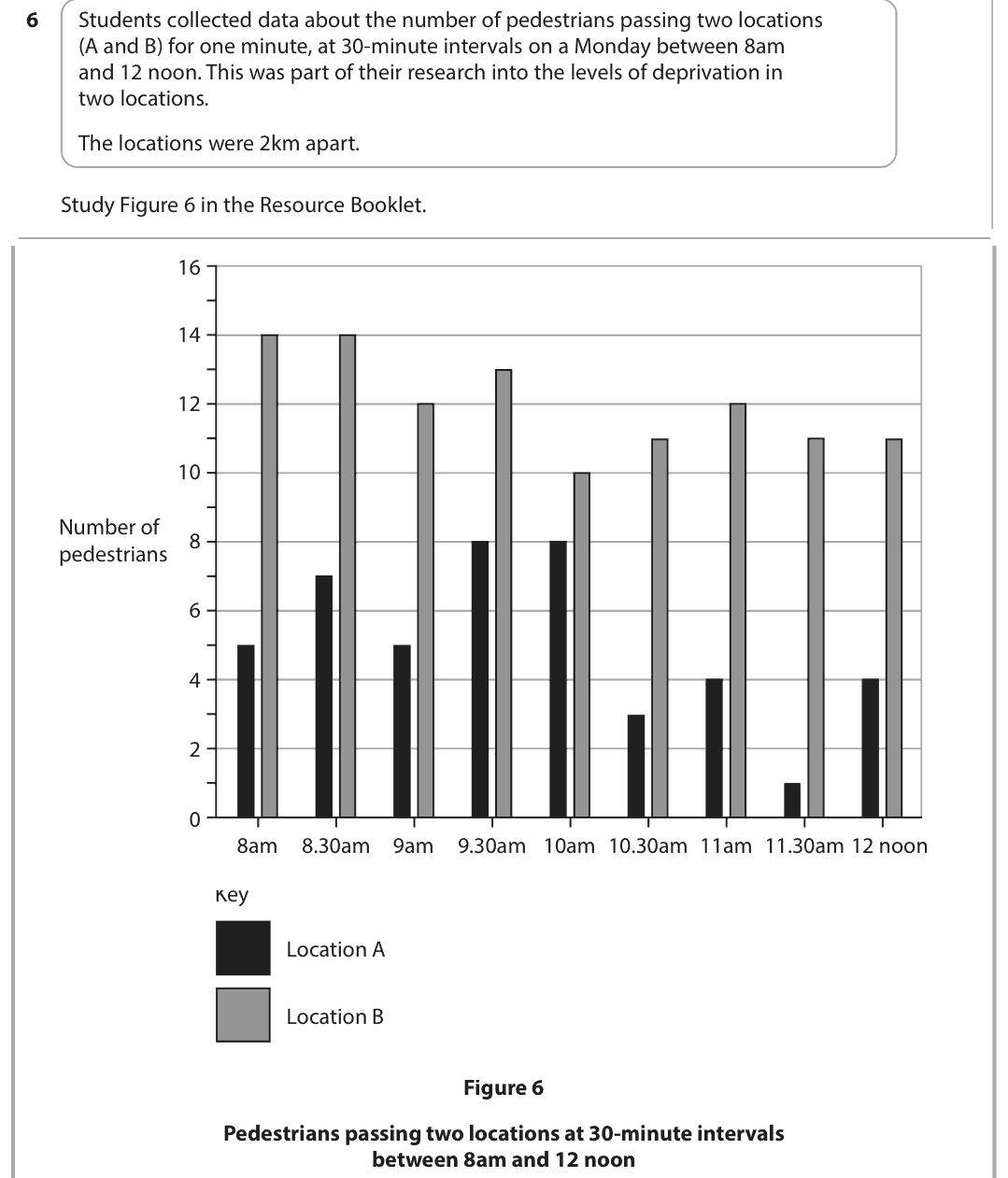
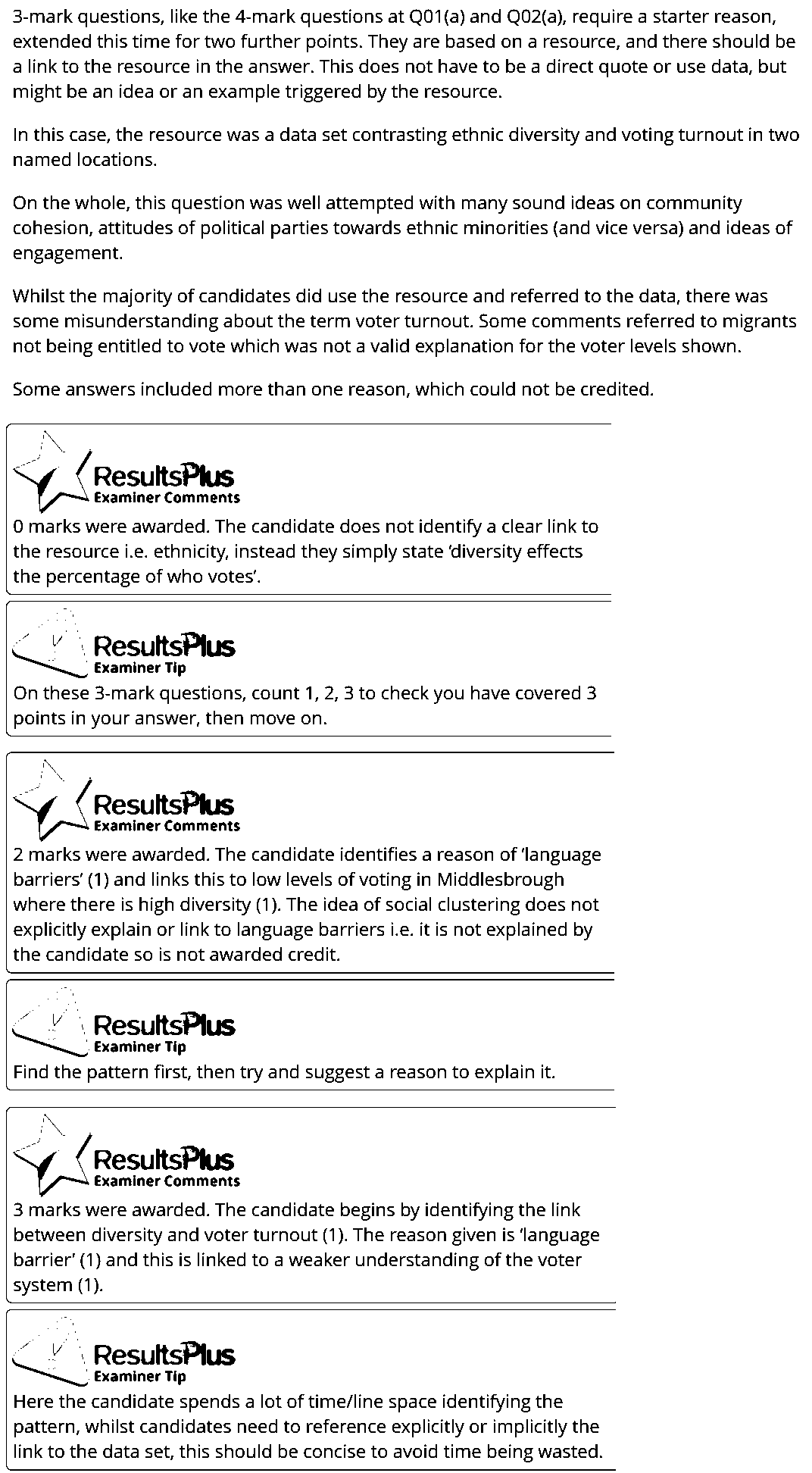
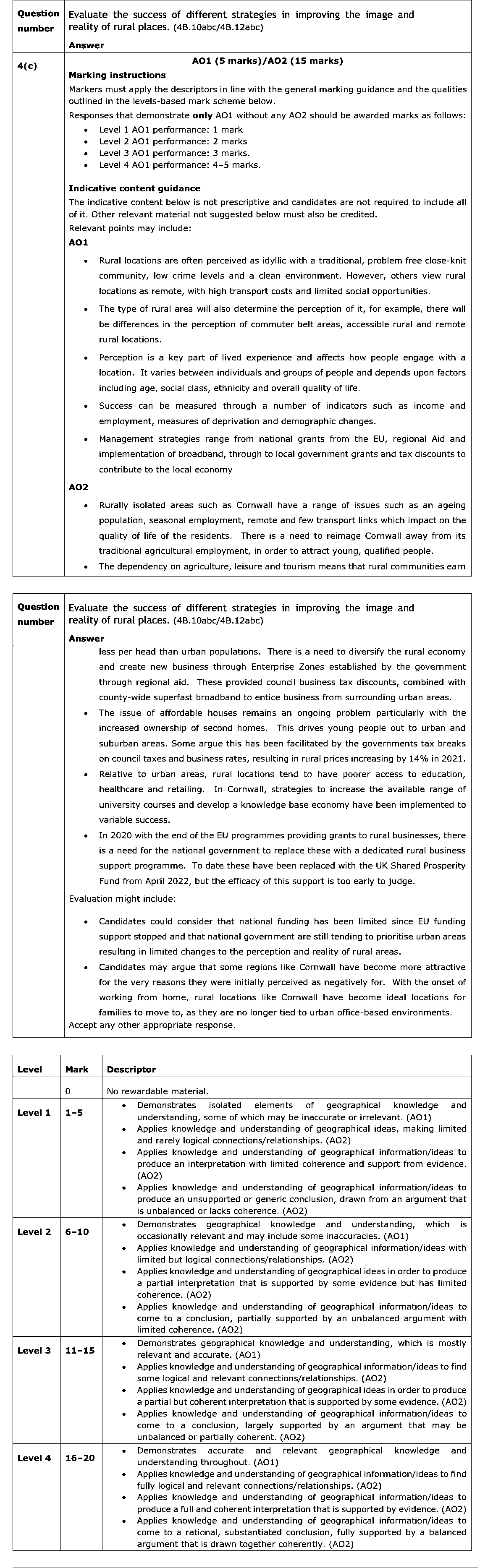
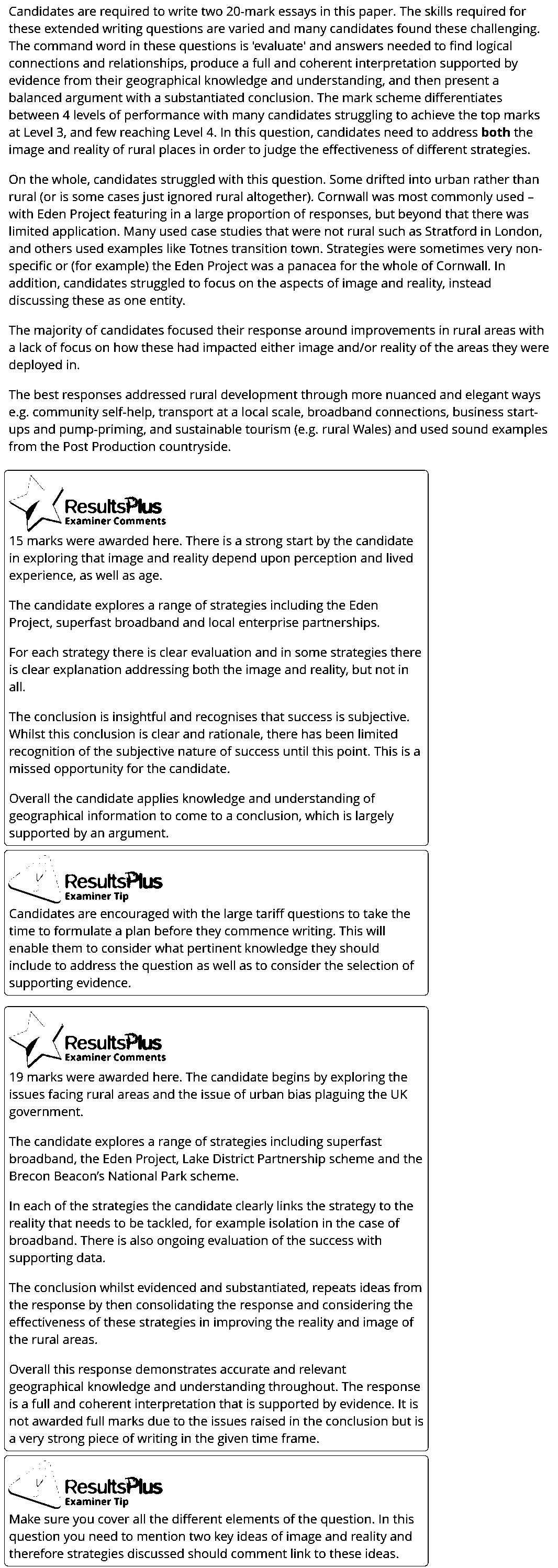
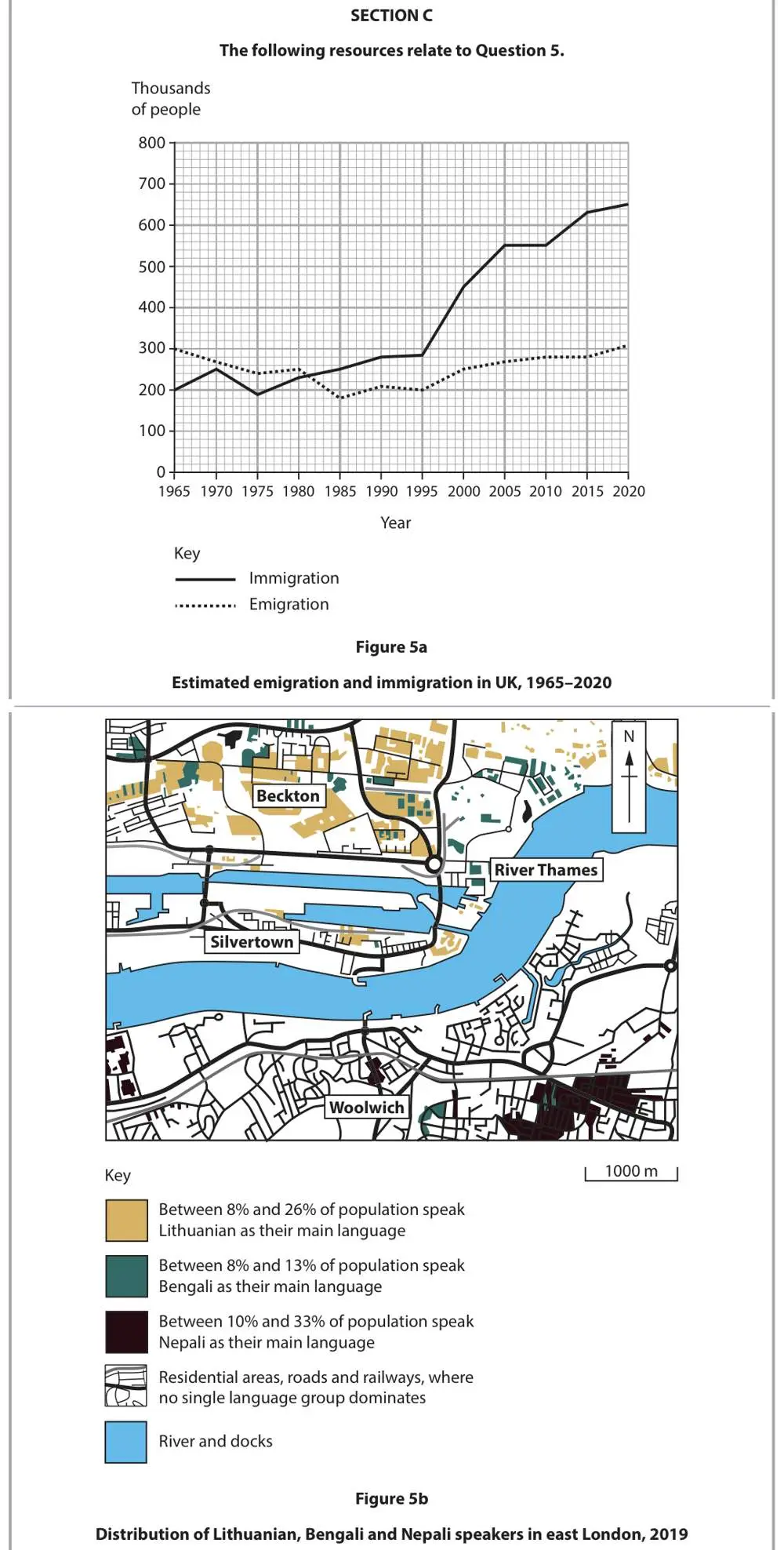
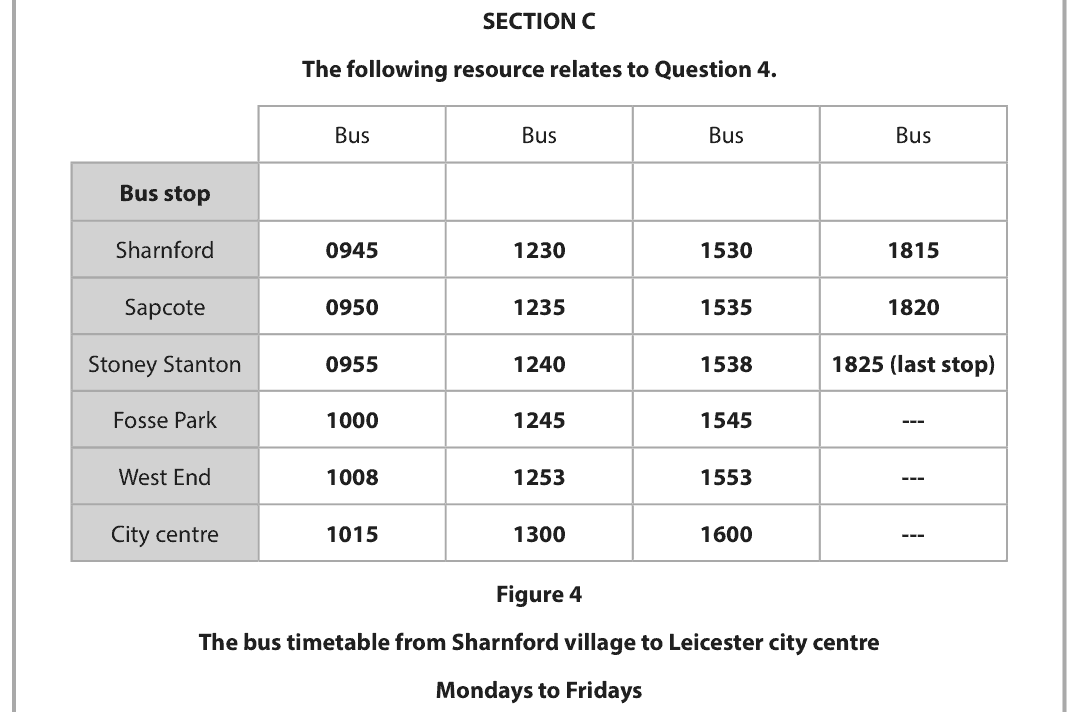
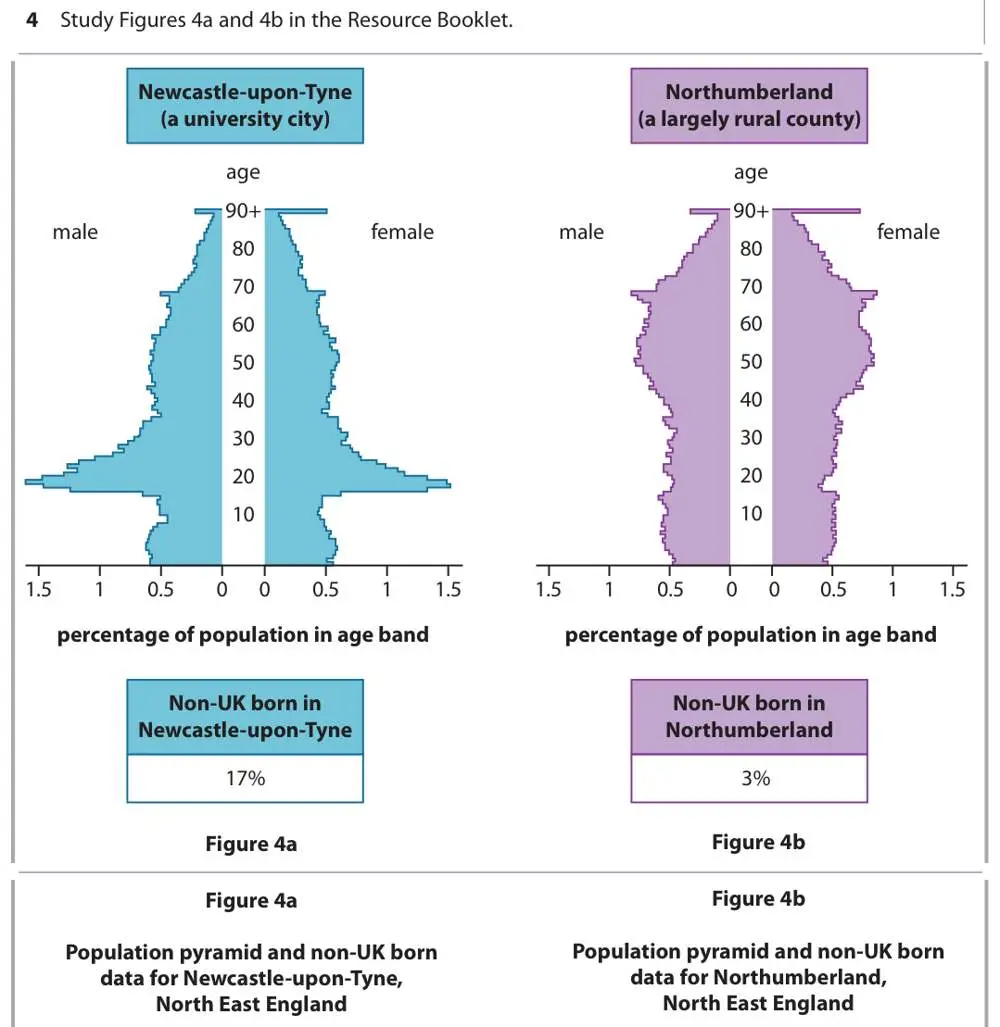
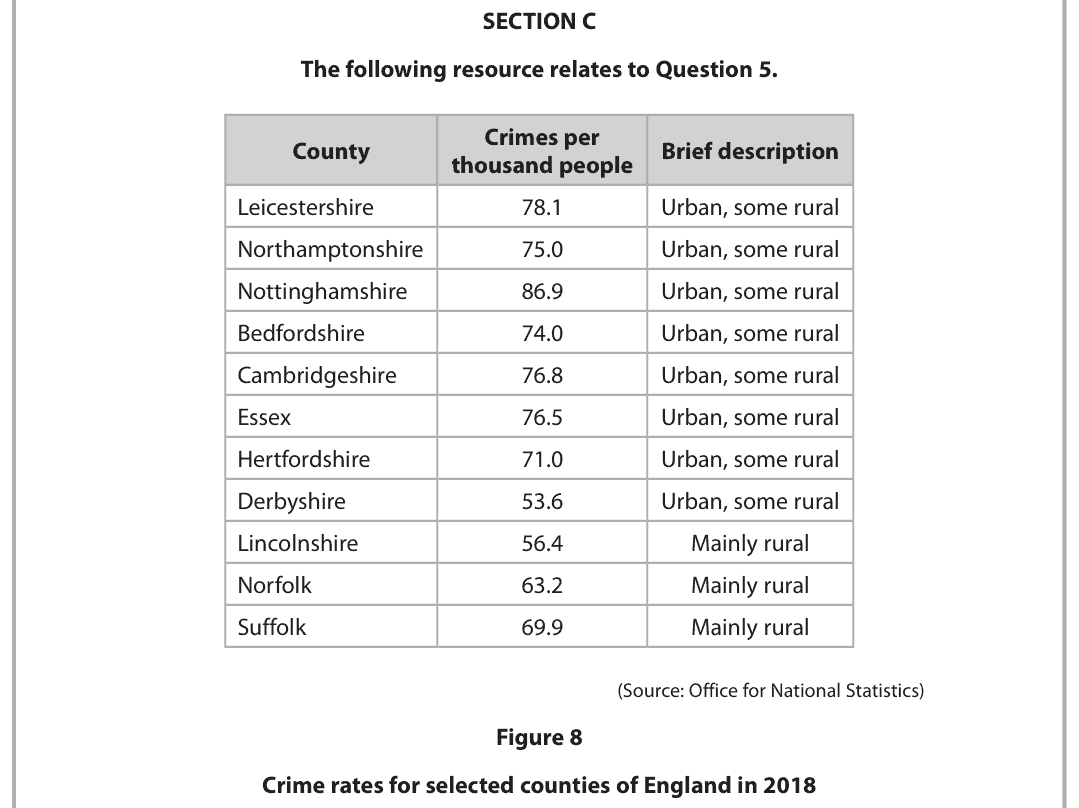
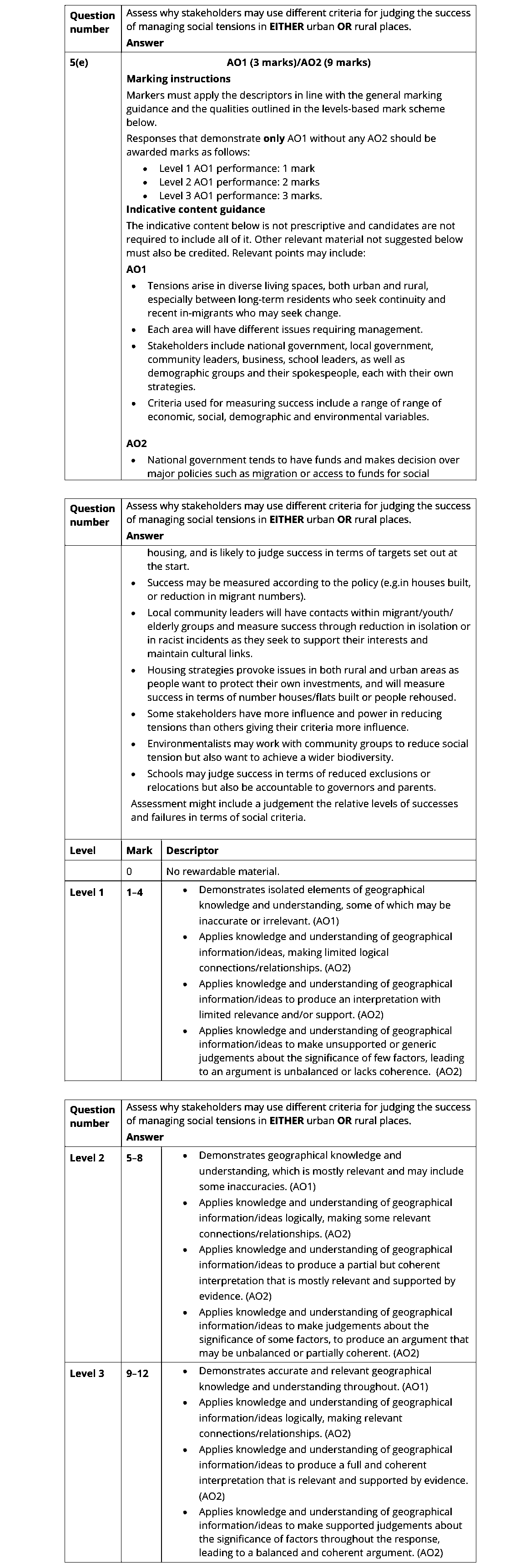
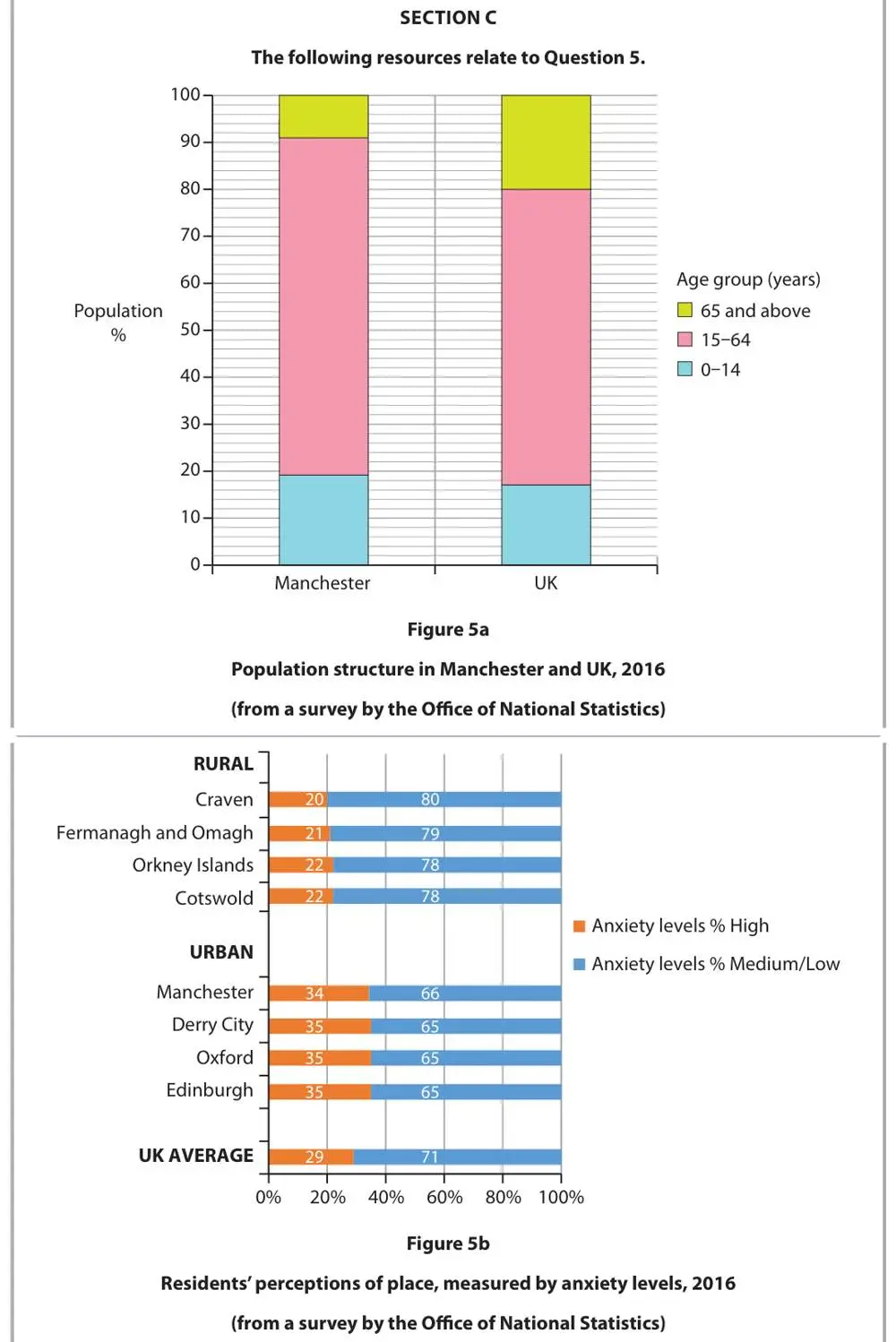
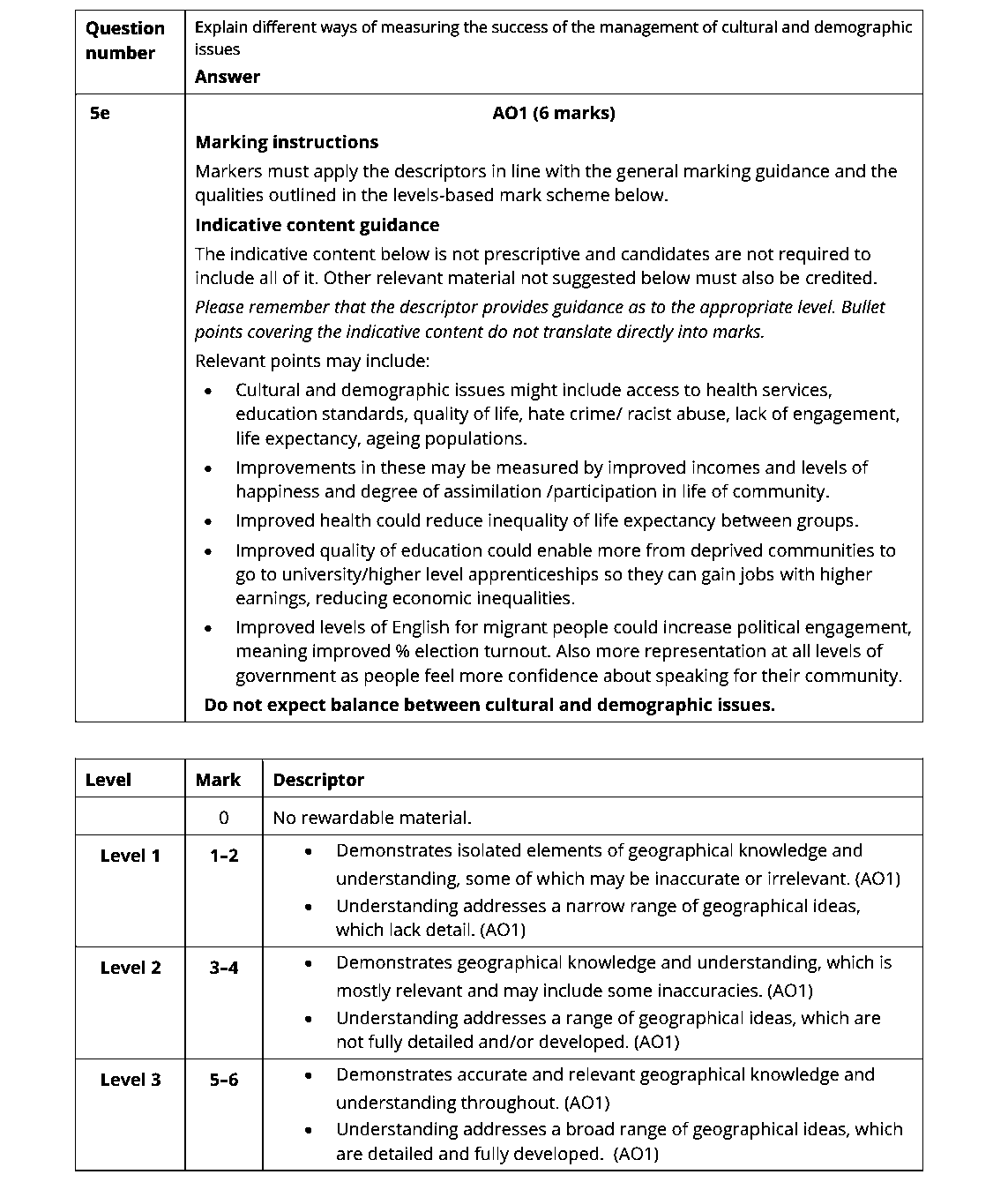
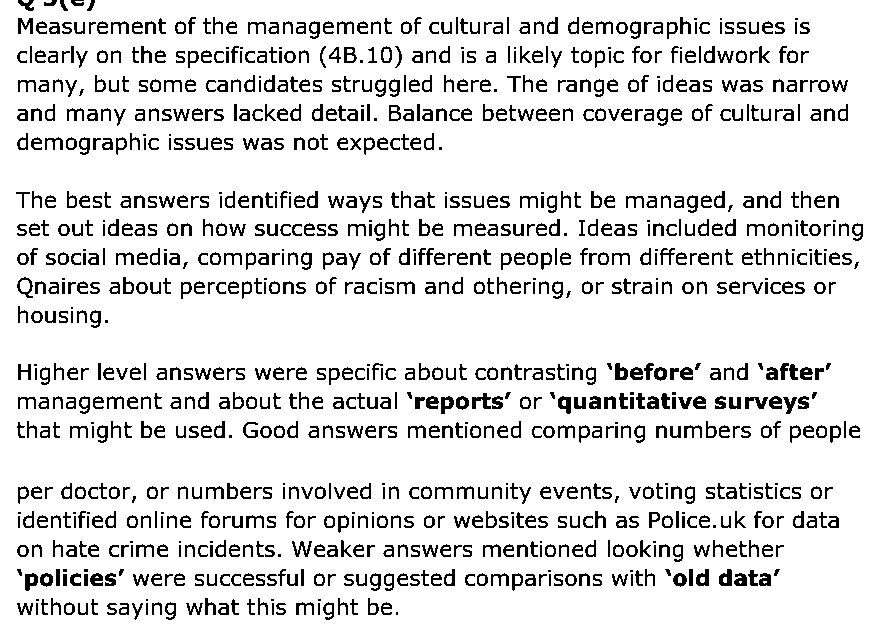
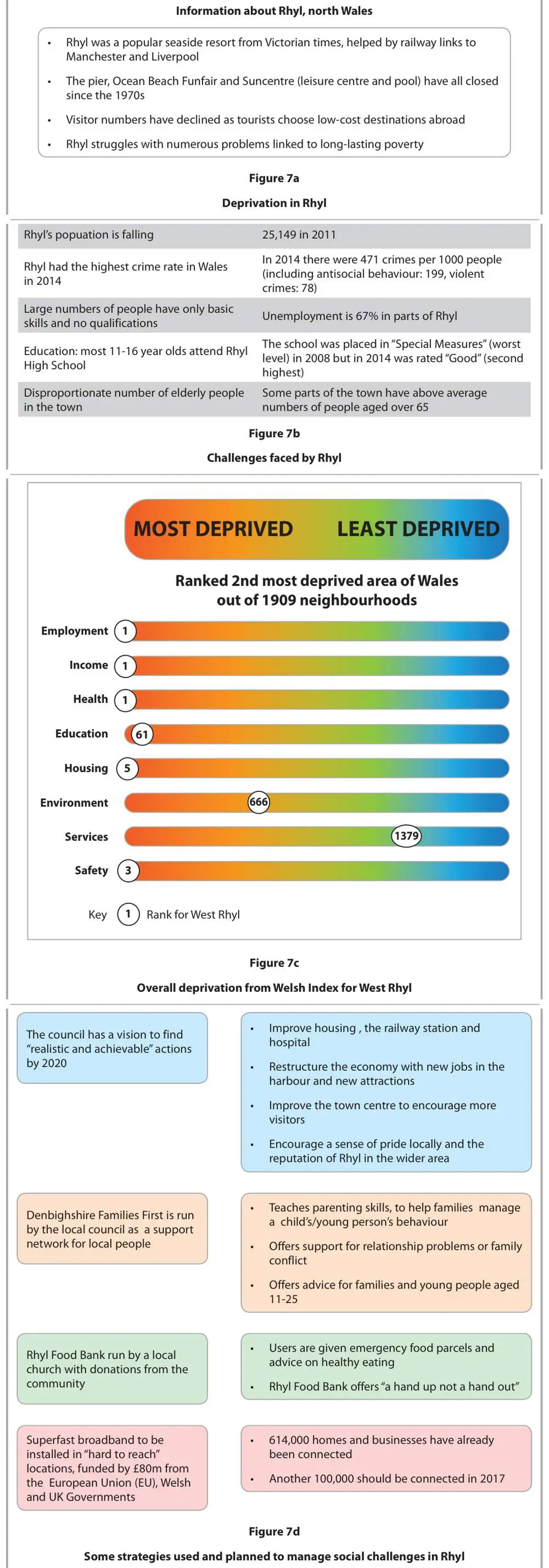
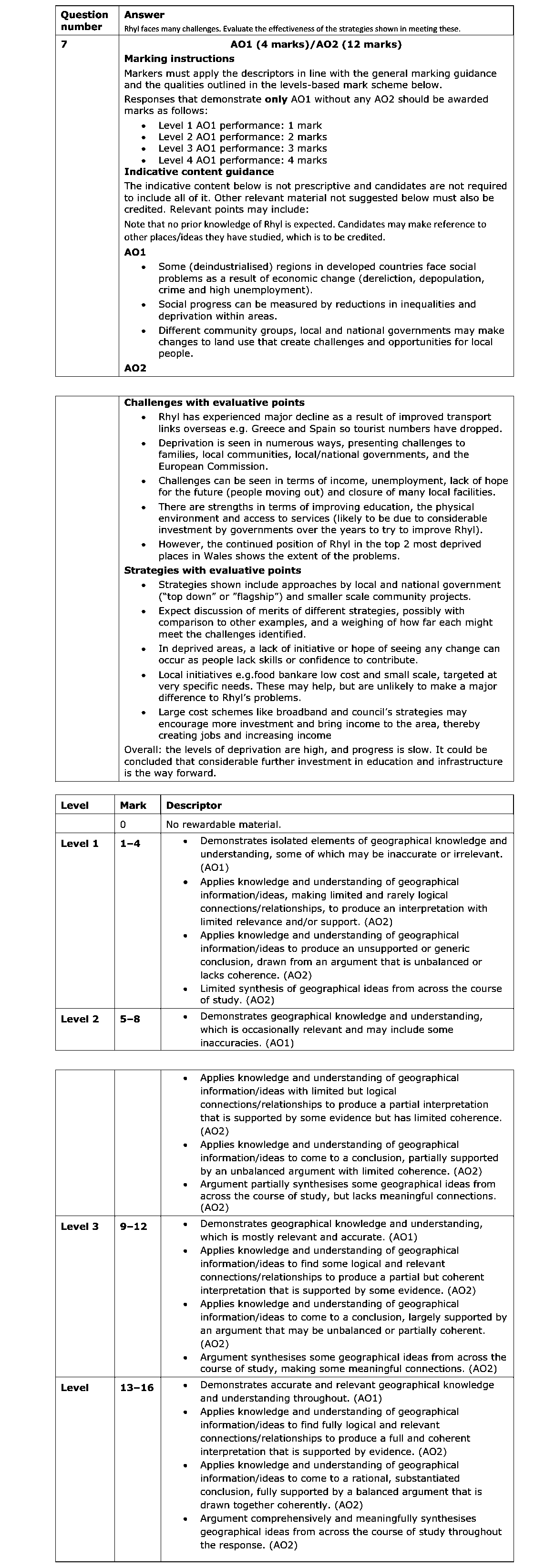
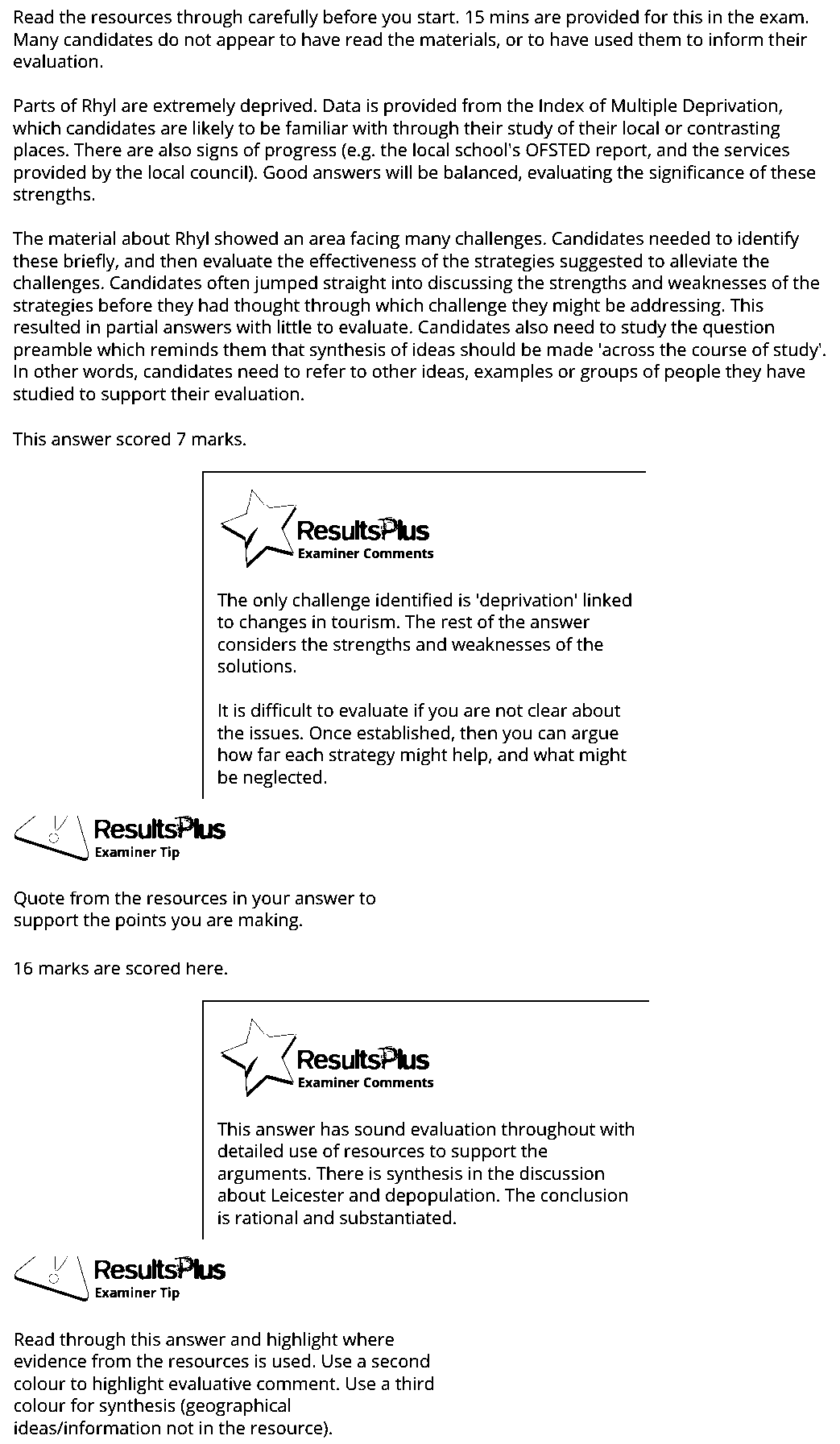
Resources for question 4

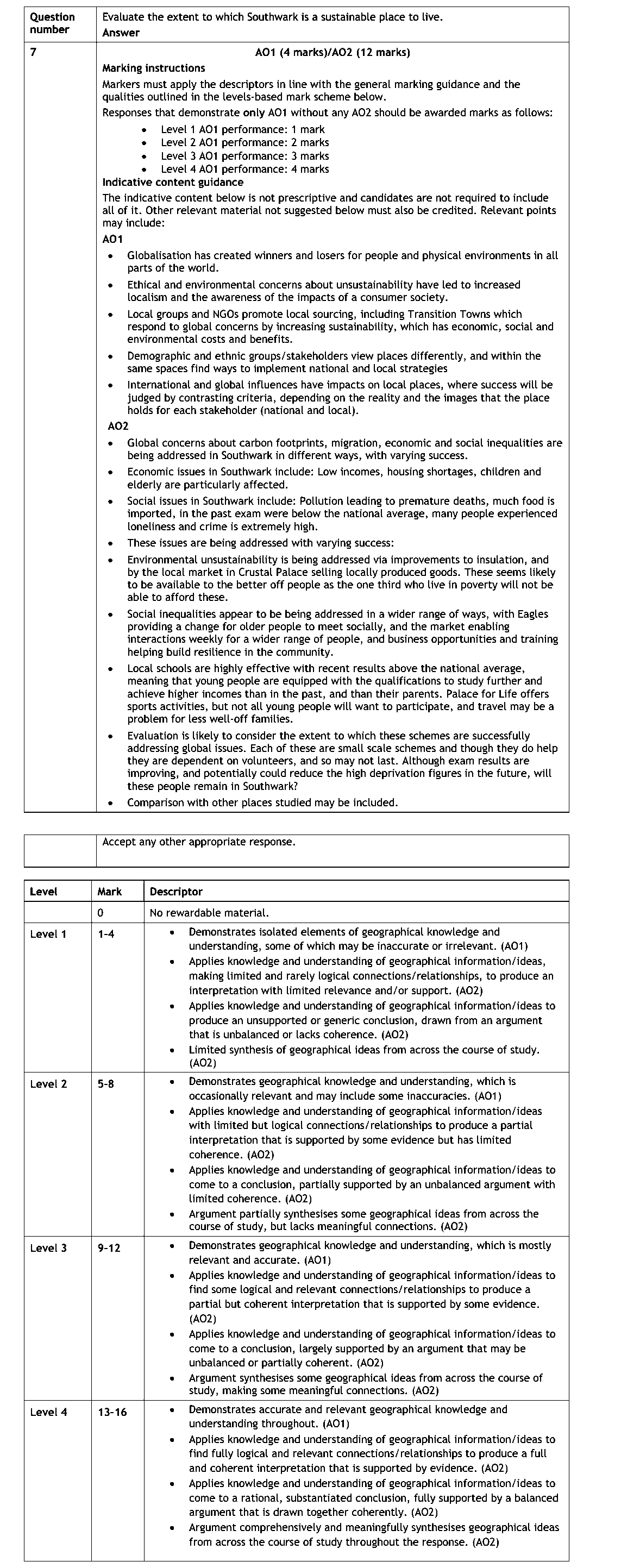
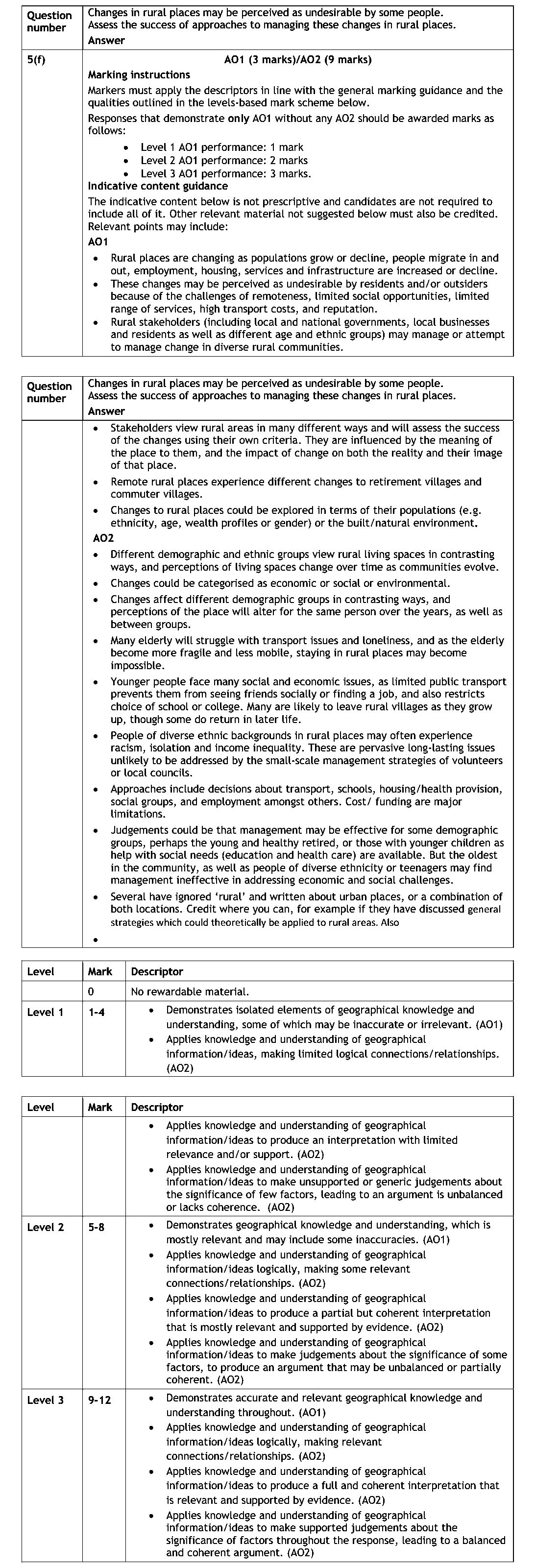
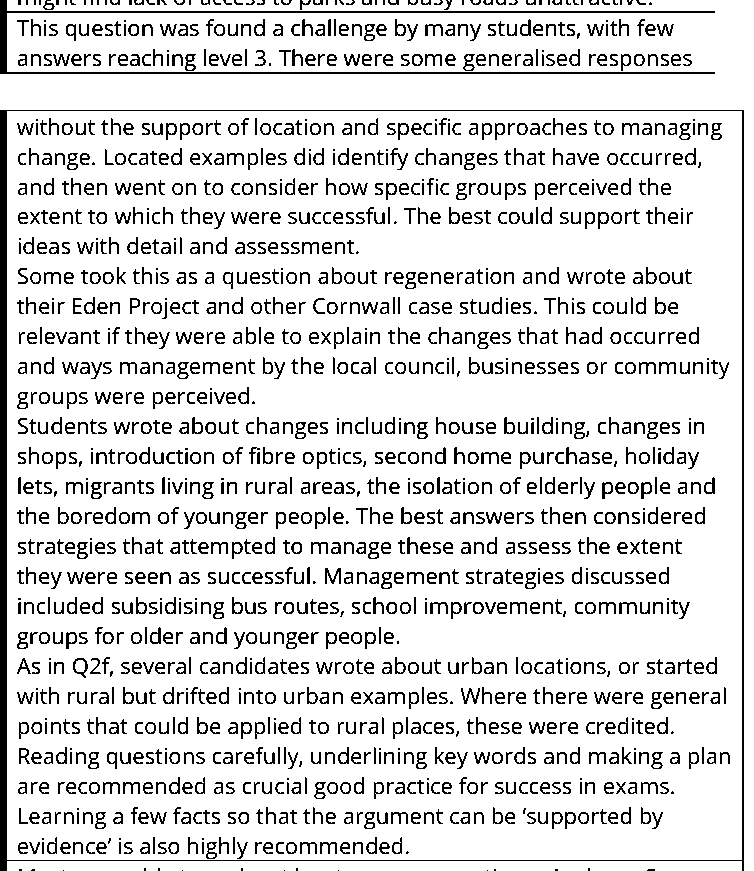
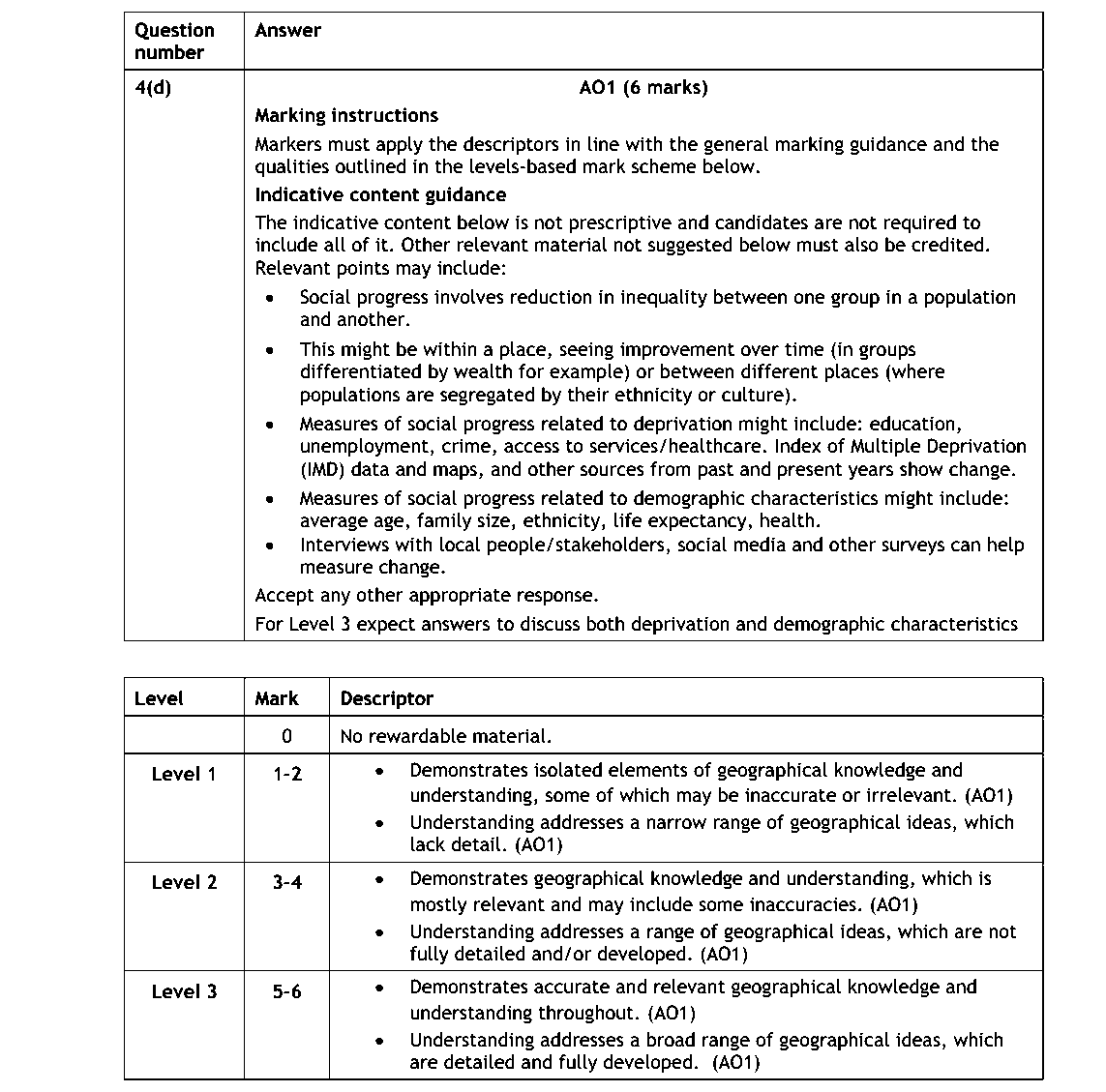
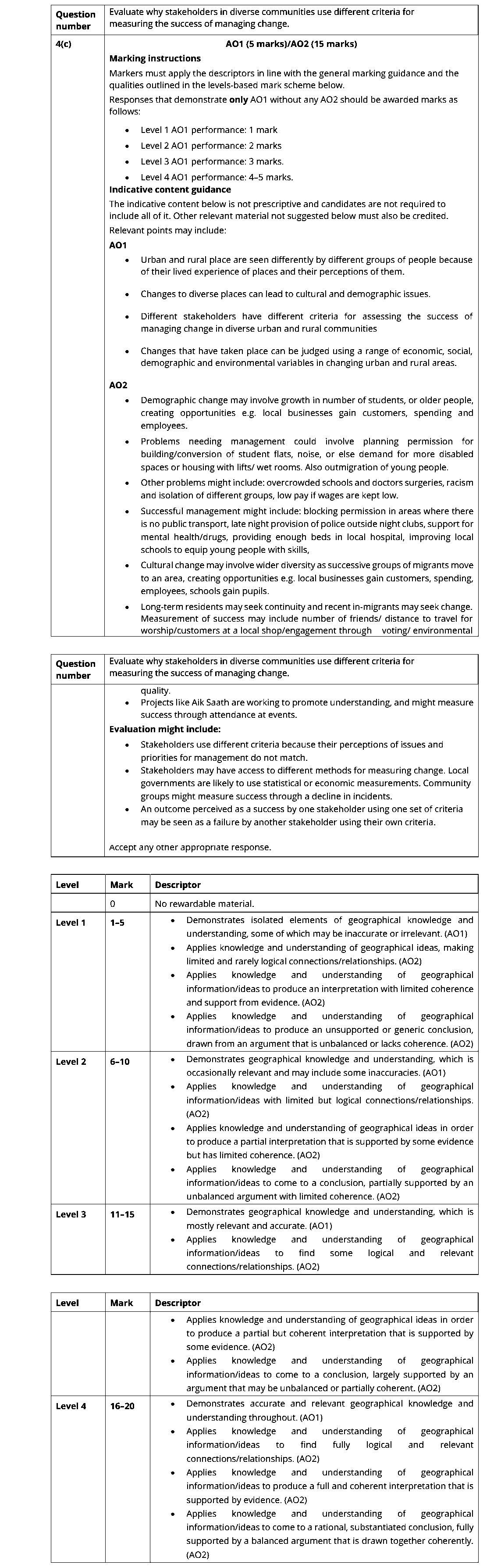
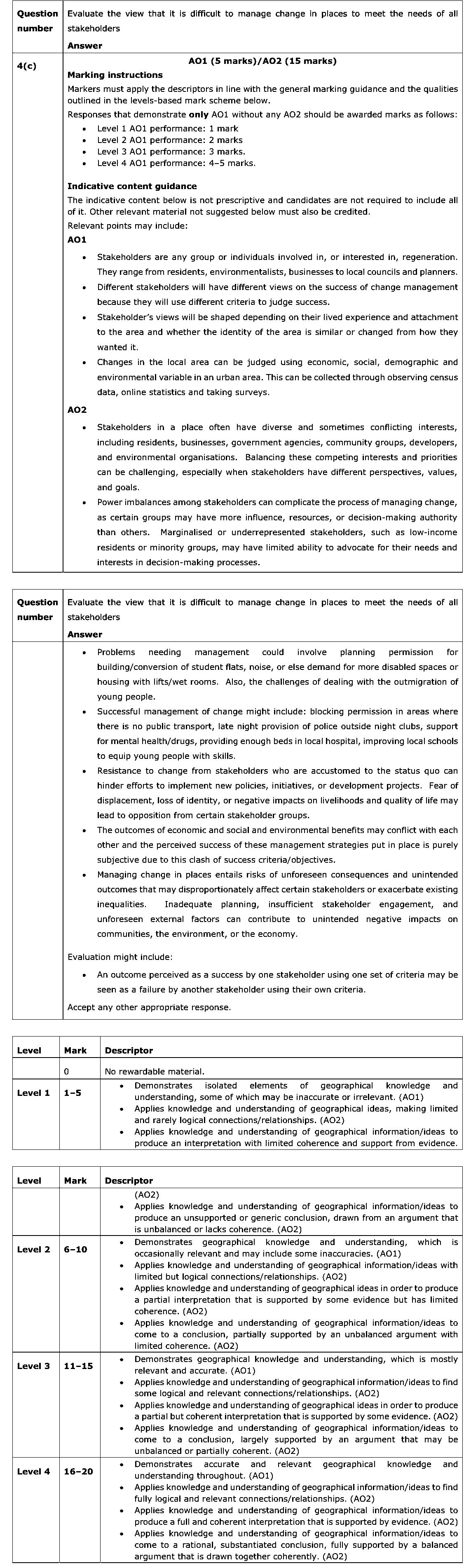
Mark scheme, including the levels and indicative content
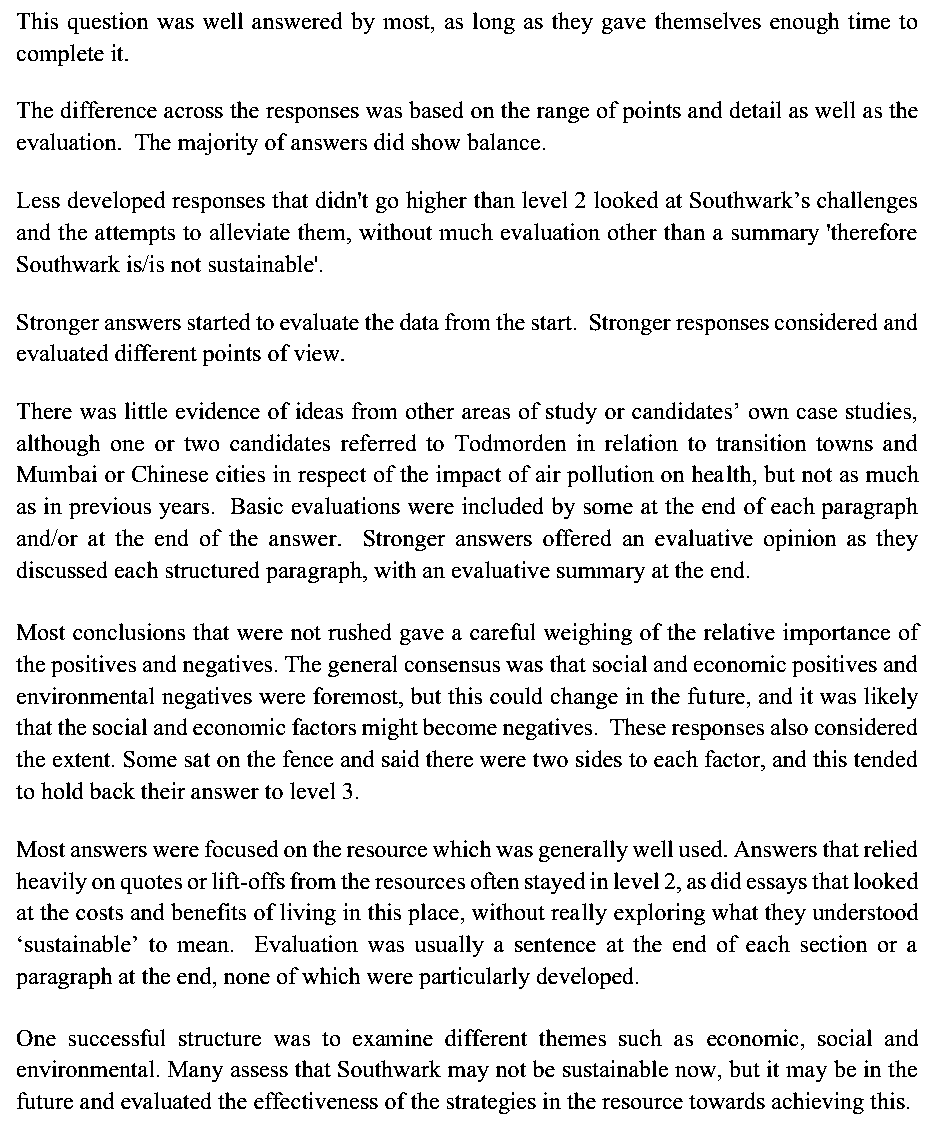
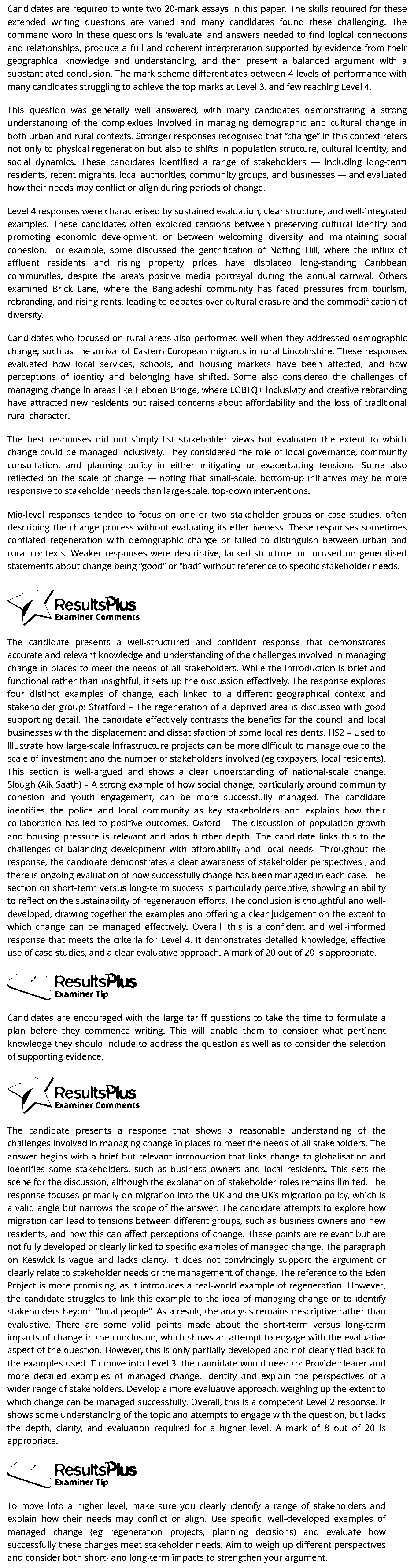
Examiner's comment
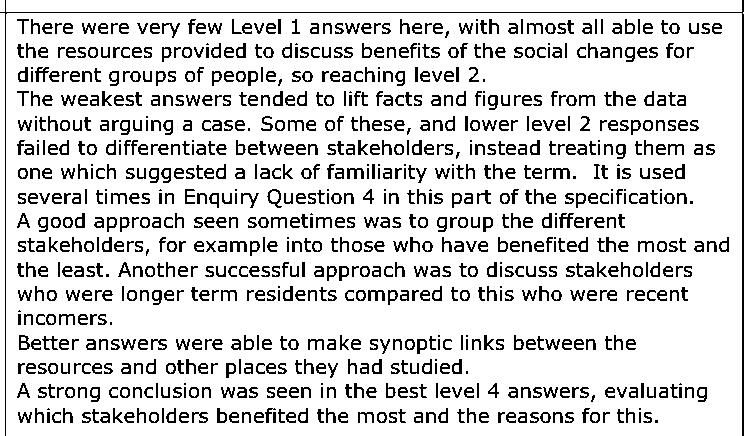
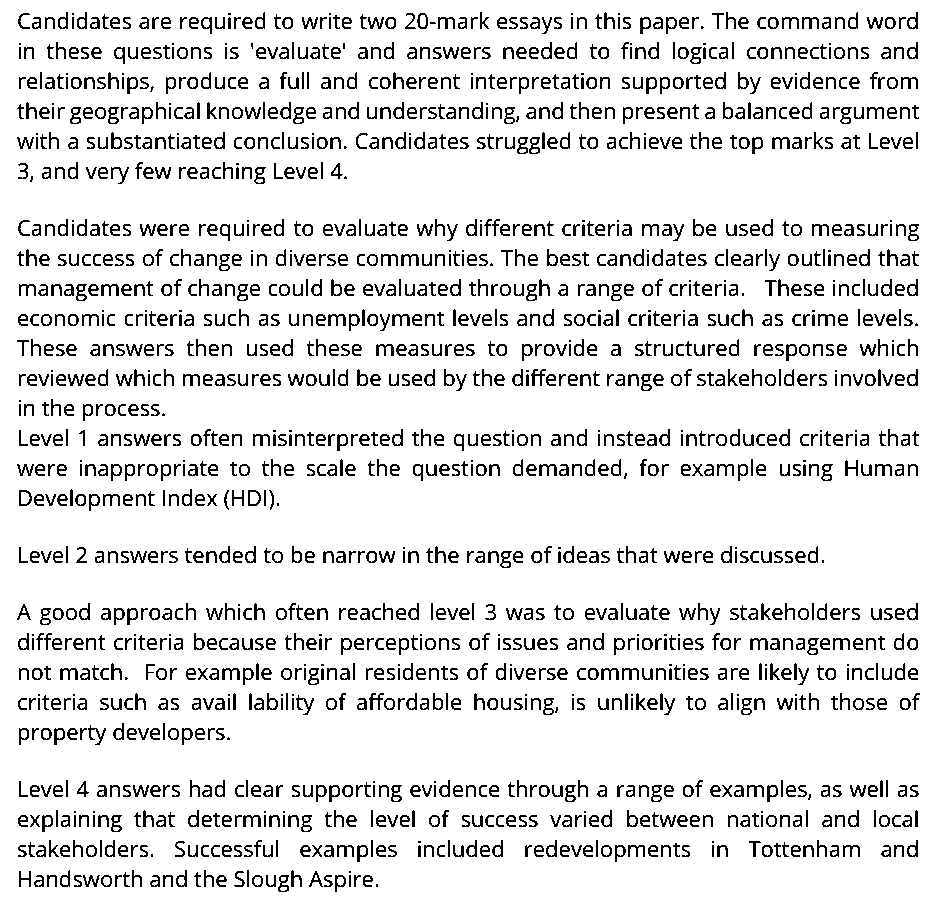
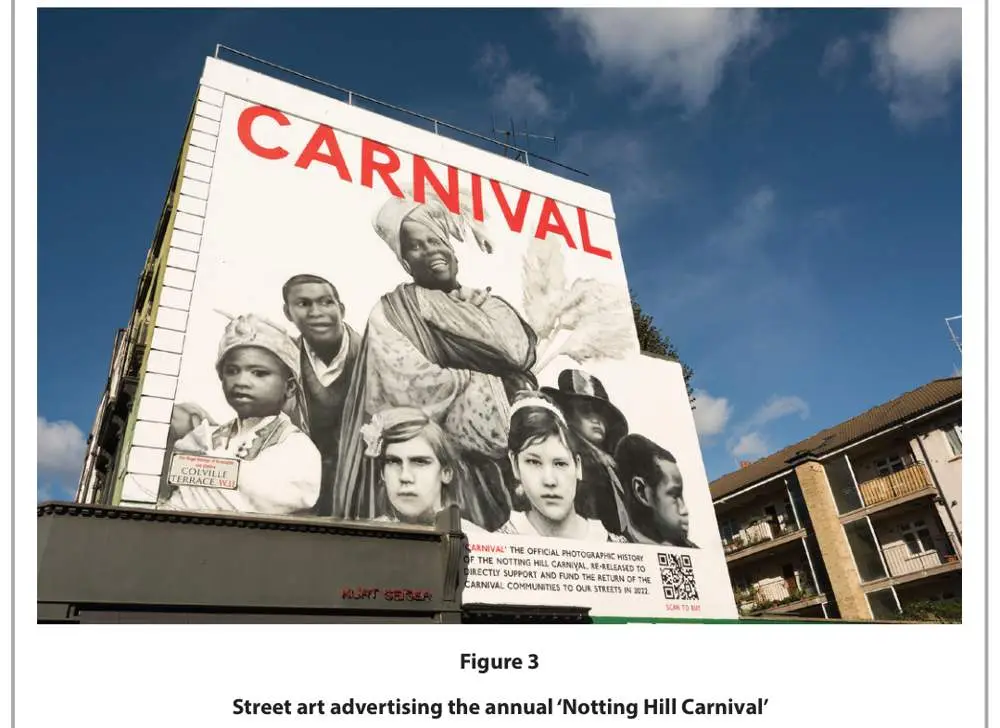
Candidates are required to write two 20-mark essays in this paper. The skills required for these extended writing questions are varied and many candidates found these challenging. The command word in these questions is 'evaluate' and answers needed to find logical connections and relationships, produce a full and coherent interpretation supported by evidence from their geographical knowledge and understanding, and then present a balanced argument with a substantiated conclusion. The mark scheme differentiates between 4 levels of performance with many candidates struggling to achieve the top marks at Level 3, and few reaching Level 4. This question was generally well answered, with many candidates demonstrating a strong understanding of the complexities involved in managing demographic and cultural change in both urban and rural contexts. Stronger responses recognised that “change” in this context refers not only to physical regeneration but also to shifts in population structure, cultural identity, and social dynamics. These candidates identified a range of stakeholders — including long-term residents, recent migrants, local authorities, community groups, and businesses — and evaluated how their needs may conflict or align during periods of change. Level 4 responses were characterised by sustained evaluation, clear structure, and well-integrated examples. These candidates often explored tensions between preserving cultural identity and promoting economic development, or between welcoming diversity and maintaining social cohesion. For example, some discussed the gentrification of Notting Hill, where the influx of affluent residents and rising property prices have displaced long-standing Caribbean communities, despite the area’s positive media portrayal during the annual carnival. Others examined Brick Lane, where the Bangladeshi community has faced pressures from tourism, rebranding, and rising rents, leading to debates over cultural erasure and the commodification of diversity. Candidates who focused on rural areas also performed well when they addressed demographic change, such as the arrival of Eastern European migrants in rural Lincolnshire. These responses evaluated how local services, schools, and housing markets have been affected, and how perceptions of identity and belonging have shifted. Some also considered the challenges of managing change in areas like Hebden Bridge, where LGBTQ+ inclusivity and creative rebranding have attracted new residents but raised concerns about affordability and the loss of traditional rural character. The best responses did not simply list stakeholder views but evaluated the extent to which change could be managed inclusively. They considered the role of local governance, community consultation, and planning policy in either mitigating or exacerbating tensions. Some also reflected on the scale of change — noting that small-scale, bottom-up initiatives may be more responsive to stakeholder needs than large-scale, top-down interventions. Mid-level responses tended to focus on one or two stakeholder groups or case studies, often describing the change process without evaluating its effectiveness. These responses sometimes conflated regeneration with demographic change or failed to distinguish between urban and rural contexts. Weaker responses were descriptive, lacked structure, or focused on generalised statements about change being “good” or “bad” without reference to specific stakeholder needs. The candidate presents a well-structured and confident response that demonstrates accurate and relevant knowledge and understanding of the challenges involved in managing change in places to meet the needs of all stakeholders. While the introduction is brief and functional rather than insightful, it sets up the discussion effectively. The response explores four distinct examples of change, each linked to a different geographical context and stakeholder group: Stratford – The regeneration of a deprived area is discussed with good supporting detail. The candidate effectively contrasts the benefits for the council and local businesses with the displacement and dissatisfaction of some local residents. HS2 – Used to illustrate how large-scale infrastructure projects can be more difficult to manage due to the scale of investment and the number of stakeholders involved (eg taxpayers, local residents). This section is well-argued and shows a clear understanding of national-scale change. Slough (Aik Saath) – A strong example of how social change, particularly around community cohesion and youth engagement, can be more successfully managed. The candidate identifies the police and local community as key stakeholders and explains how their collaboration has led to positive outcomes. Oxford – The discussion of population growth and housing pressure is relevant and adds further depth. The candidate links this to the challenges of balancing development with affordability and local needs. Throughout the response, the candidate demonstrates a clear awareness of stakeholder perspectives , and there is ongoing evaluation of how successfully change has been managed in each case. The section on short-term versus long-term success is particularly perceptive, showing an ability to reflect on the sustainability of regeneration efforts. The conclusion is thoughtful and well- developed, drawing together the examples and offering a clear judgement on the extent to which change can be managed effectively. Overall, this is a confident and well-informed response that meets the criteria for Level 4. It demonstrates detailed knowledge, effective use of case studies, and a clear evaluative approach. A mark of 20 out of 20 is appropriate. Candidates are encouraged with the large tariff questions to take the time to formulate a plan before they commence writing. This will enable them to consider what pertinent knowledge they should include to address the question as well as to consider the selection of supporting evidence. The candidate presents a response that shows a reasonable understanding of the challenges involved in managing change in places to meet the needs of all stakeholders. The answer begins with a brief but relevant introduction that links change to globalisation and identifies some stakeholders, such as business owners and local residents. This sets the scene for the discussion, although the explanation of stakeholder roles remains limited. The response focuses primarily on migration into the UK and the UK’s migration policy, which is a valid angle but narrows the scope of the answer. The candidate attempts to explore how migration can lead to tensions between different groups, such as business owners and new residents, and how this can affect perceptions of change. These points are relevant but are not fully developed or clearly linked to specific examples of managed change. The paragraph on Keswick is vague and lacks clarity. It does not convincingly support the argument or clearly relate to stakeholder needs or the management of change. The reference to the Eden Project is more promising, as it introduces a real-world example of regeneration. However, the candidate struggles to link this example to the idea of managing change or to identify stakeholders beyond “local people”. As a result, the analysis remains descriptive rather than evaluative. There are some valid points made about the short-term versus long-term impacts of change in the conclusion, which shows an attempt to engage with the evaluative aspect of the question. However, this is only partially developed and not clearly tied back to the examples used. To move into Level 3, the candidate would need to: Provide clearer and more detailed examples of managed change. Identify and explain the perspectives of a wider range of stakeholders. Develop a more evaluative approach, weighing up the extent to which change can be managed successfully. Overall, this is a competent Level 2 response. It shows some understanding of the topic and attempts to engage with the question, but lacks the depth, clarity, and evaluation required for a higher level. A mark of 8 out of 20 is appropriate. To move into a higher level, make sure you clearly identify a range of stakeholders and explain how their needs may conflict or align. Use specific, well-developed examples of managed change (eg regeneration projects, planning decisions) and evaluate how successfully these changes meet stakeholder needs. Aim to weigh up different perspectives and consider both short- and long-term impacts to strengthen your argument.
Notes from the mark scheme and report
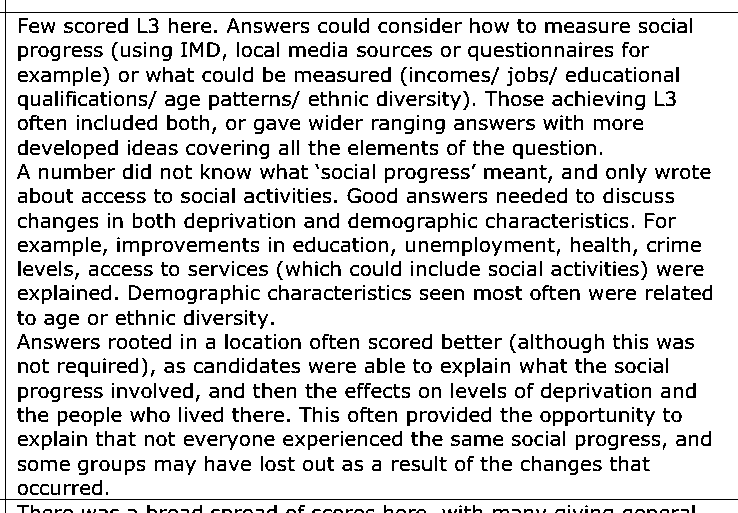
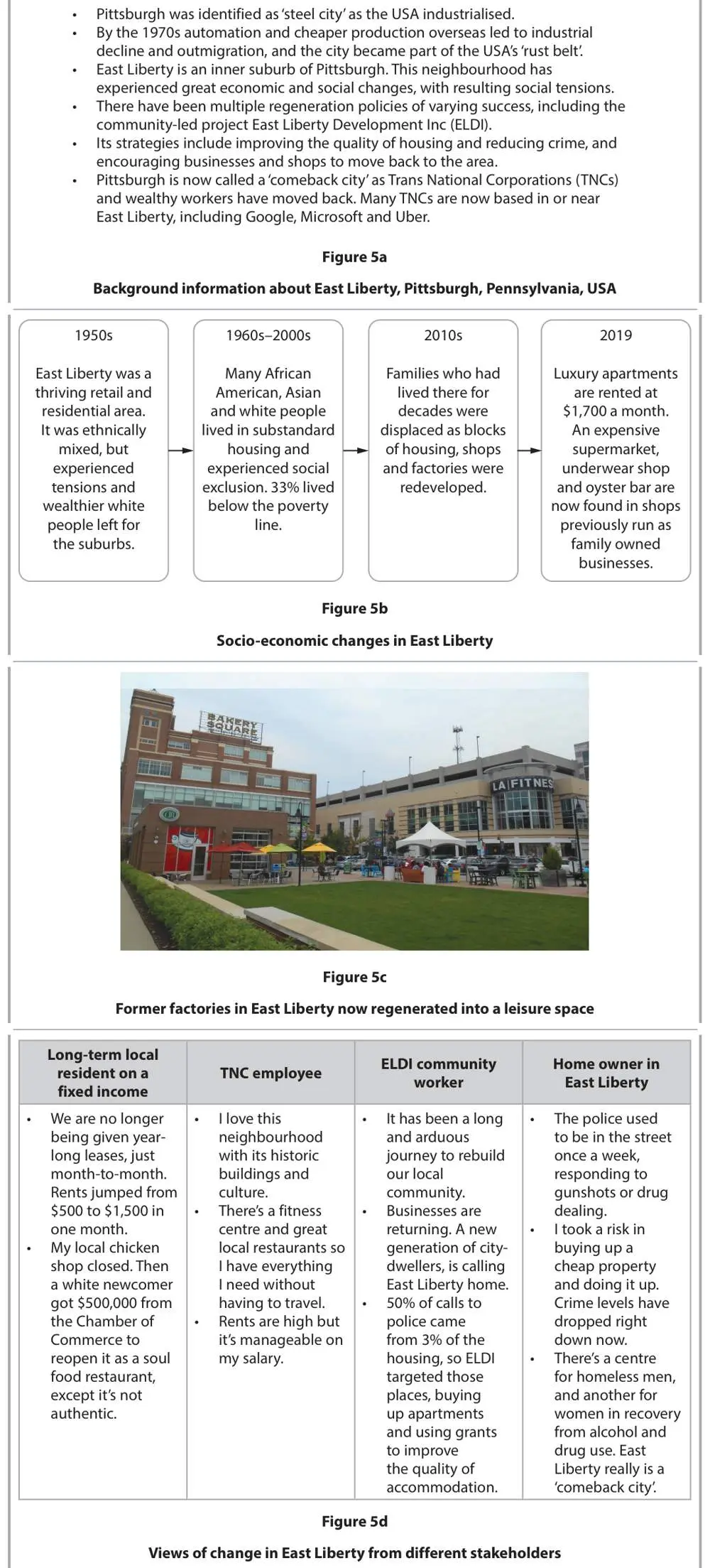
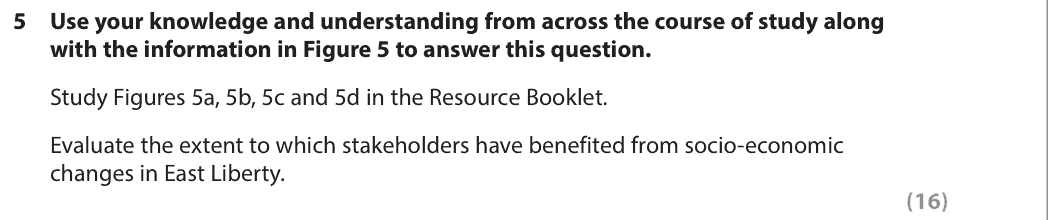
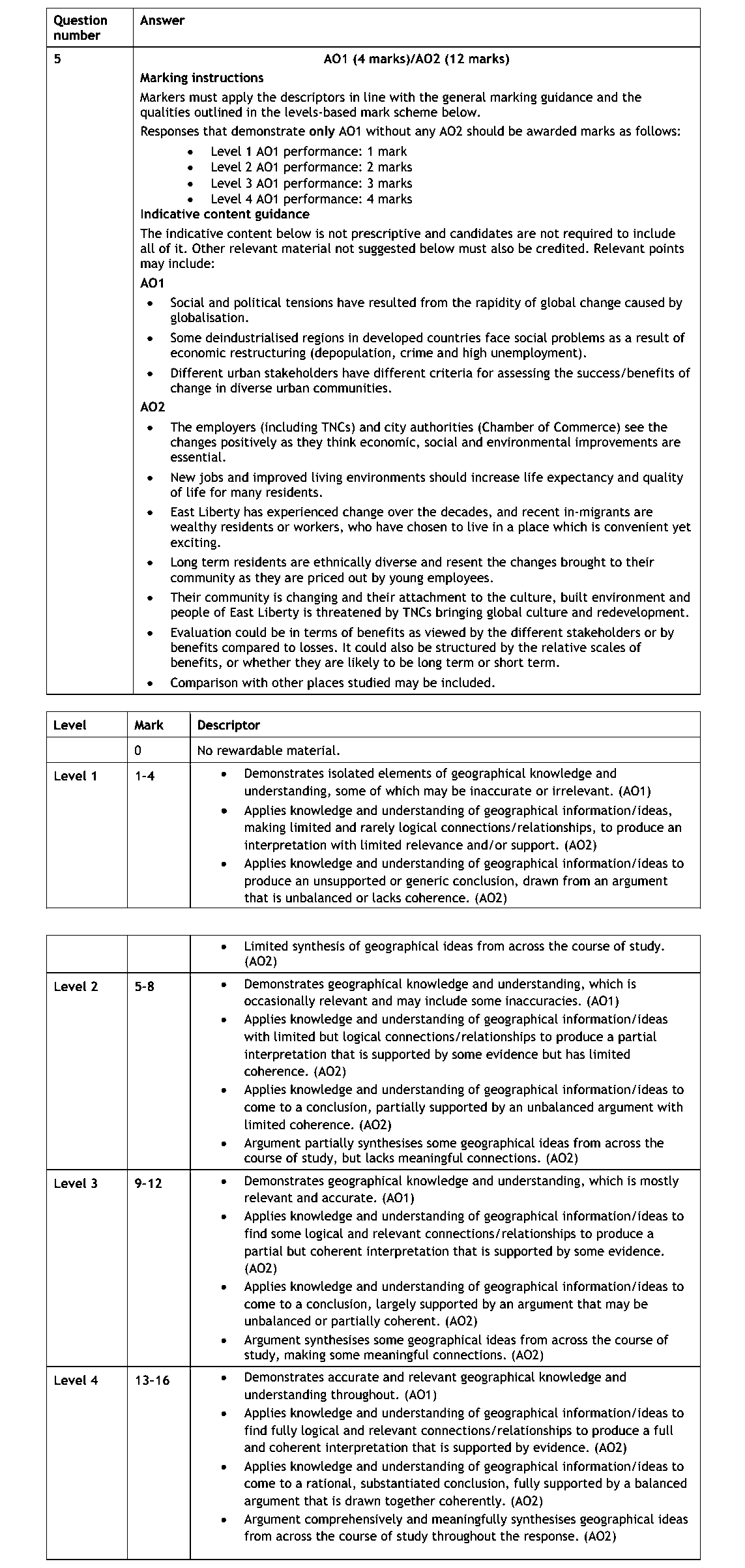
- Stakeholders' lived experience and attachment shape their criteria
- long-term residents v in-migrants, government, businesses
- judged by economic, social, demographic and environmental variables
- many struggled to reach Level 3 and few Level 4