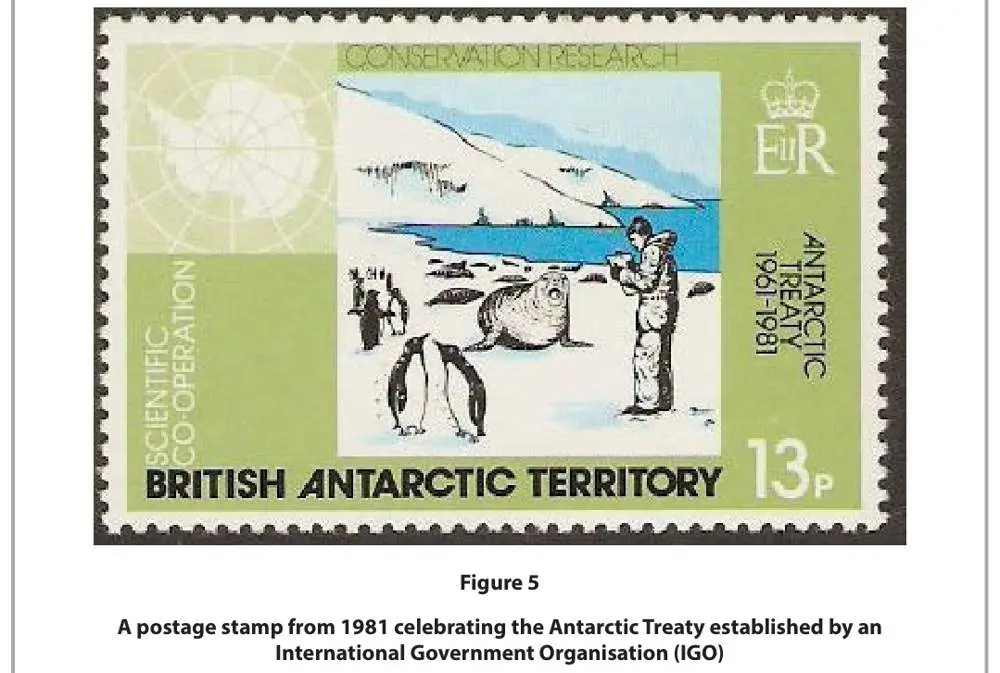
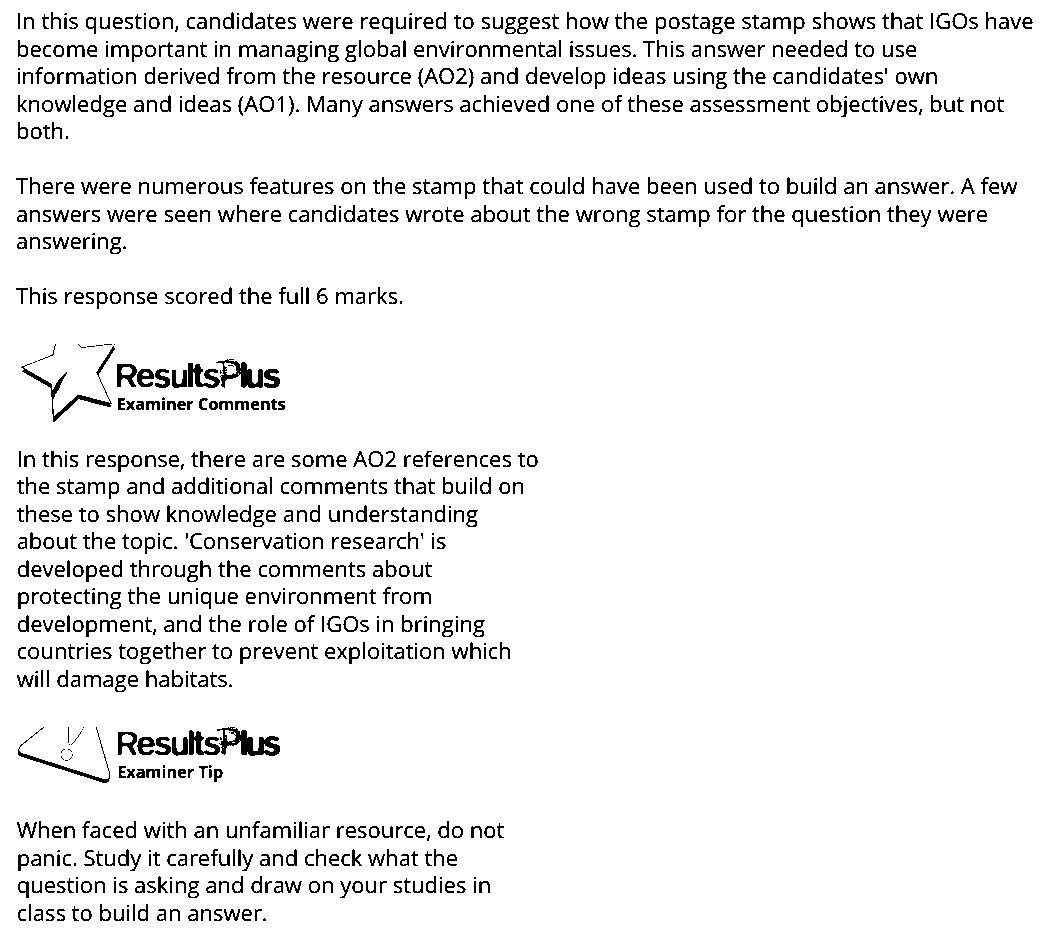
Resources for question 6
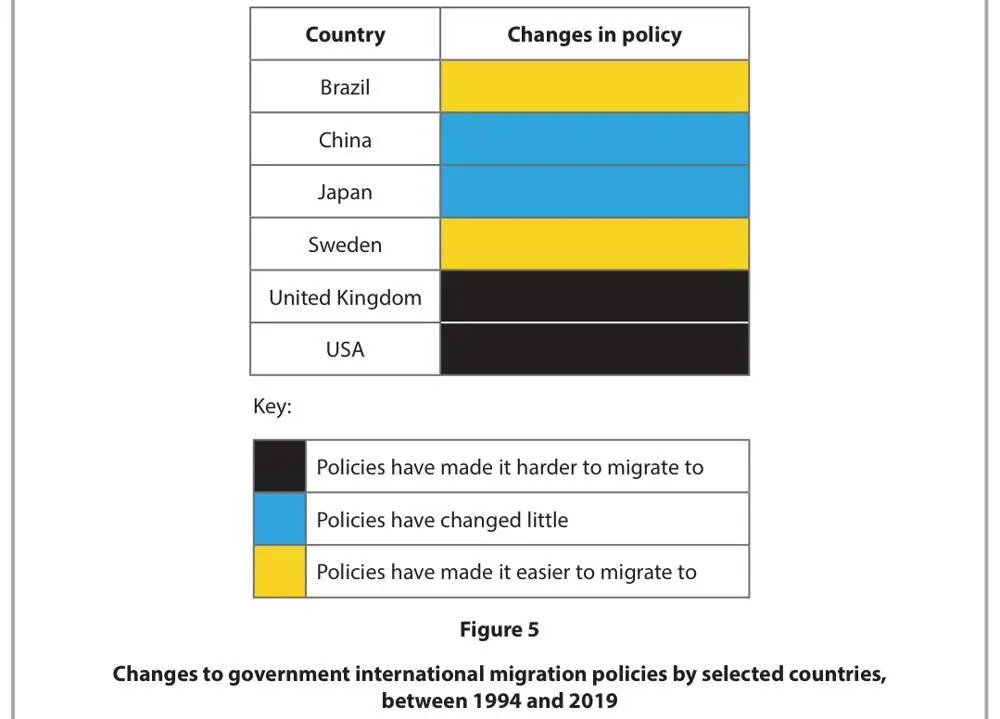

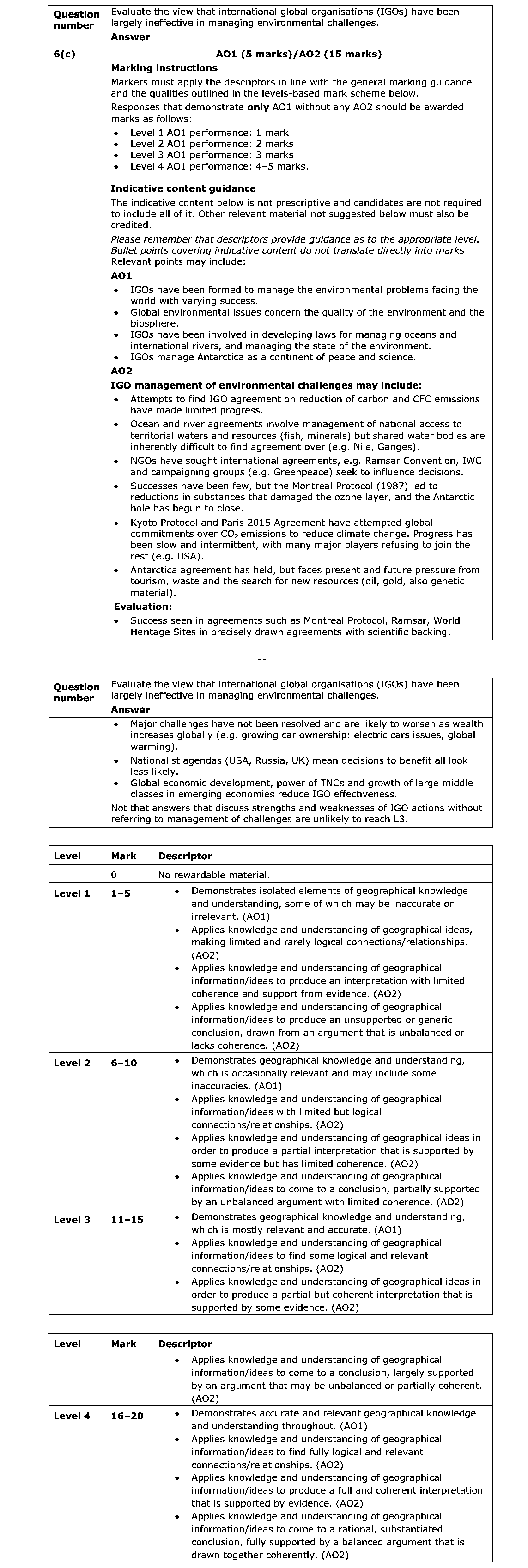
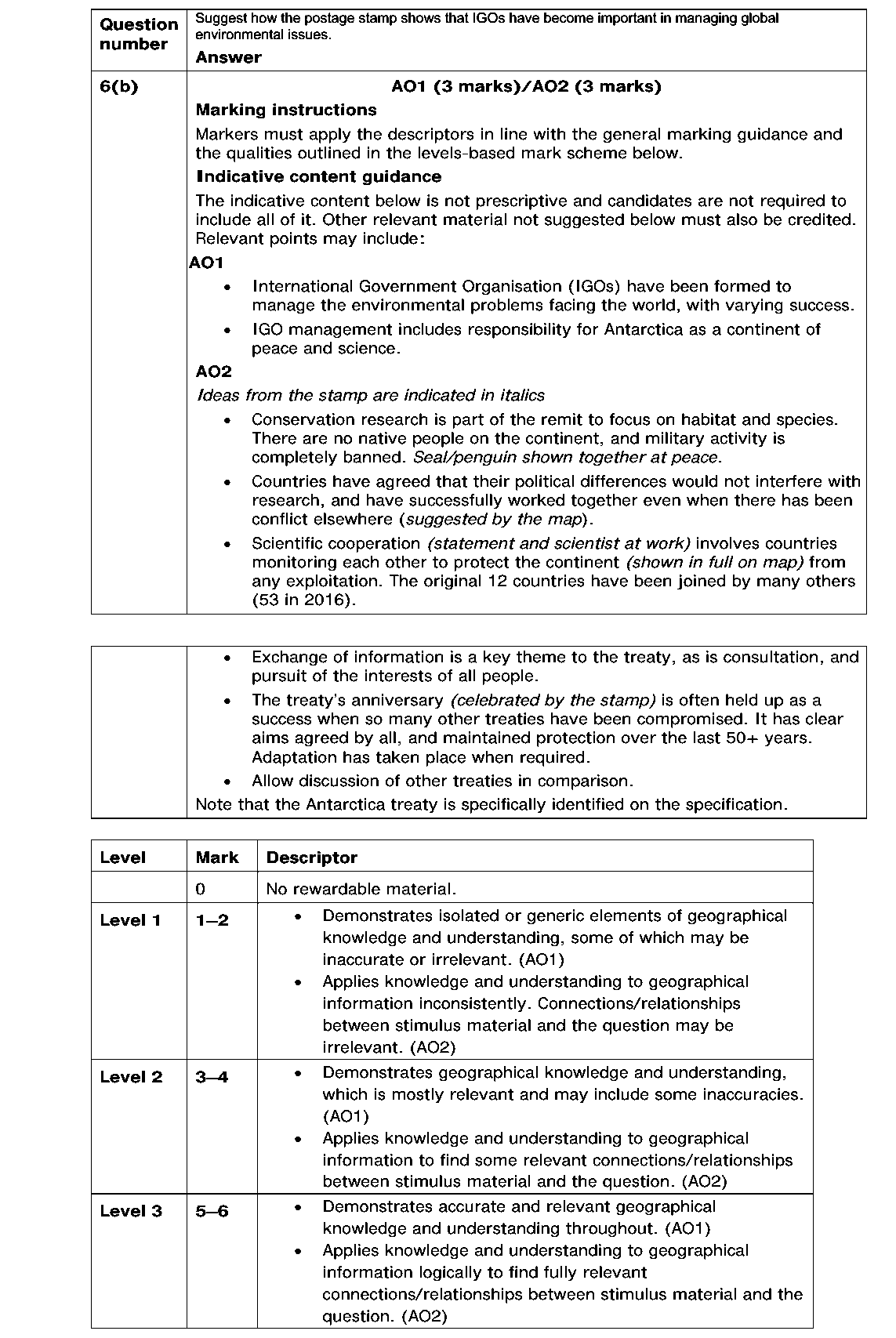
Mark scheme
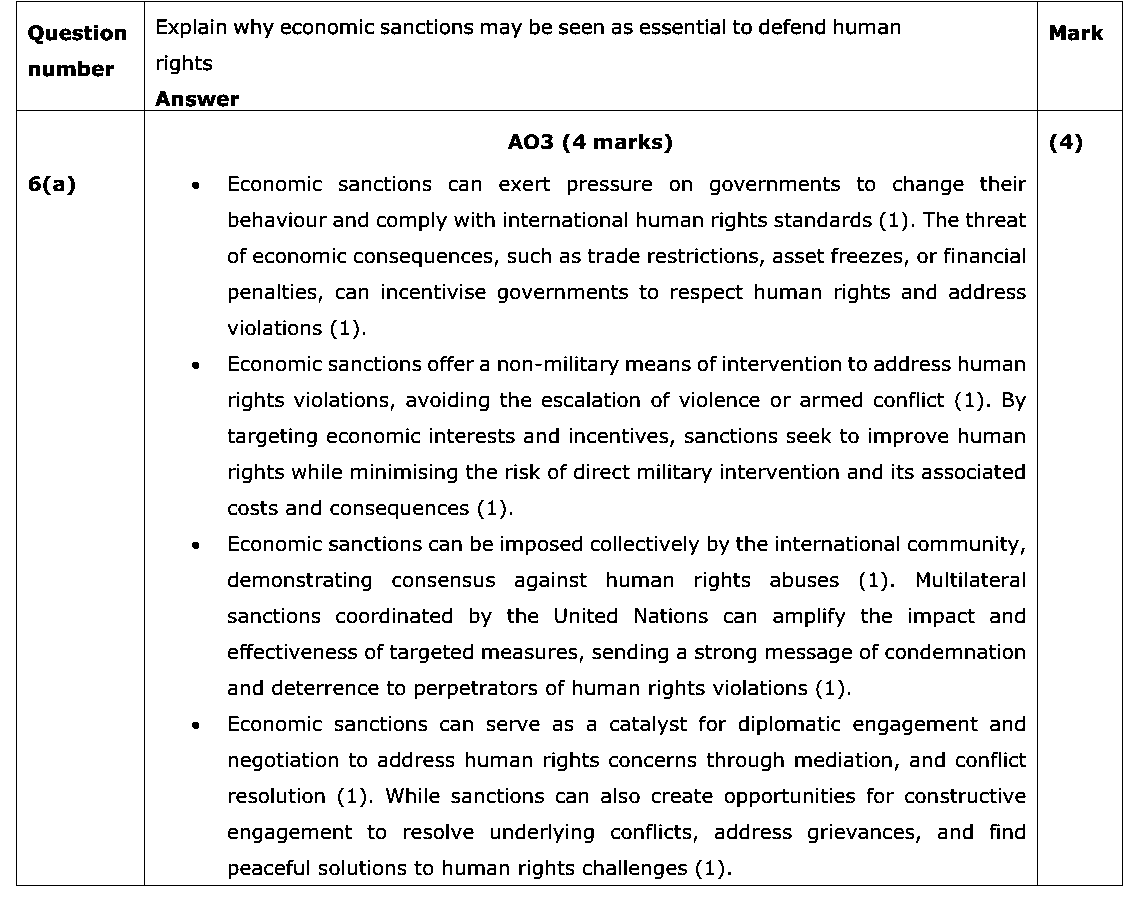
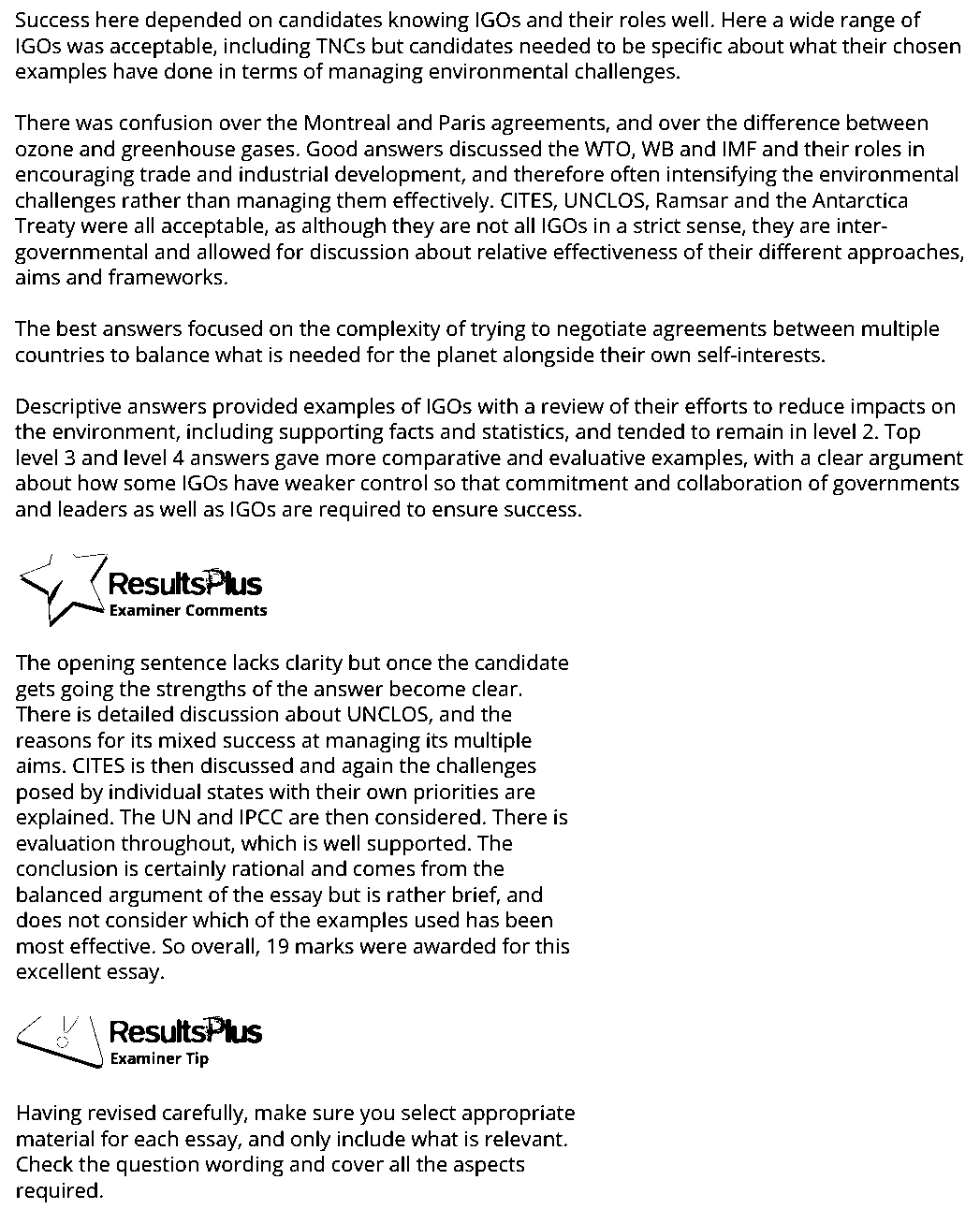
Examiner's comment
Candidates showed a wide range of marks on this question with some able to identify that economic sanctions are used to pressure governments or regimes that violate human rights. Stronger responses explained how sanctions can restrict access to international trade, financial systems, or resources, thereby limiting a regime’s ability to continue oppressive practices. Examples such as sanctions against Russia following the invasion of Ukraine, or against Iran for its treatment of women and political dissidents, were used effectively to illustrate this point. Best responses clearly linked sanctions to the defence of specific rights — such as freedom of speech, freedom of religion, or the right to life — and explained how sanctions can act as a deterrent or a tool for international accountability. Weaker responses tended to describe what sanctions are or how they “punish” countries, without linking this clearly to the protection of human rights. Some candidates mentioned sanctions in general terms but failed to explain how they might lead to behavioural change or protect vulnerable populations. This response was awarded 3 marks because it included three valid and clearly expressed points about why economic sanctions may be seen as essential to defend human rights. The candidate first explained that sanctions apply international pressure on countries committing human rights abuses, which is a relevant and accurate point. They then stated that sanctions can destabilise a country’s economy, which may lead to internal struggles and weaken the government’s position. Finally, they argued that this economic weakening can reduce a country’s ability to sustain a war effort, using Russia’s invasion of Ukraine as an example. These three points were clearly linked to the question and showed a sound understanding of how sanctions can be used as a non-military tool to influence state behaviour. However, the response did not include a fourth distinct point, which is why it was capped at 3 marks. To achieve full marks, the candidate could have added a final idea, such as how sanctions can incentivise governments to improve their human rights records in order to rejoin the global economy. To secure full marks in a 4-mark explain question, aim to include four distinct, well- developed points. Always aim to build a complete chain of reasoning and, where possible, support your points with real-world examples. This response to Question 6(a) was awarded full marks because it clearly explained four distinct reasons why economic sanctions may be seen as essential to defend human rights. The candidate began by stating that sanctions act as a form of punishment, which is a valid point as they are often used to apply pressure on governments violating human rights. They then explained that sanctions can make it difficult for a country to trade, which can disrupt its economy and limit its ability to function normally. The response also noted that sanctions can prevent countries from investing, further isolating them from the global economy. Finally, the candidate concluded that in order for sanctions to be lifted, countries often need to improve their human rights records to rejoin international trade and diplomacy. Each point was clearly expressed and directly relevant to the question, demonstrating a strong understanding of how sanctions function as a non-military tool for defending human rights. This response is a great example of how to structure a 4-mark explain question. Each sentence introduces a clear, distinct point—sanctions as punishment, trade restrictions, blocked investment, and the incentive to improve human rights to rejoin the global economy. To achieve full marks, aim to make four separate, relevant points , each clearly linked to the question. Keep explanations concise but purposeful, and avoid repeating the same idea in different words.
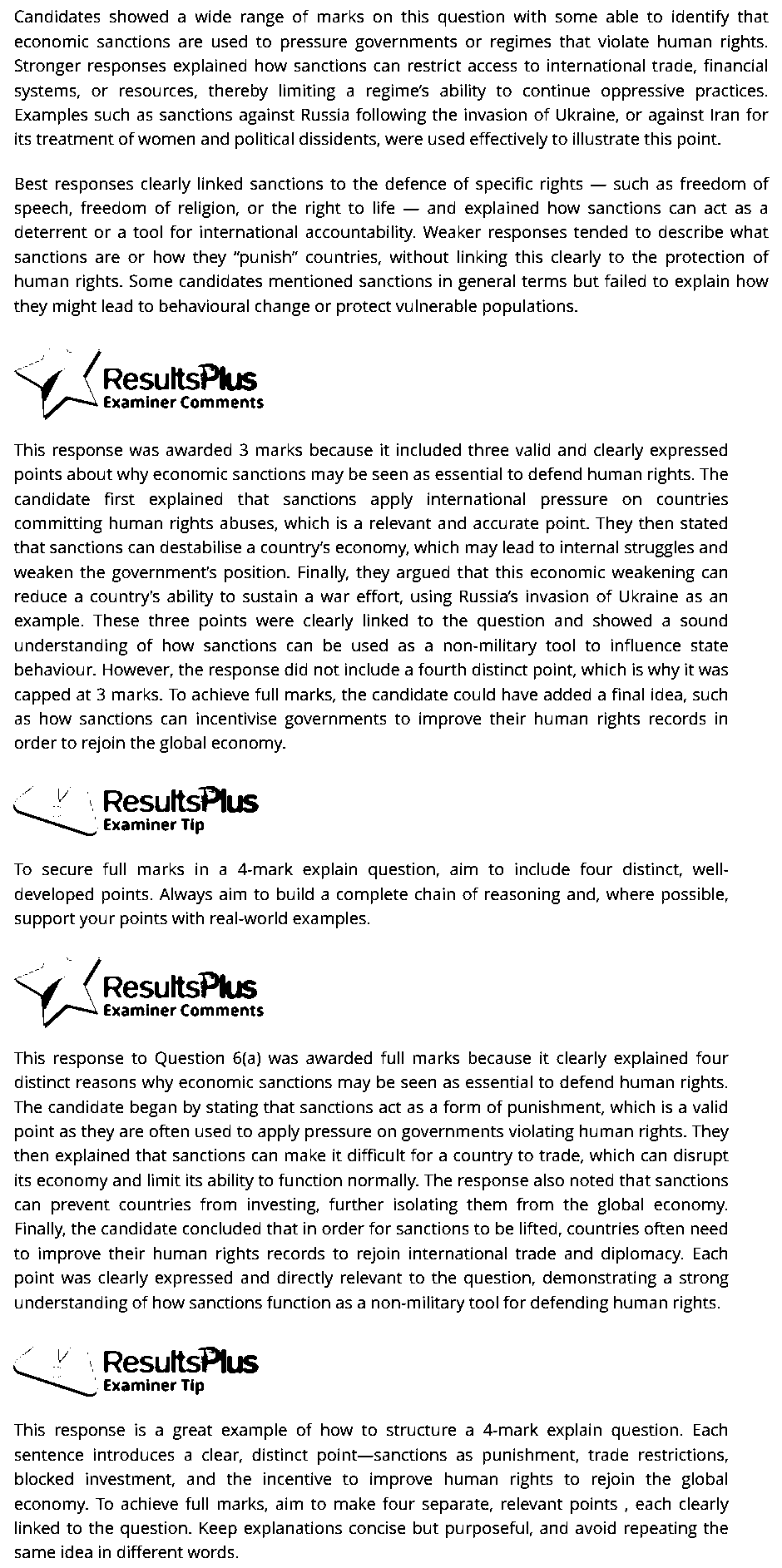
Notes from the mark scheme and report
- Sanctions pressure regimes to comply with human rights standards (trade restrictions, asset freezes)
- a non-military intervention avoiding escalation
- examples Russia after Ukraine, Iran
- must link sanctions to defending specific rights