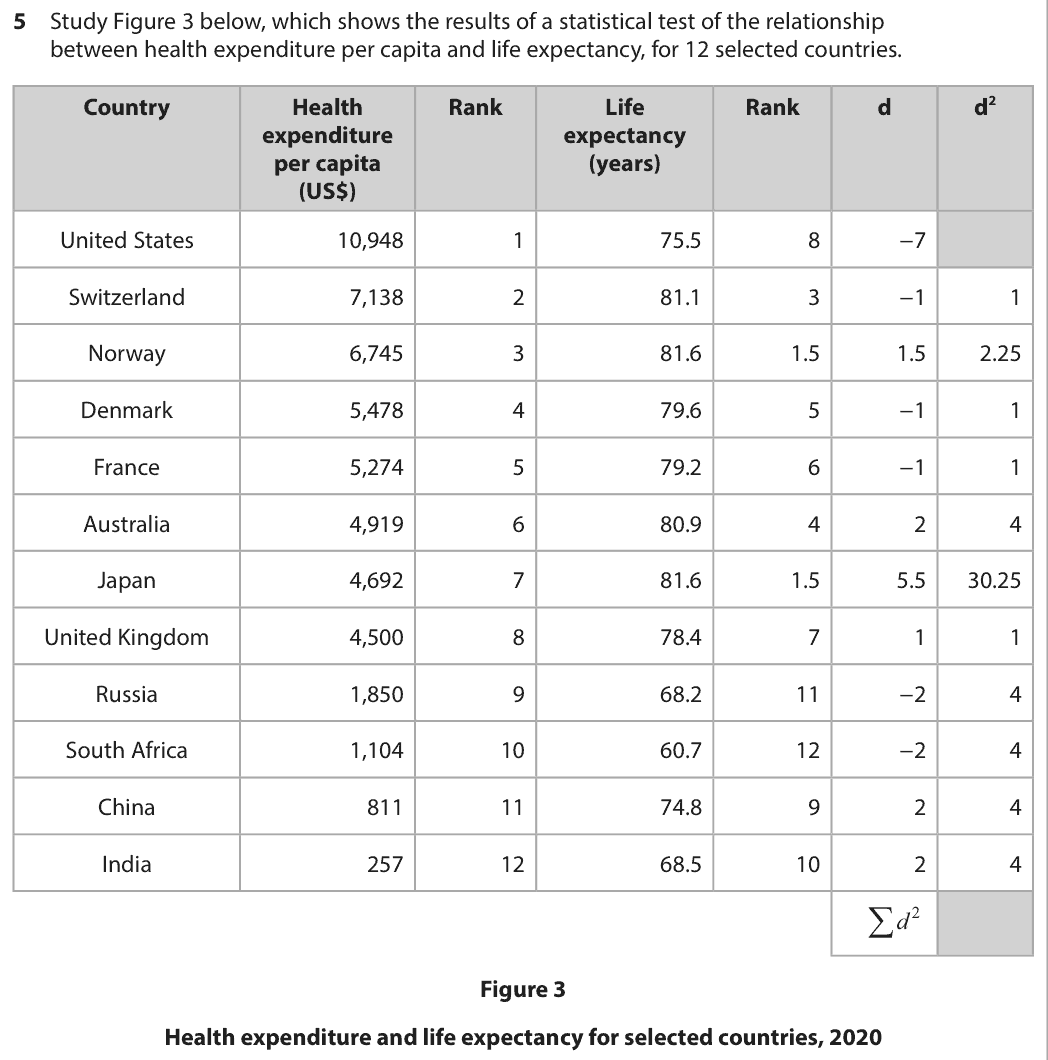
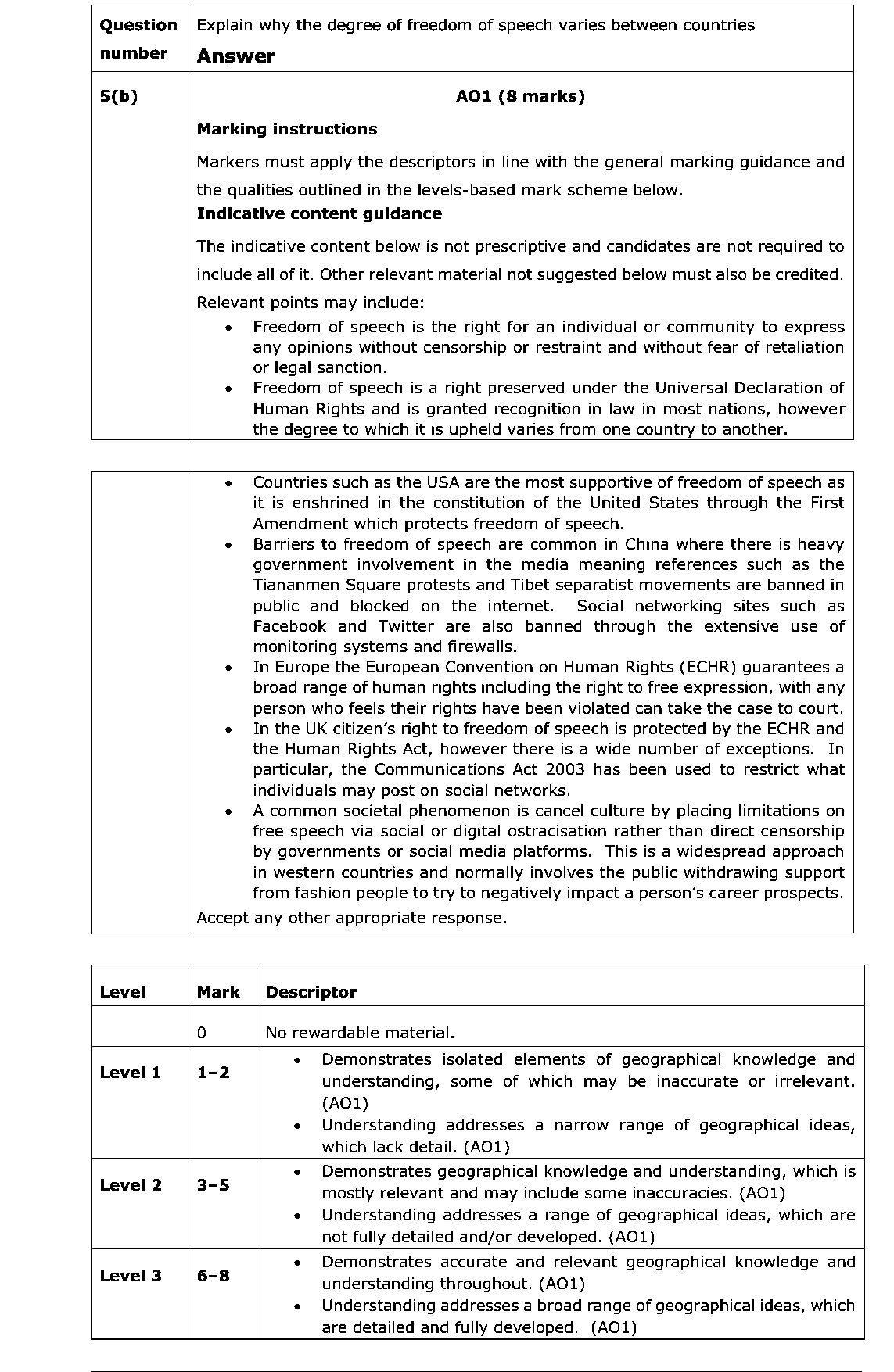
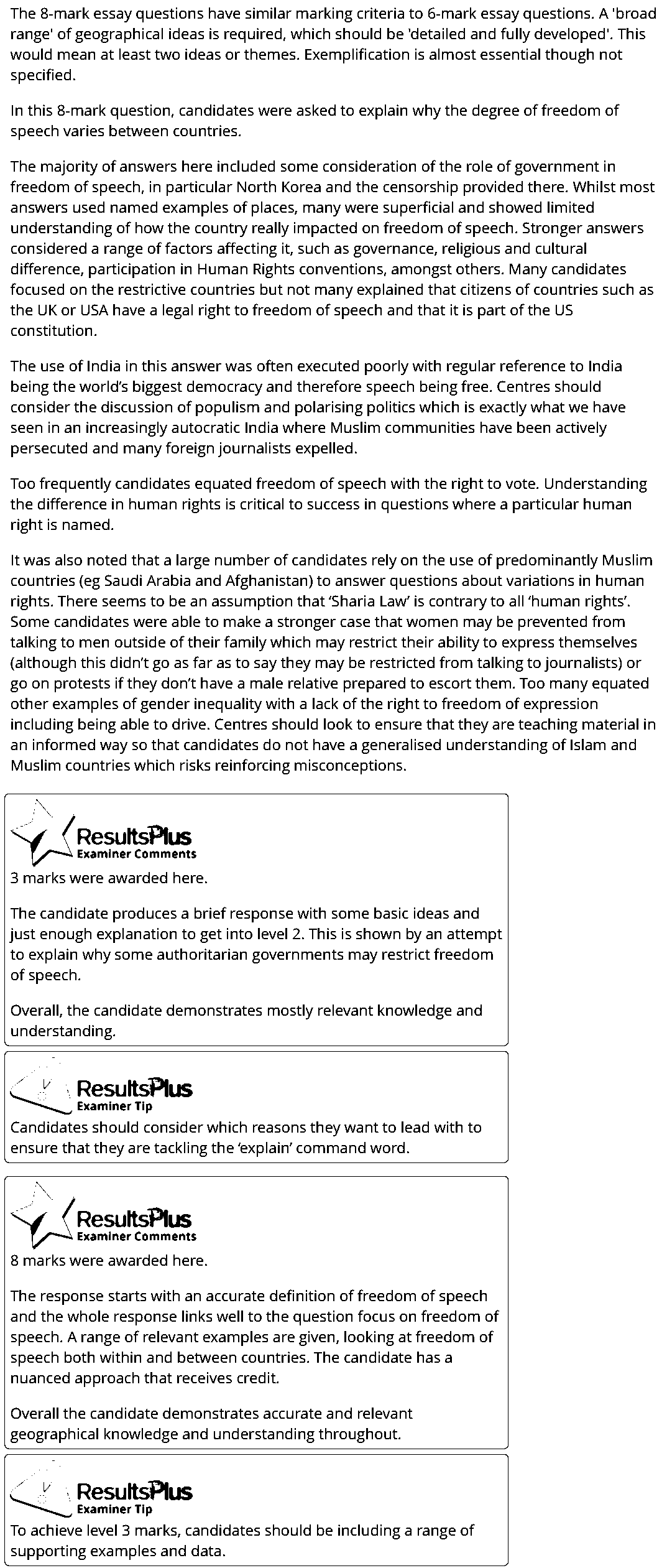
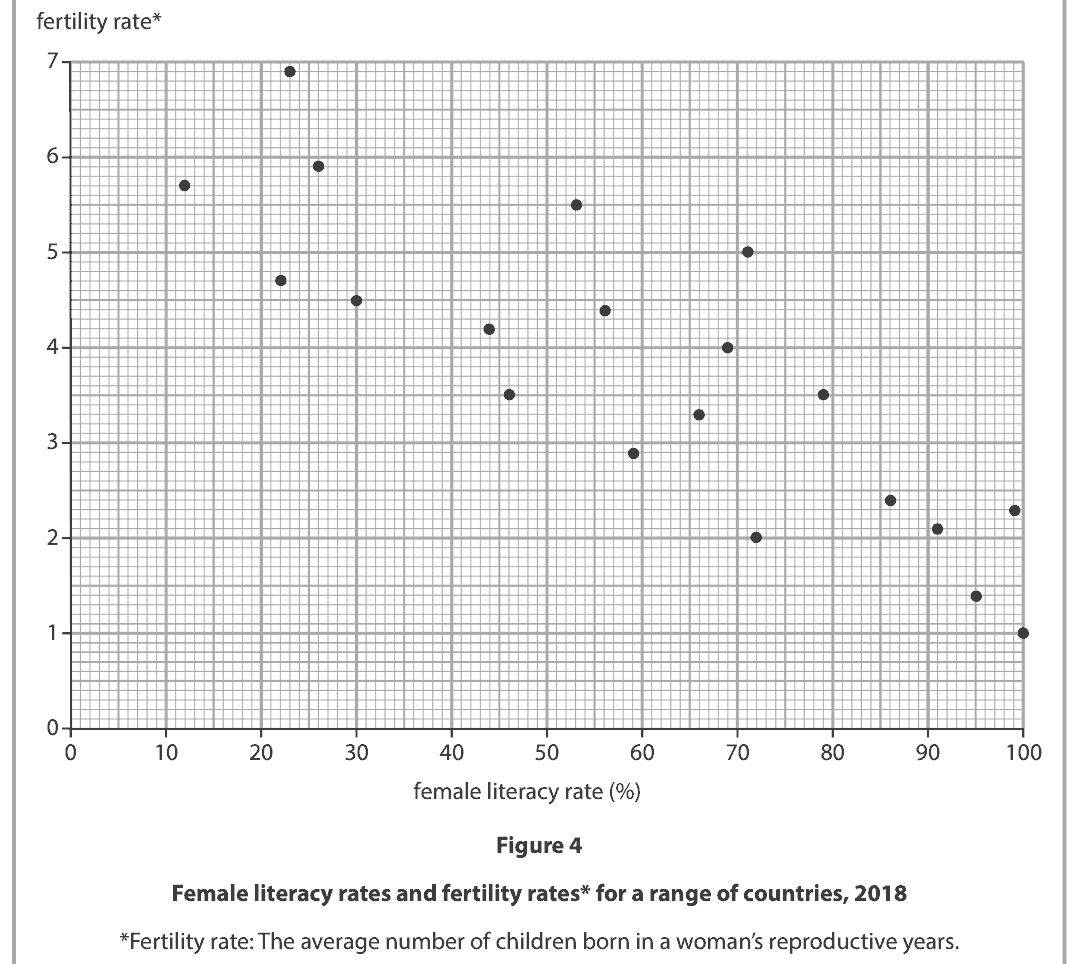
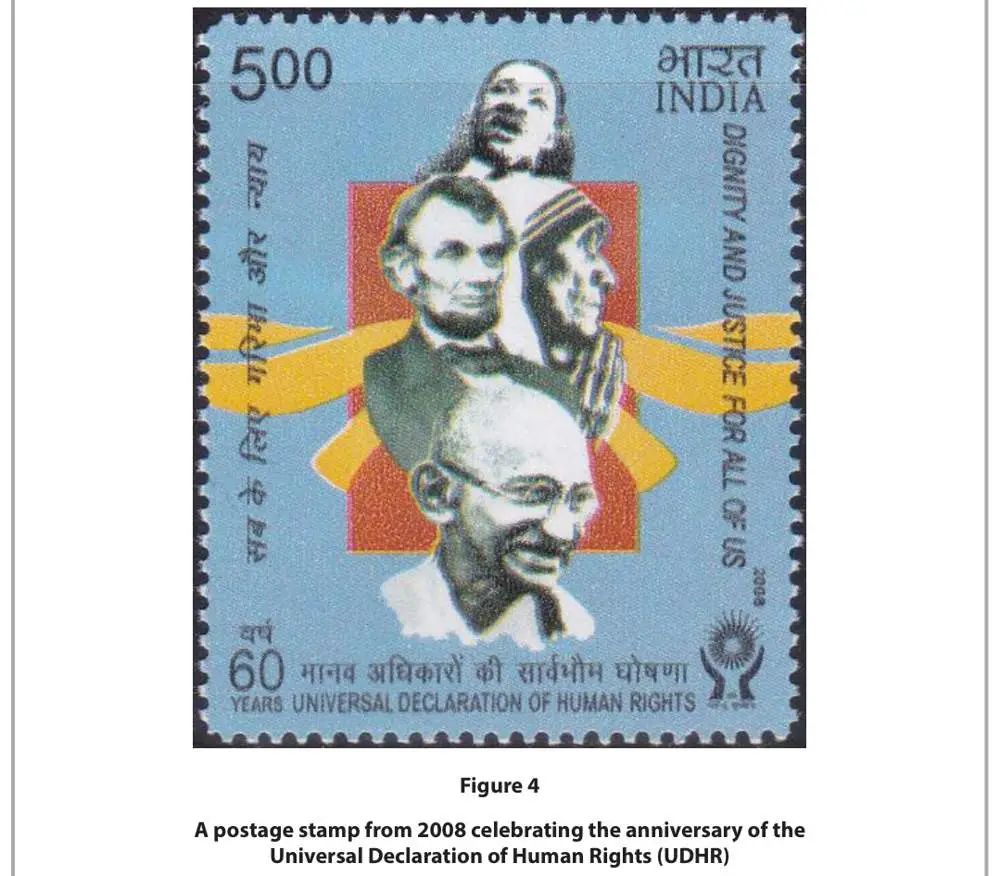
Resources for question 5

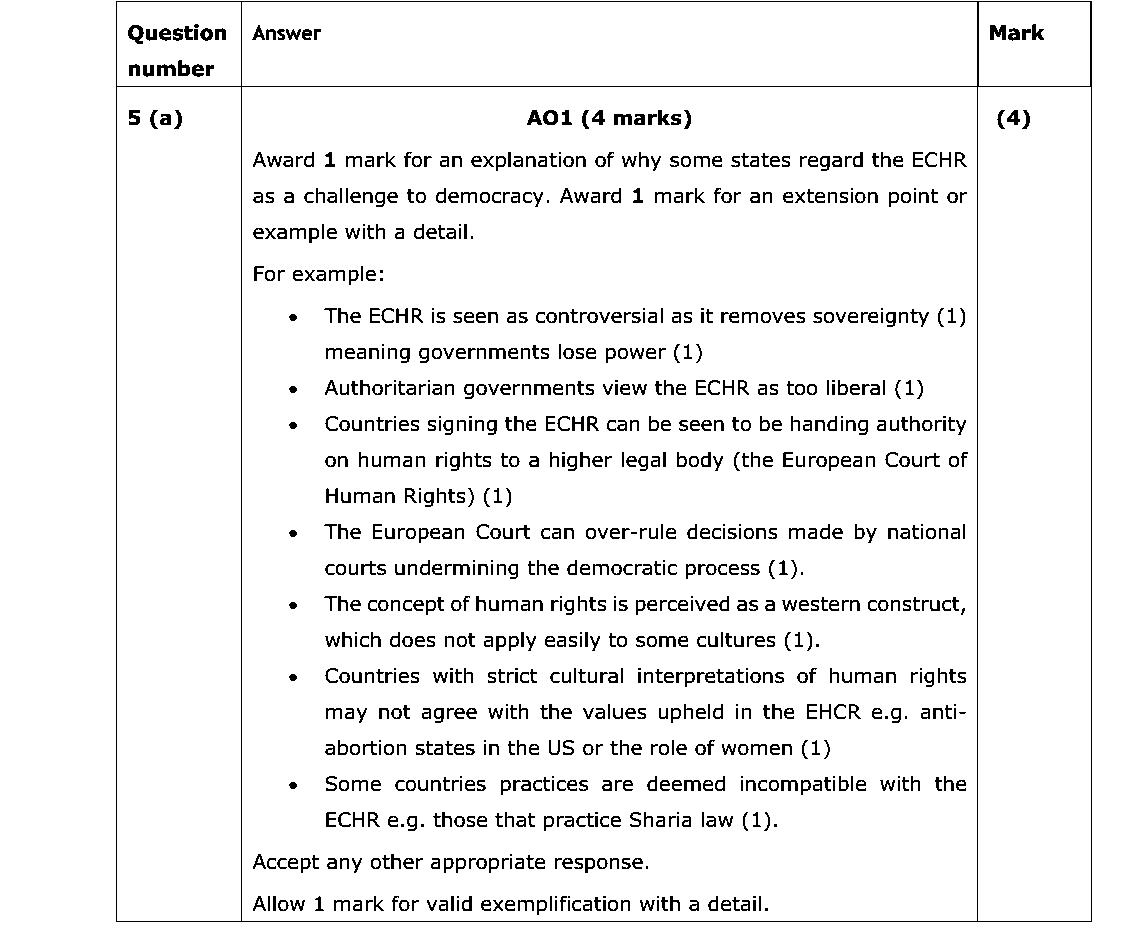
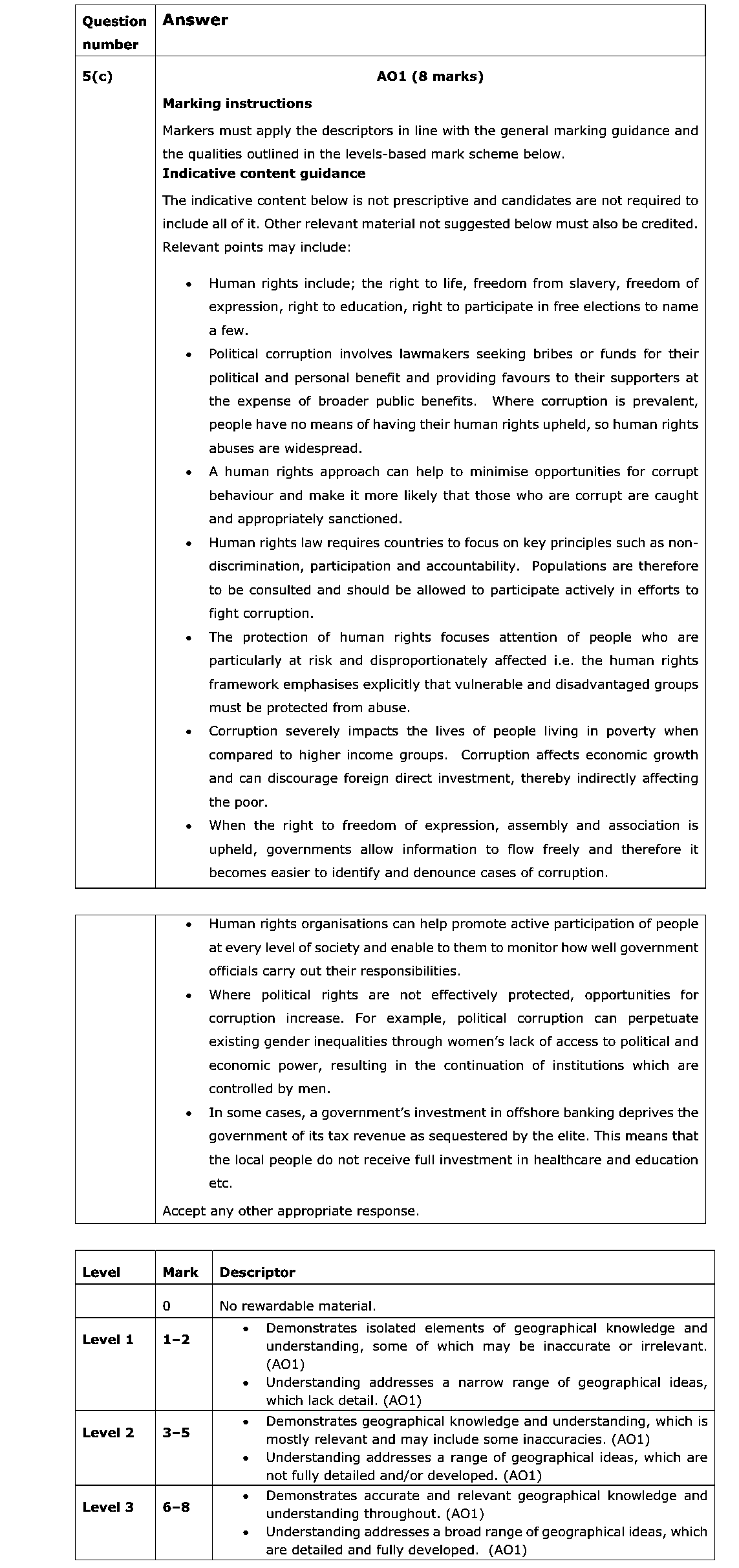
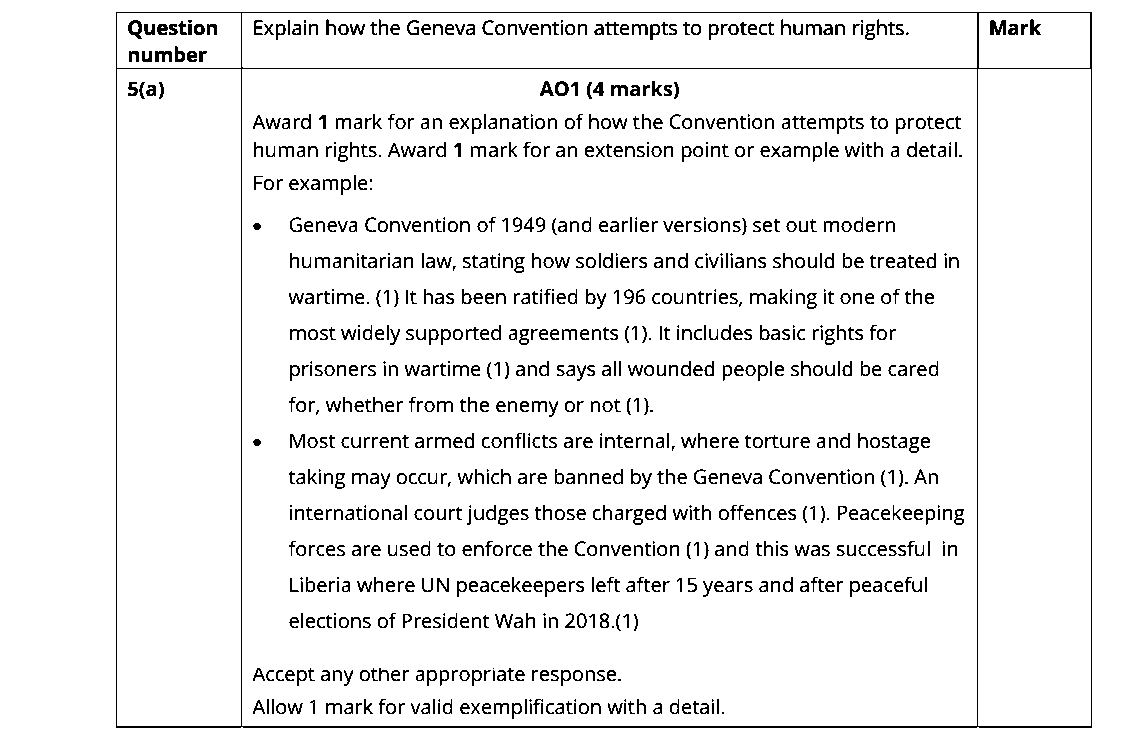
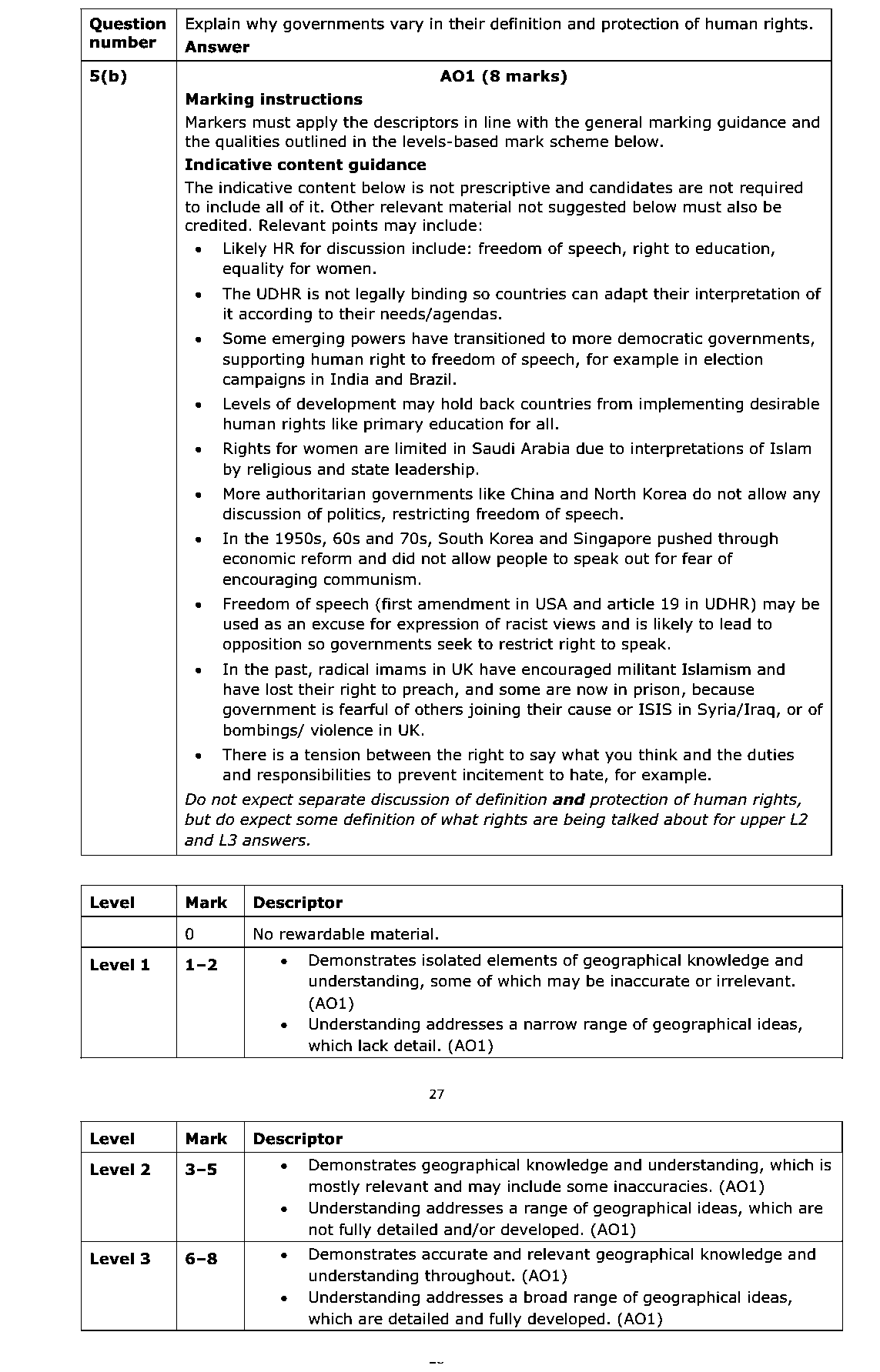
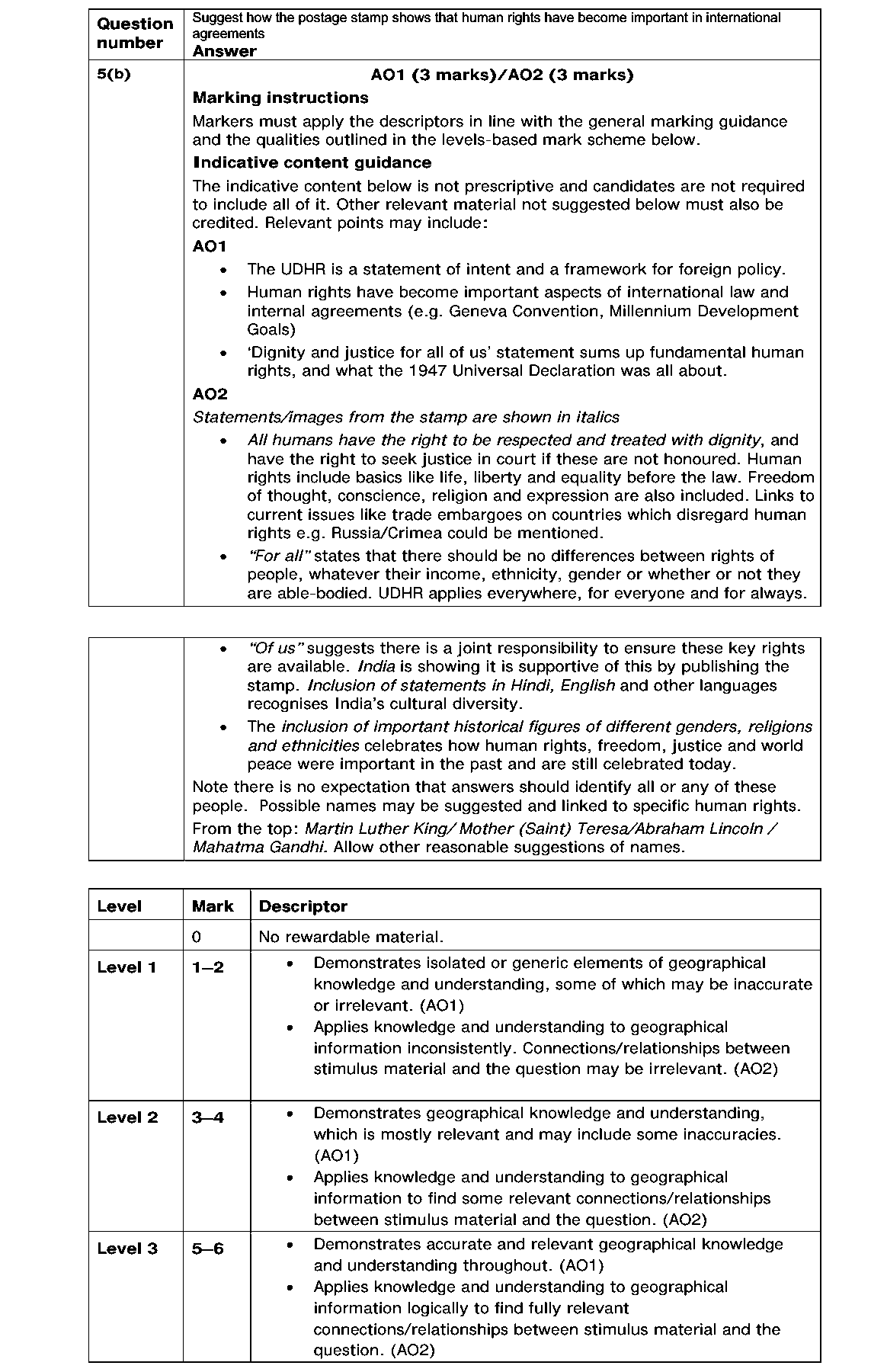
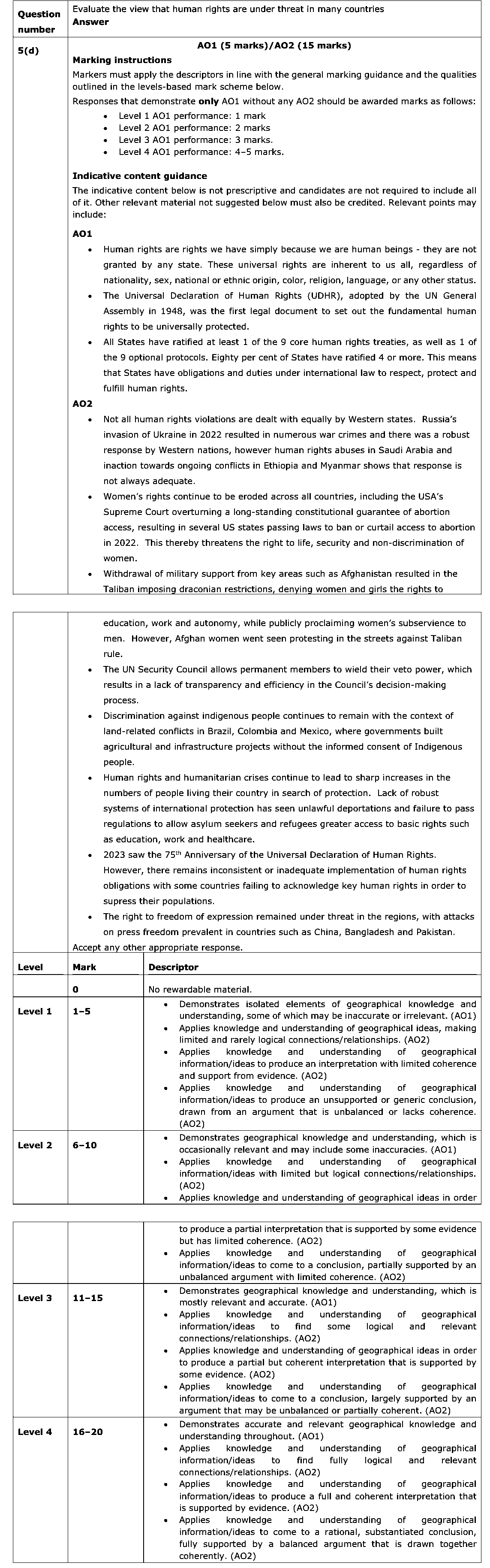
Mark scheme, including the levels and indicative content
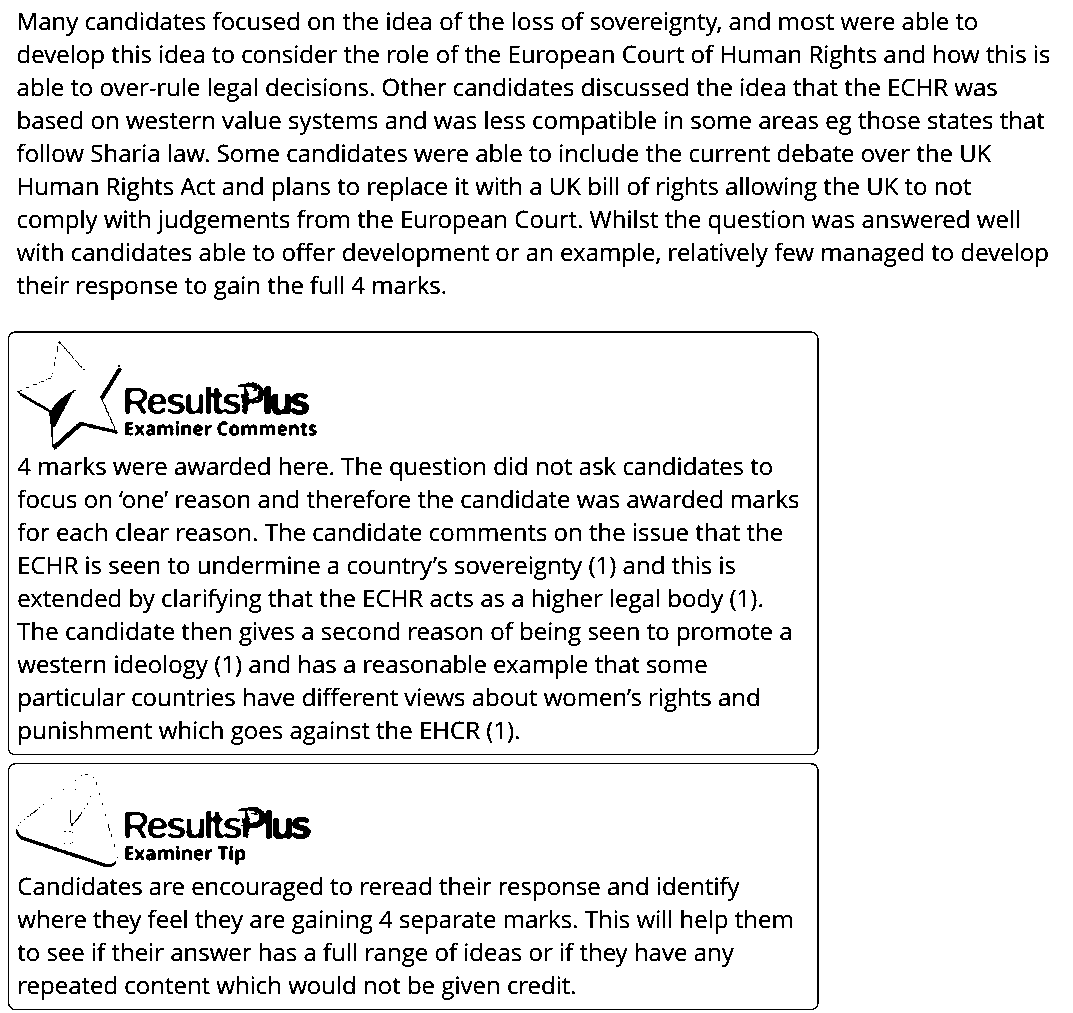
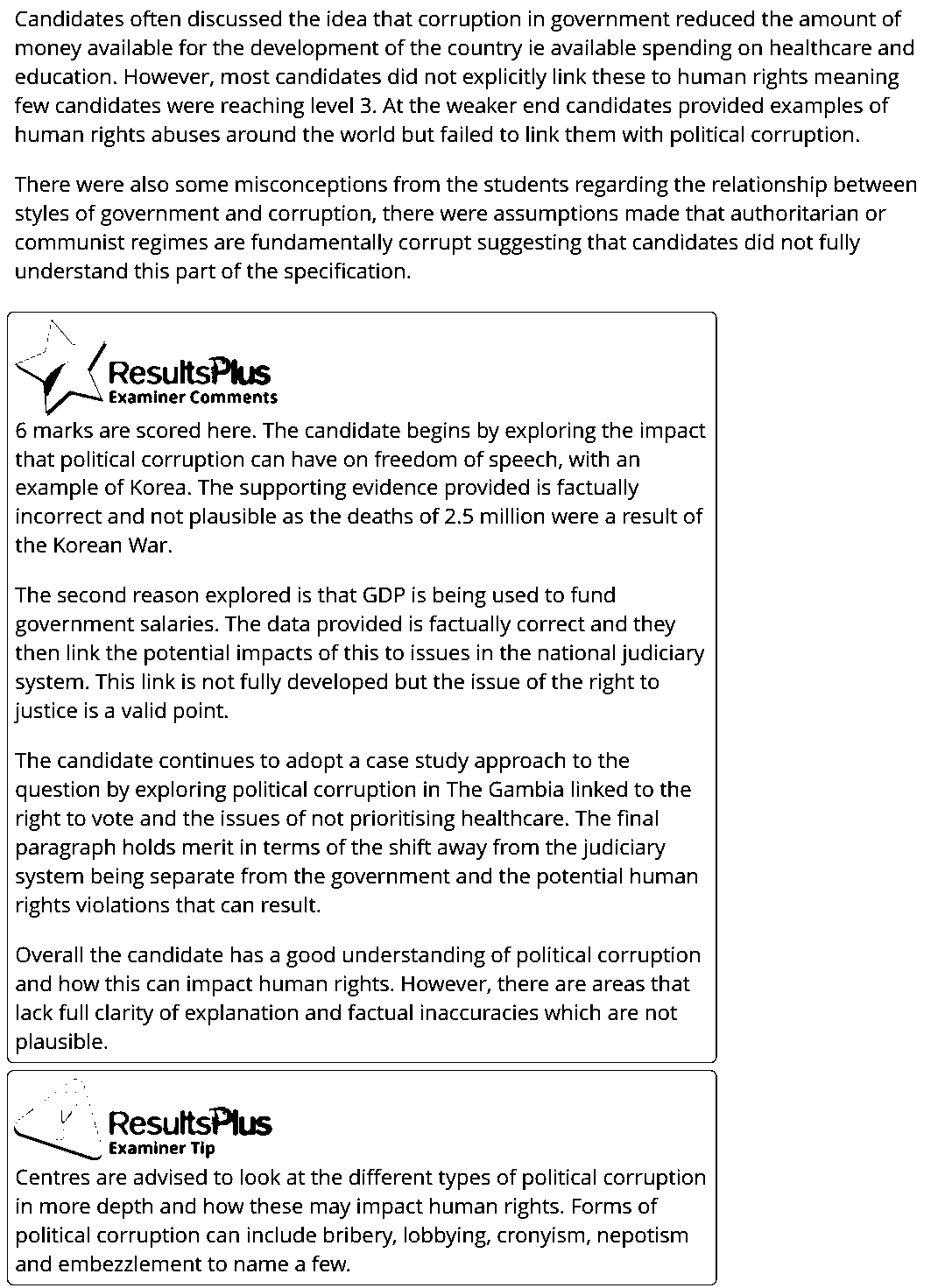
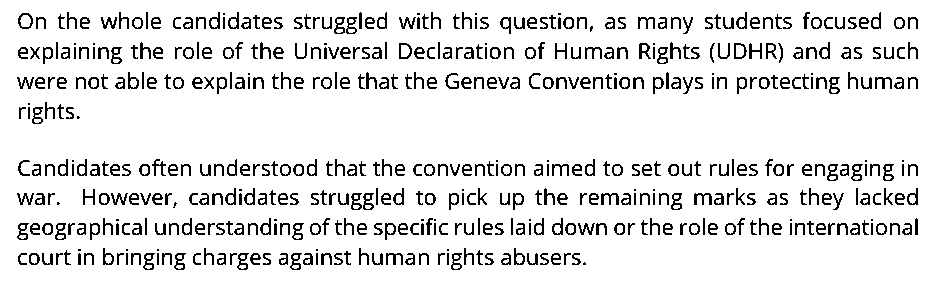
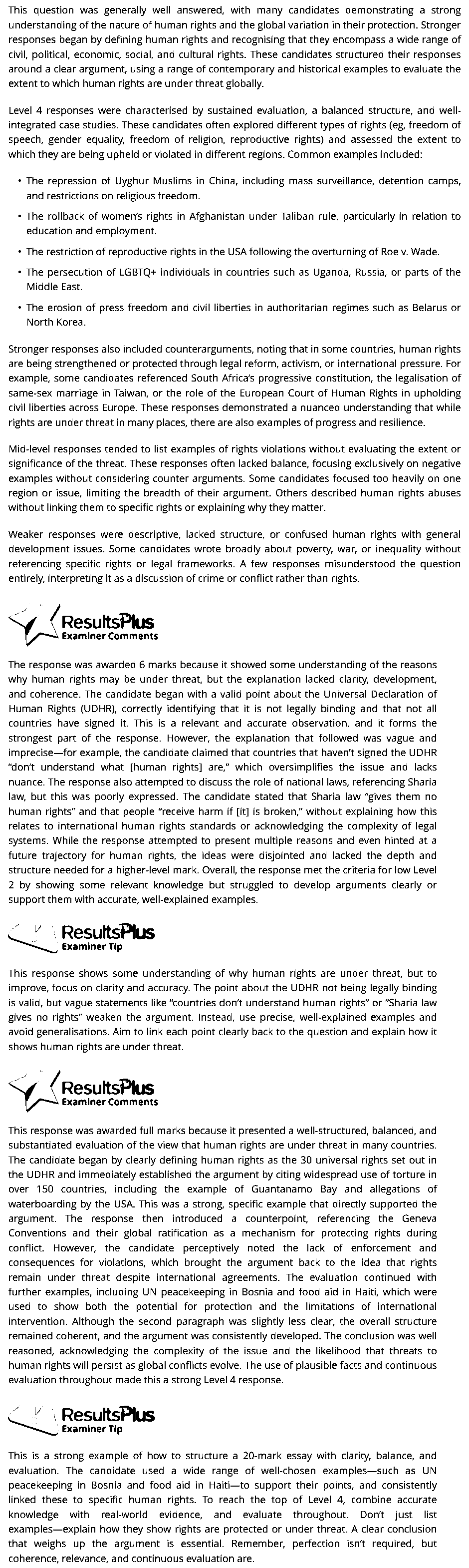
Examiner's comment
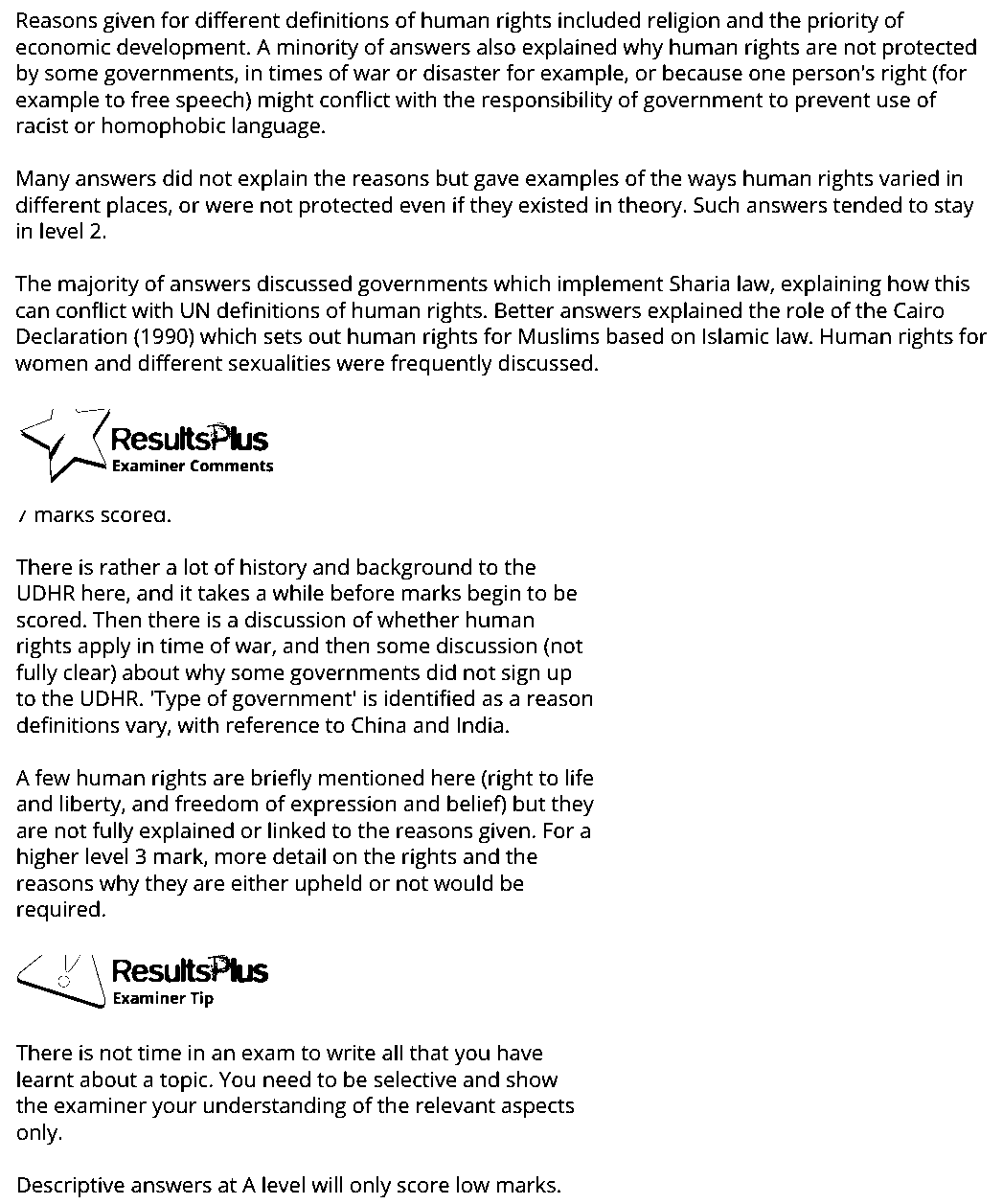
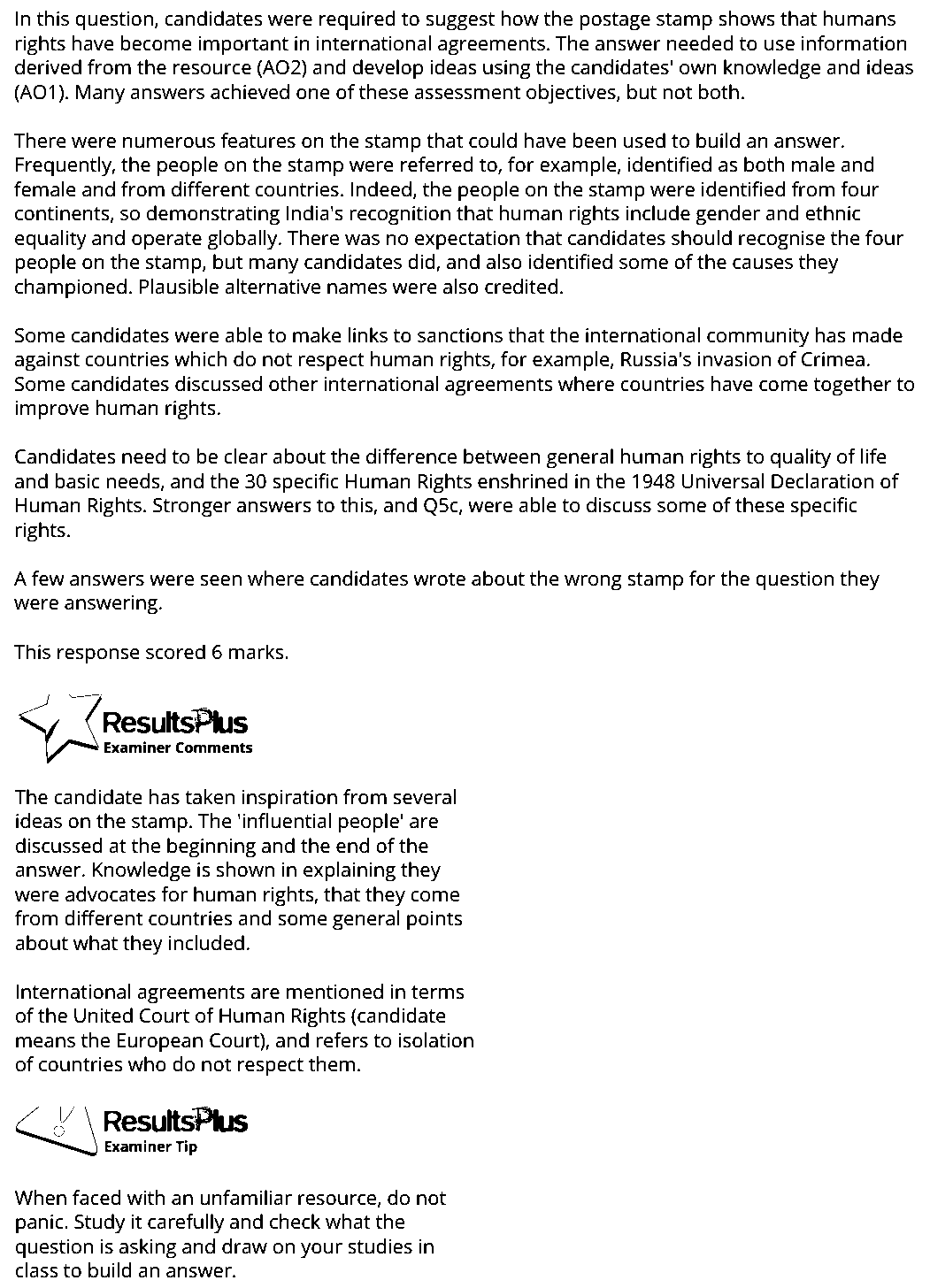
This question was generally well answered, with many candidates demonstrating a strong understanding of the nature of human rights and the global variation in their protection. Stronger responses began by defining human rights and recognising that they encompass a wide range of civil, political, economic, social, and cultural rights. These candidates structured their responses around a clear argument, using a range of contemporary and historical examples to evaluate the extent to which human rights are under threat globally. Level 4 responses were characterised by sustained evaluation, a balanced structure, and well- integrated case studies. These candidates often explored different types of rights (eg, freedom of speech, gender equality, freedom of religion, reproductive rights) and assessed the extent to which they are being upheld or violated in different regions. Common examples included: • The repression of Uyghur Muslims in China, including mass surveillance, detention camps, and restrictions on religious freedom. • The rollback of women’s rights in Afghanistan under Taliban rule, particularly in relation to education and employment. • The restriction of reproductive rights in the USA following the overturning of Roe v. Wade. • The persecution of LGBTQ+ individuals in countries such as Uganda, Russia, or parts of the Middle East. • The erosion of press freedom and civil liberties in authoritarian regimes such as Belarus or North Korea. Stronger responses also included counterarguments, noting that in some countries, human rights are being strengthened or protected through legal reform, activism, or international pressure. For example, some candidates referenced South Africa’s progressive constitution, the legalisation of same-sex marriage in Taiwan, or the role of the European Court of Human Rights in upholding civil liberties across Europe. These responses demonstrated a nuanced understanding that while rights are under threat in many places, there are also examples of progress and resilience. Mid-level responses tended to list examples of rights violations without evaluating the extent or significance of the threat. These responses often lacked balance, focusing exclusively on negative examples without considering counter arguments. Some candidates focused too heavily on one region or issue, limiting the breadth of their argument. Others described human rights abuses without linking them to specific rights or explaining why they matter. Weaker responses were descriptive, lacked structure, or confused human rights with general development issues. Some candidates wrote broadly about poverty, war, or inequality without referencing specific rights or legal frameworks. A few responses misunderstood the question entirely, interpreting it as a discussion of crime or conflict rather than rights. The response was awarded 6 marks because it showed some understanding of the reasons why human rights may be under threat, but the explanation lacked clarity, development, and coherence. The candidate began with a valid point about the Universal Declaration of Human Rights (UDHR), correctly identifying that it is not legally binding and that not all countries have signed it. This is a relevant and accurate observation, and it forms the strongest part of the response. However, the explanation that followed was vague and imprecise—for example, the candidate claimed that countries that haven’t signed the UDHR “don’t understand what [human rights] are,” which oversimplifies the issue and lacks nuance. The response also attempted to discuss the role of national laws, referencing Sharia law, but this was poorly expressed. The candidate stated that Sharia law “gives them no human rights” and that people “receive harm if [it] is broken,” without explaining how this relates to international human rights standards or acknowledging the complexity of legal systems. While the response attempted to present multiple reasons and even hinted at a future trajectory for human rights, the ideas were disjointed and lacked the depth and structure needed for a higher-level mark. Overall, the response met the criteria for low Level 2 by showing some relevant knowledge but struggled to develop arguments clearly or support them with accurate, well-explained examples. This response shows some understanding of why human rights are under threat, but to improve, focus on clarity and accuracy. The point about the UDHR not being legally binding is valid, but vague statements like “countries don’t understand human rights” or “Sharia law gives no rights” weaken the argument. Instead, use precise, well-explained examples and avoid generalisations. Aim to link each point clearly back to the question and explain how it shows human rights are under threat. This response was awarded full marks because it presented a well-structured, balanced, and substantiated evaluation of the view that human rights are under threat in many countries. The candidate began by clearly defining human rights as the 30 universal rights set out in the UDHR and immediately established the argument by citing widespread use of torture in over 150 countries, including the example of Guantanamo Bay and allegations of waterboarding by the USA. This was a strong, specific example that directly supported the argument. The response then introduced a counterpoint, referencing the Geneva Conventions and their global ratification as a mechanism for protecting rights during conflict. However, the candidate perceptively noted the lack of enforcement and consequences for violations, which brought the argument back to the idea that rights remain under threat despite international agreements. The evaluation continued with further examples, including UN peacekeeping in Bosnia and food aid in Haiti, which were used to show both the potential for protection and the limitations of international intervention. Although the second paragraph was slightly less clear, the overall structure remained coherent, and the argument was consistently developed. The conclusion was well reasoned, acknowledging the complexity of the issue and the likelihood that threats to human rights will persist as global conflicts evolve. The use of plausible facts and continuous evaluation throughout made this a strong Level 4 response. This is a strong example of how to structure a 20-mark essay with clarity, balance, and evaluation. The candidate used a wide range of well-chosen examples—such as UN peacekeeping in Bosnia and food aid in Haiti—to support their points, and consistently linked these to specific human rights. To reach the top of Level 4, combine accurate knowledge with real-world evidence, and evaluate throughout. Don’t just list examples—explain how they show rights are protected or under threat. A clear conclusion that weighs up the argument is essential. Remember, perfection isn’t required, but coherence, relevance, and continuous evaluation are.
Notes from the mark scheme and report
- Define human rights and UDHR obligations
- threats (Uyghurs in China, women in Afghanistan and Iran, freedom of speech) v protection and progress (ECHR, democratic transitions)
- evaluate different types of rights and regions
- generally well answered