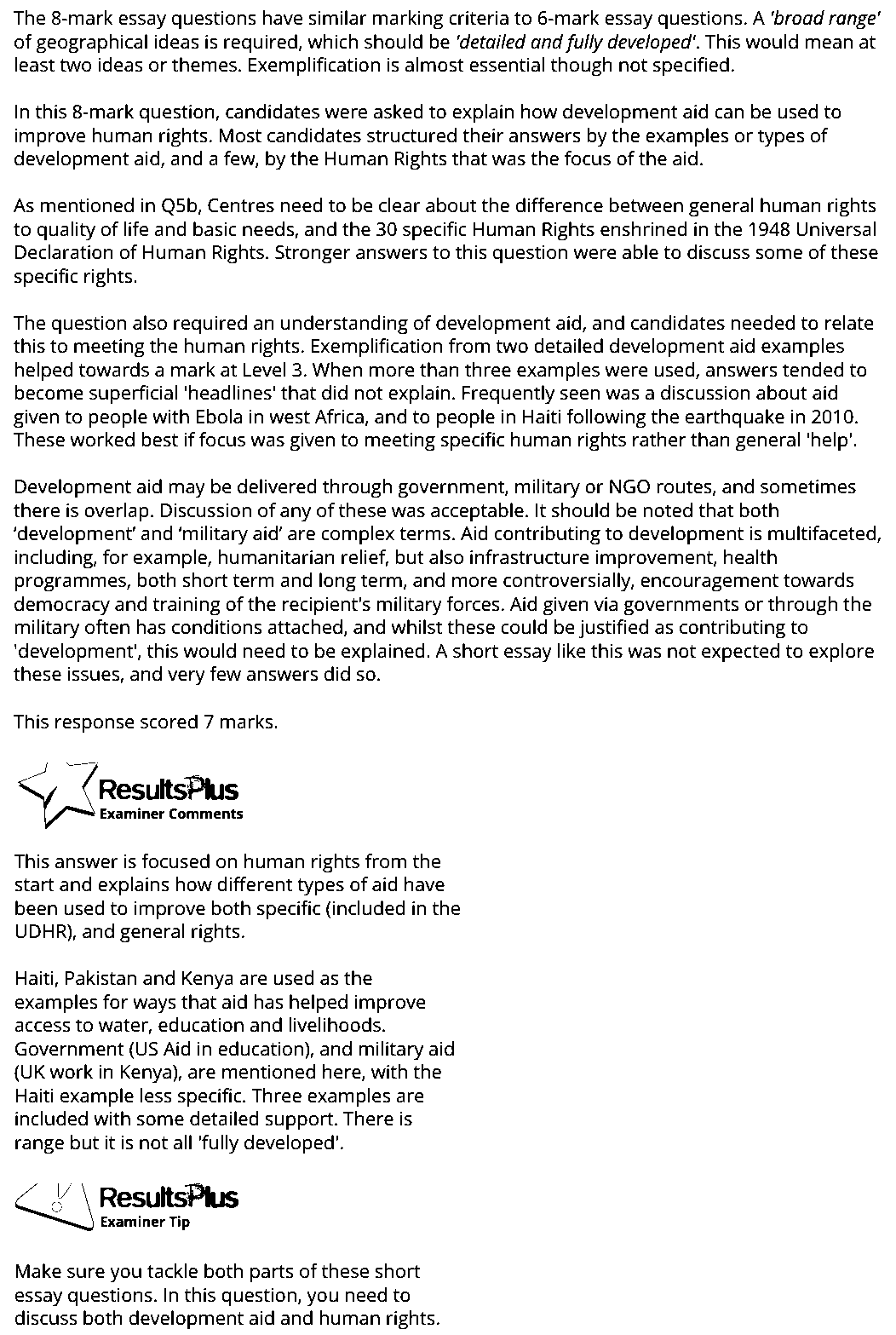
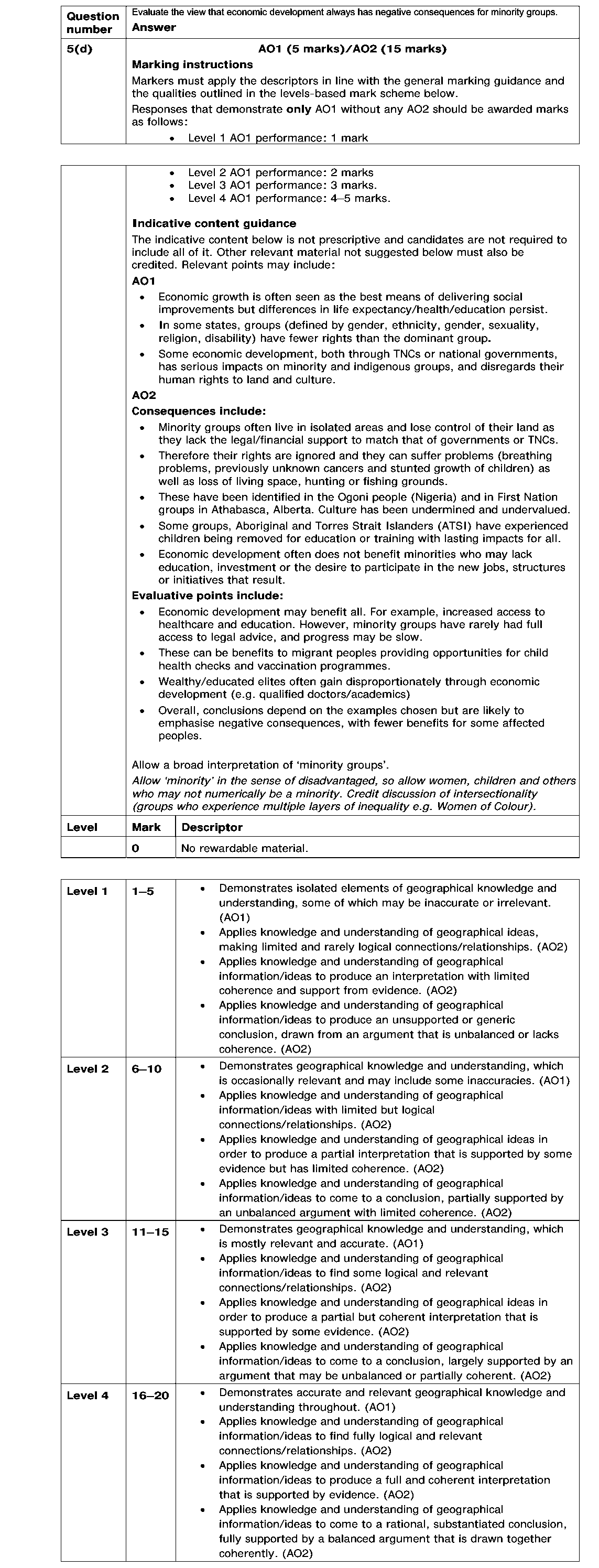
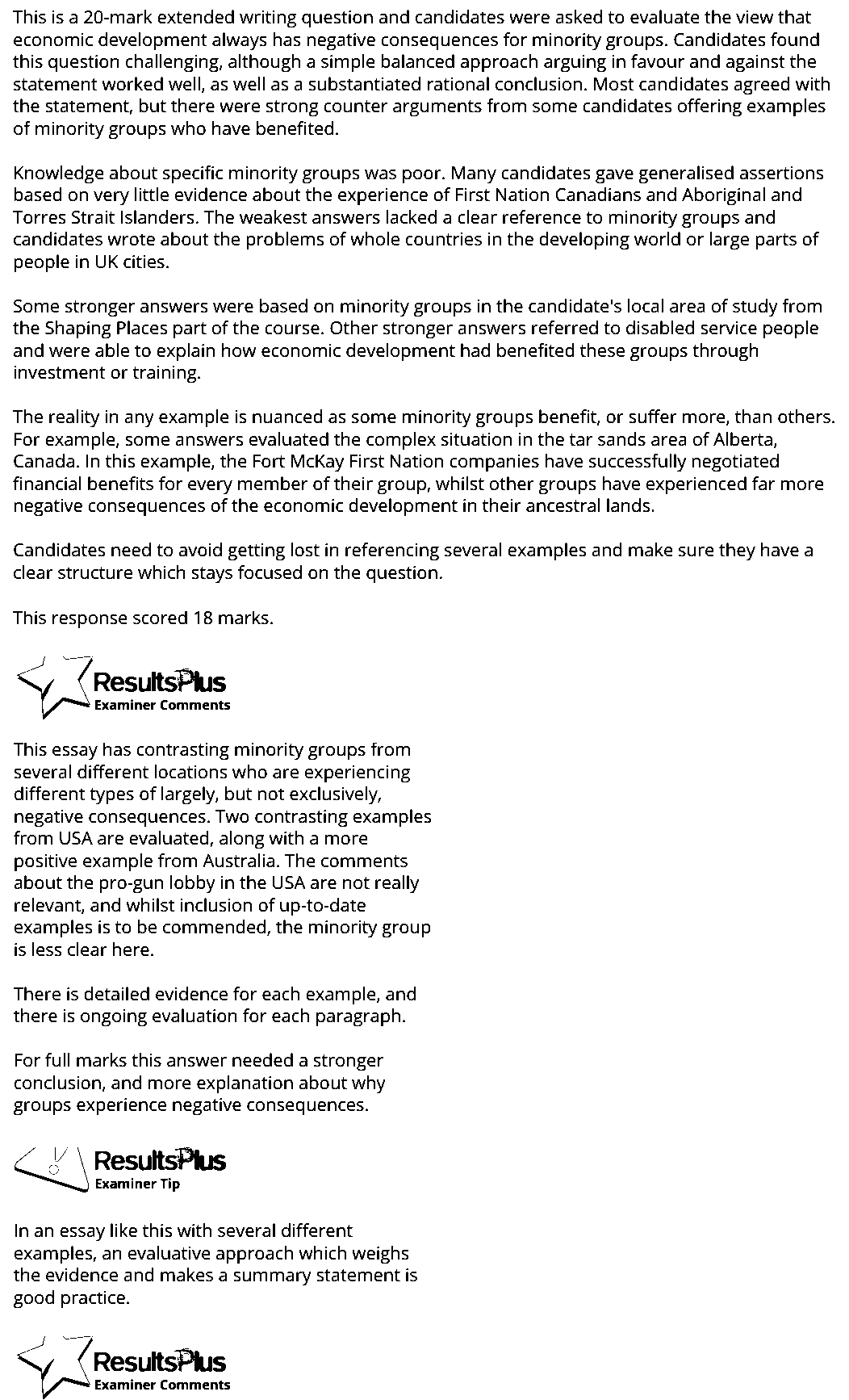
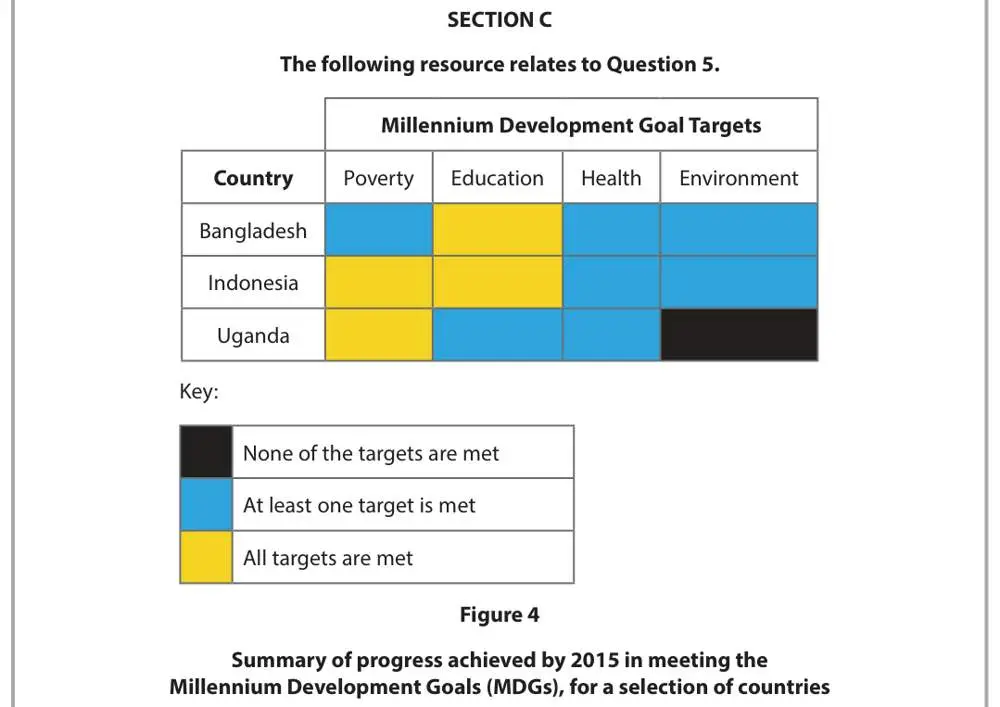
Resources for question 5

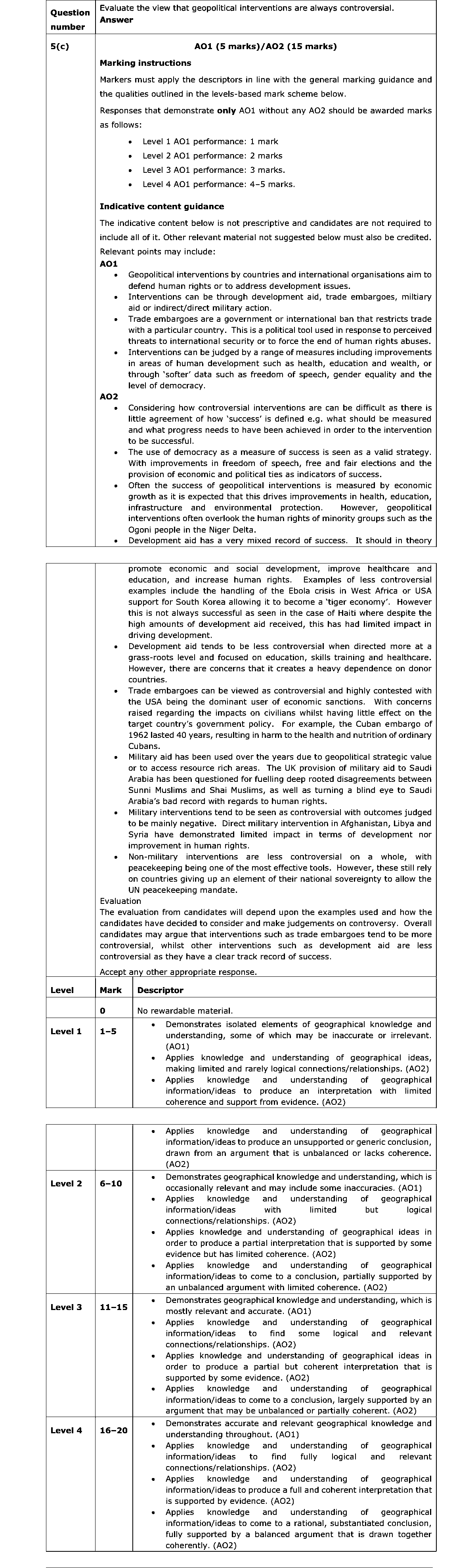
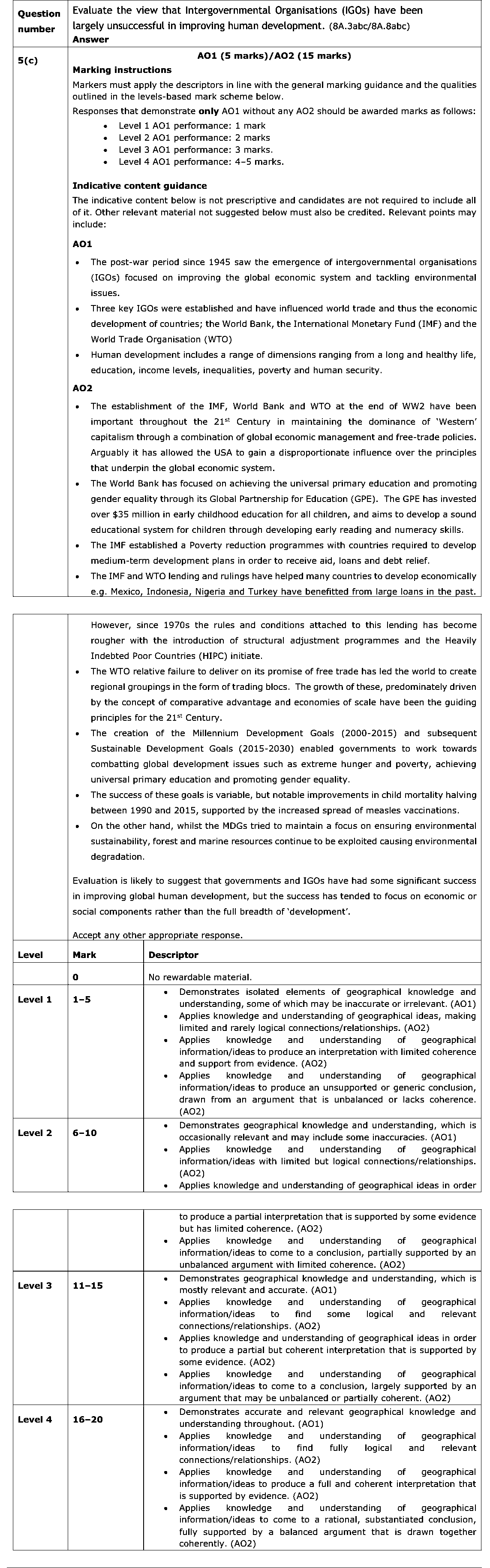
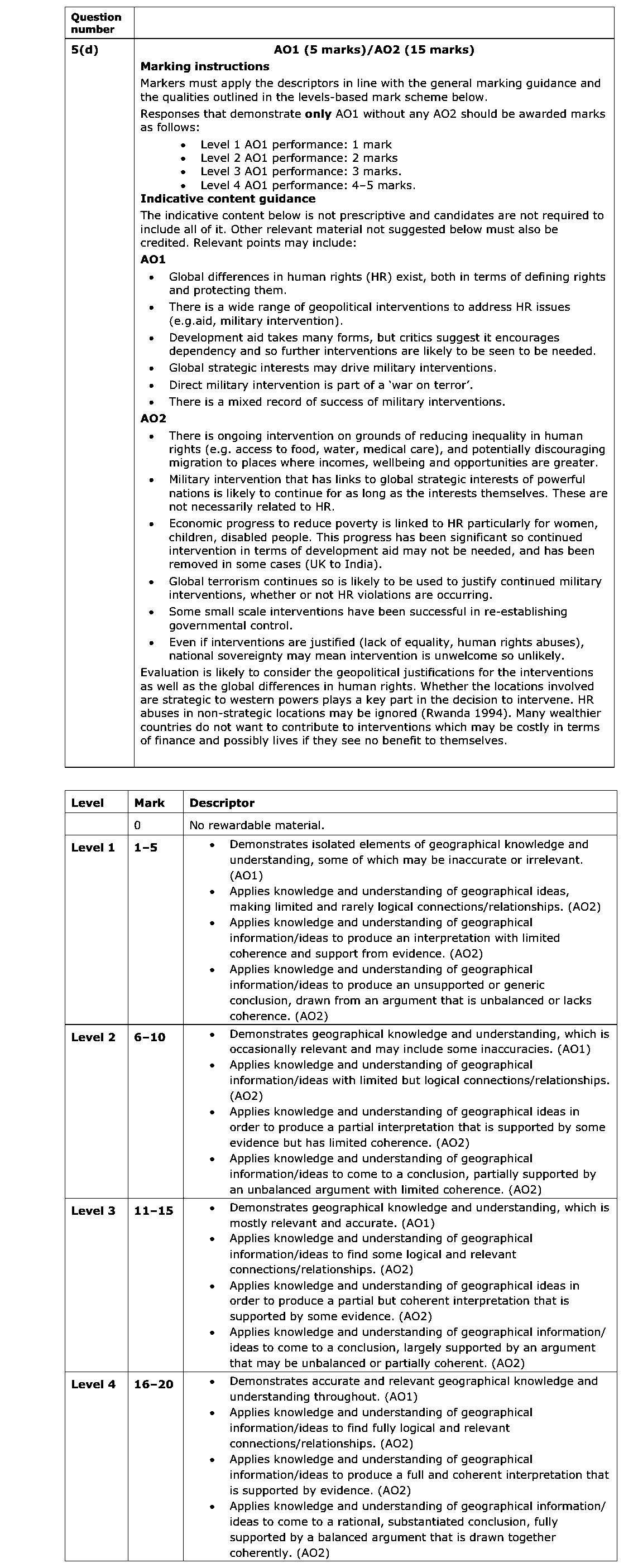
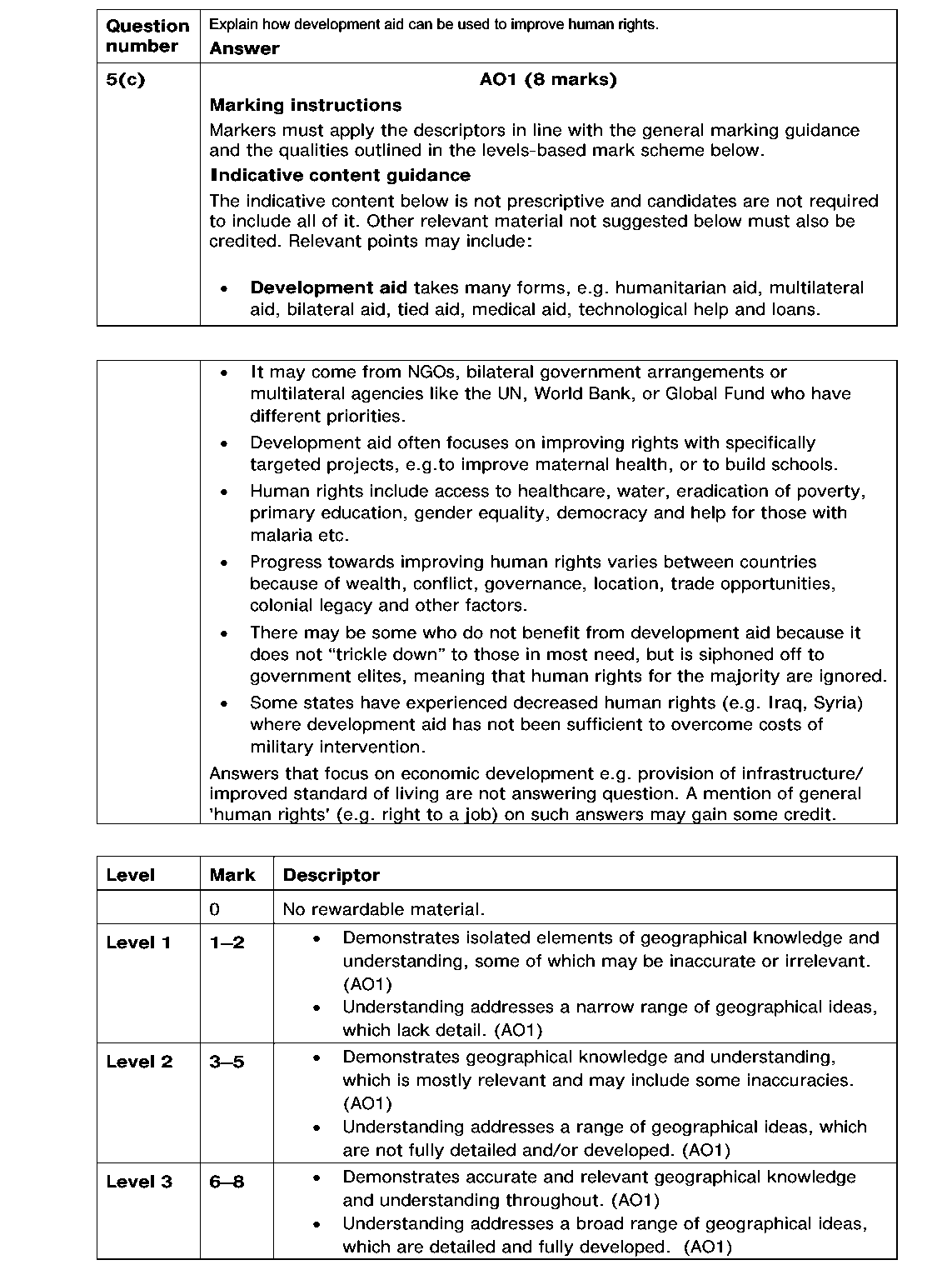
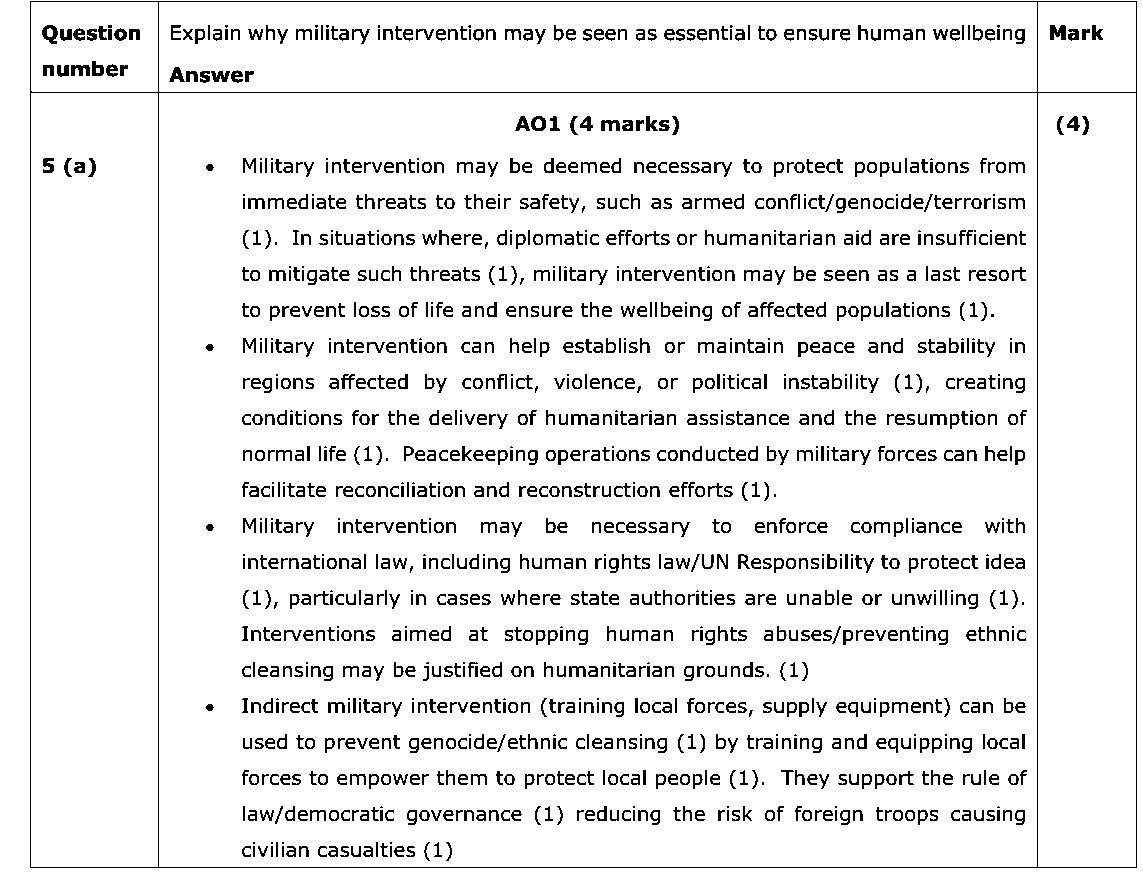
Mark scheme
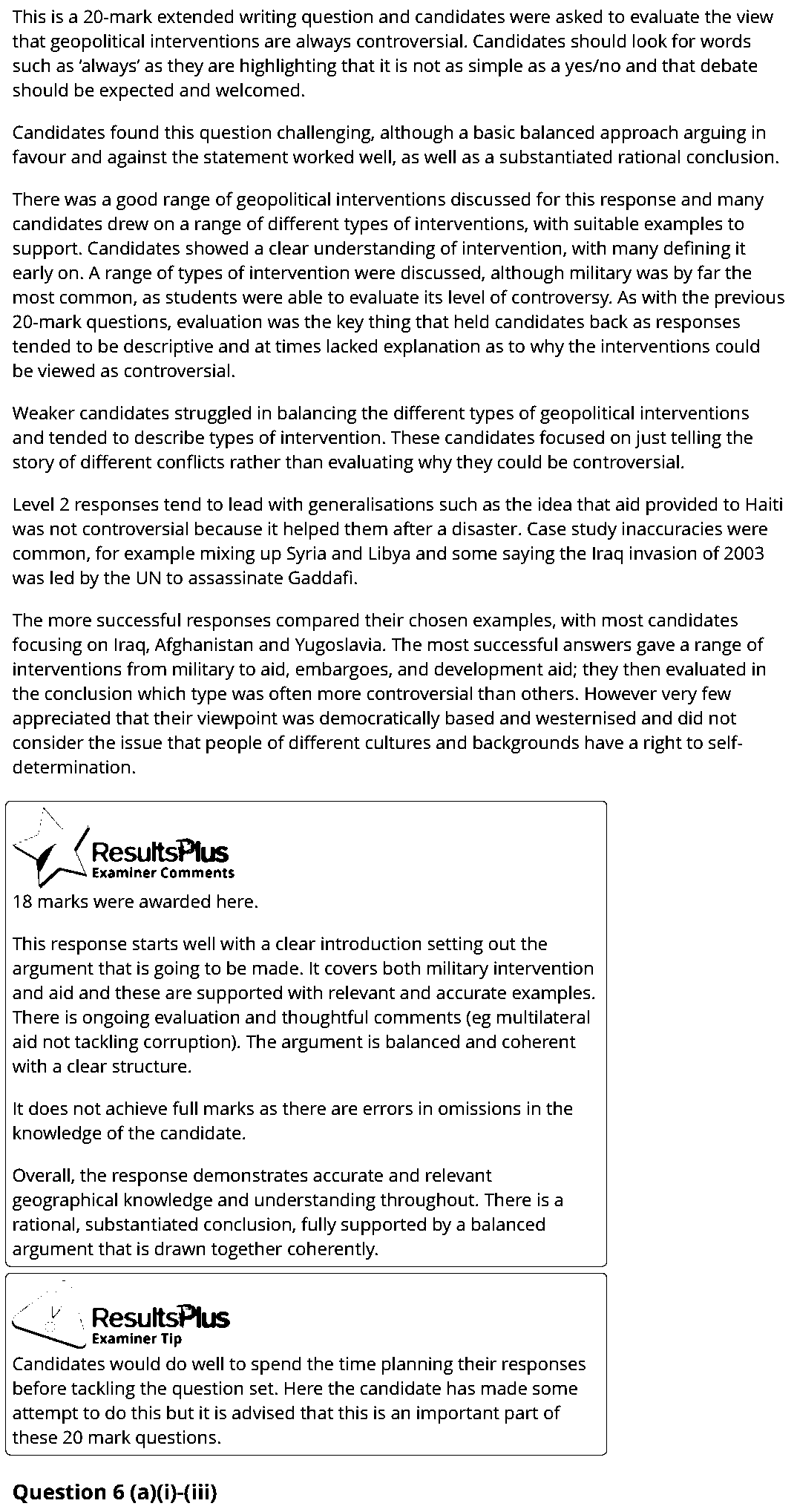
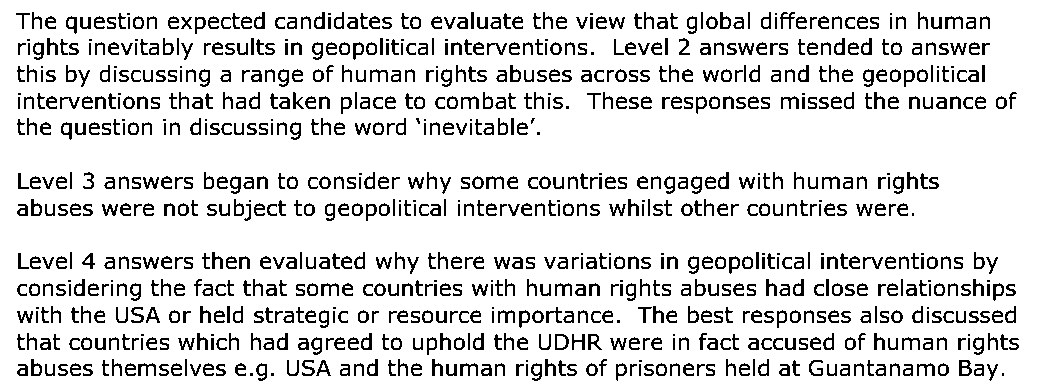
Examiner's comment
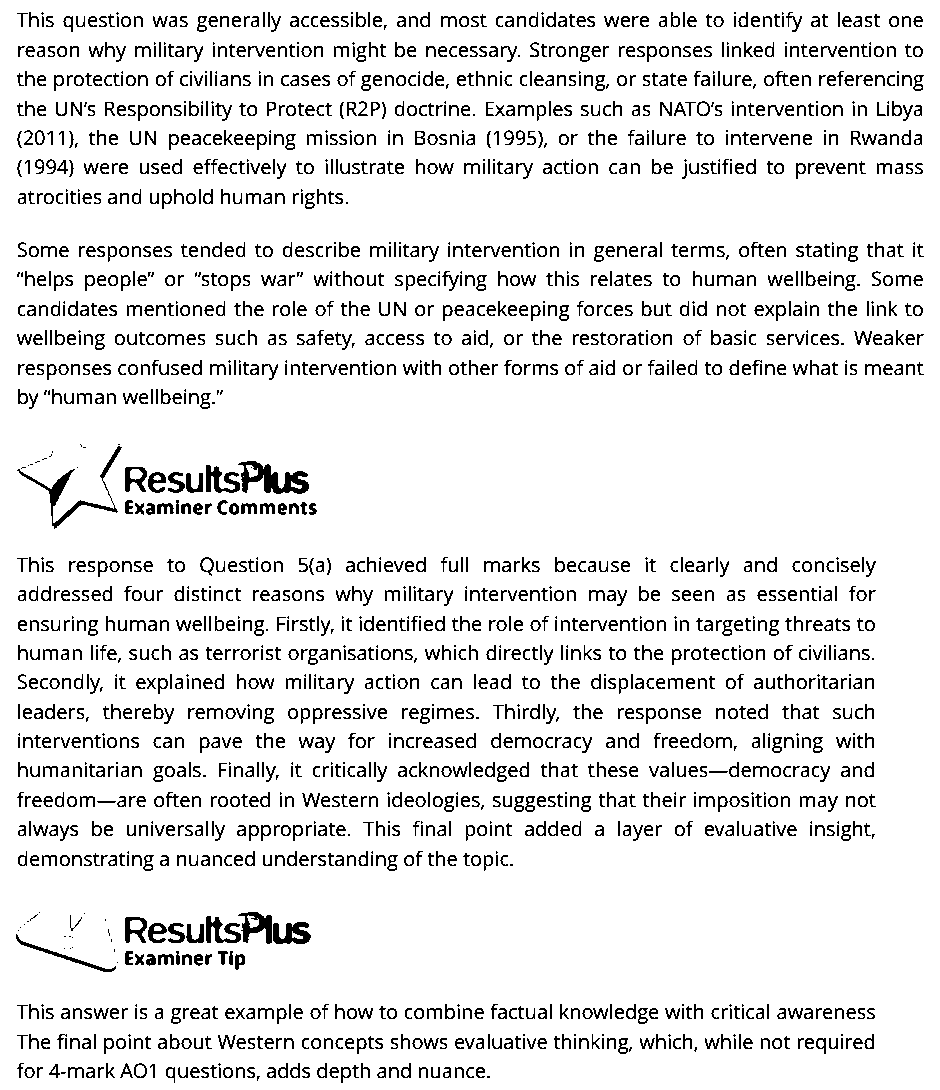
This question was generally accessible, and most candidates were able to identify at least one reason why military intervention might be necessary. Stronger responses linked intervention to the protection of civilians in cases of genocide, ethnic cleansing, or state failure, often referencing the UN’s Responsibility to Protect (R2P) doctrine. Examples such as NATO’s intervention in Libya (2011), the UN peacekeeping mission in Bosnia (1995), or the failure to intervene in Rwanda (1994) were used effectively to illustrate how military action can be justified to prevent mass atrocities and uphold human rights. Some responses tended to describe military intervention in general terms, often stating that it “helps people” or “stops war” without specifying how this relates to human wellbeing. Some candidates mentioned the role of the UN or peacekeeping forces but did not explain the link to wellbeing outcomes such as safety, access to aid, or the restoration of basic services. Weaker responses confused military intervention with other forms of aid or failed to define what is meant by “human wellbeing.” This response to Question 5(a) achieved full marks because it clearly and concisely addressed four distinct reasons why military intervention may be seen as essential for ensuring human wellbeing. Firstly, it identified the role of intervention in targeting threats to human life, such as terrorist organisations, which directly links to the protection of civilians. Secondly, it explained how military action can lead to the displacement of authoritarian leaders, thereby removing oppressive regimes. Thirdly, the response noted that such interventions can pave the way for increased democracy and freedom, aligning with humanitarian goals. Finally, it critically acknowledged that these values—democracy and freedom—are often rooted in Western ideologies, suggesting that their imposition may not always be universally appropriate. This final point added a layer of evaluative insight, demonstrating a nuanced understanding of the topic. This answer is a great example of how to combine factual knowledge with critical awareness The final point about Western concepts shows evaluative thinking, which, while not required for 4-mark AO1 questions, adds depth and nuance.
Notes from the mark scheme and report
- Protect civilians from genocide, ethnic cleansing or state failure when diplomacy and aid fail (Responsibility to Protect)
- restores stability so aid and services resume
- examples Libya 2011, Bosnia, failure in Rwanda
- 'stops war' without a wellbeing link was weak