Resources for question 6

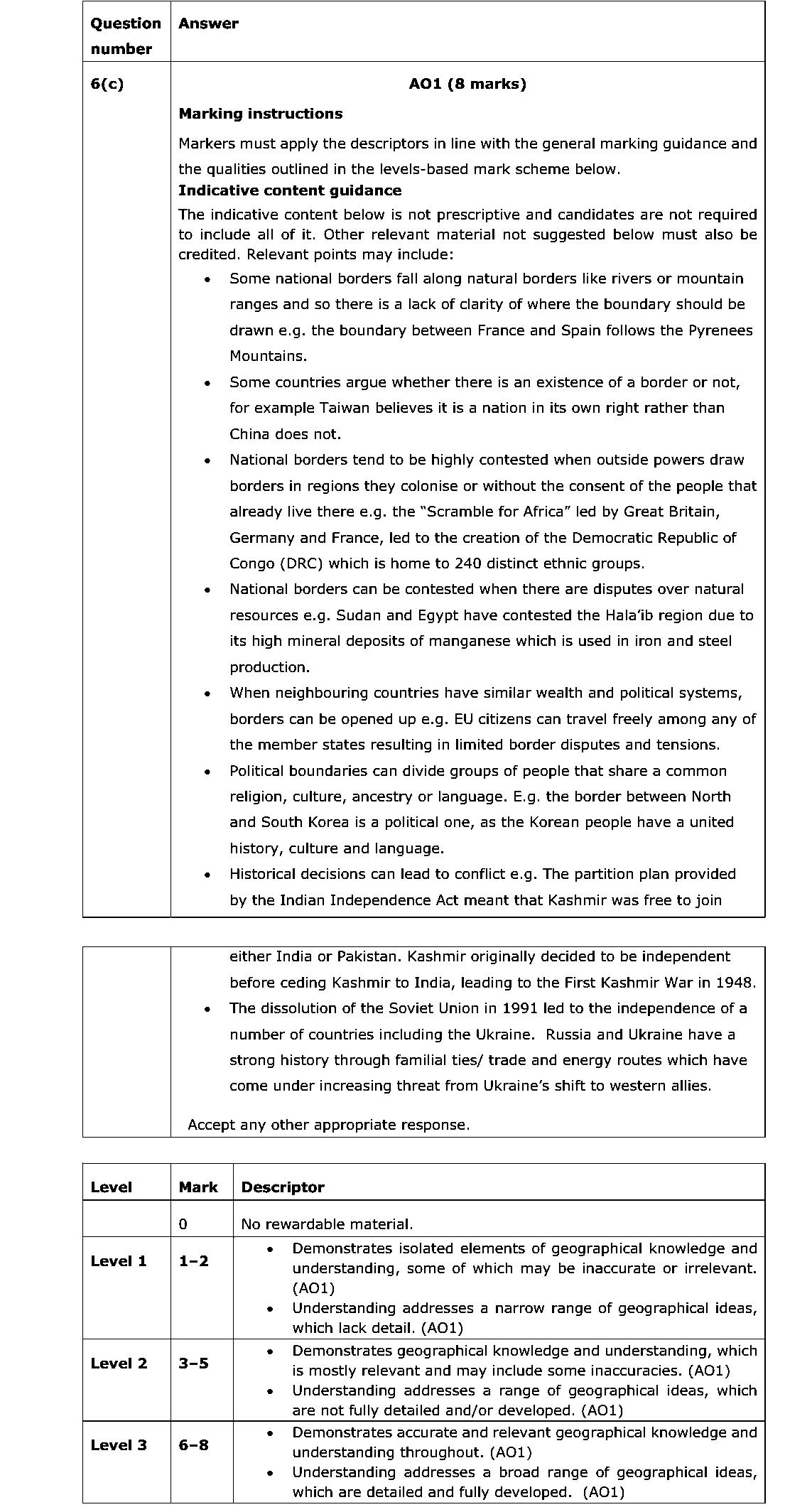
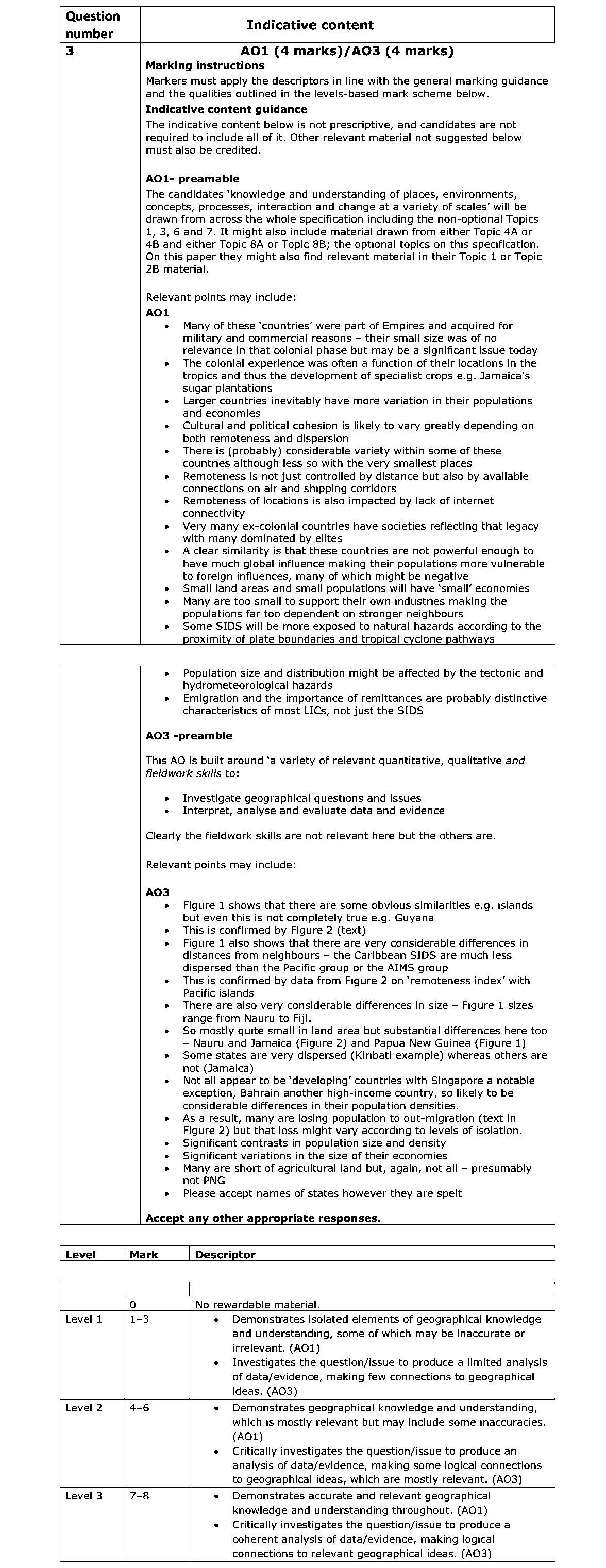
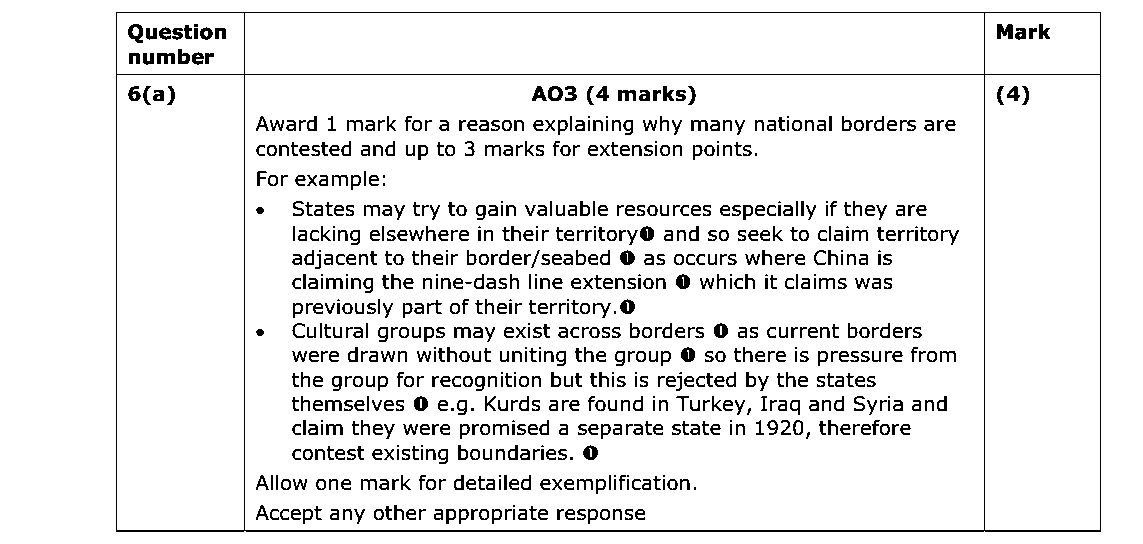
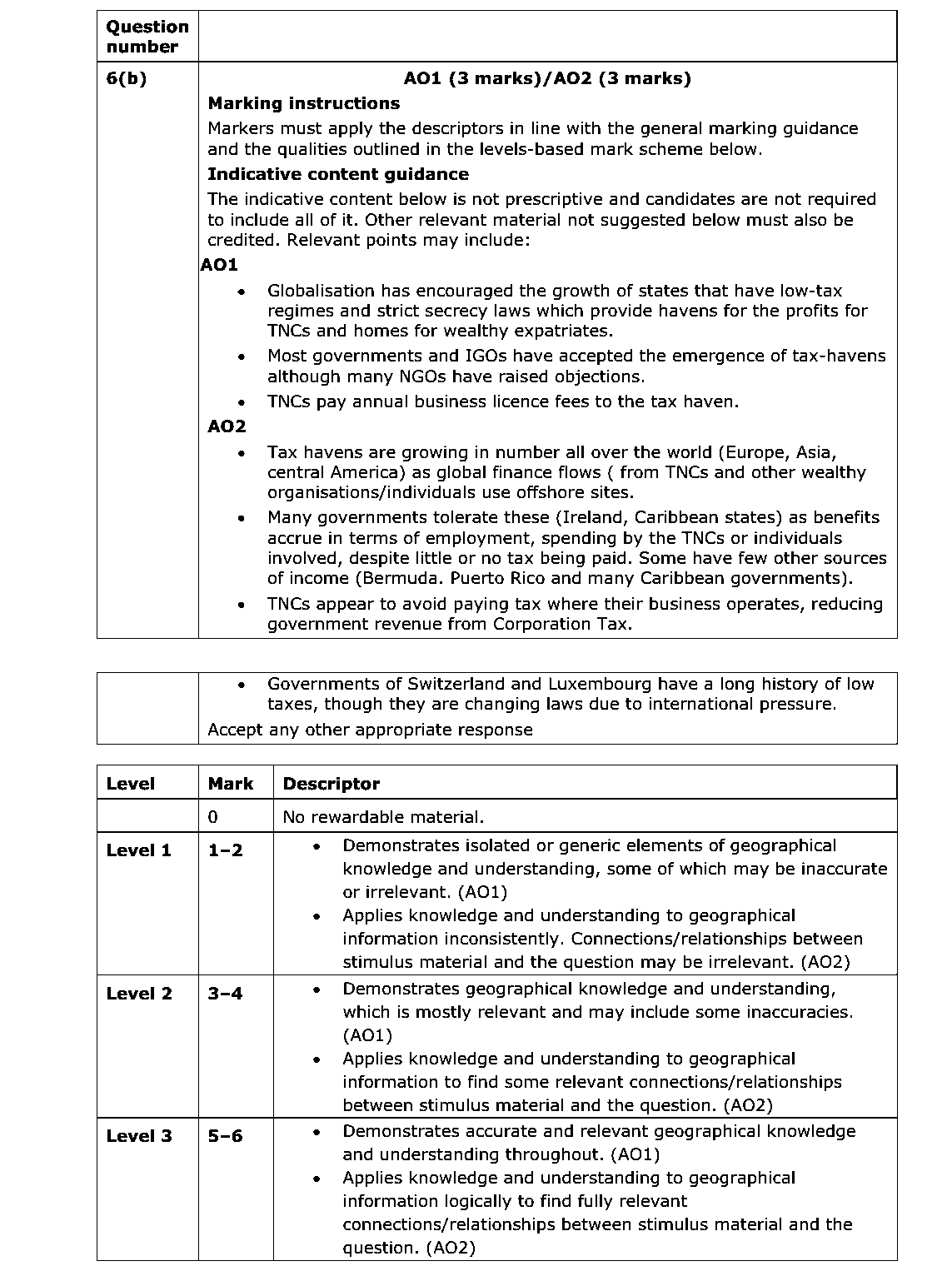
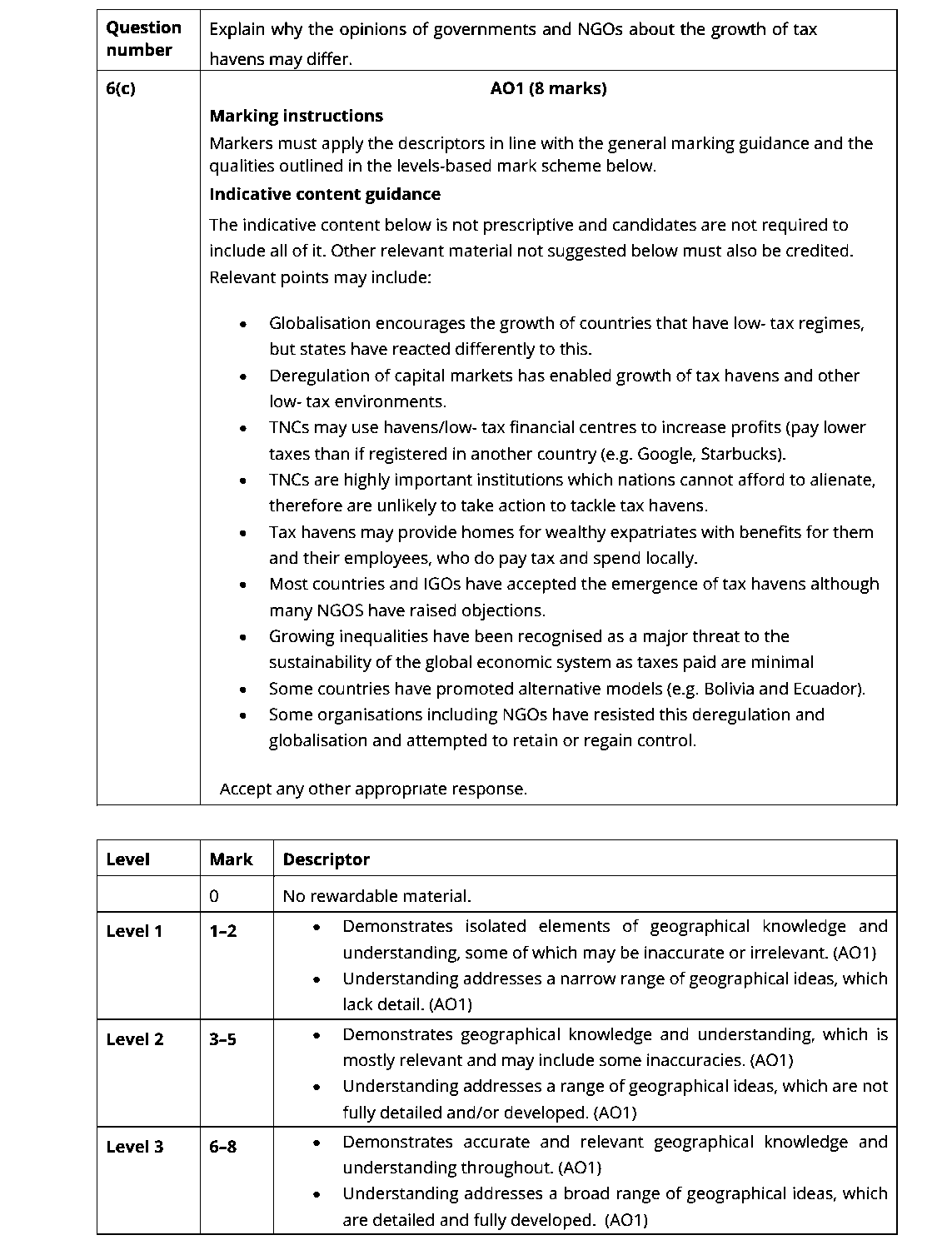
Mark scheme, including the levels and indicative content
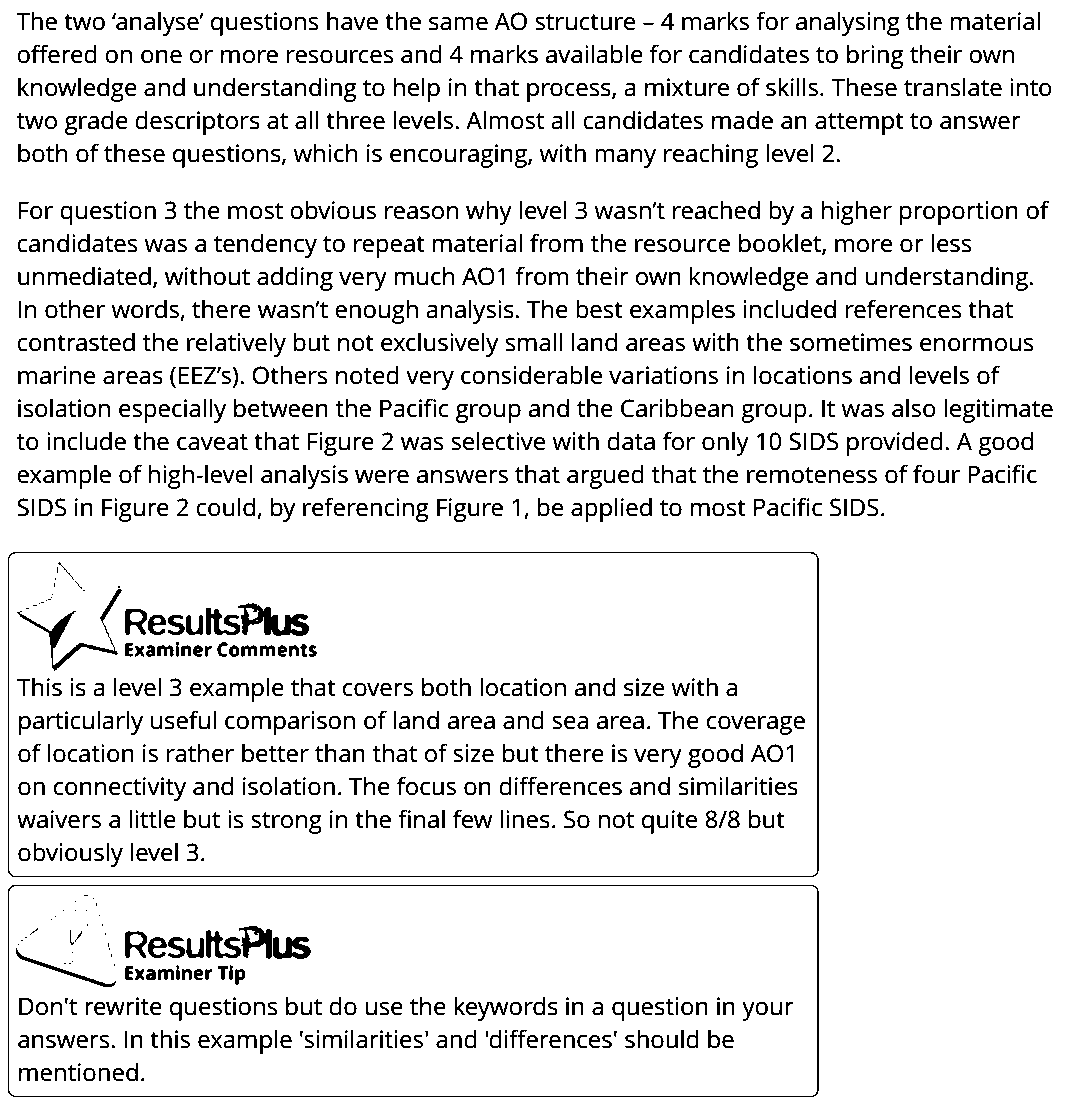
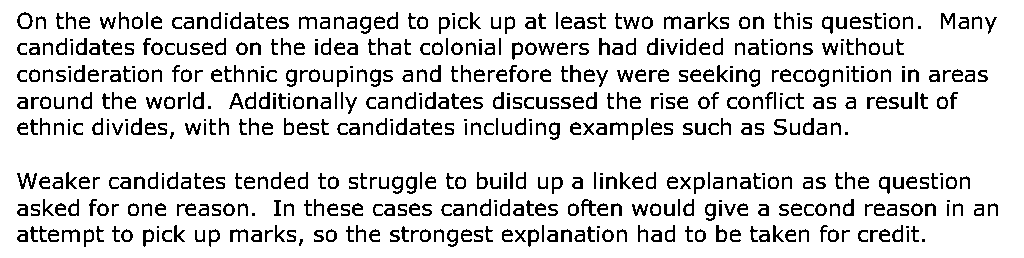
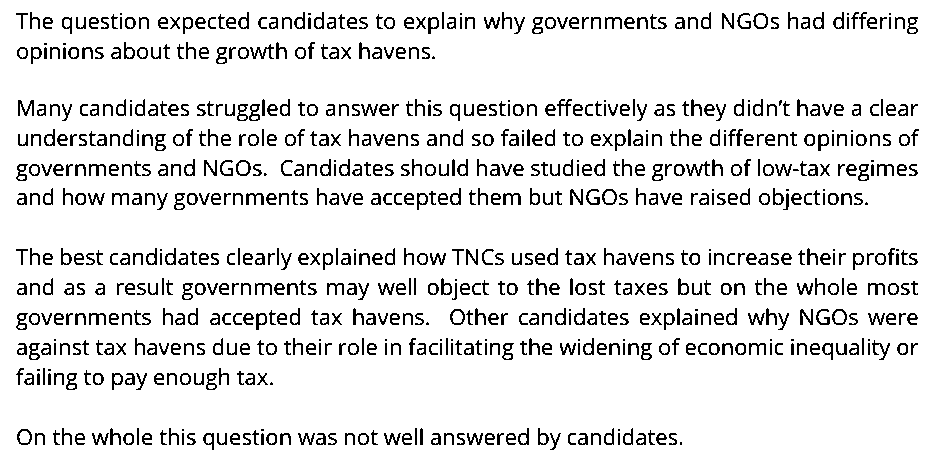
Examiner's comment
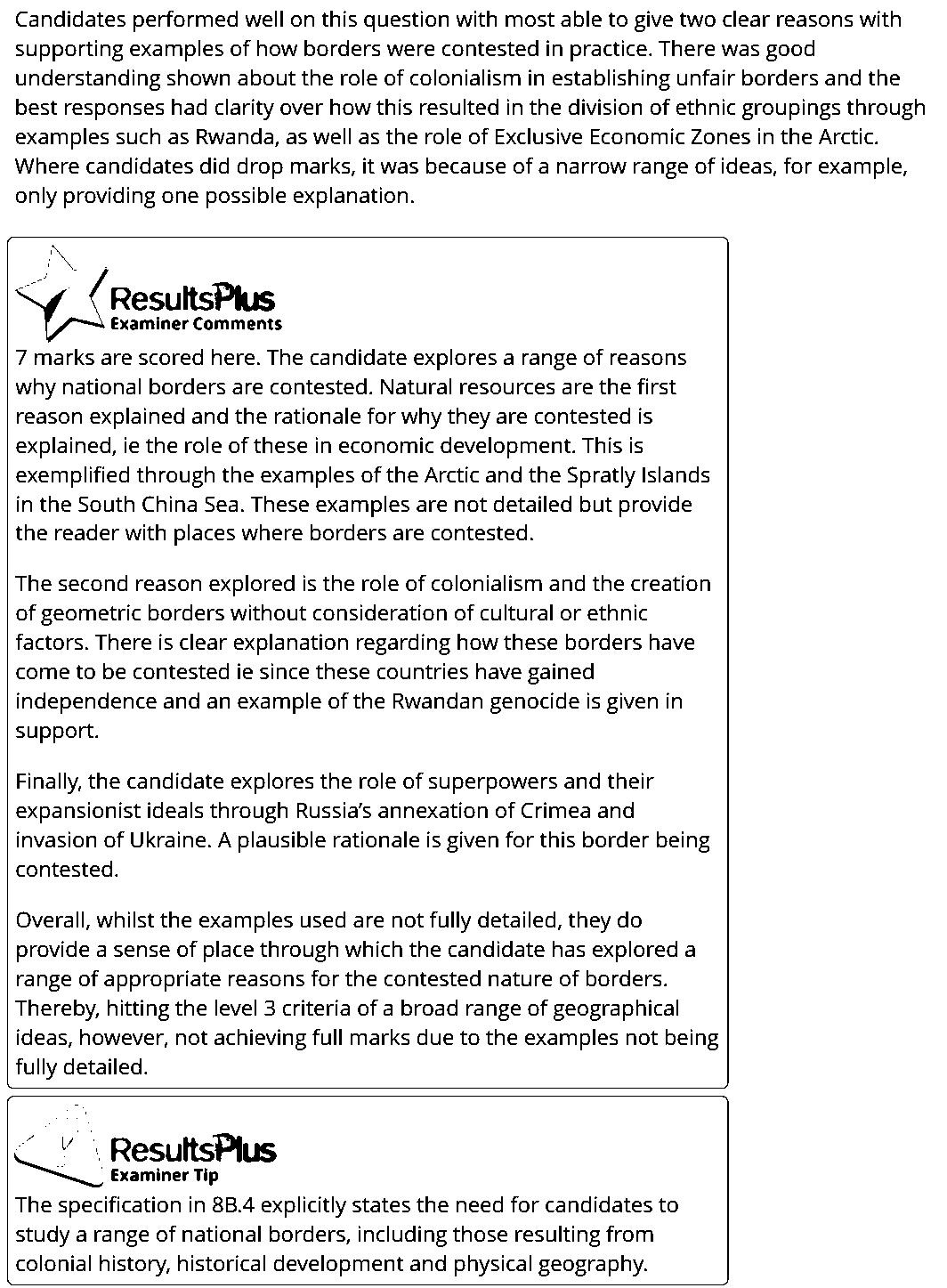
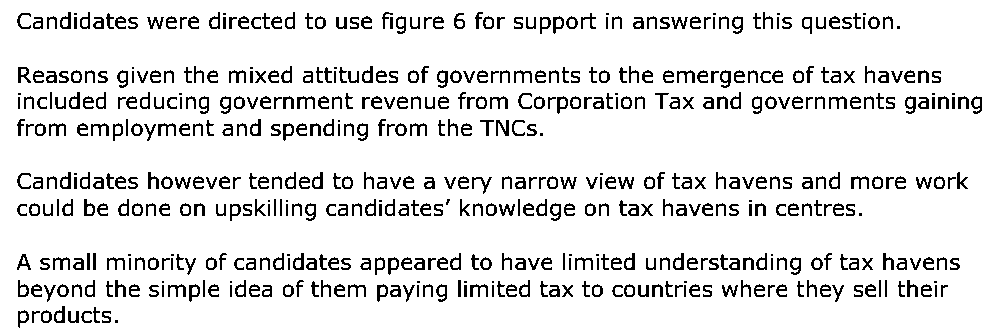
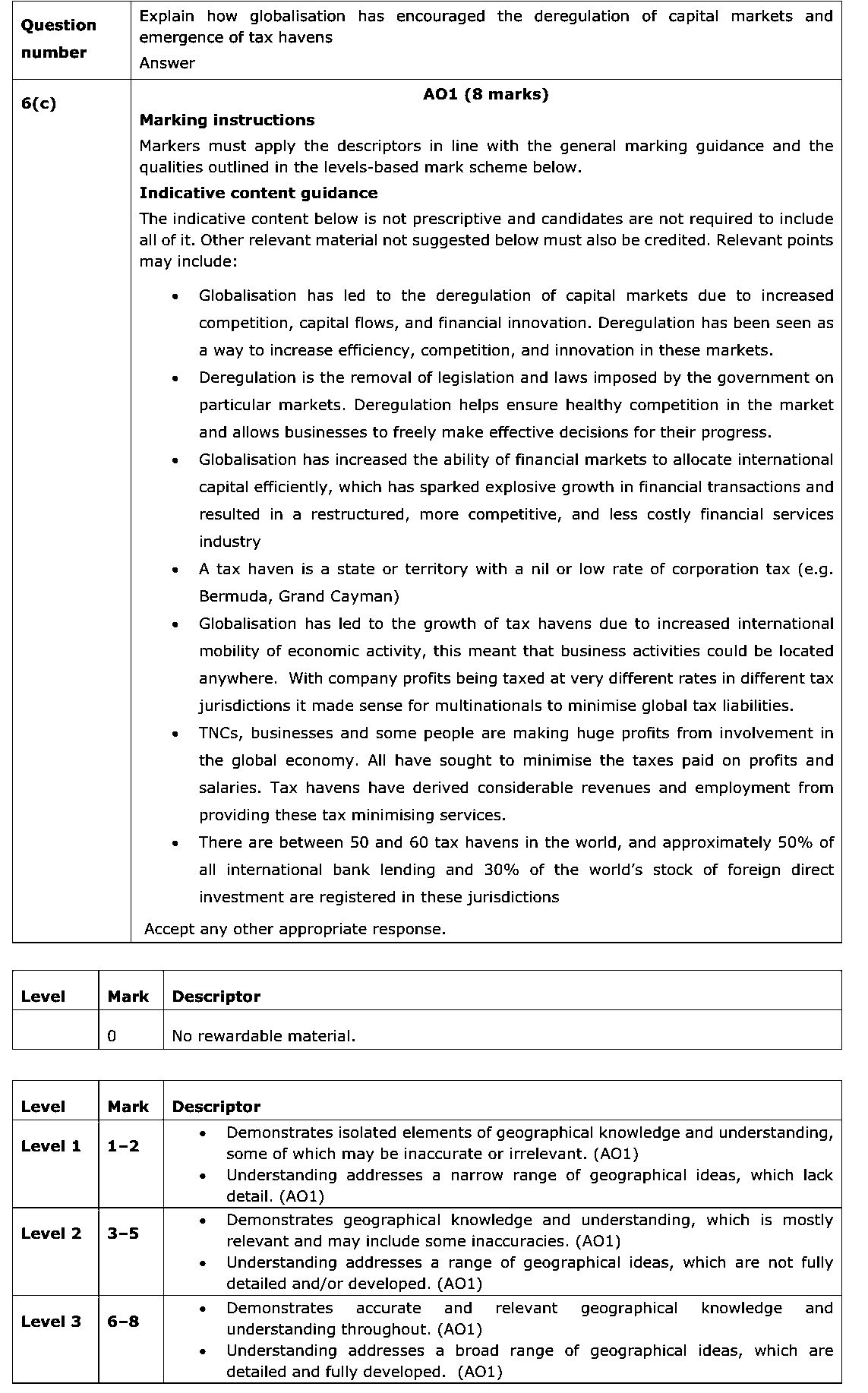
The 8-mark essays have a similar marking criterion to 6-mark essays. A 'broad range' of geographical ideas is required, which should be 'detailed and fully developed'. This would usually mean at least two ideas or themes. Exemplification is a useful route for many candidates, though not essential. This question proved challenging for many candidates, particularly in relation to the concept of capital market deregulation. Stronger responses explained that globalisation has led to increased financial flows, prompting governments to remove restrictions on the movement of capital to attract foreign investment. These candidates often referenced the “Big Bang” financial reforms in London (1986) or the role of neoliberal economic policies in promoting deregulation. They also explained how TNCs and wealthy individuals use tax havens (eg, Cayman Islands, Luxembourg, Ireland) to minimise tax liabilities, linking this to the globalisation of finance and the pursuit of competitive advantage. Level 3 responses provided clear explanations of both deregulation and tax havens, supported by examples and linked to globalisation processes such as FDI, TNC expansion, and financial liberalisation. Some candidates also referenced the role of international institutions (eg, IMF, World Bank) in promoting deregulation through structural adjustment programmes. Mid-level responses tended to focus on one aspect (usually tax havens) and described them without linking to globalisation. Some candidates confused deregulation with trade liberalisation or assumed that tax havens are illegal. Weaker responses were vague, lacked terminology, or described globalisation in general terms without addressing the question. The candidate begins by explaining how globalisation has encouraged the emergence of tax havens, focusing on the idea that companies can increase their profit margins by relocating their headquarters to countries with lower corporation tax. They use Ireland as a key example, noting that its 12.5% corporate tax rate is significantly lower than the 20% rate in the USA. This, they argue, has led companies like Google to base their operations in Ireland to reduce tax liabilities. The candidate correctly identifies this as a legal and strategic move enabled by globalisation, which has made the world more interconnected and allowed businesses to operate across borders with greater ease. However, while the candidate demonstrates a sound understanding of tax havens and their link to globalisation, they do not address the concept of deregulation. There is no mention of how globalisation has led to the removal of government controls on capital markets, nor any reference to key historical examples such as the UK’s financial deregulation in the 1980s. As a result, the response lacks the depth and breadth required for a higher-level mark. The answer is coherent and relevant, but it only partially answers the question. It focuses heavily on tax havens and profit shifting, without exploring the broader financial context of deregulated capital flows that underpin this behaviour. This limits the response to Level 2, where the candidate shows mostly relevant knowledge but does not fully develop the range of ideas expected. To access higher marks in questions like 6(c), candidates must go beyond describing tax havens. While using examples like Ireland is valid, responses must also explain how globalisation has led to the deregulation of capital markets —for example, through policies that remove restrictions on financial flows. The candidate demonstrates a strong understanding of how globalisation has encouraged the deregulation of capital markets. They clearly explain the concept of deregulation, referencing the UK’s financial reforms under Margaret Thatcher in the 1980s, which removed restrictions on capital flows and allowed foreign banks to invest more freely. This is well contextualised within the broader framework of globalisation, which the candidate links to the promotion of free-market capitalism and neoliberal policies. They also discuss how deregulation has made capital markets more competitive and attractive to international investors, contributing to economic growth. The candidate then moves on to explain how globalisation has led to the emergence of tax havens, noting that transnational corporations (TNCs) seek out jurisdictions with low or no corporate tax to maximise profits. They correctly identify that these tax havens attract foreign direct investment by offering more favourable tax conditions. However, while the explanation of tax havens is valid, it lacks a specific example to support the point—such as naming a well-known tax haven like the Cayman Islands, Bermuda, or Ireland. Including such an example would have strengthened the response and potentially pushed it into Level 3. Overall, the answer is coherent, well- structured, and shows a clear grasp of the key concepts. It meets the criteria for Level 3 (6 marks) because it demonstrates accurate and relevant geographical knowledge and understanding, particularly in relation to deregulation. The absence of a concrete example for tax havens is the main limitation. To secure higher marks, ensure that both parts of the question are fully addressed. This response explains deregulation well, using the UK as a strong example, but the explanation of tax havens would be more convincing with a named example. Always aim to support abstract concepts with specific case studies or real-world examples to demonstrate applied understanding.
Notes from the mark scheme and report
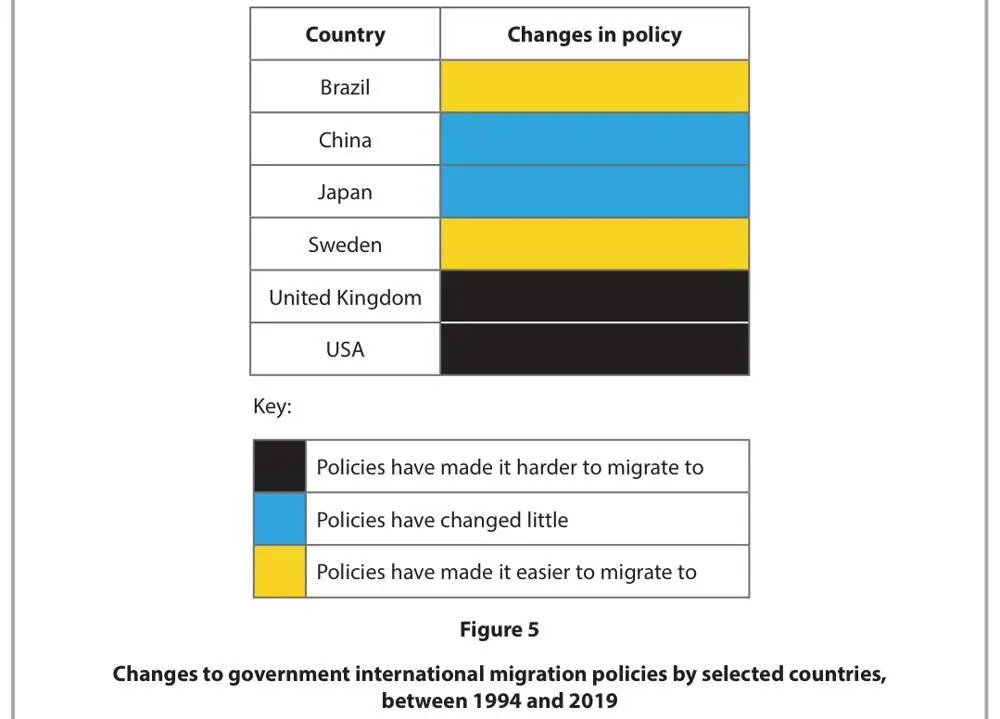
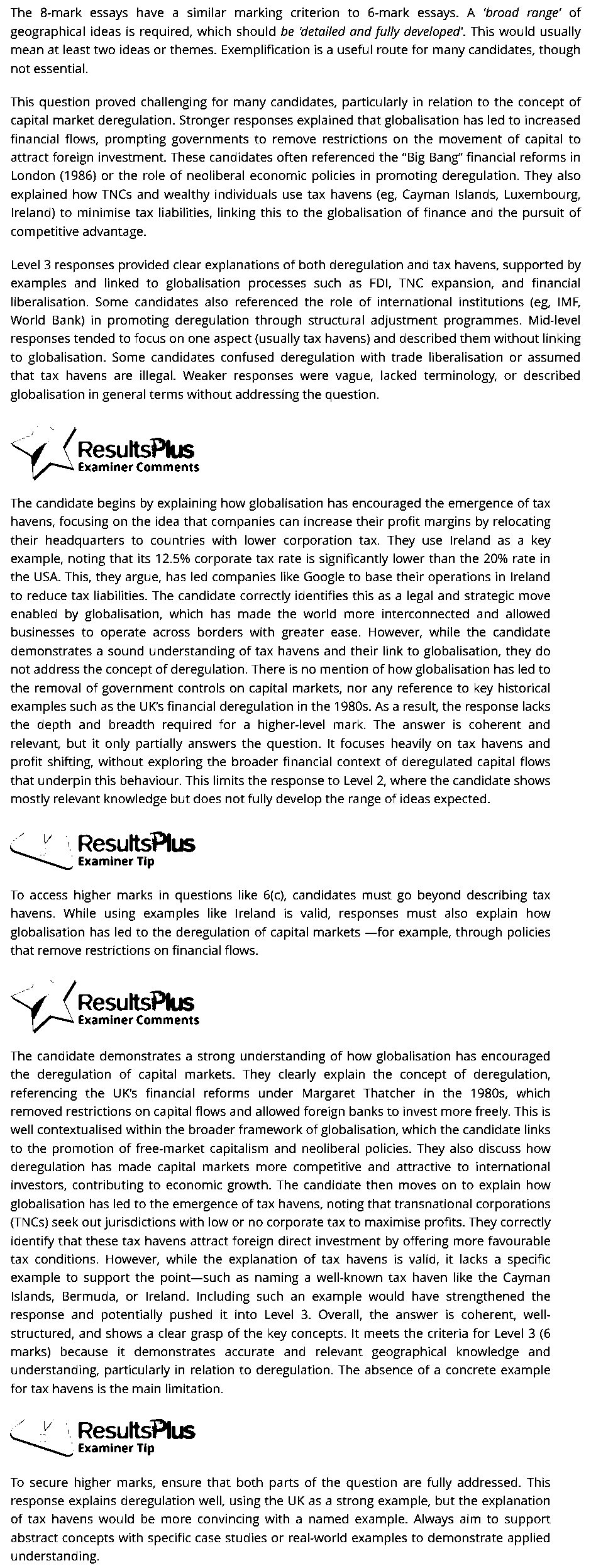
- Globalisation of capital flows led governments to deregulate (London 'Big Bang' 1986, neoliberalism) to attract FDI
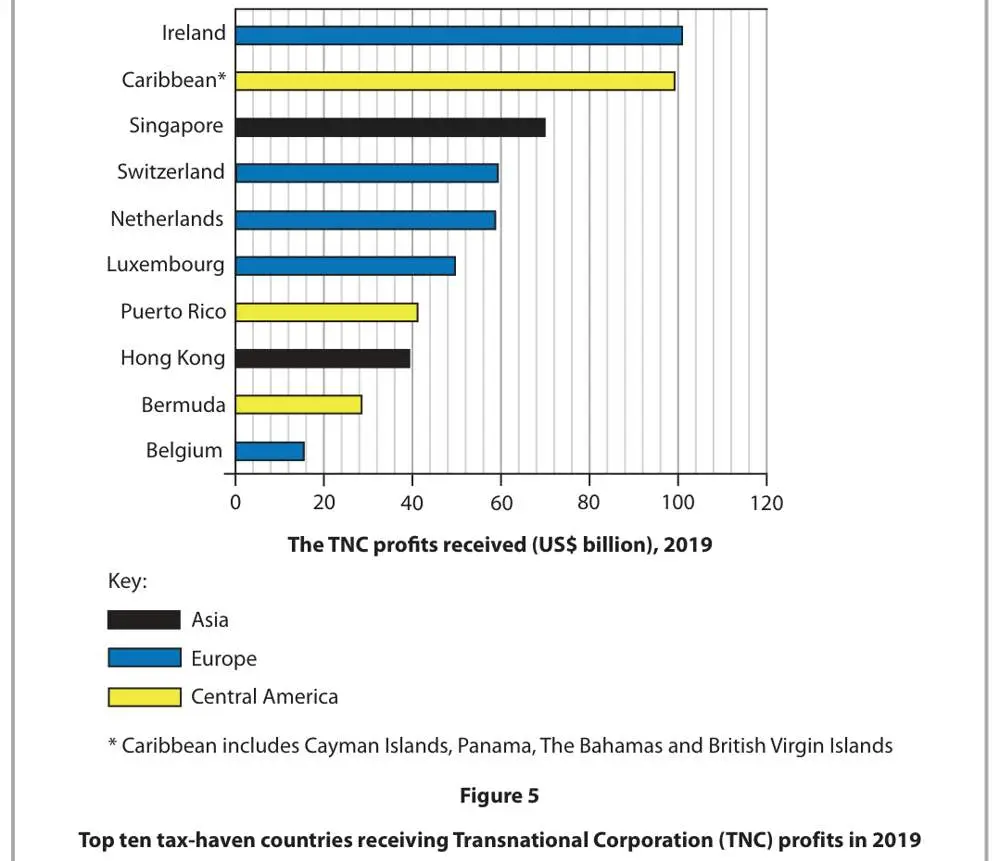
- TNCs and wealthy individuals use low-tax havens (Cayman Islands, Luxembourg, Ireland)
- report: 'This question proved challenging for many candidates, particularly in relation to the concept of capital market deregulation'