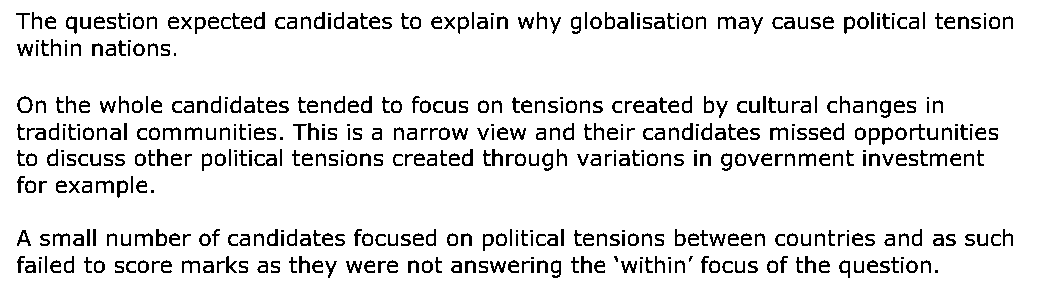
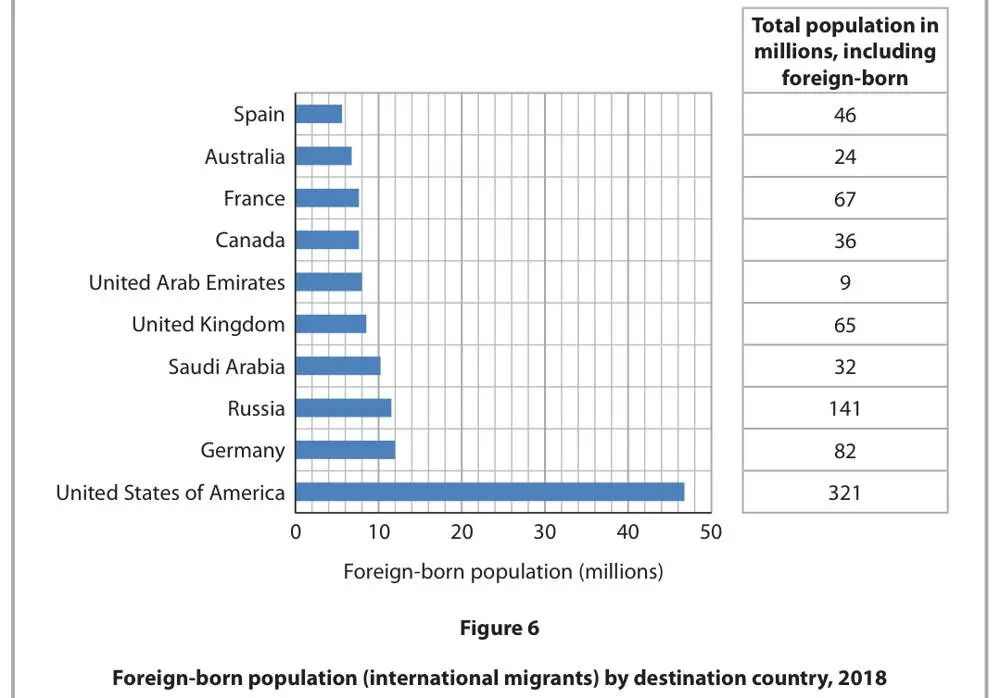
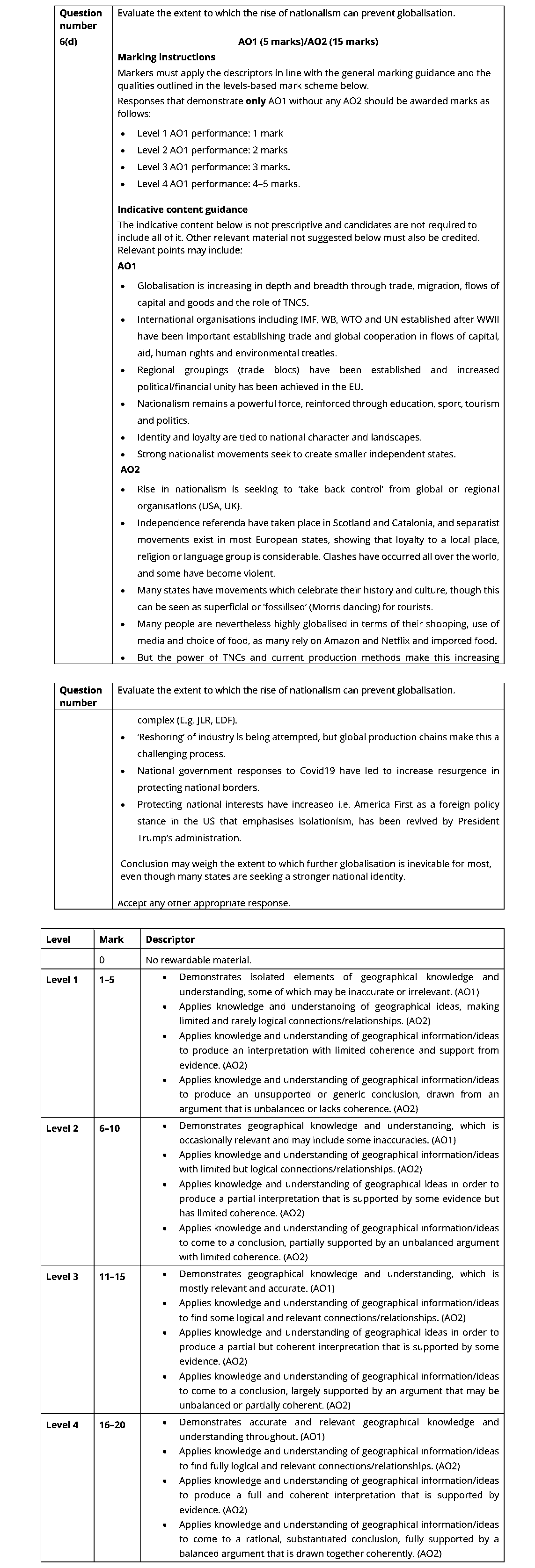
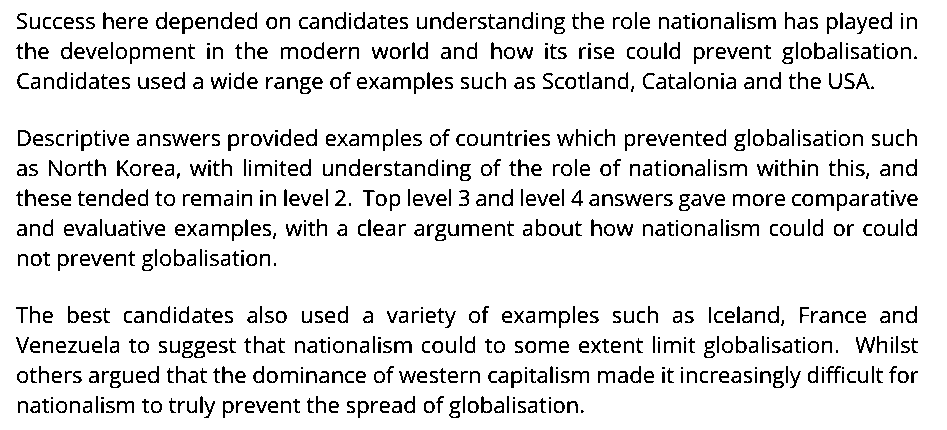
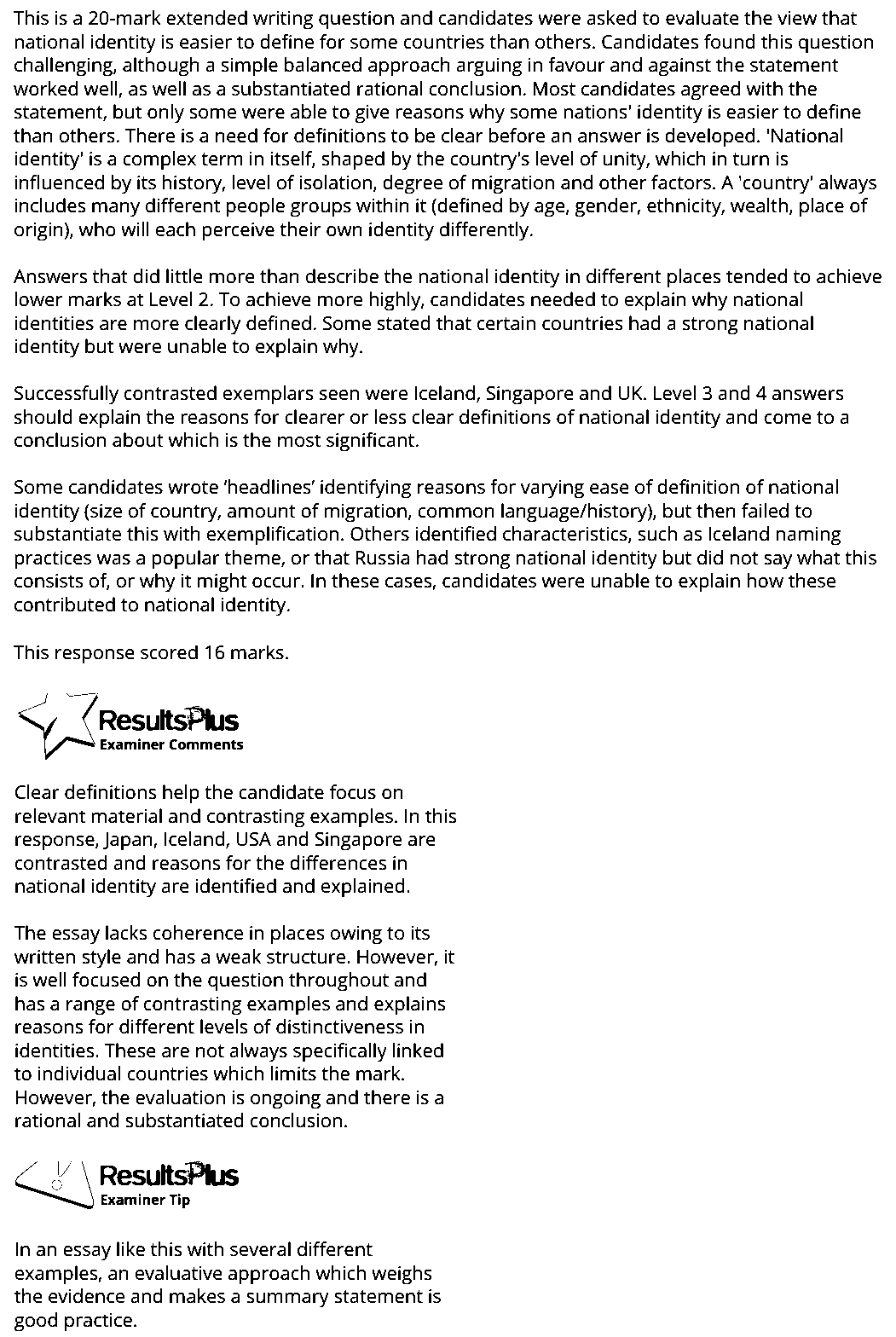
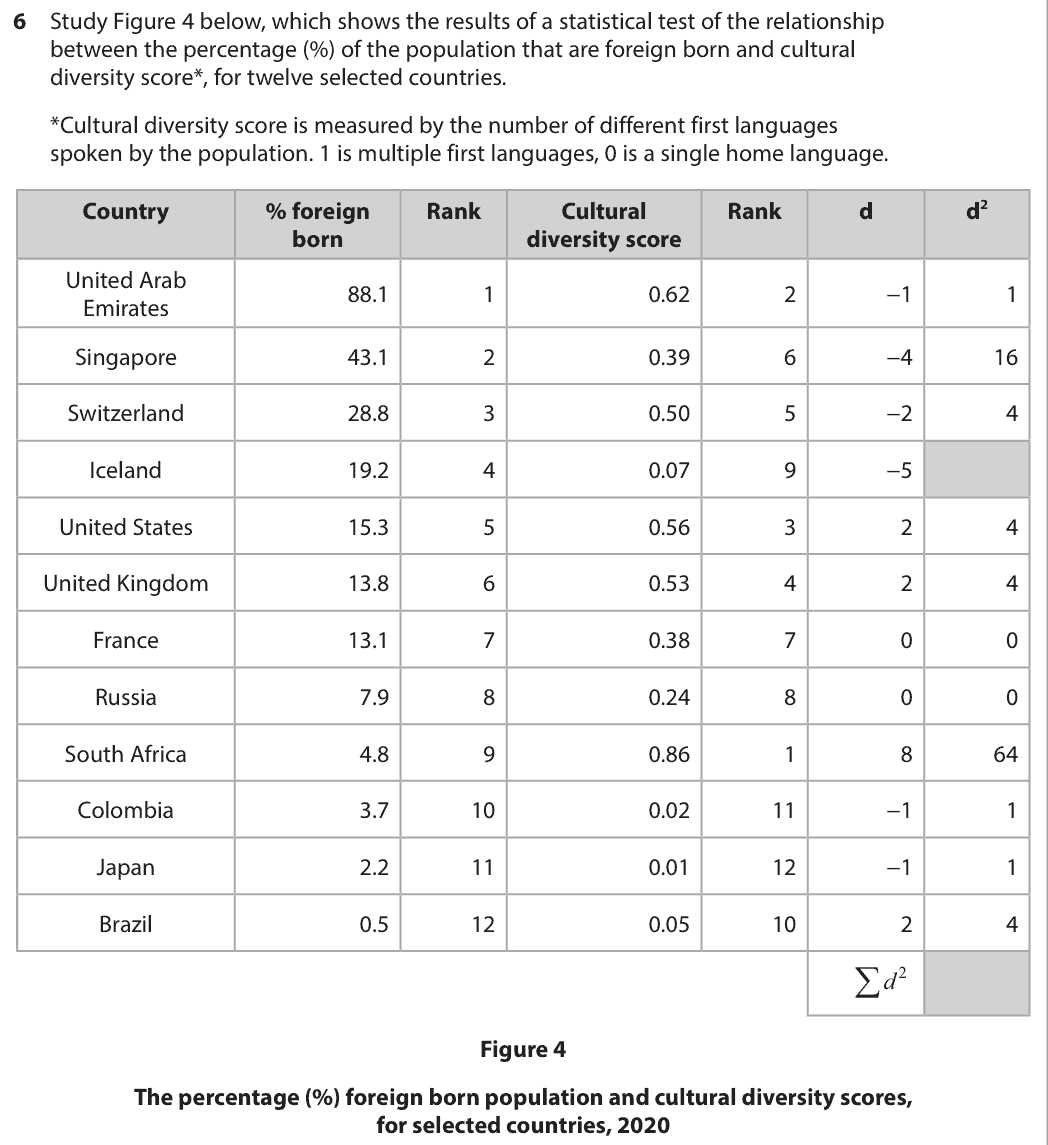
Resources for question 6

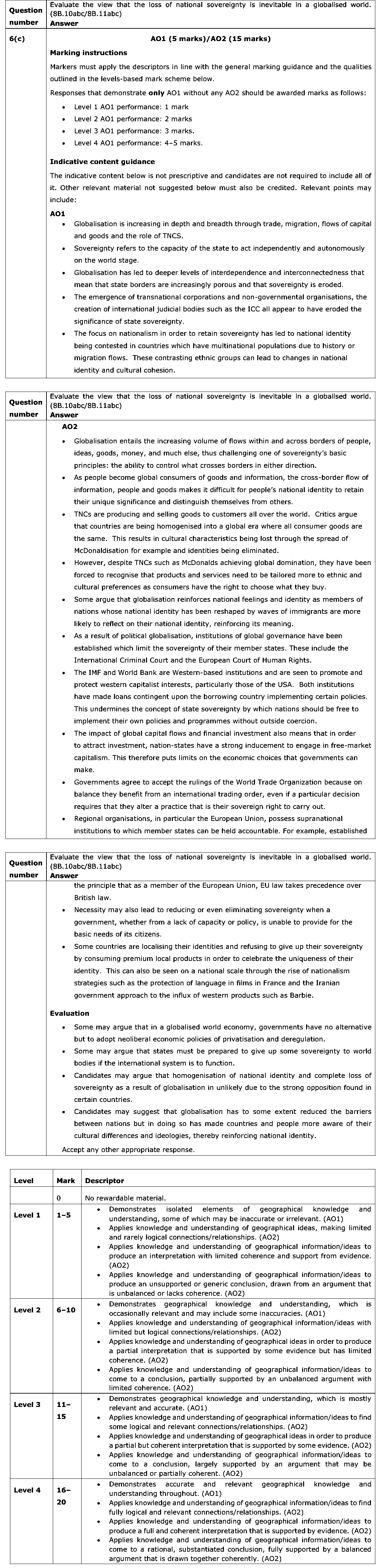
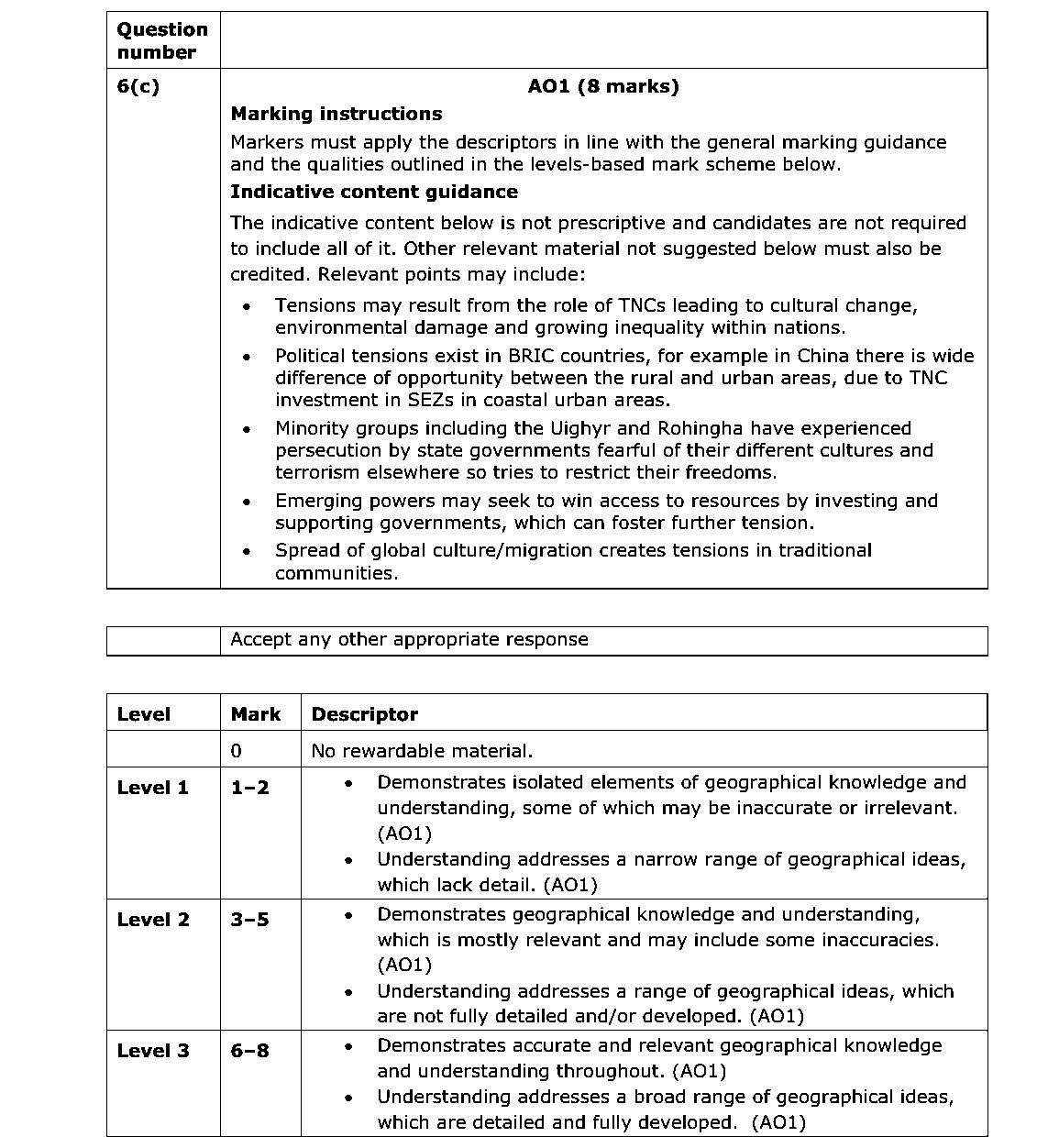
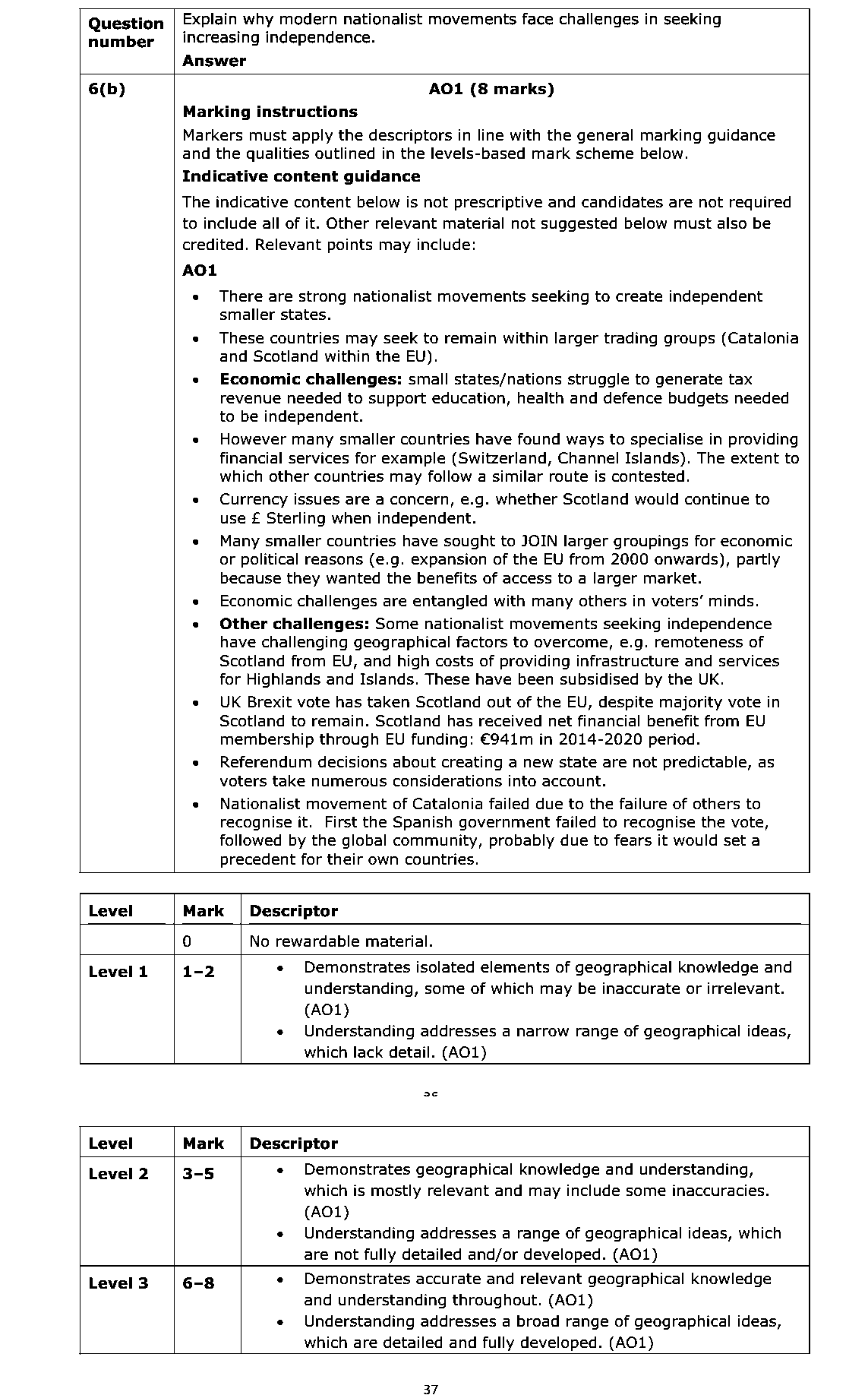
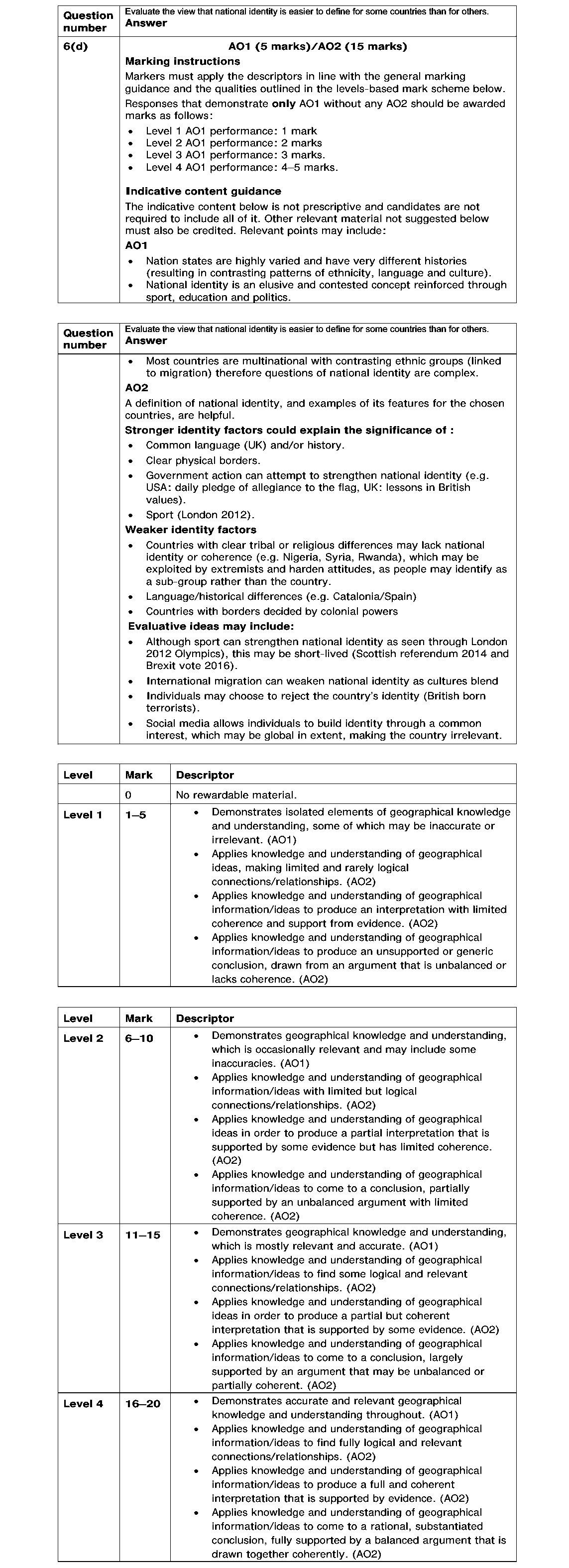
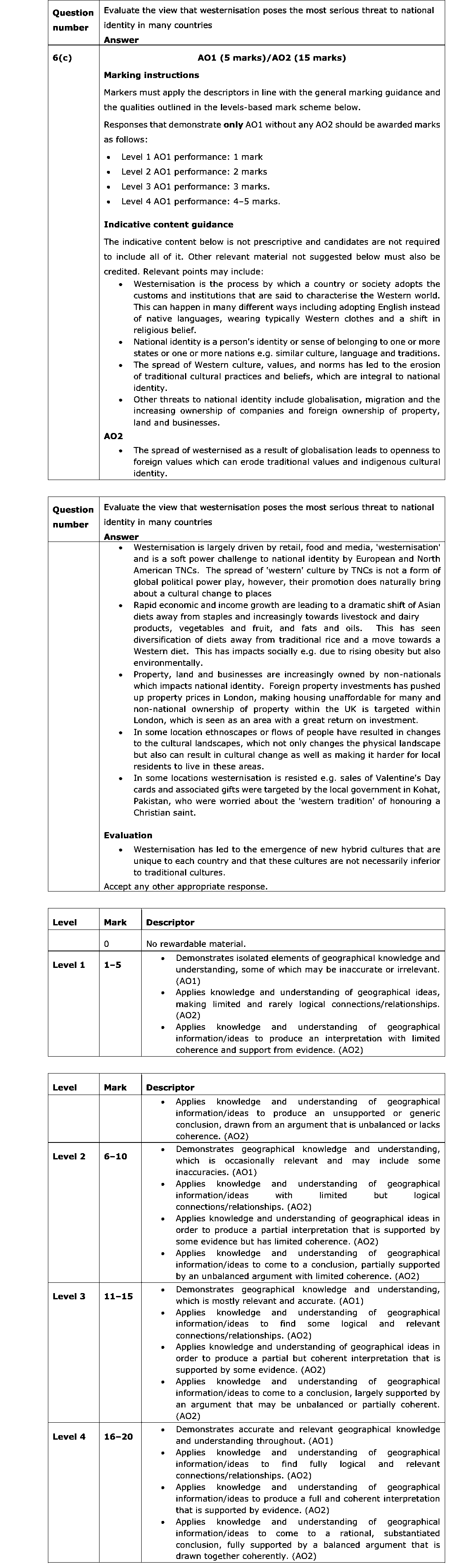
Mark scheme, including the levels and indicative content
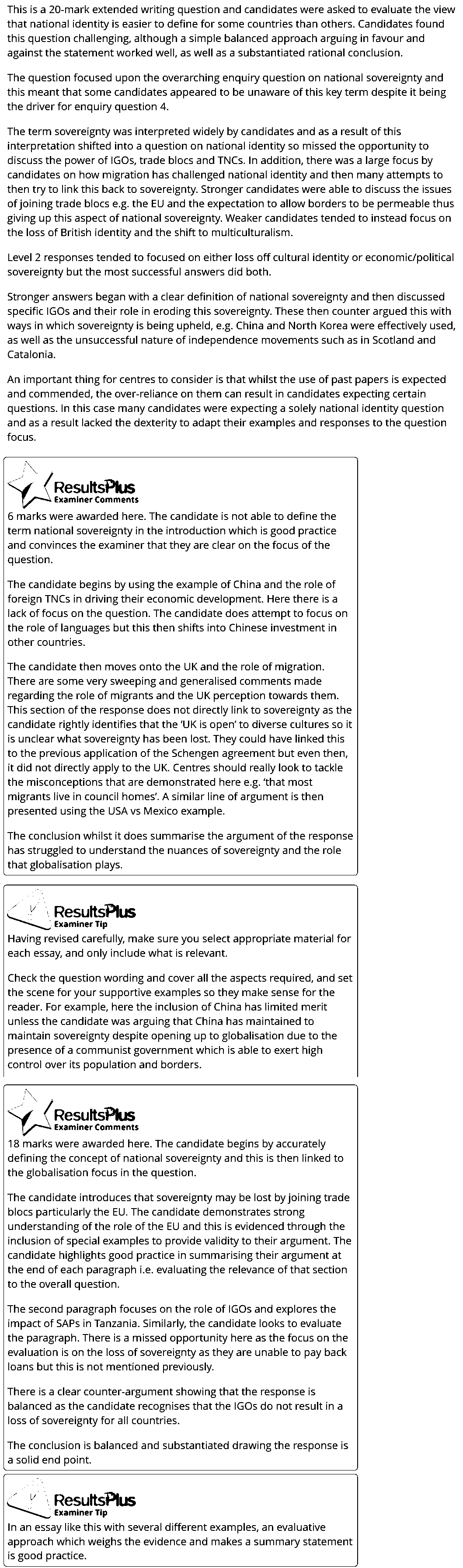
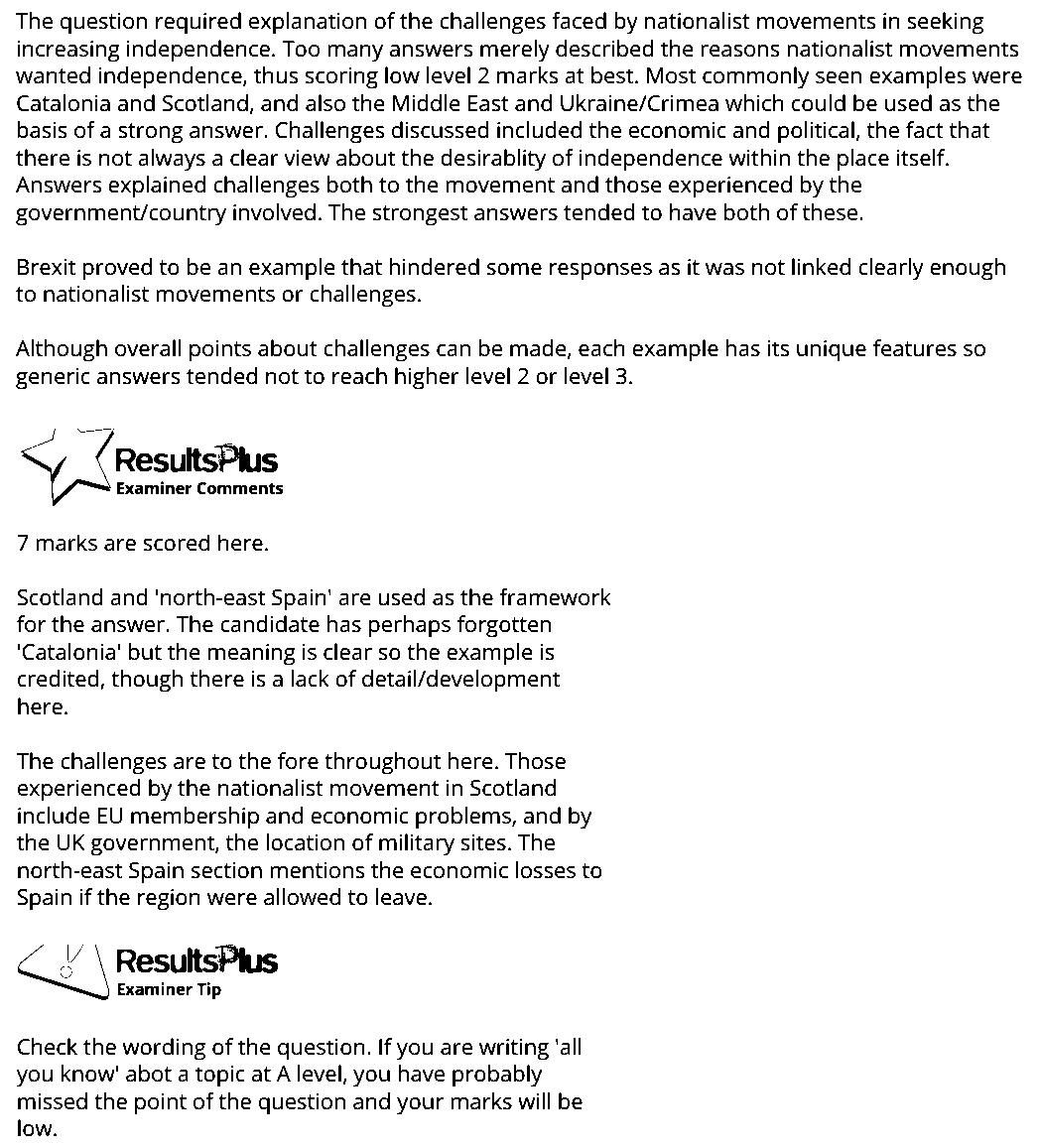
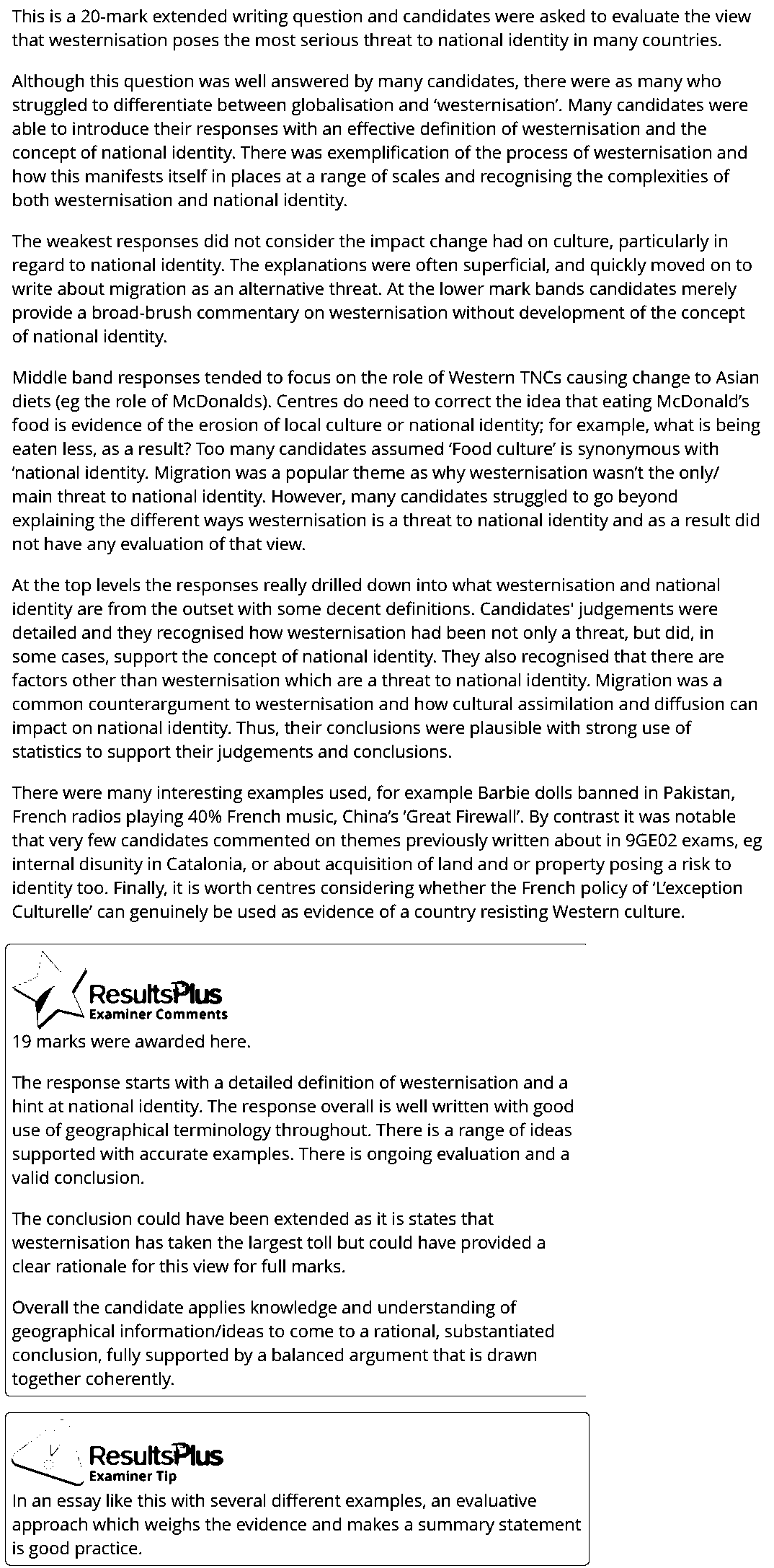
Examiner's comment
This is a 20-mark extended writing question and candidates were asked to evaluate the view that westernisation poses the most serious threat to national identity in many countries. Although this question was well answered by many candidates, there were as many who struggled to differentiate between globalisation and ‘westernisation’. Many candidates were able to introduce their responses with an effective definition of westernisation and the concept of national identity. There was exemplification of the process of westernisation and how this manifests itself in places at a range of scales and recognising the complexities of both westernisation and national identity. The weakest responses did not consider the impact change had on culture, particularly in regard to national identity. The explanations were often superficial, and quickly moved on to write about migration as an alternative threat. At the lower mark bands candidates merely provide a broad-brush commentary on westernisation without development of the concept of national identity. Middle band responses tended to focus on the role of Western TNCs causing change to Asian diets (eg the role of McDonalds). Centres do need to correct the idea that eating McDonald’s food is evidence of the erosion of local culture or national identity; for example, what is being eaten less, as a result? Too many candidates assumed ‘Food culture’ is synonymous with ‘national identity. Migration was a popular theme as why westernisation wasn’t the only/ main threat to national identity. However, many candidates struggled to go beyond explaining the different ways westernisation is a threat to national identity and as a result did not have any evaluation of that view. At the top levels the responses really drilled down into what westernisation and national identity are from the outset with some decent definitions. Candidates' judgements were detailed and they recognised how westernisation had been not only a threat, but did, in some cases, support the concept of national identity. They also recognised that there are factors other than westernisation which are a threat to national identity. Migration was a common counterargument to westernisation and how cultural assimilation and diffusion can impact on national identity. Thus, their conclusions were plausible with strong use of statistics to support their judgements and conclusions. There were many interesting examples used, for example Barbie dolls banned in Pakistan, French radios playing 40% French music, China’s ‘Great Firewall’. By contrast it was notable that very few candidates commented on themes previously written about in 9GE02 exams, eg internal disunity in Catalonia, or about acquisition of land and or property posing a risk to identity too. Finally, it is worth centres considering whether the French policy of ‘L’exception Culturelle’ can genuinely be used as evidence of a country resisting Western culture. 19 marks were awarded here. The response starts with a detailed definition of westernisation and a hint at national identity. The response overall is well written with good use of geographical terminology throughout. There is a range of ideas supported with accurate examples. There is ongoing evaluation and a valid conclusion. The conclusion could have been extended as it is states that westernisation has taken the largest toll but could have provided a clear rationale for this view for full marks. Overall the candidate applies knowledge and understanding of geographical information/ideas to come to a rational, substantiated conclusion, fully supported by a balanced argument that is drawn together coherently. In an essay like this with several different examples, an evaluative approach which weighs the evidence and makes a summary statement is good practice.
Notes from the mark scheme and report
- Define westernisation and national identity
- US corporations, media and language eroding traditions v other threats (migration, foreign ownership, separatism, globalisation generally)
- many could not separate westernisation from globalisation