Examiner's comment
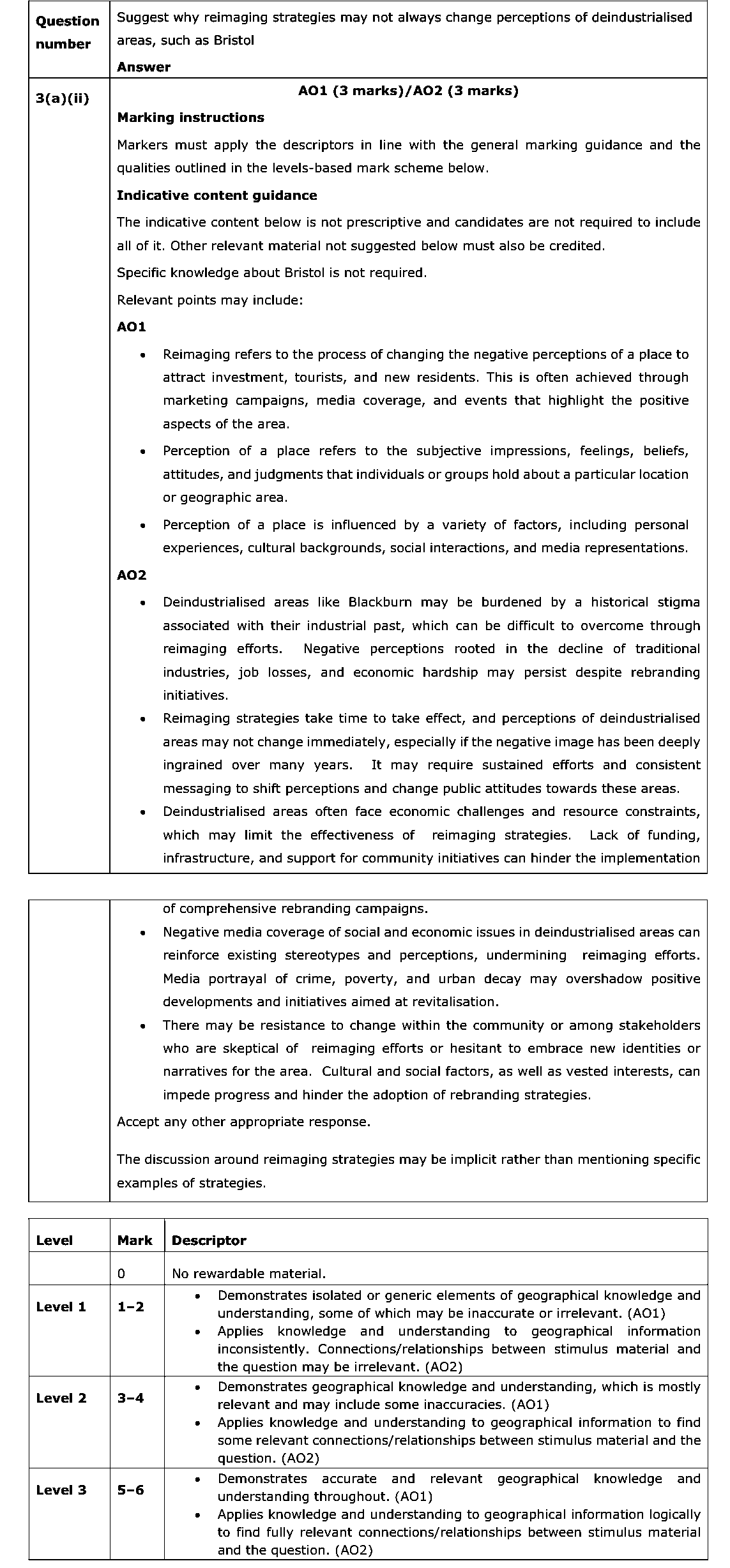
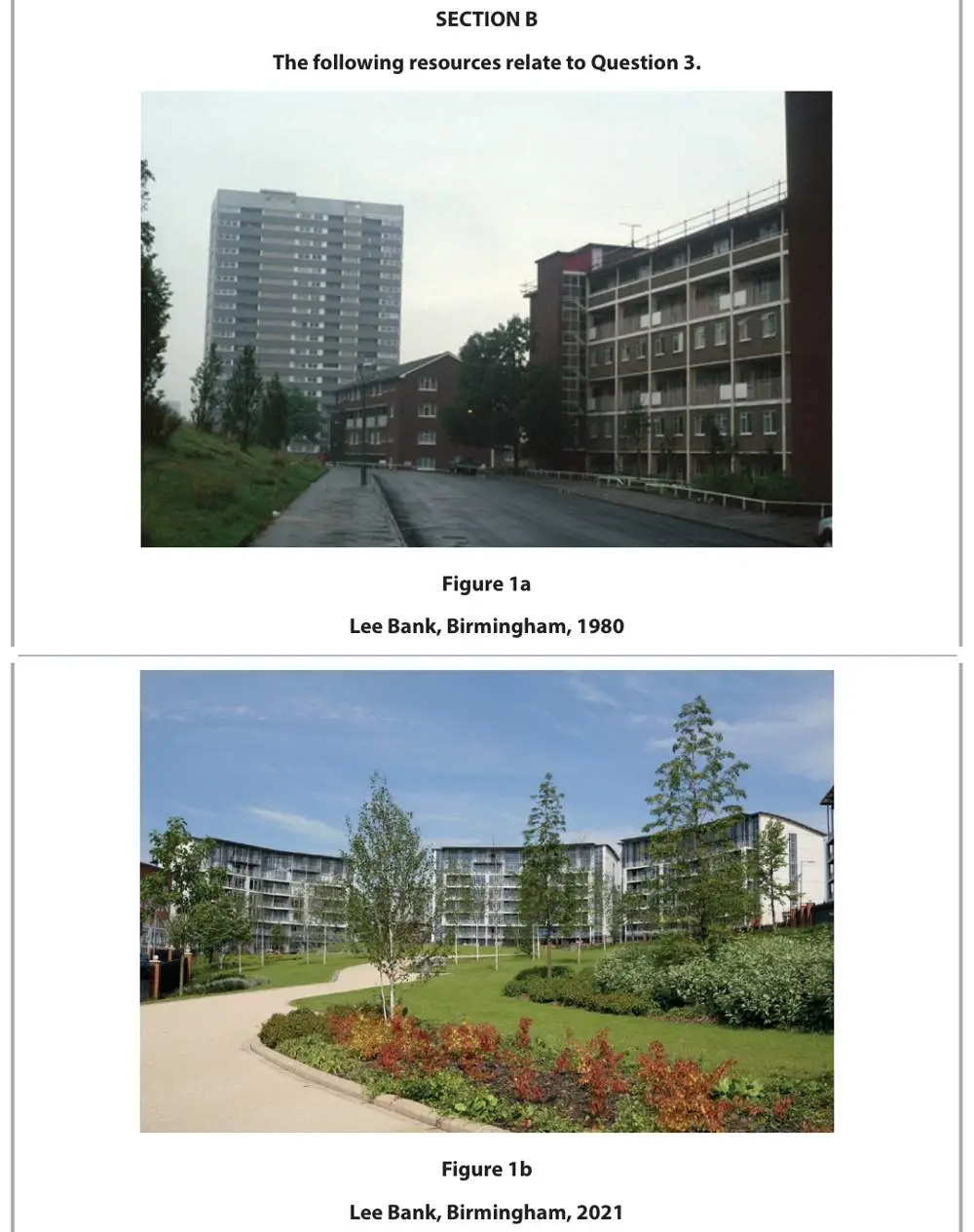
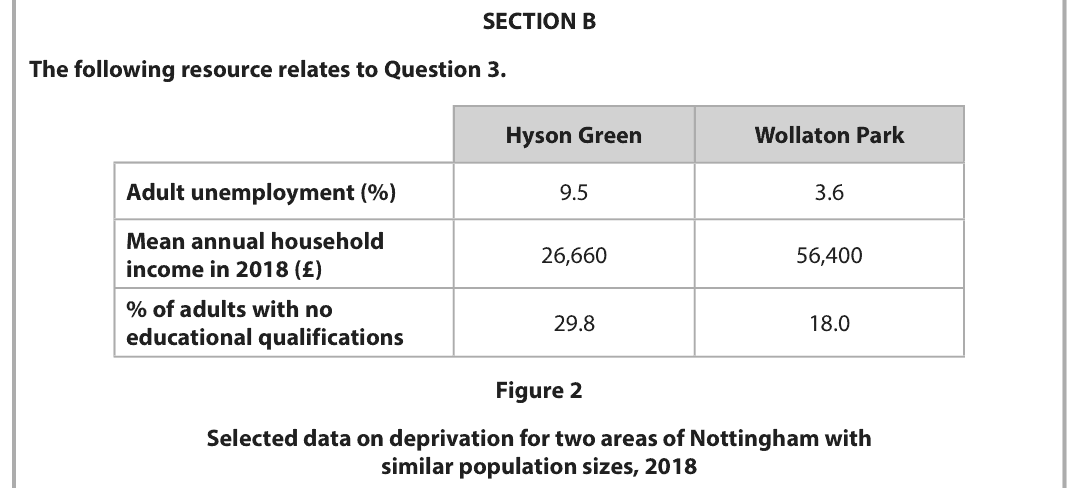
This is a 6-mark, AO1 and AO2 question based on a resource. The weighting is equal with AO1 being awarded 3 marks and AO2, also 3 marks. This question was generally well understood, and many candidates were able to access Level 2 or 3 by identifying reasons why reimaging may not be effective for all stakeholders. Stronger responses explored the role of lived experience, historical memory, and socio-economic realities in shaping perceptions. For example, some candidates noted that long-term residents may remain sceptical of cosmetic changes if underlying issues such as poverty, crime, or unemployment persist. Others highlighted that reimaging may benefit certain groups (eg, tourists, investors) while excluding or alienating others (eg, low-income residents, ethnic minorities). Level 3 responses typically included two well-developed reasons, supported by examples or references to stakeholder perspectives. These responses demonstrated a nuanced understanding of how perception is shaped by both media and lived experience. Some candidates referenced gentrification and the idea that reimaging can mask deeper inequalities. Mid-level responses tended to identify valid reasons but lacked development or failed to consider multiple viewpoints. Weaker responses were generic, often stating that “some people might not like it” without explaining why or linking to the concept of perception. The candidate presents a thoughtful and focused response that demonstrates a good understanding of the challenges involved in changing people’s perceptions of place. The answer identifies different social groups—such as older residents and those who have lived in the area for a long time—whose views may be more resistant to change. This shows an awareness of how personal experience, age, and attachment to place can shape and solidify perceptions over time. The candidate’s focus on these demographic factors adds depth to the analysis and reflects a nuanced understanding of the social dimensions of place-making. The response is clearly rooted in the negative aspects of perception, discussing why certain groups may hold onto outdated or negative views of a place despite regeneration or rebranding efforts. This focus is valid and well-explained, but it limits the breadth of the response. A more balanced answer might have explored how perceptions can also be positively influenced, or how younger or newer residents might respond differently. Additionally, the response would have been strengthened by introducing a contrasting example from another place—perhaps one where perceptions have successfully shifted over time—to provide comparative insight and demonstrate wider contextual understanding. The use of terminology is appropriate, and the structure of the response is clear and logical. However, the analysis could be further developed with more specific examples or case studies to support the points made. Despite these limitations, the response meets the criteria for Level 3, showing accurate knowledge, relevant application, and some analytical depth. A mark of 5 out of 6 is appropriate, reflecting a strong answer with minor areas for improvement in balance and evidence. To score well in 6-mark “suggest why” questions, make sure you consider multiple perspectives and develop your points fully This response does a good job of explaining how lived experience and stakeholder perspectives (eg long-term residents vs. developers) can shape perceptions of reimaging strategies. To improve further, try to structure your answer clearly , with each paragraph focusing on a distinct reason. You should also aim to link your ideas back to the question —for example, by explicitly stating why these factors mean that reimaging may not succeed in changing perceptions. Including specific examples (like Bristol or a named regeneration project) can also help demonstrate application and boost your marks. The candidate provides a response that demonstrates a basic but relevant understanding of the factors that can influence the success of place rebranding. Two distinct ideas are presented: one relating to the physical transformation of a place and the other concerning community engagement. The first point is reasonably well-developed, showing awareness that visible improvements to the built environment—such as new infrastructure or amenities—can help shift public perception and attract new investment or visitors. This reflects a sound grasp of how tangible changes can contribute to rebranding efforts. The second point, which touches on the importance of community engagement, is less clearly explained. While the candidate correctly identifies that involving local residents is important, the reasoning behind this is underdeveloped. There is little exploration of how community buy-in can foster a sense of ownership, reduce resistance to change, or ensure that rebranding efforts reflect the needs and identity of the local population. The response is structured and coherent, and the ideas presented are relevant to the question. However, the lack of detailed explanation and absence of supporting examples limit the overall effectiveness of the answer. There is no reference to specific places or case studies, which could have helped to illustrate the points more vividly and demonstrate wider contextual understanding. Overall, this is a solid Level 2 response. It shows some understanding and attempts to engage with the question, but the second idea is not fully developed. A mark of 3 out of 6 is appropriate. For 6-mark “suggest why” questions, it’s important to go beyond surface-level ideas and develop your reasoning. This response identifies that negative past experiences and a disengaged community can prevent reimaging strategies from changing perceptions. These are valid points, but to improve further, the candidate could expand on how and why these factors matter—eg how long-term stigma or lack of community involvement undermines regeneration efforts. Try to structure your answer clearly, with each paragraph focusing on a different reason, and use phrases like “this means that…” or “as a result…” to show the cause-and-effect relationship. Including a specific example (like Bristol or a named reimaging project) can also help demonstrate application and boost your marks.
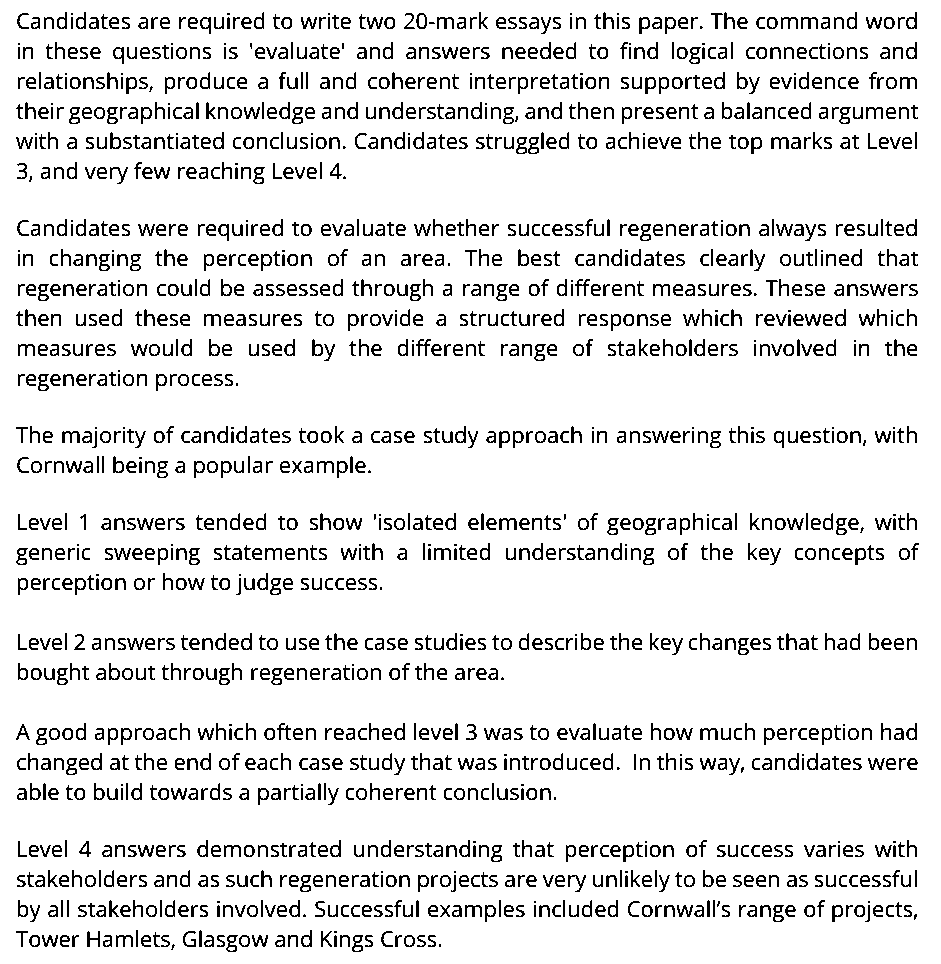
![Examiner's report extract for June 2025 Paper 2 question 3(a)(ii)]()