Examiner's comment
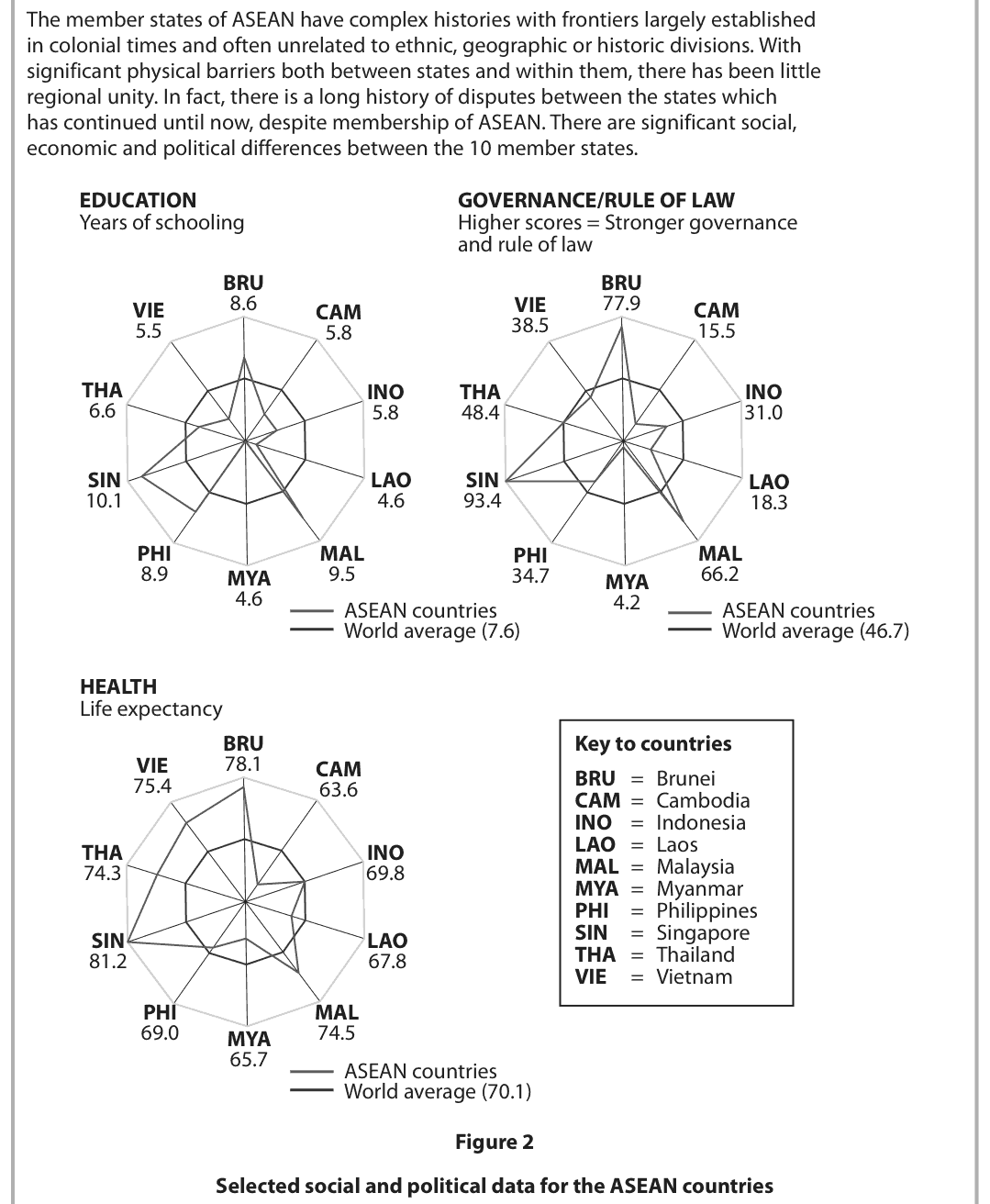
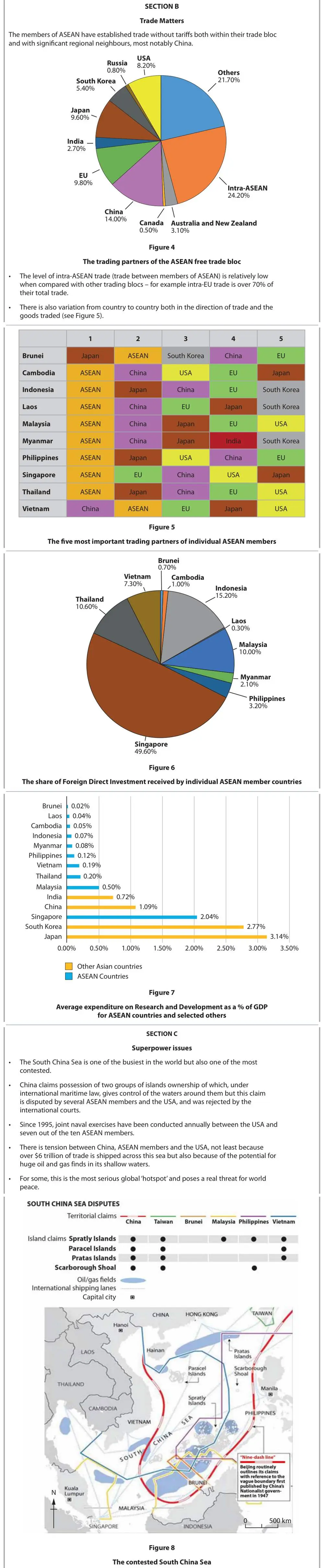
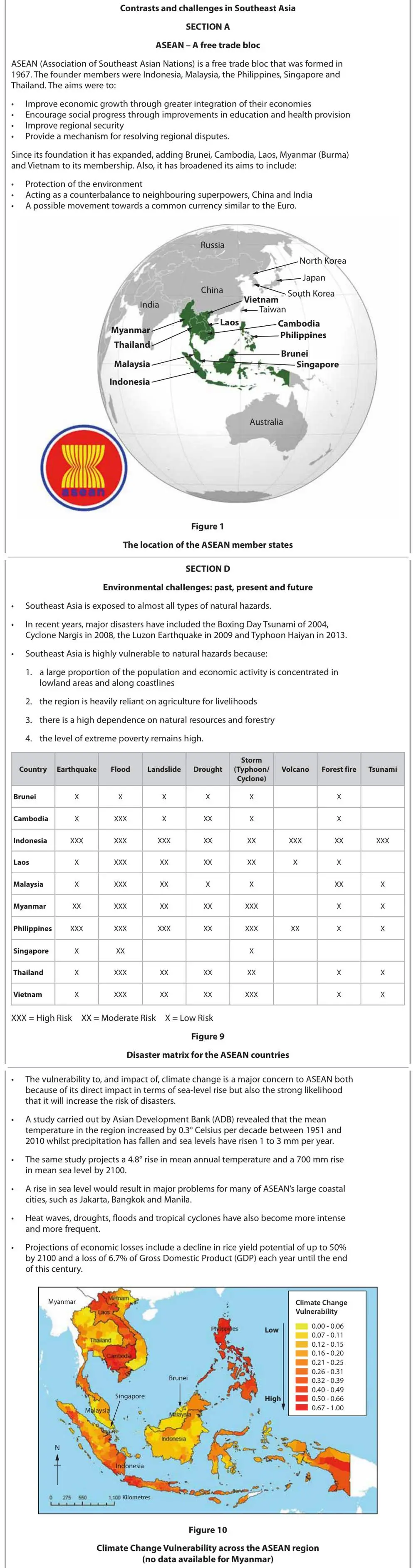
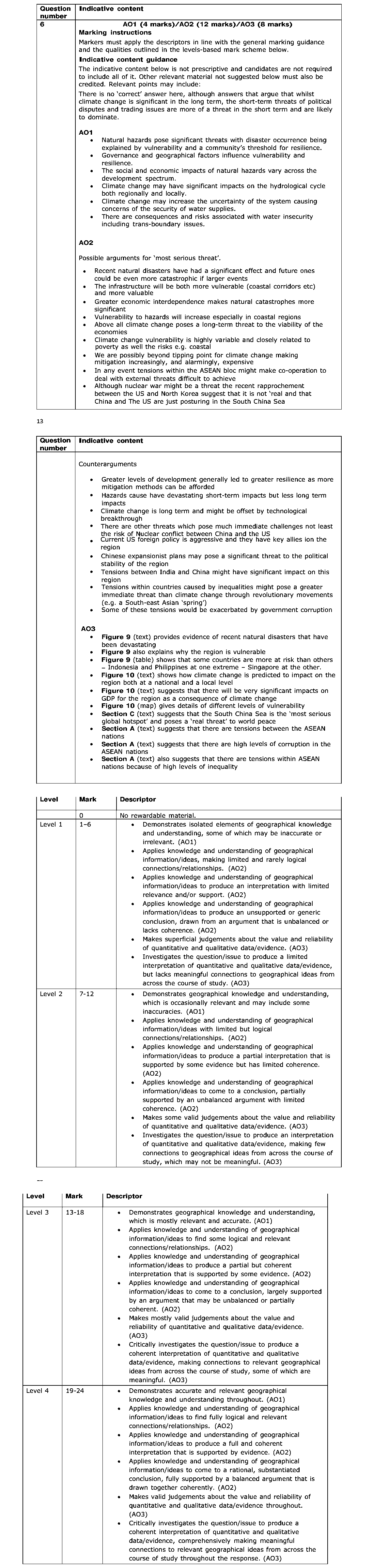
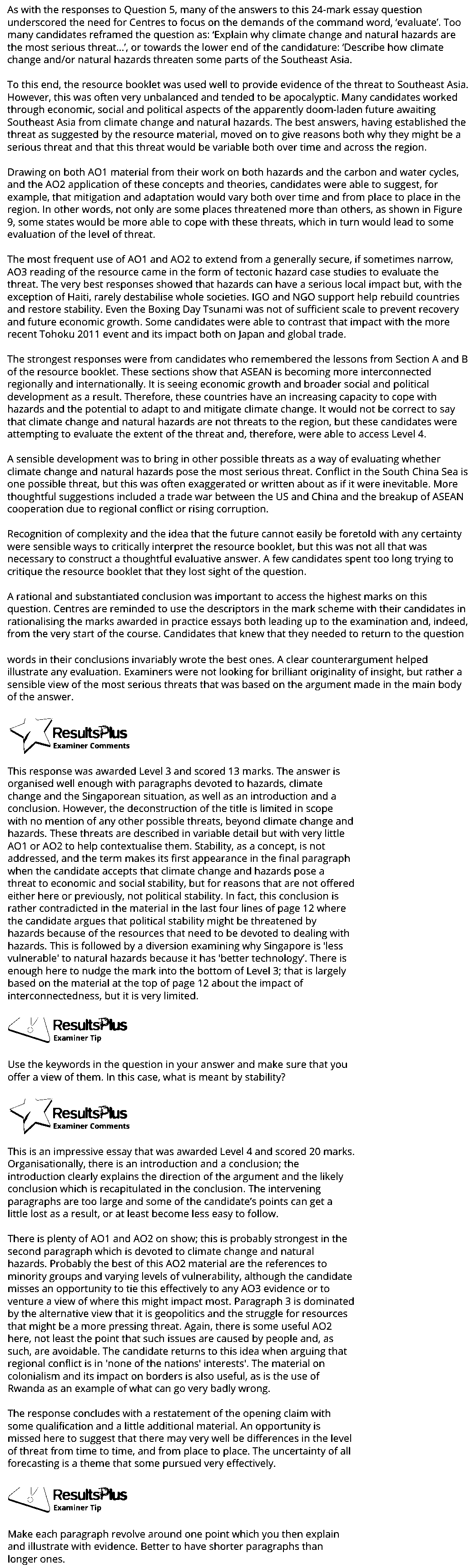
As with the responses to Question 5, many of the answers to this 24-mark essay question underscored the need for Centres to focus on the demands of the command word, ‘evaluate’. Too many candidates reframed the question as: ‘Explain why climate change and natural hazards are the most serious threat…’, or towards the lower end of the candidature: ‘Describe how climate change and/or natural hazards threaten some parts of the Southeast Asia. To this end, the resource booklet was used well to provide evidence of the threat to Southeast Asia. However, this was often very unbalanced and tended to be apocalyptic. Many candidates worked through economic, social and political aspects of the apparently doom-laden future awaiting Southeast Asia from climate change and natural hazards. The best answers, having established the threat as suggested by the resource material, moved on to give reasons both why they might be a serious threat and that this threat would be variable both over time and across the region. Drawing on both AO1 material from their work on both hazards and the carbon and water cycles, and the AO2 application of these concepts and theories, candidates were able to suggest, for example, that mitigation and adaptation would vary both over time and from place to place in the region. In other words, not only are some places threatened more than others, as shown in Figure 9, some states would be more able to cope with these threats, which in turn would lead to some evaluation of the level of threat. The most frequent use of AO1 and AO2 to extend from a generally secure, if sometimes narrow, AO3 reading of the resource came in the form of tectonic hazard case studies to evaluate the threat. The very best responses showed that hazards can have a serious local impact but, with the exception of Haiti, rarely destabilise whole societies. IGO and NGO support help rebuild countries and restore stability. Even the Boxing Day Tsunami was not of sufficient scale to prevent recovery and future economic growth. Some candidates were able to contrast that impact with the more recent Tohoku 2011 event and its impact both on Japan and global trade. The strongest responses were from candidates who remembered the lessons from Section A and B of the resource booklet. These sections show that ASEAN is becoming more interconnected regionally and internationally. It is seeing economic growth and broader social and political development as a result. Therefore, these countries have an increasing capacity to cope with hazards and the potential to adapt to and mitigate climate change. It would not be correct to say that climate change and natural hazards are not threats to the region, but these candidates were attempting to evaluate the extent of the threat and, therefore, were able to access Level 4. A sensible development was to bring in other possible threats as a way of evaluating whether climate change and natural hazards pose the most serious threat. Conflict in the South China Sea is one possible threat, but this was often exaggerated or written about as if it were inevitable. More thoughtful suggestions included a trade war between the US and China and the breakup of ASEAN cooperation due to regional conflict or rising corruption. Recognition of complexity and the idea that the future cannot easily be foretold with any certainty were sensible ways to critically interpret the resource booklet, but this was not all that was necessary to construct a thoughtful evaluative answer. A few candidates spent too long trying to critique the resource booklet that they lost sight of the question. A rational and substantiated conclusion was important to access the highest marks on this question. Centres are reminded to use the descriptors in the mark scheme with their candidates in rationalising the marks awarded in practice essays both leading up to the examination and, indeed, from the very start of the course. Candidates that knew that they needed to return to the question words in their conclusions invariably wrote the best ones. A clear counterargument helped illustrate any evaluation. Examiners were not looking for brilliant originality of insight, but rather a sensible view of the most serious threats that was based on the argument made in the main body of the answer. This response was awarded Level 3 and scored 13 marks. The answer is organised well enough with paragraphs devoted to hazards, climate change and the Singaporean situation, as well as an introduction and a conclusion. However, the deconstruction of the title is limited in scope with no mention of any other possible threats, beyond climate change and hazards. These threats are described in variable detail but with very little AO1 or AO2 to help contextualise them. Stability, as a concept, is not addressed, and the term makes its first appearance in the final paragraph when the candidate accepts that climate change and hazards pose a threat to economic and social stability, but for reasons that are not offered either here or previously, not political stability. In fact, this conclusion is rather contradicted in the material in the last four lines of page 12 where the candidate argues that political stability might be threatened by hazards because of the resources that need to be devoted to dealing with hazards. This is followed by a diversion examining why Singapore is 'less vulnerable' to natural hazards because it has 'better technology’. There is enough here to nudge the mark into the bottom of Level 3; that is largely based on the material at the top of page 12 about the impact of interconnectedness, but it is very limited. Use the keywords in the question in your answer and make sure that you offer a view of them. In this case, what is meant by stability? This is an impressive essay that was awarded Level 4 and scored 20 marks. Organisationally, there is an introduction and a conclusion; the introduction clearly explains the direction of the argument and the likely conclusion which is recapitulated in the conclusion. The intervening paragraphs are too large and some of the candidate’s points can get a little lost as a result, or at least become less easy to follow. There is plenty of AO1 and AO2 on show; this is probably strongest in the second paragraph which is devoted to climate change and natural hazards. Probably the best of this AO2 material are the references to minority groups and varying levels of vulnerability, although the candidate misses an opportunity to tie this effectively to any AO3 evidence or to venture a view of where this might impact most. Paragraph 3 is dominated by the alternative view that it is geopolitics and the struggle for resources that might be a more pressing threat. Again, there is some useful AO2 here, not least the point that such issues are caused by people and, as such, are avoidable. The candidate returns to this idea when arguing that regional conflict is in 'none of the nations' interests'. The material on colonialism and its impact on borders is also useful, as is the use of Rwanda as an example of what can go very badly wrong. The response concludes with a restatement of the opening claim with some qualification and a little additional material. An opportunity is missed here to suggest that there may very well be differences in the level of threat from time to time, and from place to place. The uncertainty of all forecasting is a theme that some pursued very effectively. Make each paragraph revolve around one point which you then explain and illustrate with evidence. Better to have shorter paragraphs than longer ones.
![Examiner's report extract for June 2018 Paper 3 question 6]()