Examiner's comment
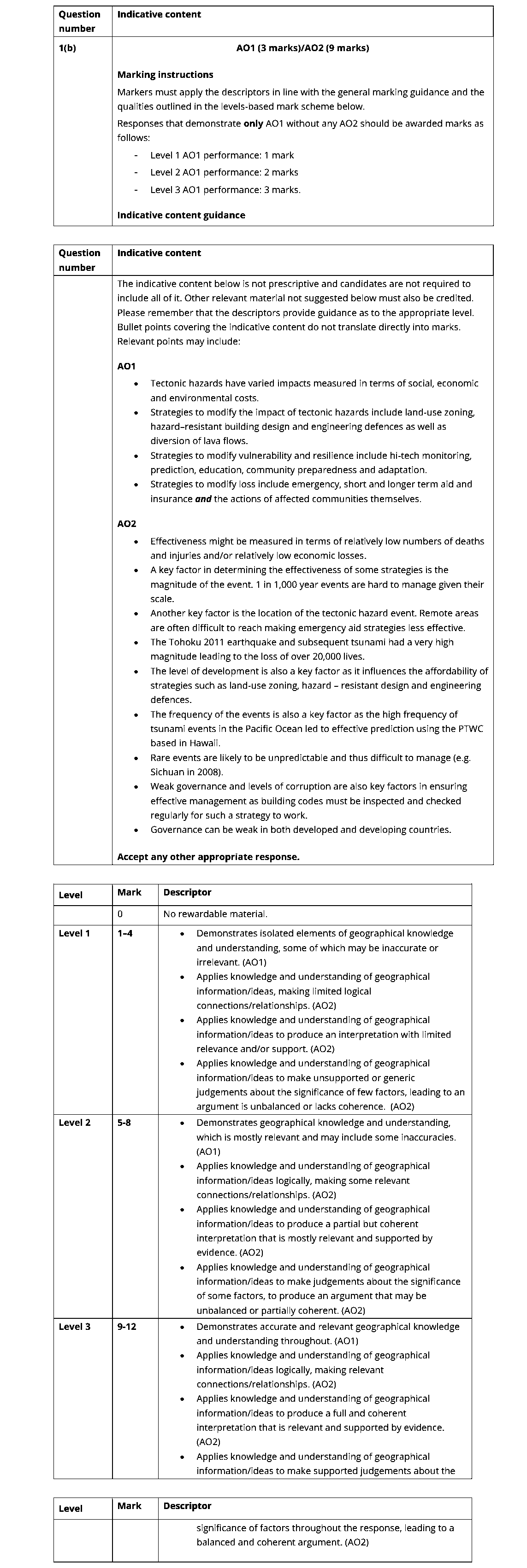
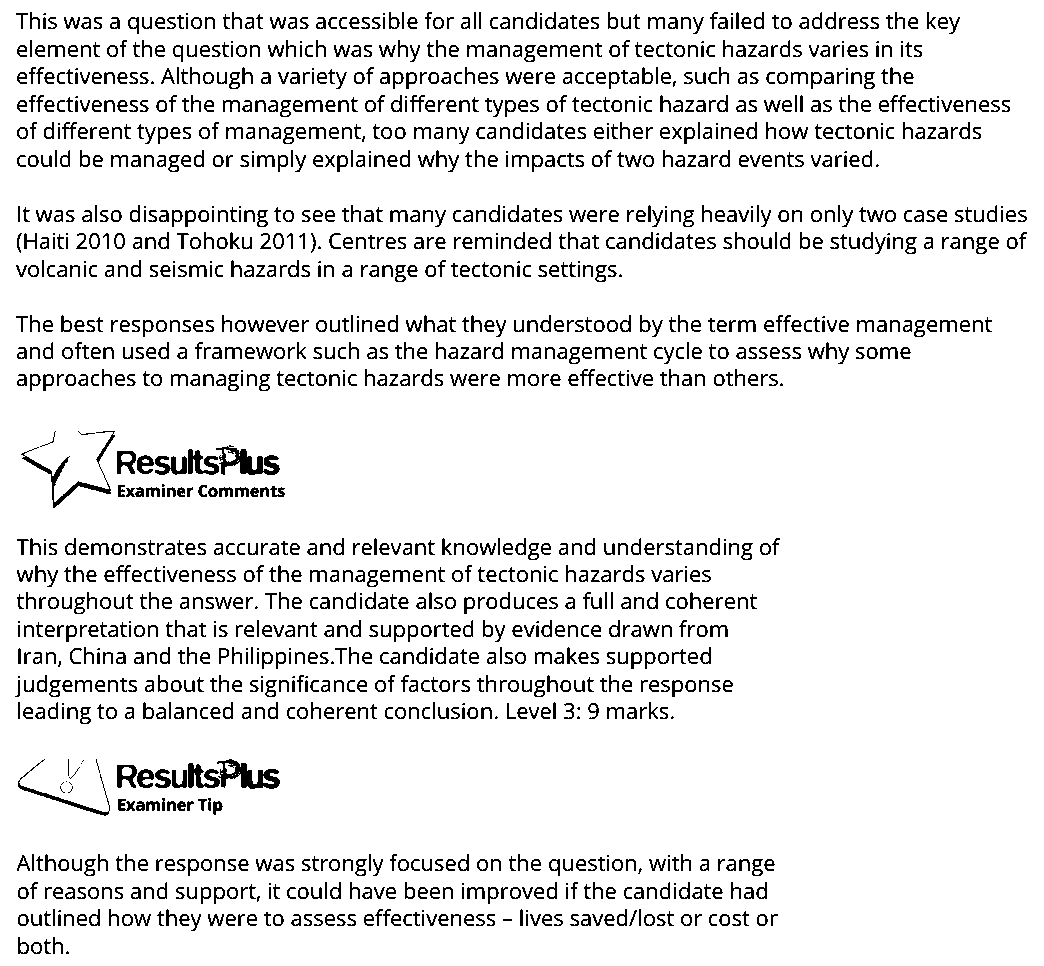
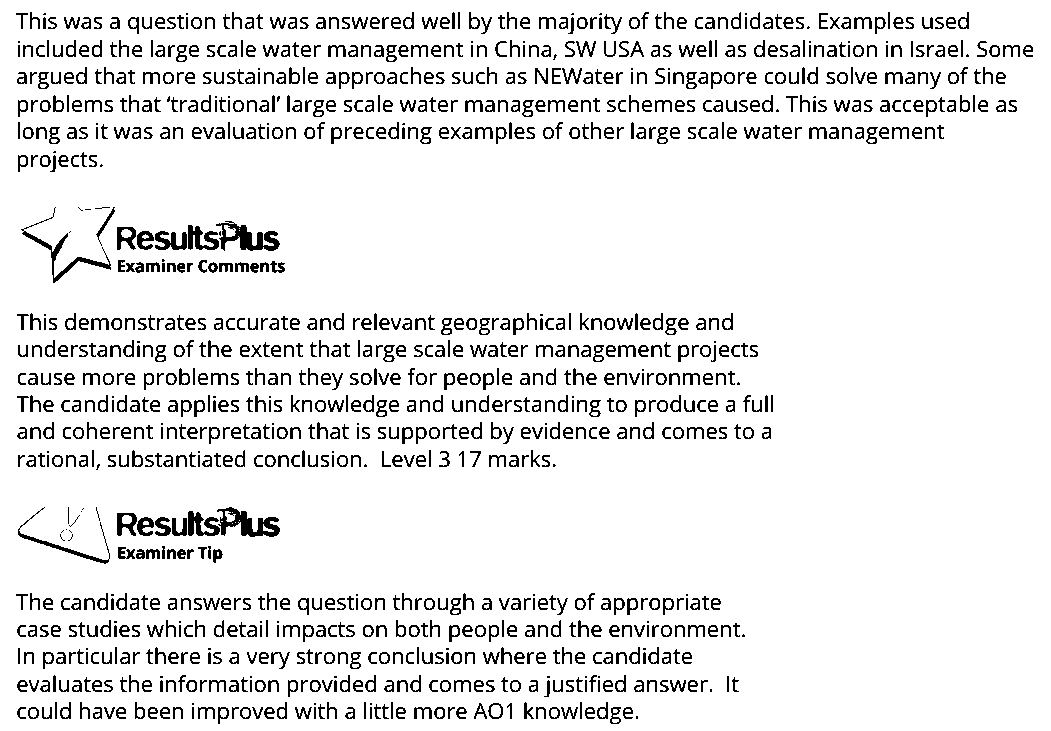
This was a question that was accessible for all candidates but many failed to address the key element of the question which was why the management of tectonic hazards varies in its effectiveness. Although a variety of approaches were acceptable, such as comparing the effectiveness of the management of different types of tectonic hazard as well as the effectiveness of different types of management, too many candidates either explained how tectonic hazards could be managed or simply explained why the impacts of two hazard events varied. It was also disappointing to see that many candidates were relying heavily on only two case studies (Haiti 2010 and Tohoku 2011). Centres are reminded that candidates should be studying a range of volcanic and seismic hazards in a range of tectonic settings. The best responses however outlined what they understood by the term effective management and often used a framework such as the hazard management cycle to assess why some approaches to managing tectonic hazards were more effective than others. This demonstrates accurate and relevant knowledge and understanding of why the effectiveness of the management of tectonic hazards varies throughout the answer. The candidate also produces a full and coherent interpretation that is relevant and supported by evidence drawn from Iran, China and the Philippines.The candidate also makes supported judgements about the significance of factors throughout the response leading to a balanced and coherent conclusion. Level 3: 9 marks. Although the response was strongly focused on the question, with a range of reasons and support, it could have been improved if the candidate had outlined how they were to assess effectiveness – lives saved/lost or cost or both.
![Examiner's report extract for June 2019 Paper 1 question 1(b)]()