June 2022: AS Paper 2, Dynamic places

81 marks · 36 question parts (every option is included) · Paper, mark scheme and report on Edexcel's site
Question by question

QTopicMarksAOType
1(a) Consequences of globalisation: inequality and responses 1AO1=1Multiple choice
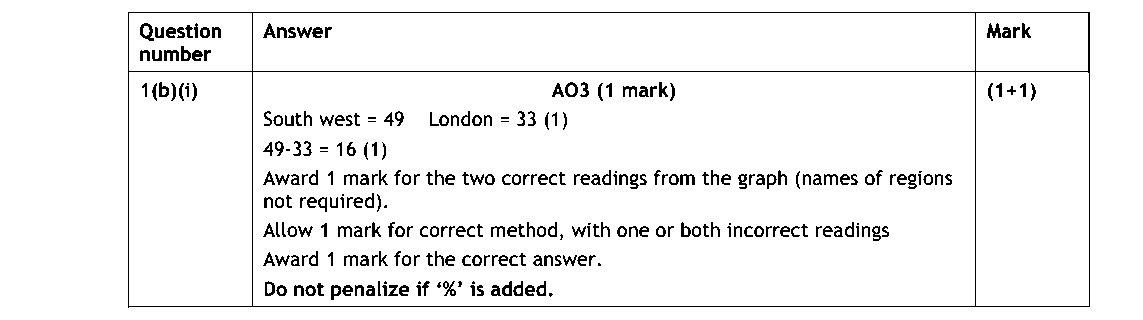
1(b)(i) Consequences of globalisation: inequality and responses 2Calculation
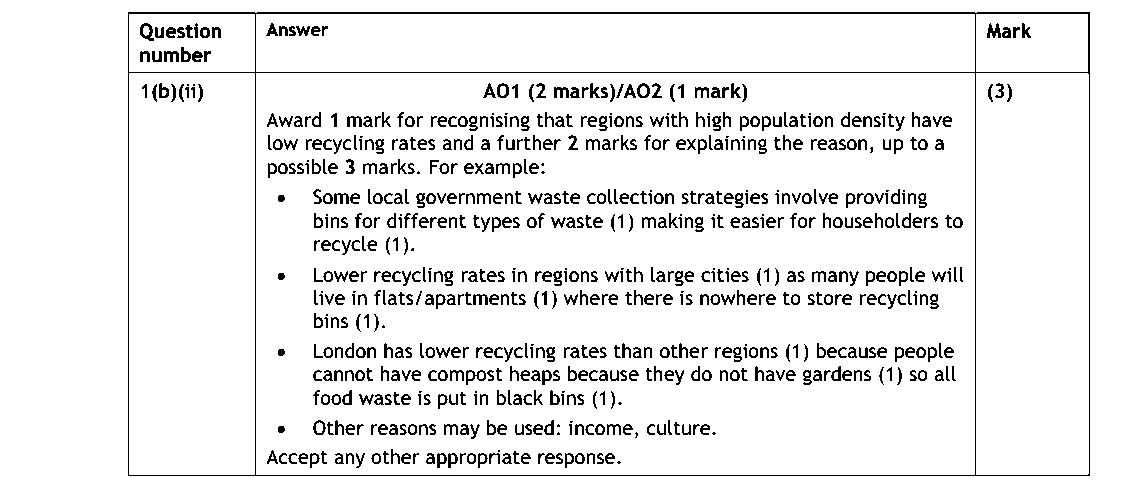
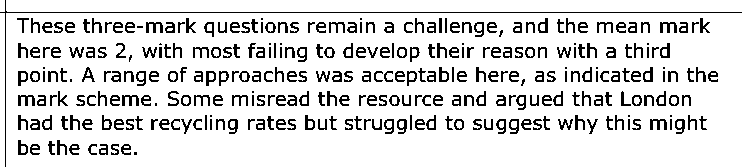
1(b)(ii) Consequences of globalisation: inequality and responses 3AO1=2,AO2=1Data response
1(c) Causes of globalisation 4AO1=4Short answer
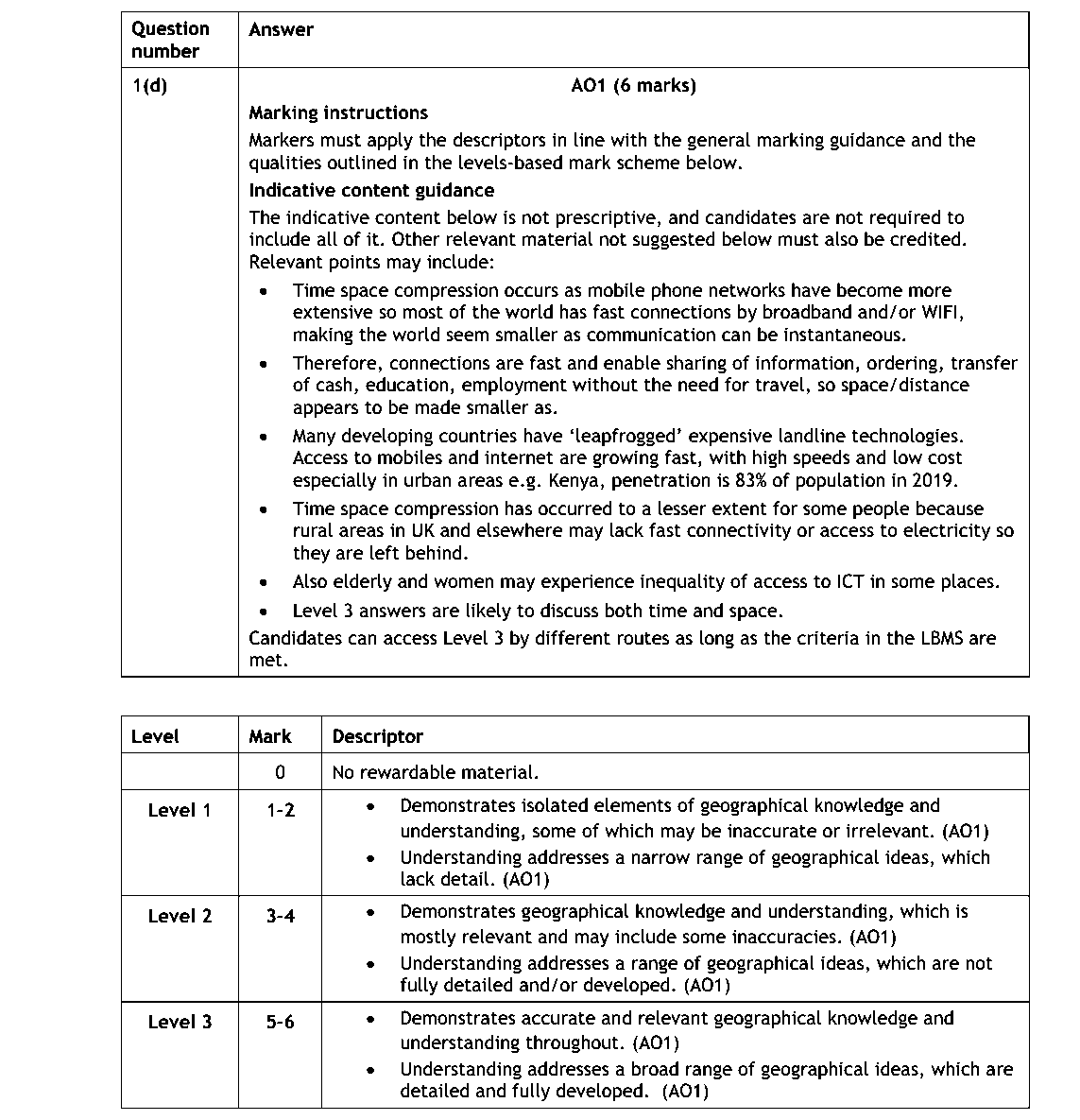
1(d) Causes of globalisation 6AO1=6Extended response
1(e) Consequences of globalisation: inequality and responses 12AO1=3,AO2=9Essay
2(a) Why regeneration might be needed 1AO1=1Short answer
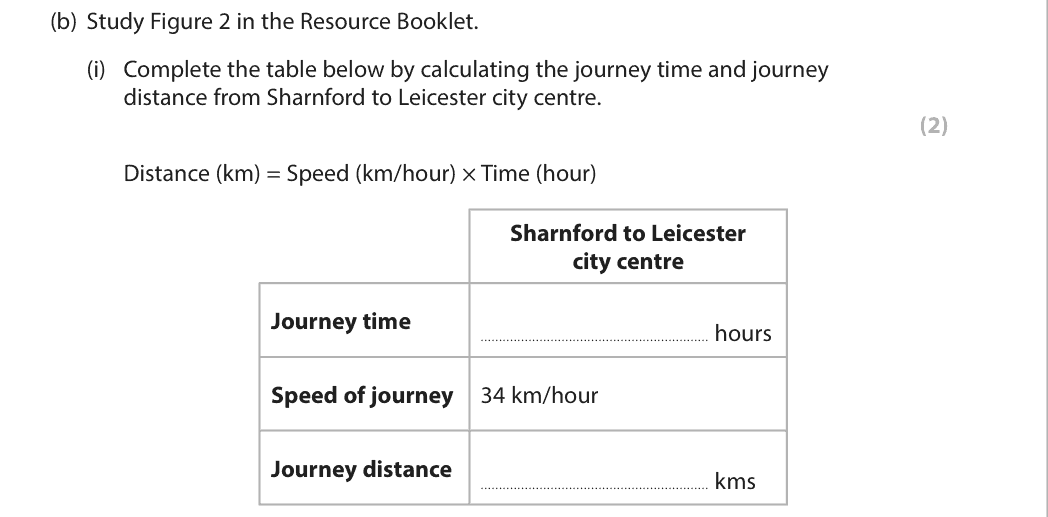
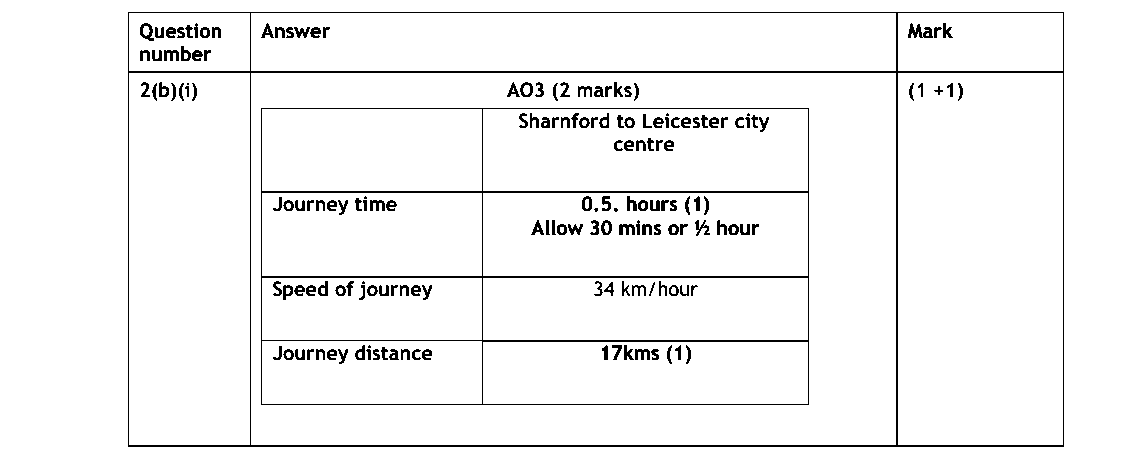
2(b)(i) Why regeneration might be needed 2AO3=2Calculation
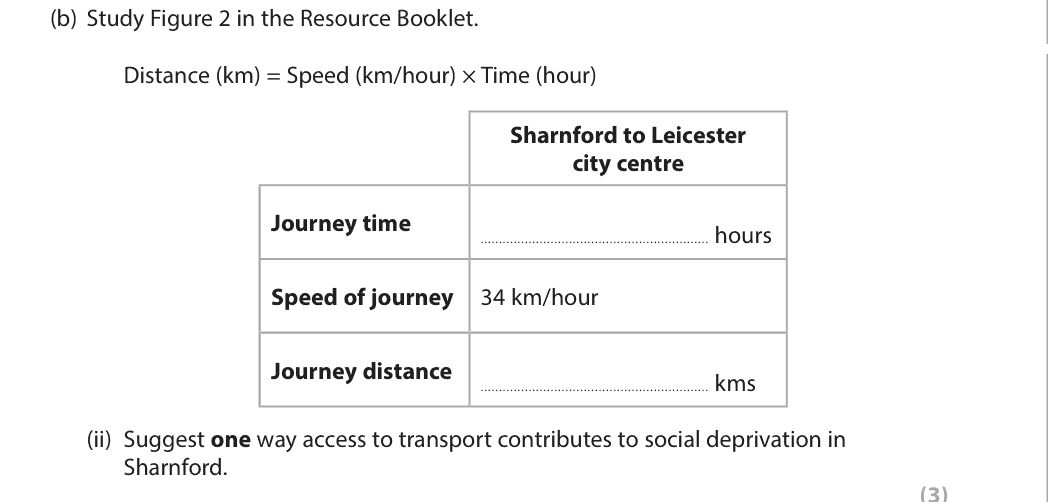
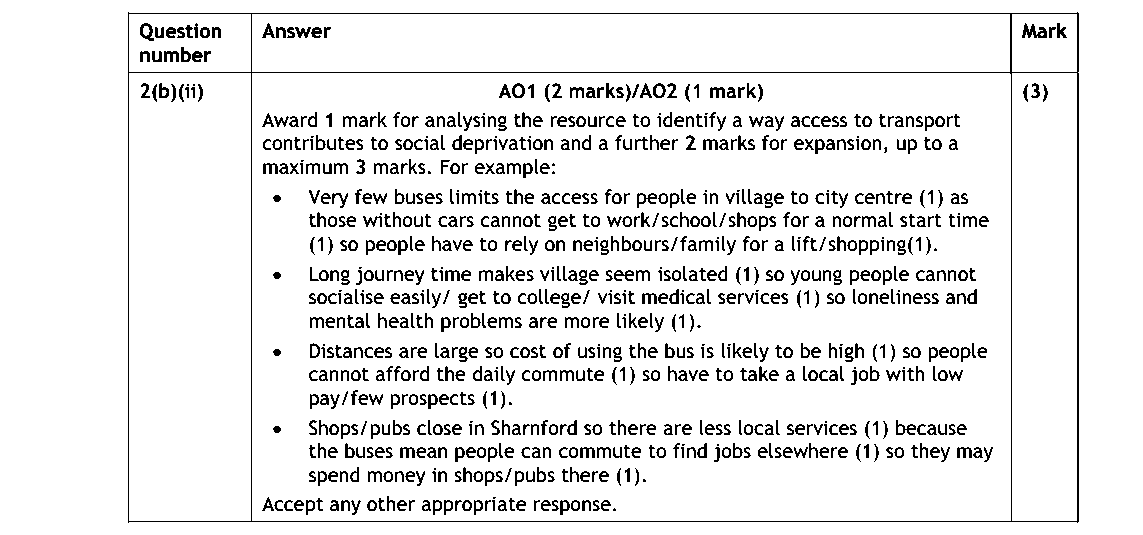
2(b)(ii) Why regeneration might be needed 3AO1=2,AO2=1Data response
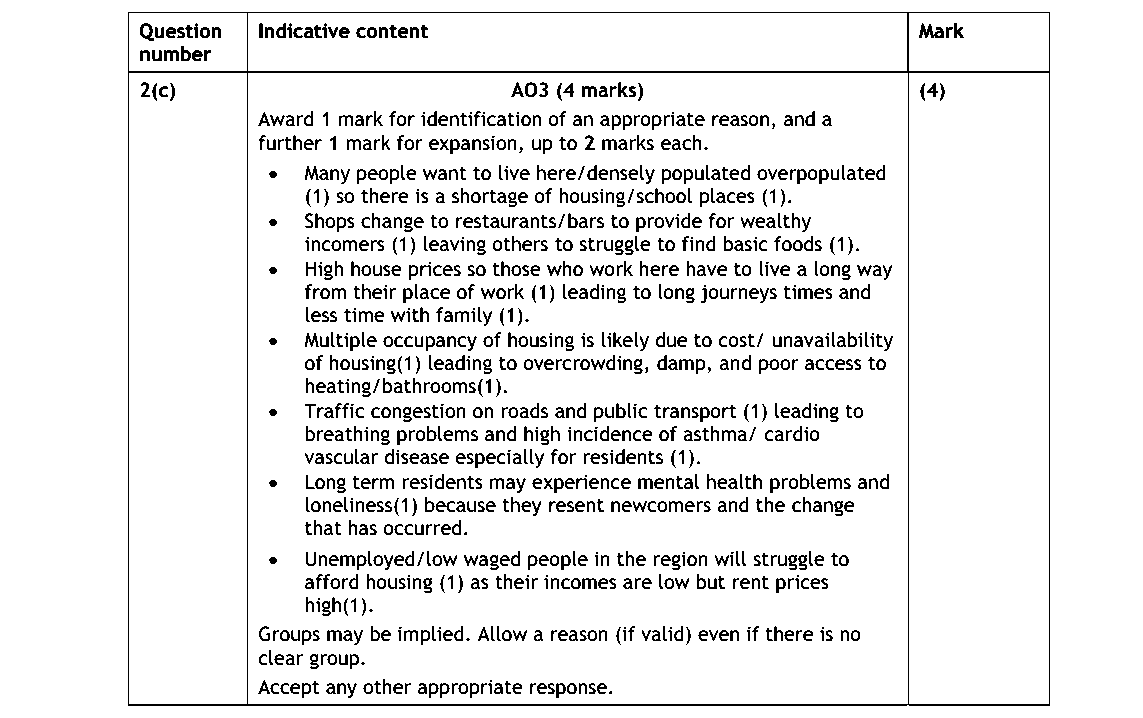
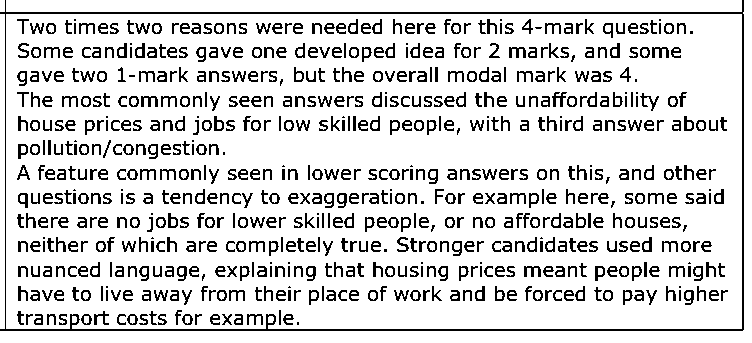
2(c) Why regeneration might be needed 4AO3=4Short answer
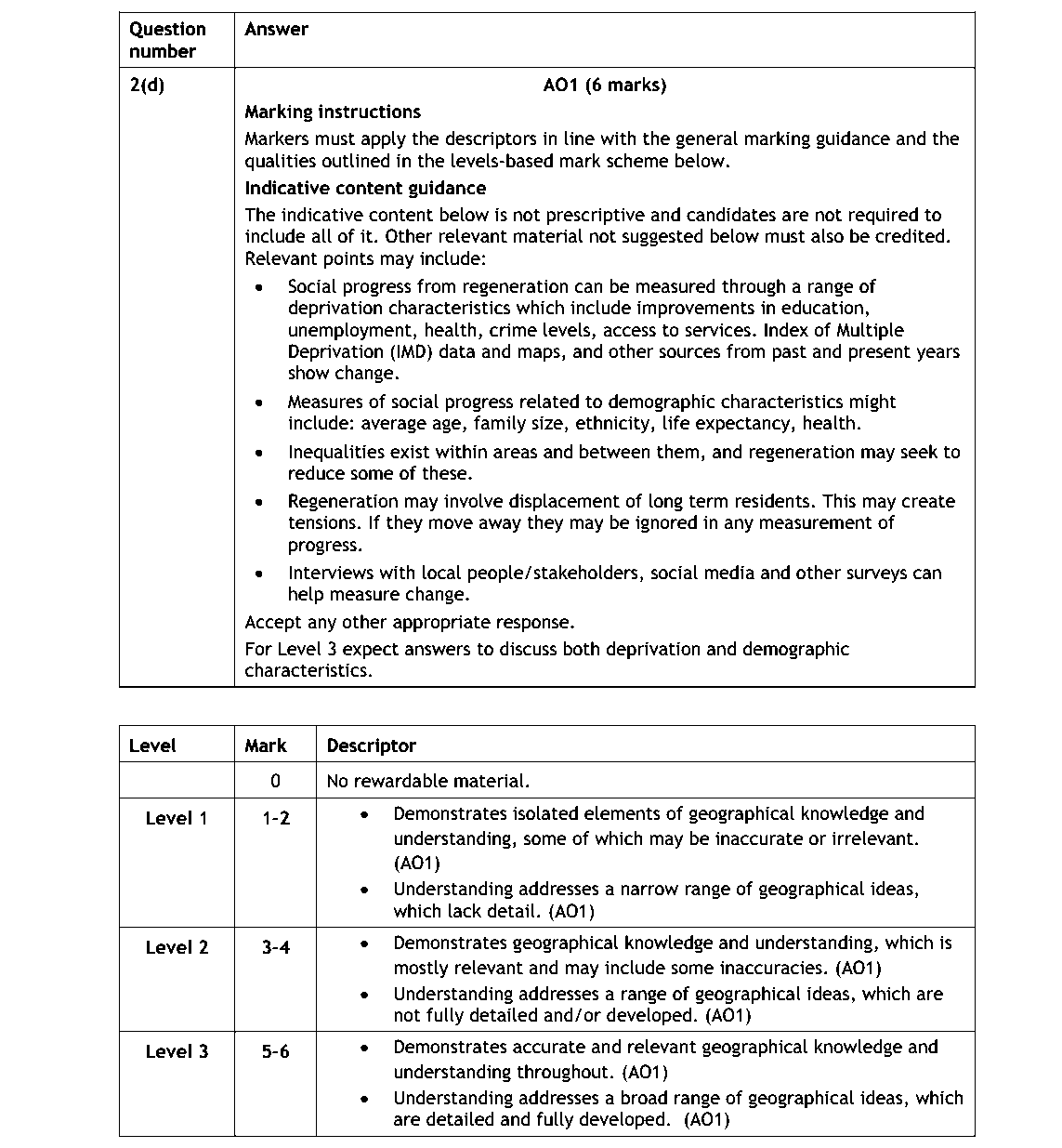
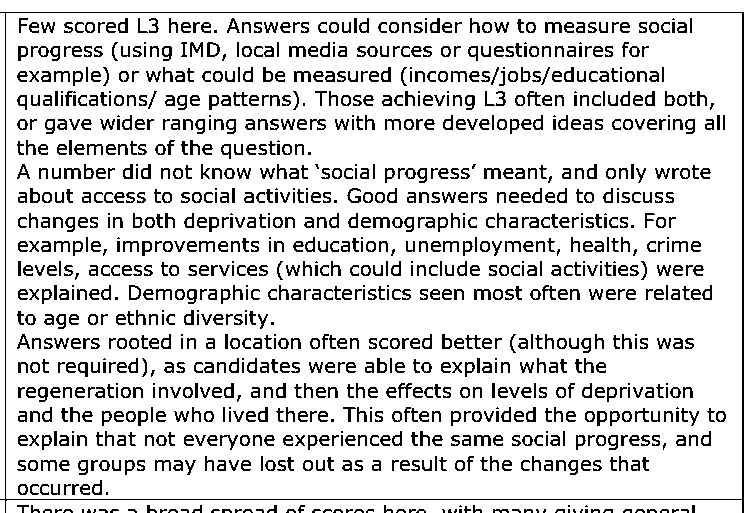
2(d) How successful regeneration is 6AO1=6Extended response
2(e) How and why places vary (regenerating places) 12AO1=3,AO2=9Essay
3 How successful regeneration is 16AO1=4,AO2=12Essay
4(a) How people view diverse living spaces 1AO1=1Short answer
4(b)(i) How people view diverse living spaces 2AO3=2Calculation
4(b)(ii) How people view diverse living spaces 3AO1=2,AO2=1Data response
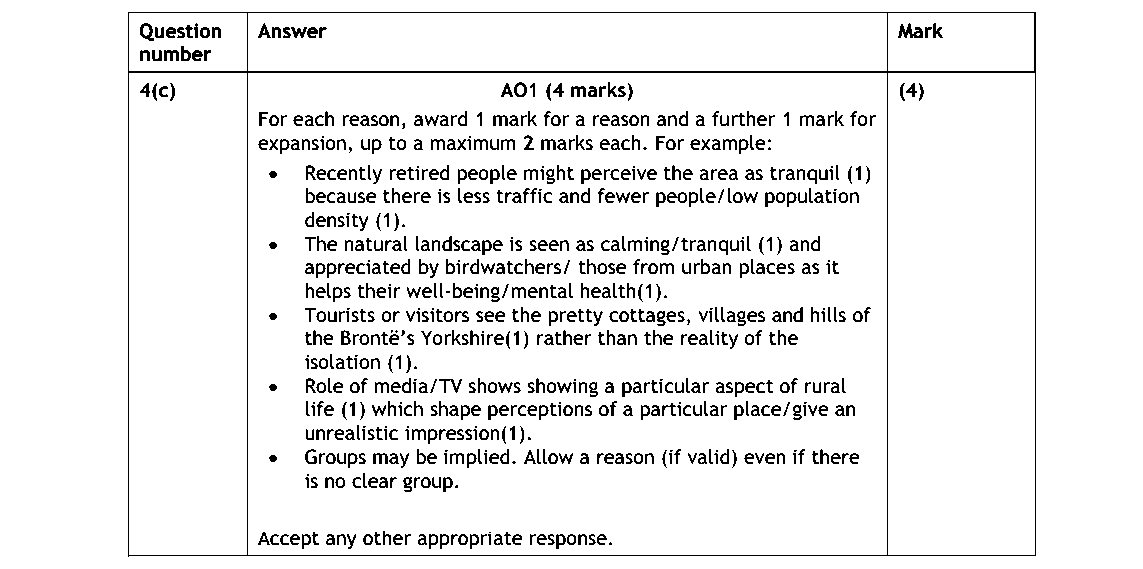
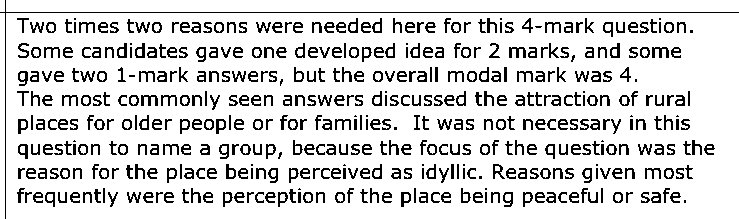
4(c) How people view diverse living spaces 4AO1=4Short answer
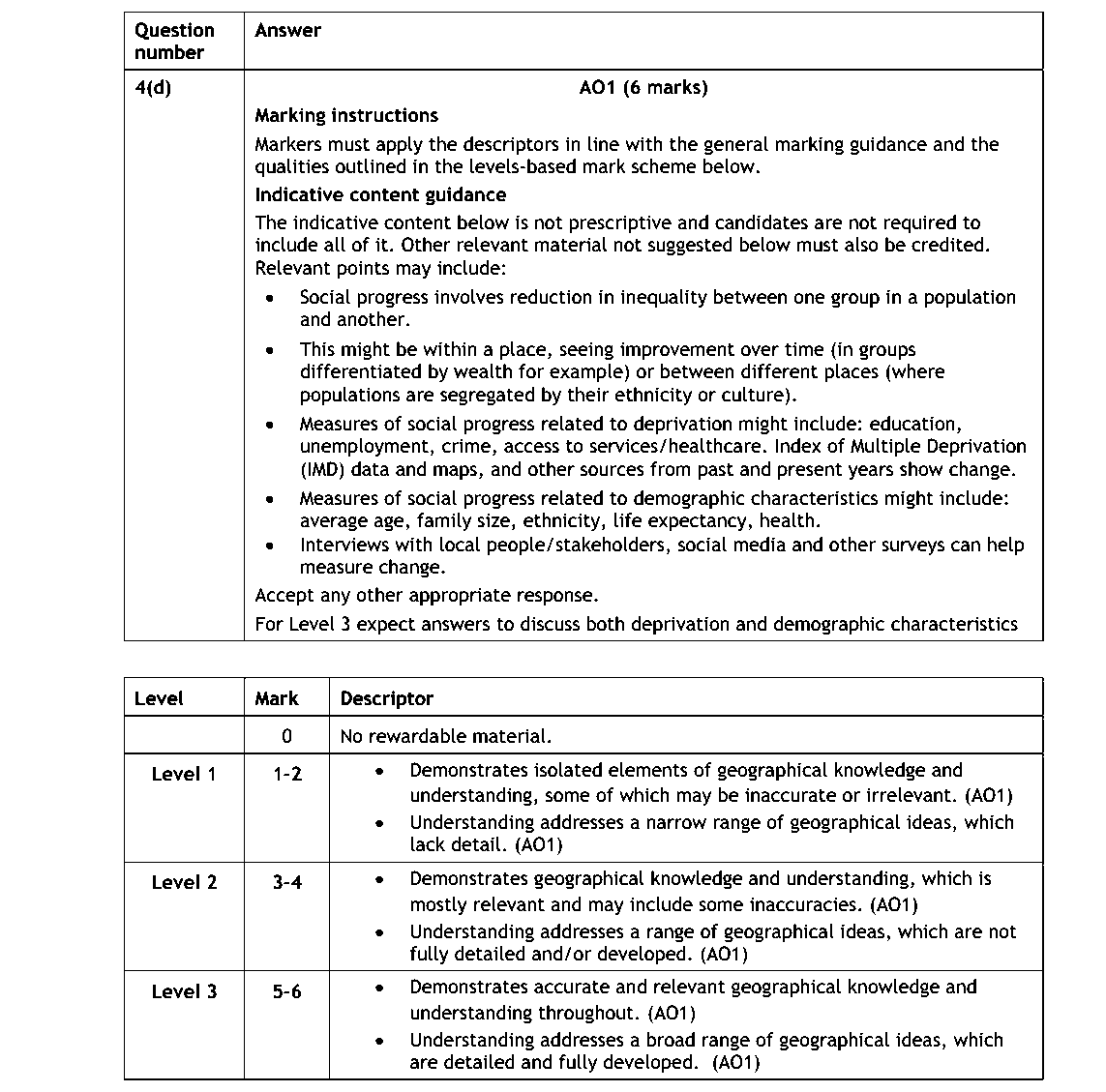
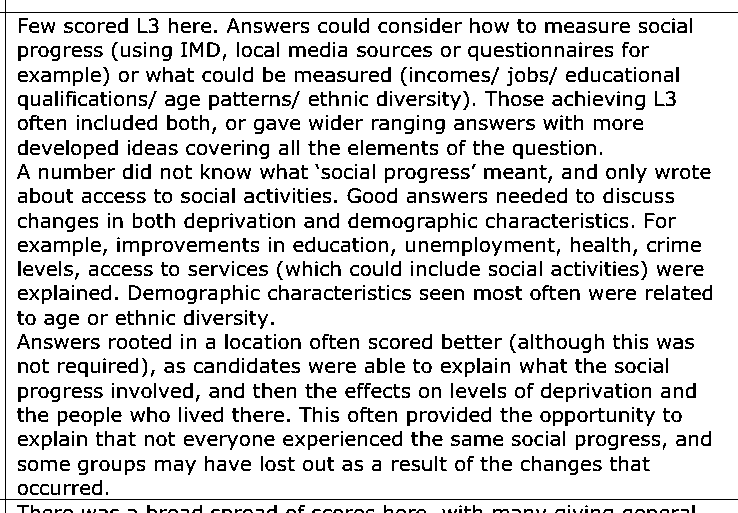
4(d) Managing cultural and demographic issues 6AO1=6Extended response
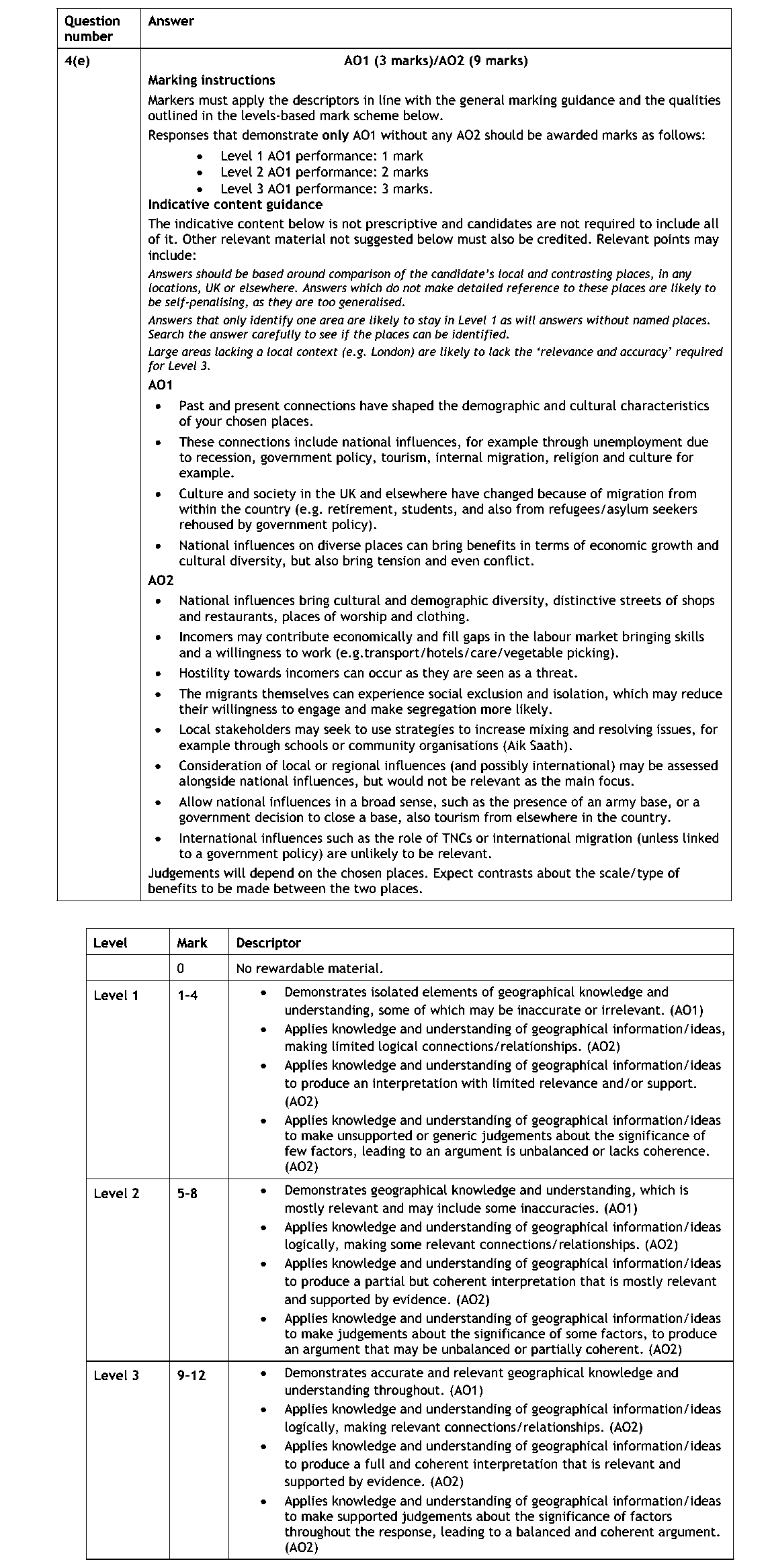
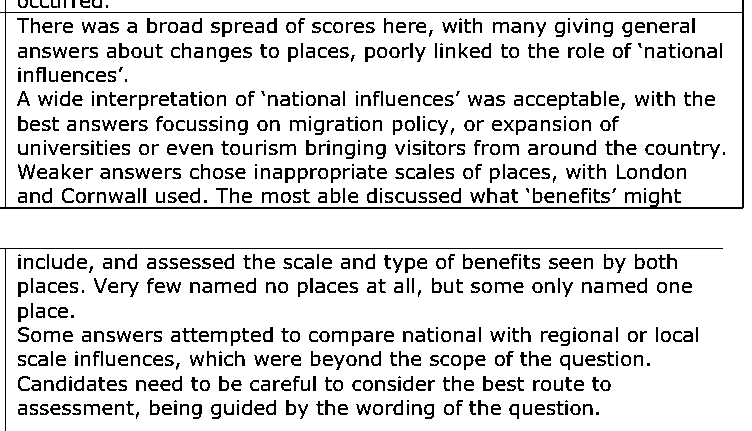
4(e) How population structures vary (diverse places) 12AO1=3,AO2=9Essay
5 Managing cultural and demographic issues 16AO1=4,AO2=12Essay
6(a) Glacial landforms and landscapes 1AO3=1Fieldwork
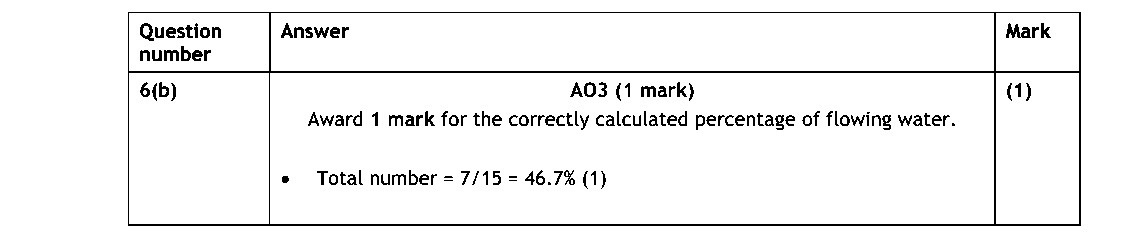
6(b) Glacial landforms and landscapes 1AO3=1Fieldwork
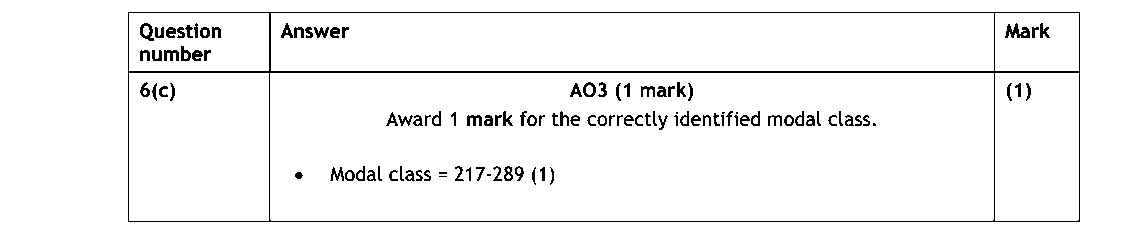
6(c) Glacial landforms and landscapes 1AO3=1Fieldwork
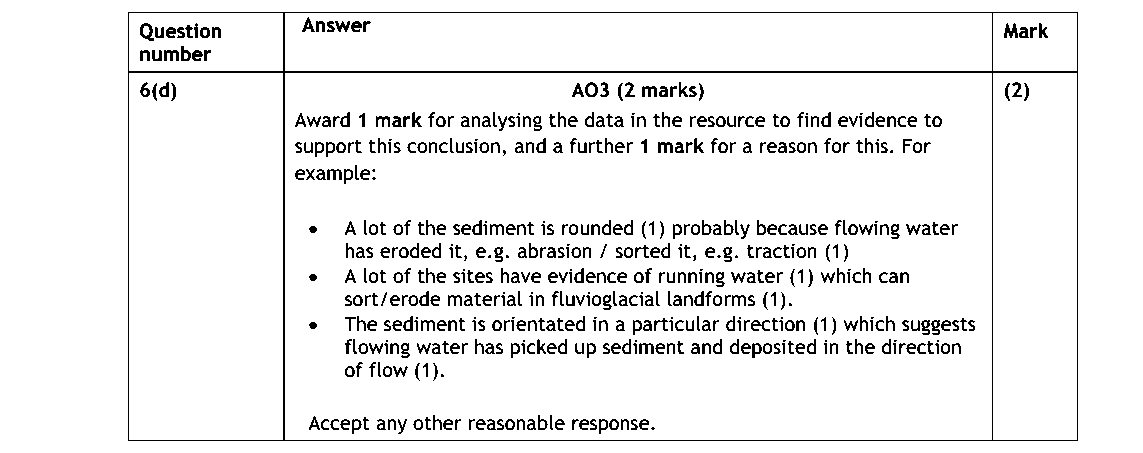
6(d) Glacial landforms and landscapes 2AO3=2Fieldwork
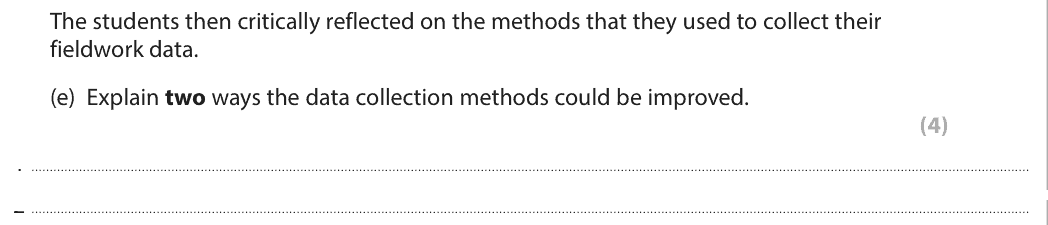
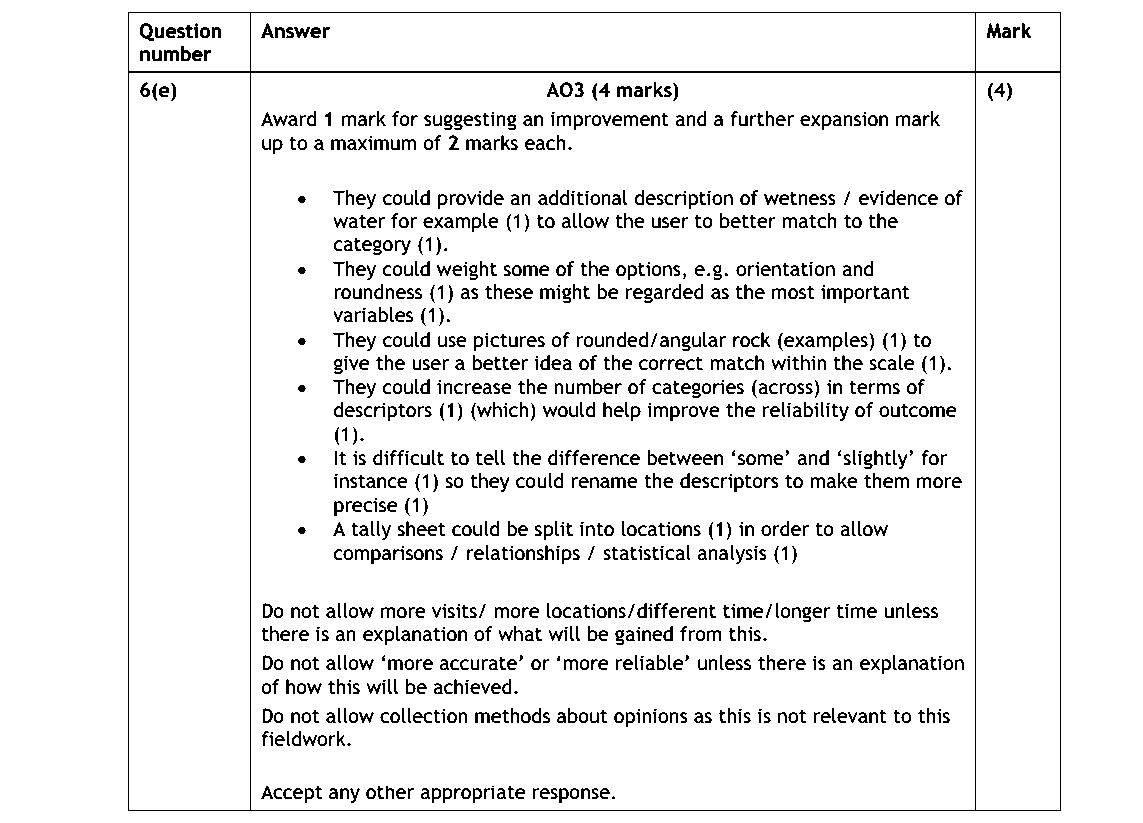
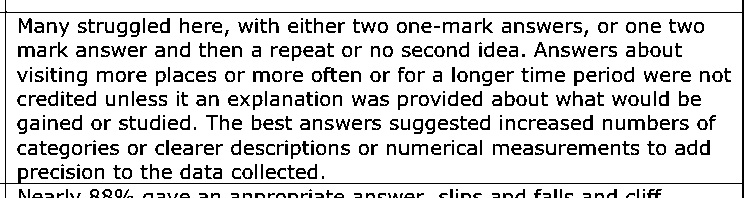
6(e) Glacial landforms and landscapes 4AO3=4Fieldwork
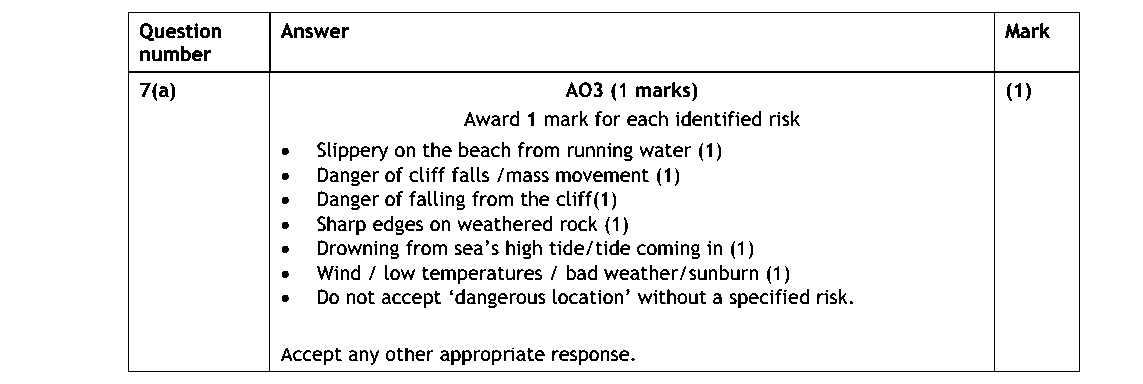
7(a) Coastal landforms, sediment cells and longshore drift 1AO3=1Fieldwork
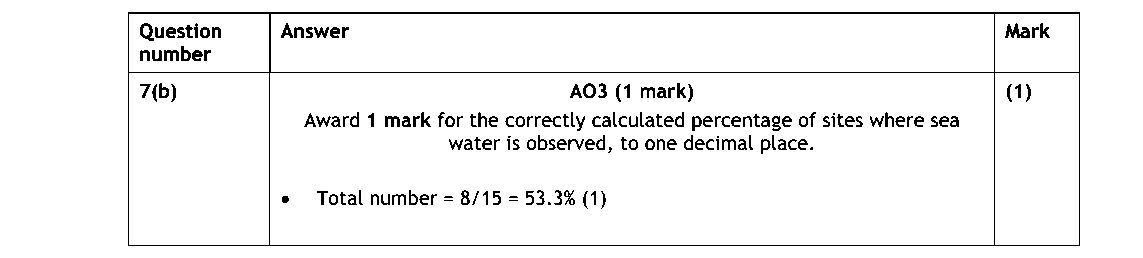
7(b) Coastal landforms, sediment cells and longshore drift 1AO3=1Fieldwork
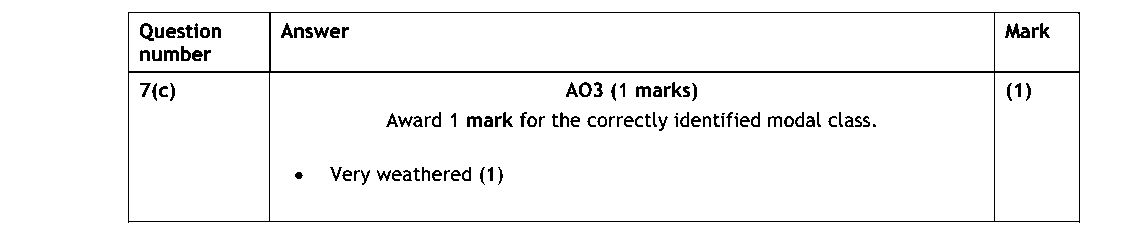
7(c) Coastal landforms, sediment cells and longshore drift 1AO3=1Fieldwork
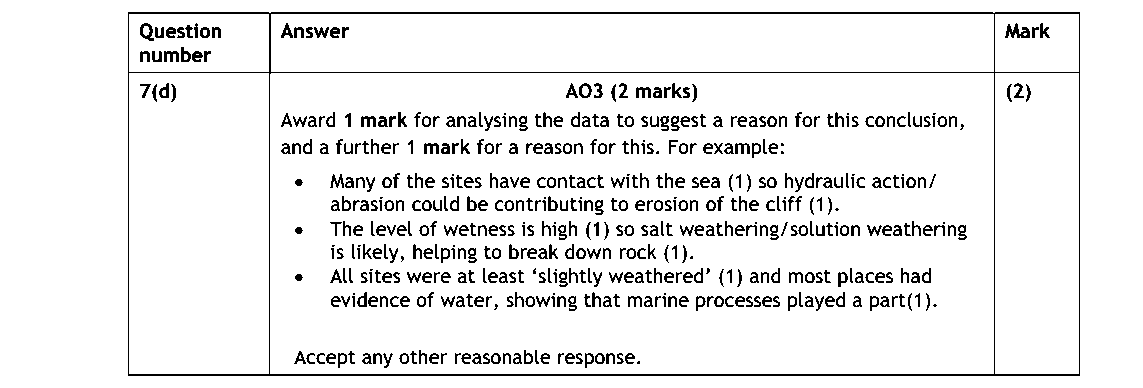
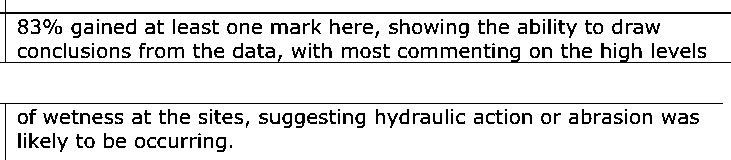
7(d) Coastal landforms, sediment cells and longshore drift 2AO3=2Fieldwork
7(e) Coastal landforms, sediment cells and longshore drift 4AO3=4Fieldwork
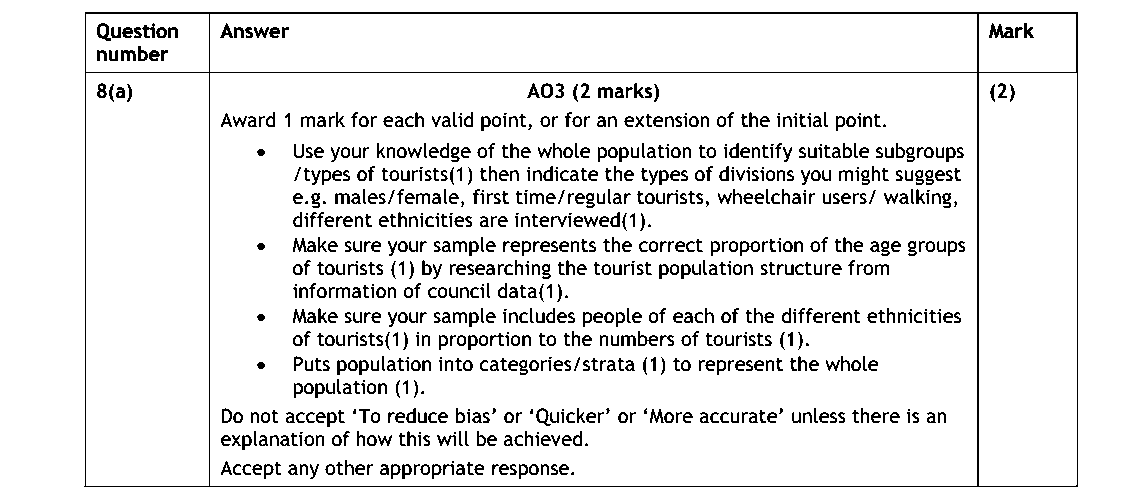
8(a) How and why places vary (regenerating places) 2AO3=2Fieldwork
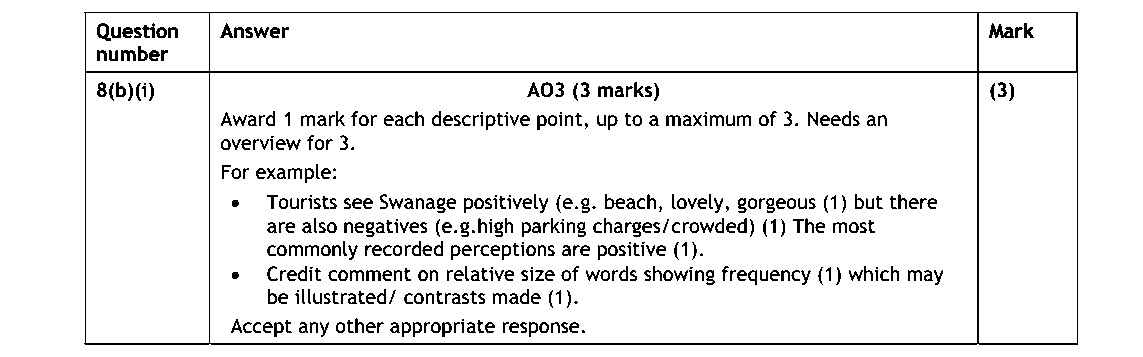
8(b)(i) How and why places vary (regenerating places) 3AO3=3Fieldwork
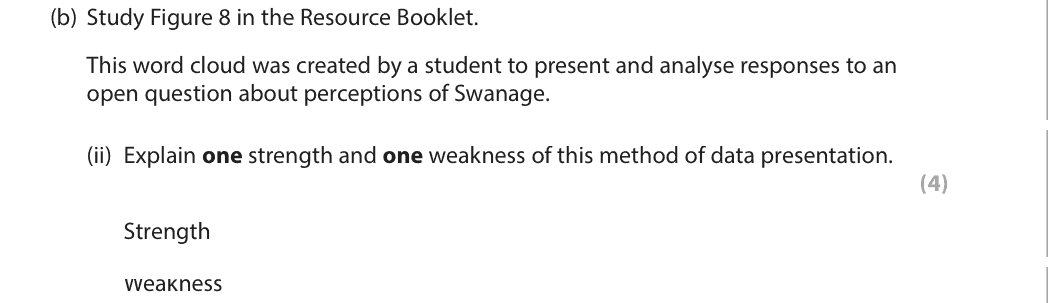
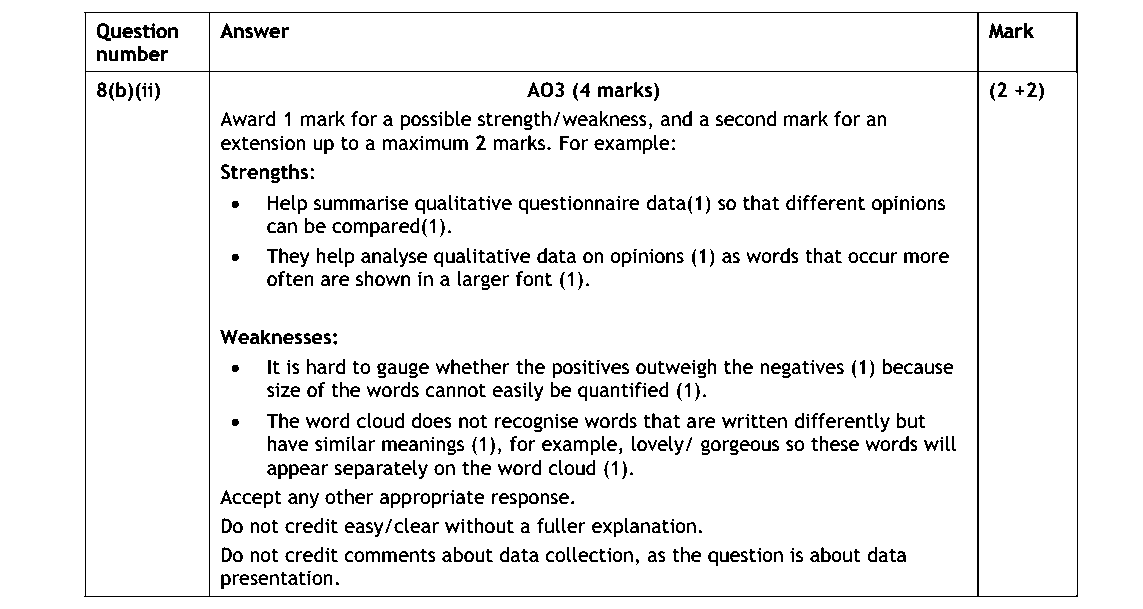
8(b)(ii) How and why places vary (regenerating places) 4AO3=4Fieldwork
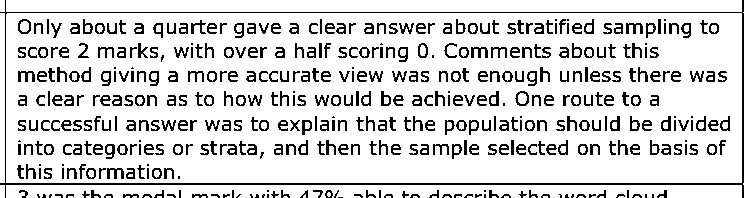
9(a) How people view diverse living spaces 2AO3=2Fieldwork
9(b)(i) How people view diverse living spaces 3AO3=3Fieldwork
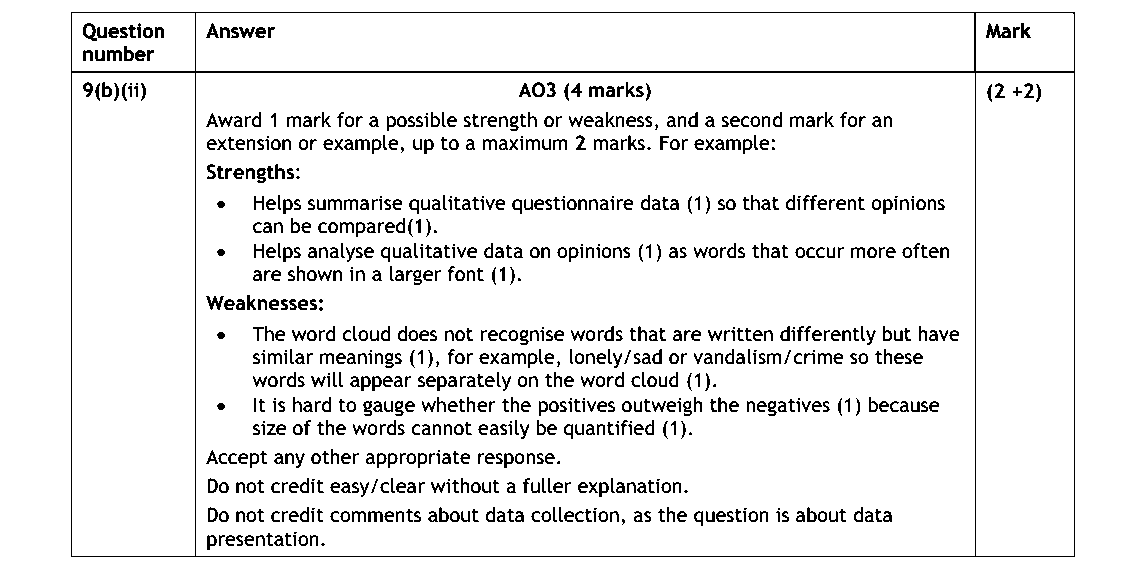
9(b)(ii) How people view diverse living spaces 4AO3=4Fieldwork

The questions

1(a)1(b)(i)1(b)(ii)1(c)1(d)1(e)2(a)2(b)(i)2(b)(ii)2(c)2(d)2(e)34(a)4(b)(i)4(b)(ii)4(c)4(d)4(e)56(a)6(b)6(c)6(d)6(e)7(a)7(b)7(c)7(d)7(e)8(a)8(b)(i)8(b)(ii)9(a)9(b)(i)9(b)(ii)
June 2022 · AS Paper 2 · Q1(a) 1 mark AO1=1 Multiple choice globalisation consequences
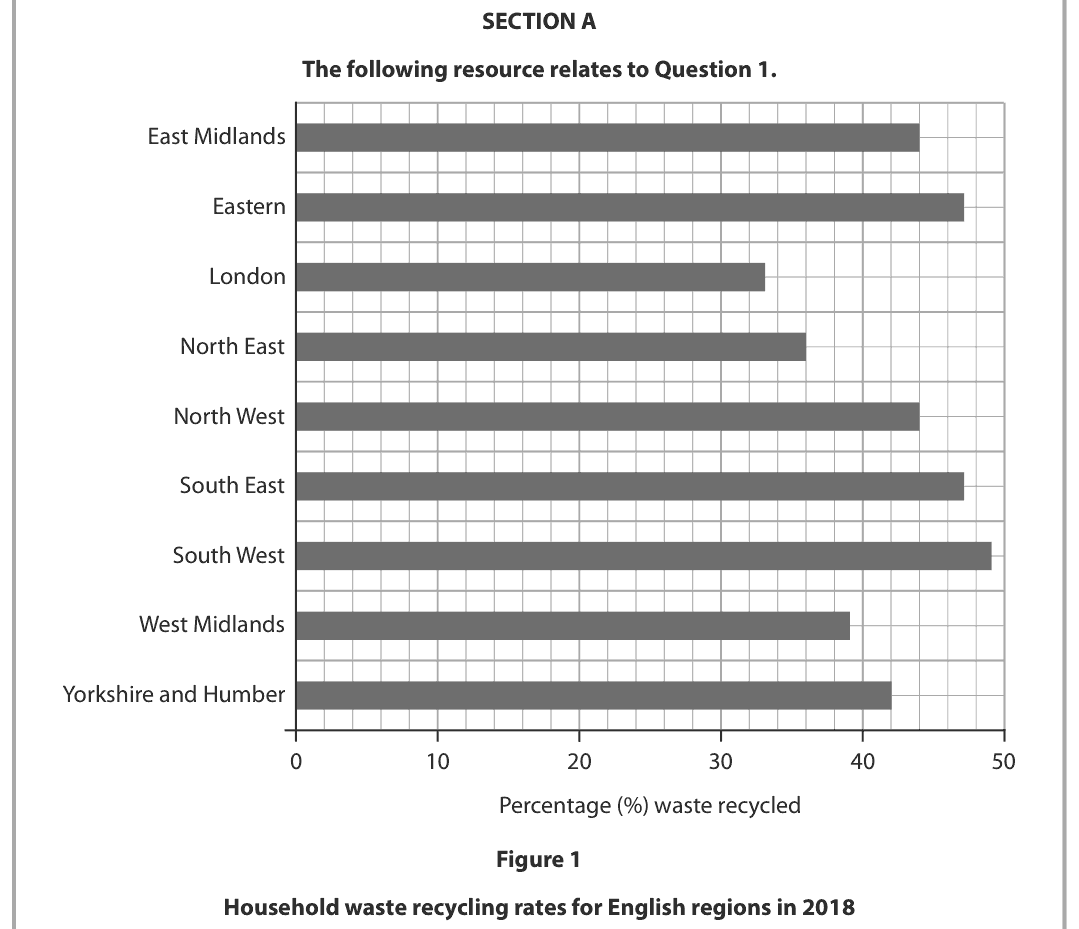
Resources for question 1Resource Booklet: Figure 1
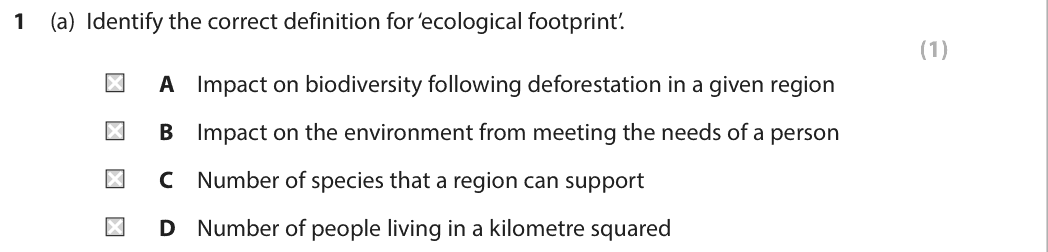
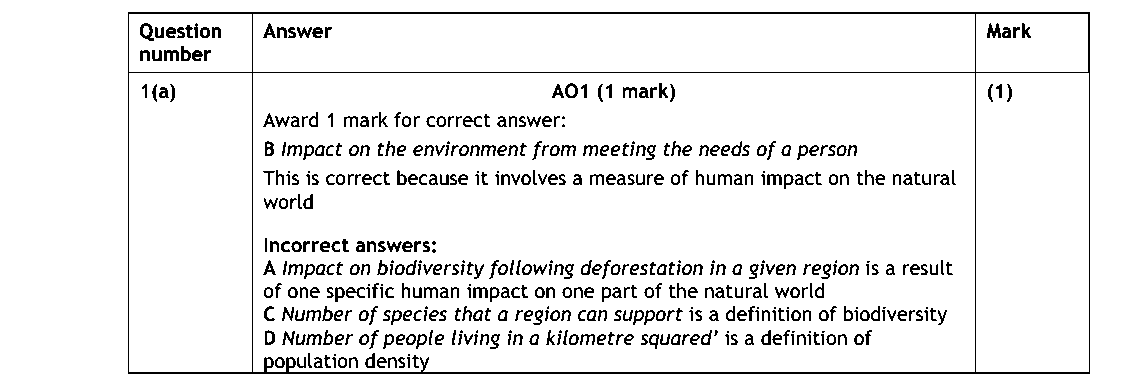
(a) Identify the correct definition for ‘ecological footprint’. (1) A Impact on biodiversity following deforestation in a given region B Impact on the environment from meeting the needs of a person C Number of species that a region can support D Number of people living in a kilometre squared
June 2022 · AS Paper 2 · Q1(b)(i) 2 marks Calculation globalisation consequences
Resources for question 1Resource Booklet: Figure 1
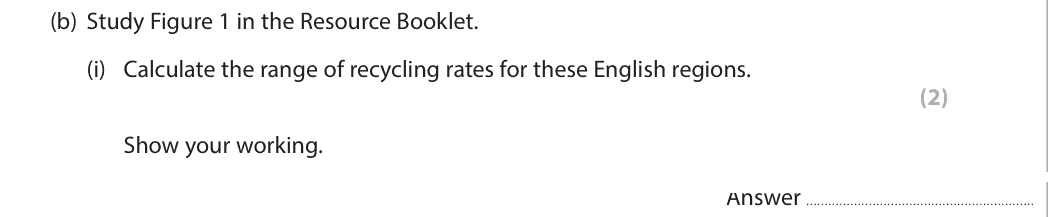
(b) Study Figure 1 in the Resource Booklet. (i) Calculate the range of recycling rates for these English regions. (2) Show your working. Answer ..............................................................
June 2022 · AS Paper 2 · Q1(b)(ii) 3 marks AO1=2, AO2=1 Data response globalisation consequences
Resources for question 1Resource Booklet: Figure 1
(b) Study Figure 1 in the Resource Booklet. (ii) Suggest one reason recycling rates differ across England. (3)
June 2022 · AS Paper 2 · Q1(c) 4 marks AO1=4 Short answer globalisation causes
Resources for question 1Resource Booklet: Figure 1
(c) Explain two measures of the degree of globalisation of a country. (4) 1 ................................................................................................................................................................................................................................................................................ 2 ................................................................................................................................................................................................................................................................................
June 2022 · AS Paper 2 · Q1(d) 6 marks AO1=6 Extended response globalisation causes
Resources for question 1Resource Booklet: Figure 1
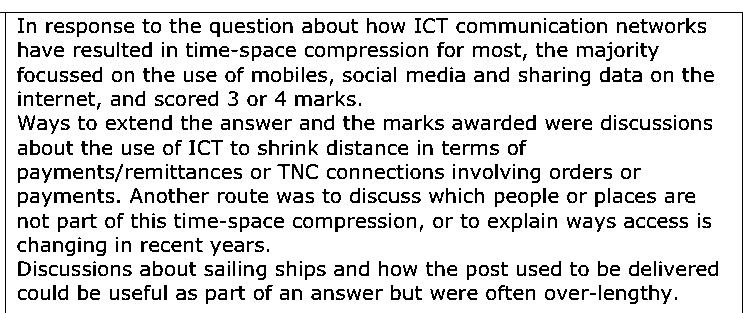
(d) Explain how ICT communication networks have resulted in time-space compression for most people. (6)
June 2022 · AS Paper 2 · Q1(e) 12 marks AO1=3, AO2=9 12-mark essay globalisation consequences
Resources for question 1Resource Booklet: Figure 1
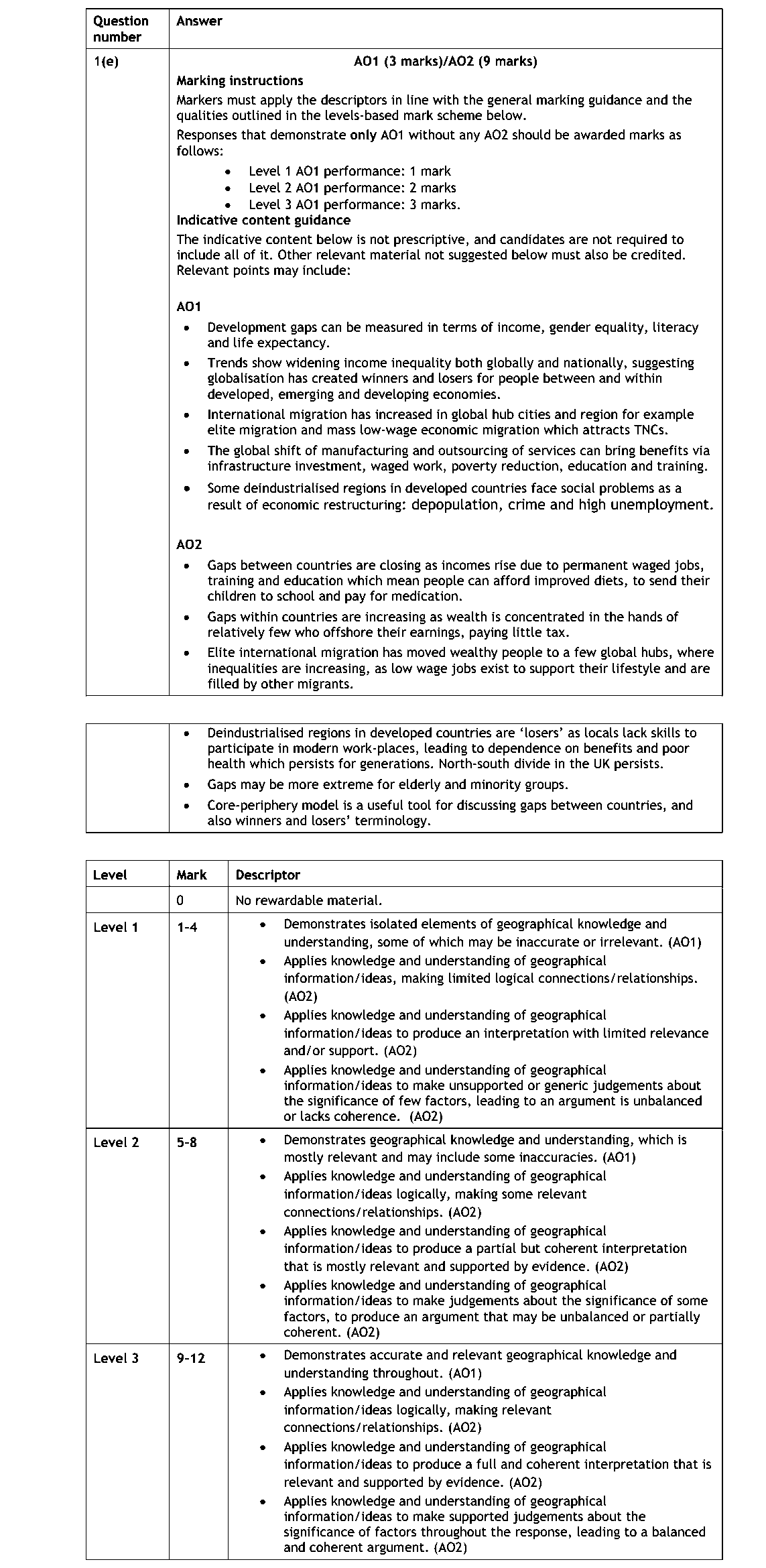
(e) Assess the extent to which globalisation is narrowing the development gap both within and between countries. (12)
June 2022 · AS Paper 2 · Q2(a) 1 mark AO1=1 Short answer regeneration need
Resources for question 2Resource Booklet: Figure 2
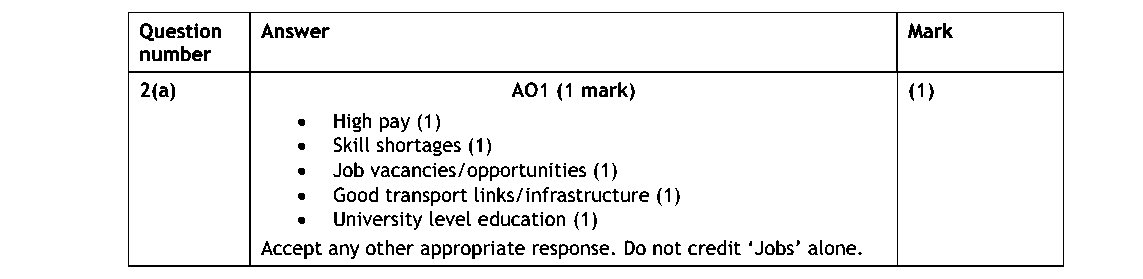
(a) State one reason successful regions have high inward migration rates. (1)
June 2022 · AS Paper 2 · Q2(b)(i) 2 marks AO3=2 Calculation regeneration need
Resources for question 2Resource Booklet: Figure 2
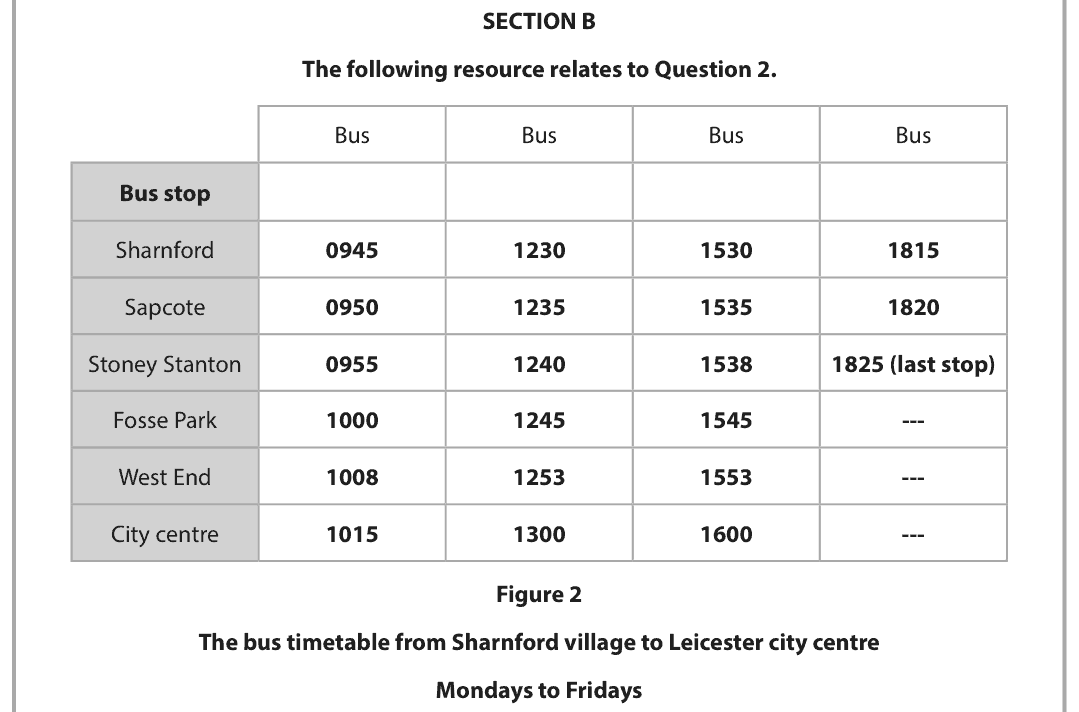
(b) Study Figure 2 in the Resource Booklet. (i) Complete the table below by calculating the journey time and journey distance from Sharnford to Leicester city centre. (2) .............................................................. hours .............................................................. kms Distance (km) = Speed (km/hour) × Time (hour) Sharnford to Leicester city centre Journey time Speed of journey 34 km/hour Journey distance
June 2022 · AS Paper 2 · Q2(b)(ii) 3 marks AO1=2, AO2=1 Data response regeneration need
Resources for question 2Resource Booklet: Figure 2
(b) Study Figure 2 in the Resource Booklet. Distance (km) = Speed (km/hour) × Time (hour) Sharnford to Leicester city centre Journey time Speed of journey 34 km/hour Journey distance (ii) Suggest one way access to transport contributes to social deprivation in Sharnford. (3)
June 2022 · AS Paper 2 · Q2(c) 4 marks AO3=4 Short answer regeneration need
Resources for question 2Resource Booklet: Figure 2
(c) Explain two reasons some groups of people living in a successful region may experience deprivation. (4) 1 ................................................................................................................................................................................................................................................................................ 2 ................................................................................................................................................................................................................................................................................
June 2022 · AS Paper 2 · Q2(d) 6 marks AO1=6 Extended response regeneration success
Resources for question 2Resource Booklet: Figure 2
(d) Explain how social progress resulting from regeneration can be measured through changes in deprivation and demographic characteristics. (6)
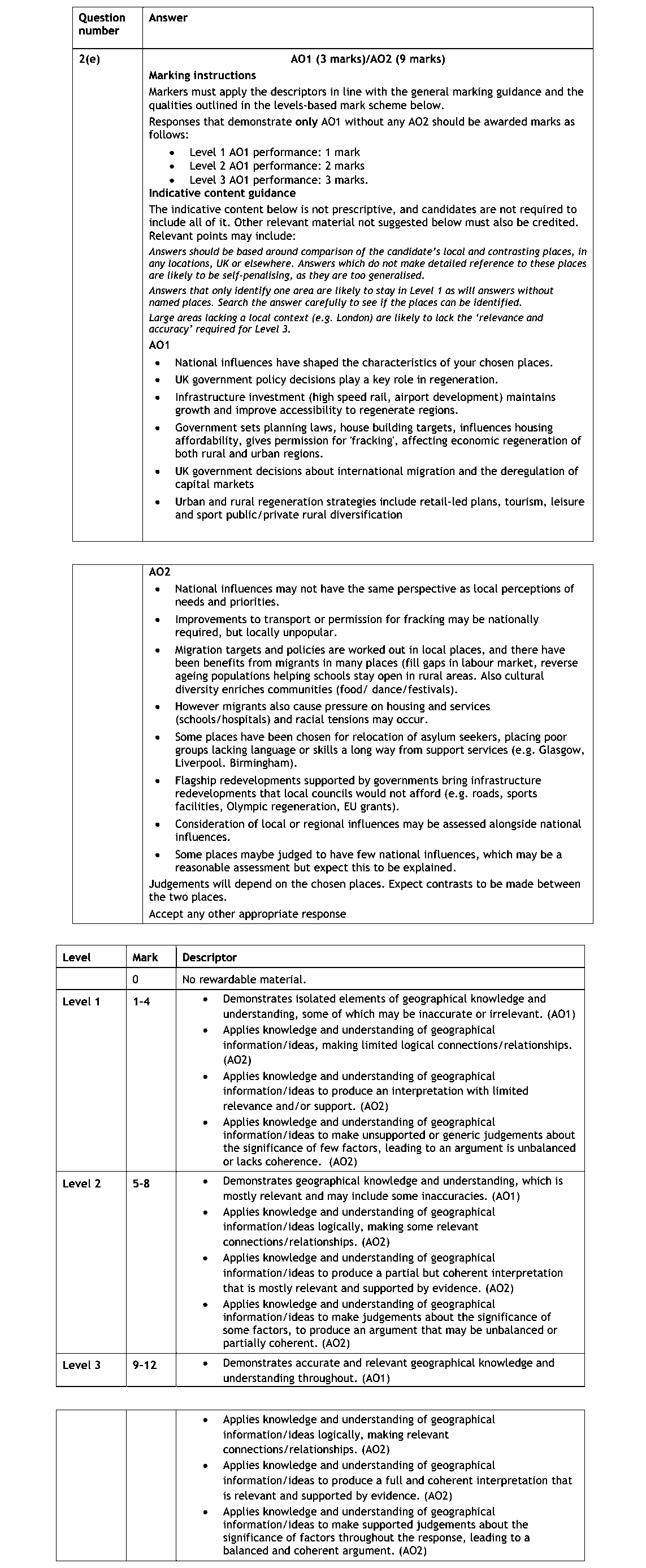
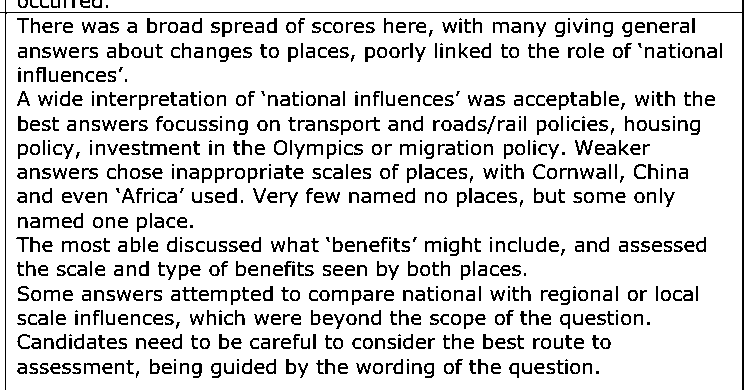
June 2022 · AS Paper 2 · Q2(e) 12 marks AO1=3, AO2=9 12-mark essay regenerating places variation
Resources for question 2Resource Booklet: Figure 2
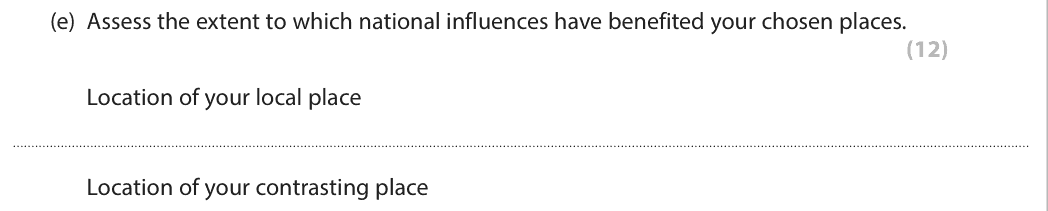
(e) Assess the extent to which national influences have benefited your chosen places. (12) Location of your local place Location of your contrasting place
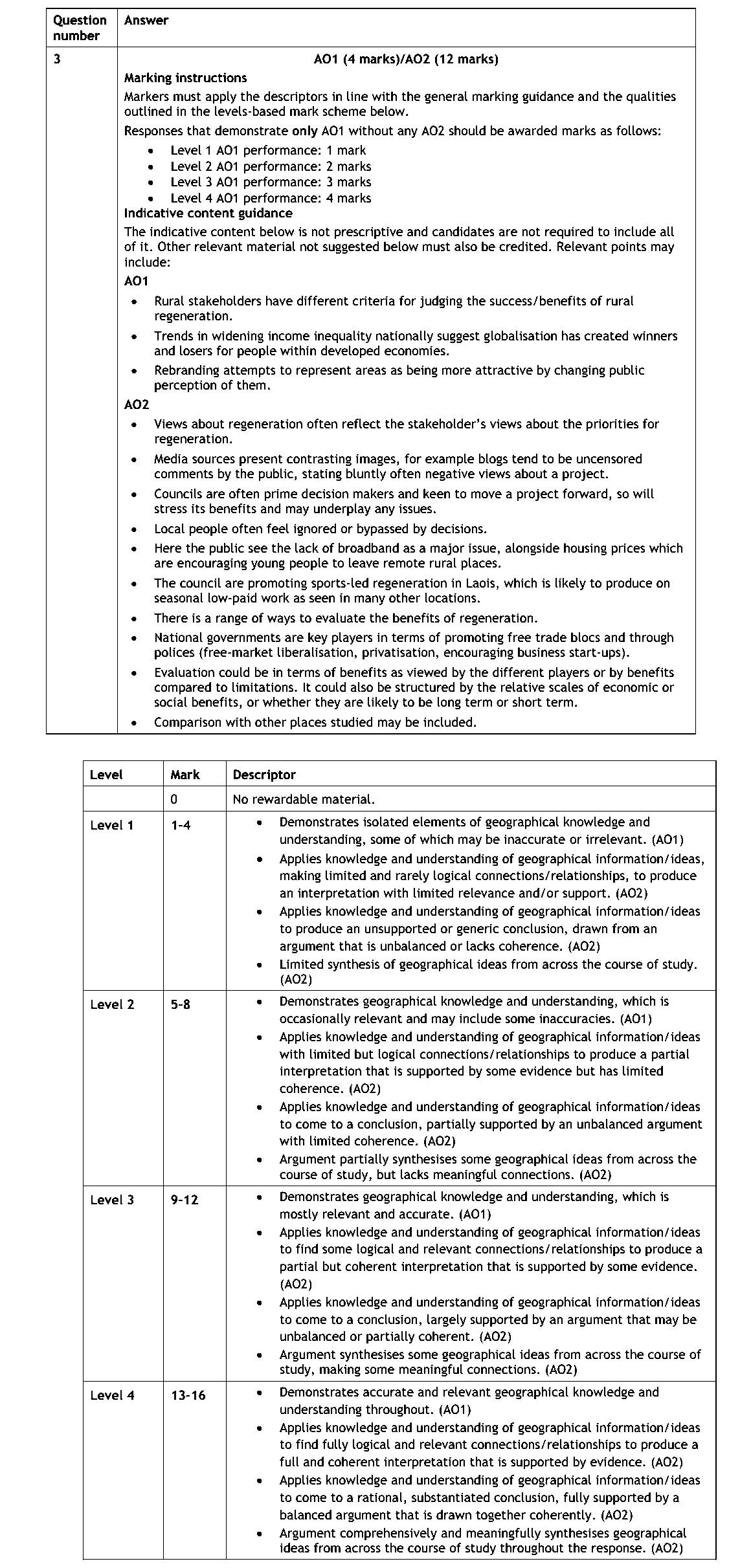
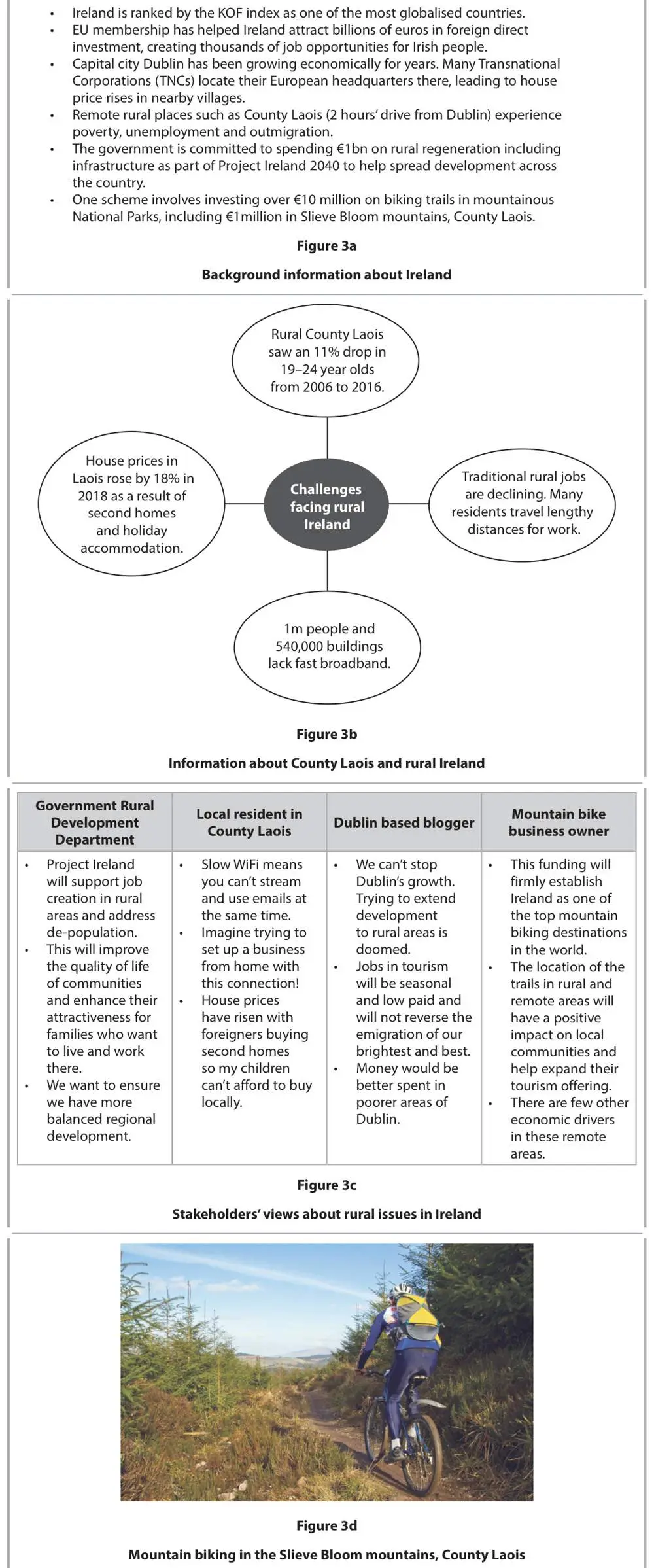
June 2022 · AS Paper 2 · Q3 16 marks AO1=4, AO2=12 16-mark essay regeneration success
Resources for question 3Resource Booklet: Figure 3a, Figure 3b, Figure 3c, Figure 3d
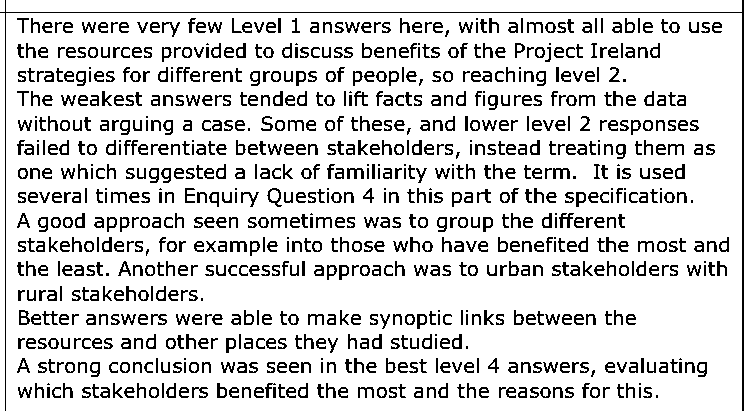
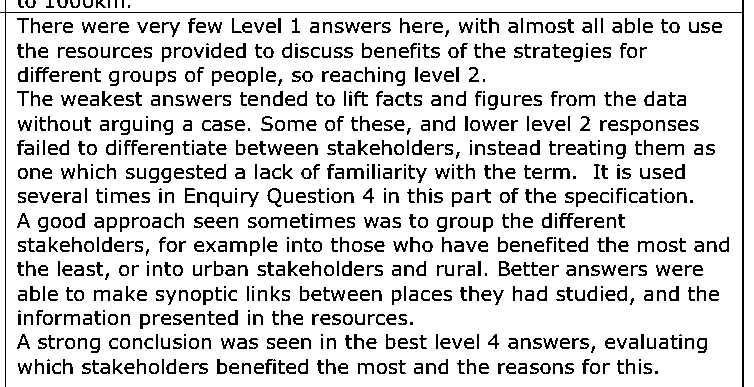
3 Study Figures 3a, 3b, 3c and 3d in the Resource Booklet. Evaluate the extent to which stakeholders may benefit from the Project Ireland strategies. (16)
June 2022 · AS Paper 2 · Q4(a) 1 mark AO1=1 Short answer diverse living spaces
Resources for question 4Resource Booklet: Figure 4
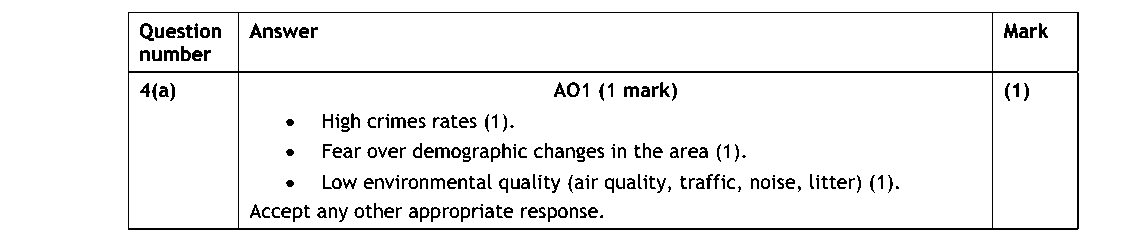
(a) State one reason some urban areas are seen as undesirable by residents. (1)
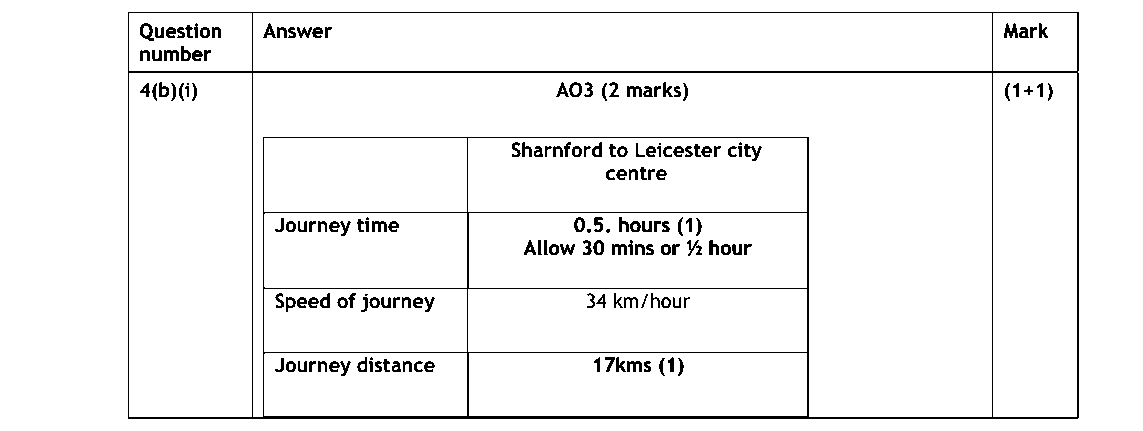
June 2022 · AS Paper 2 · Q4(b)(i) 2 marks AO3=2 Calculation diverse living spaces
Resources for question 4Resource Booklet: Figure 4
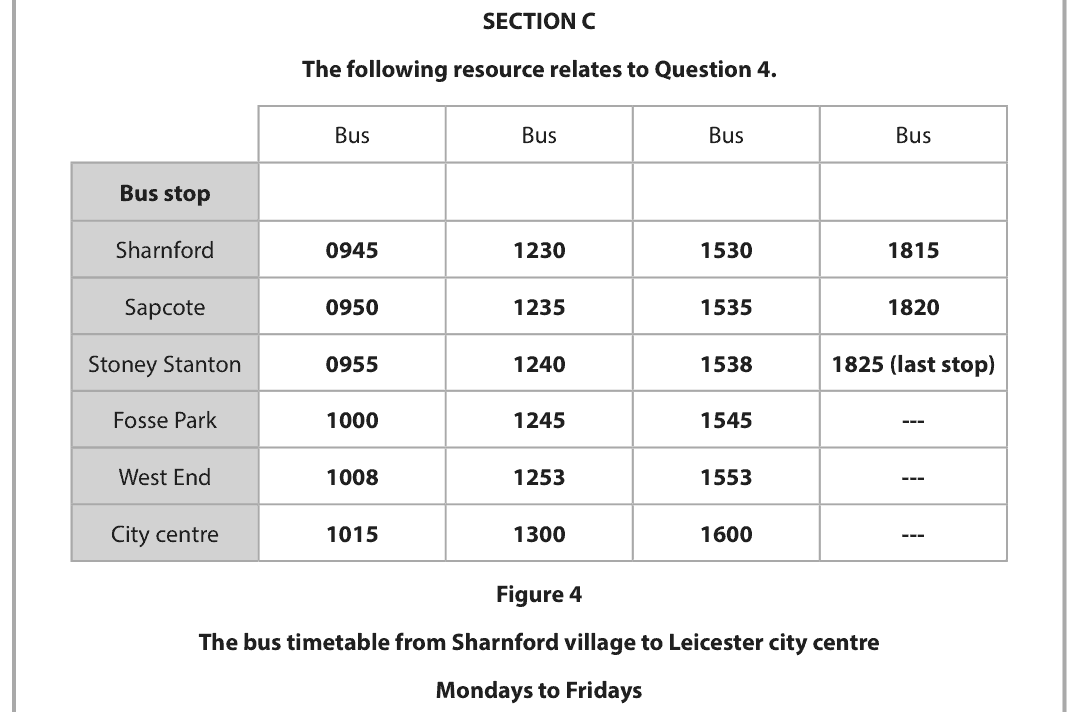
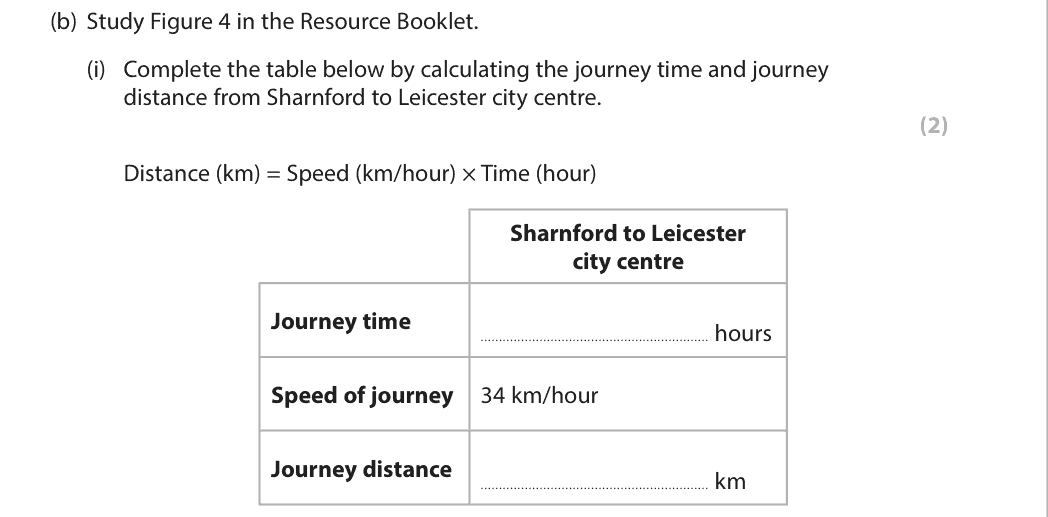
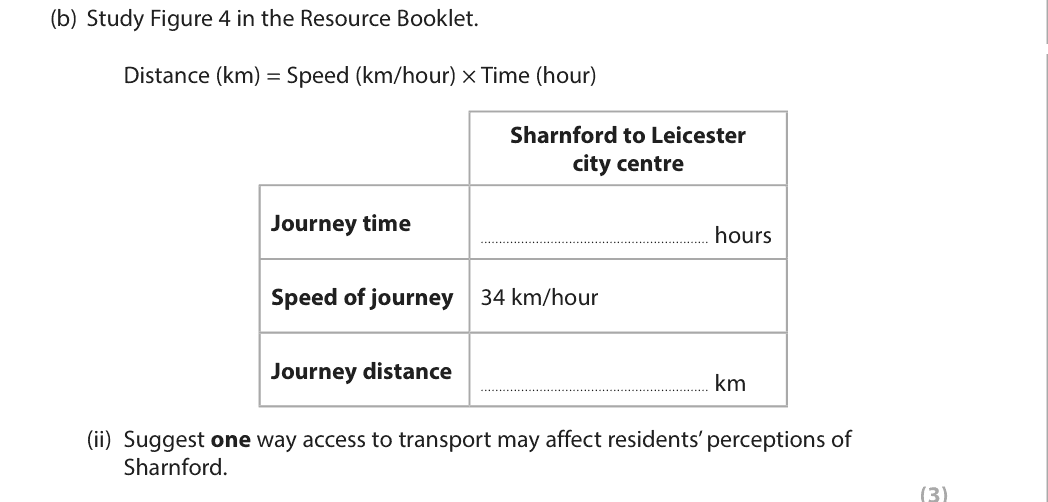
(b) Study Figure 4 in the Resource Booklet. (i) Complete the table below by calculating the journey time and journey distance from Sharnford to Leicester city centre. (2) .............................................................. hours .............................................................. km Distance (km) = Speed (km/hour) × Time (hour) Sharnford to Leicester city centre Journey time Speed of journey 34 km/hour Journey distance
June 2022 · AS Paper 2 · Q4(b)(ii) 3 marks AO1=2, AO2=1 Data response diverse living spaces
Resources for question 4Resource Booklet: Figure 4
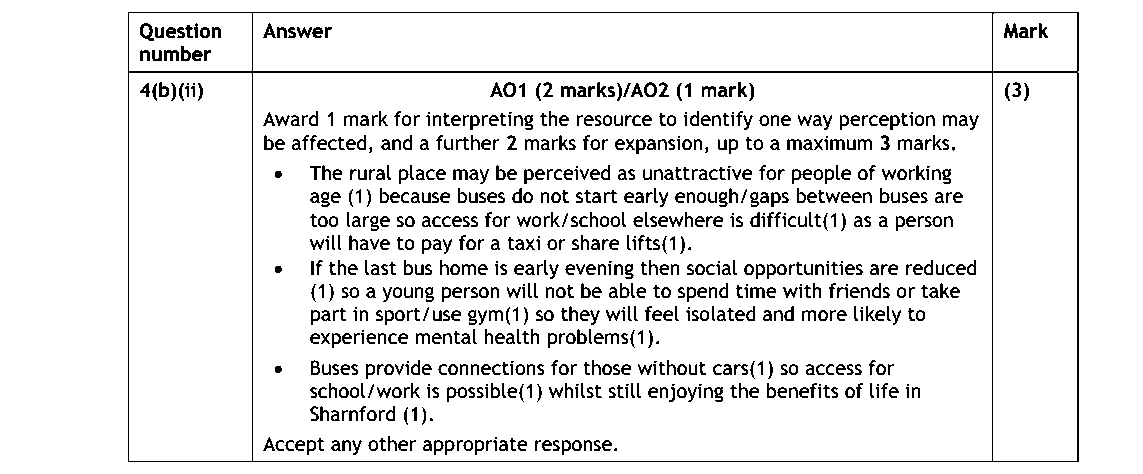
(b) Study Figure 4 in the Resource Booklet. Distance (km) = Speed (km/hour) × Time (hour) Sharnford to Leicester city centre Journey time Speed of journey 34 km/hour Journey distance (ii) Suggest one way access to transport may affect residents’ perceptions of Sharnford. (3)
June 2022 · AS Paper 2 · Q4(c) 4 marks AO1=4 Short answer diverse living spaces
Resources for question 4Resource Booklet: Figure 4
(c) Explain two reasons some groups of people may perceive a rural place as idyllic. (4) 1 ................................................................................................................................................................................................................................................................................ 2 ................................................................................................................................................................................................................................................................................
June 2022 · AS Paper 2 · Q4(d) 6 marks AO1=6 Extended response diverse places management
Resources for question 4Resource Booklet: Figure 4
(d) Explain how social progress can be measured through changes in deprivation and demographic characteristics. (6)
June 2022 · AS Paper 2 · Q4(e) 12 marks AO1=3, AO2=9 12-mark essay population structures
Resources for question 4Resource Booklet: Figure 4
(e) Assess the extent to which national influences have benefited your chosen places. (12) Location of your local place Location of your contrasting place
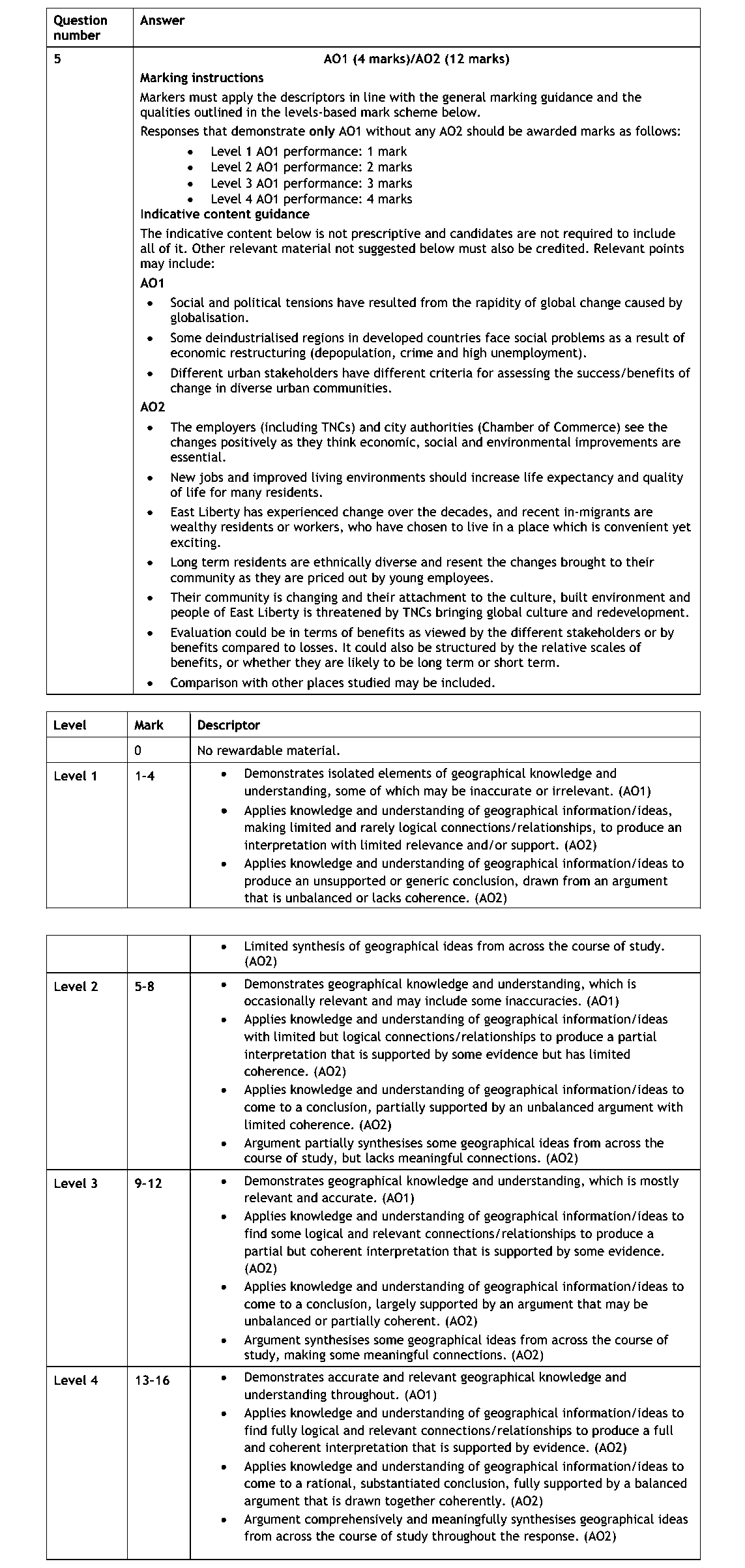
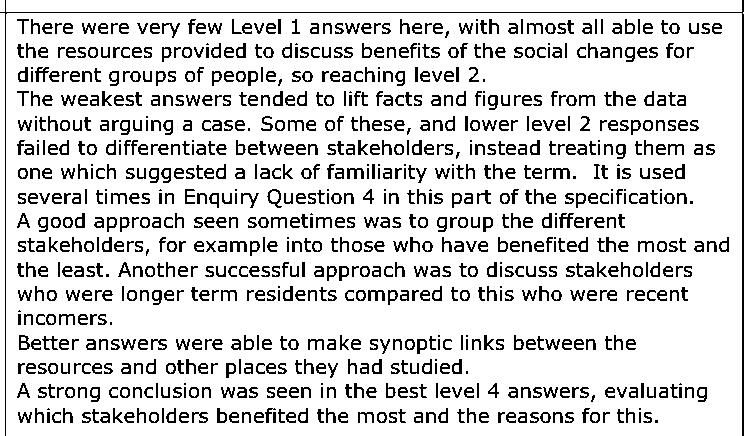
June 2022 · AS Paper 2 · Q5 16 marks AO1=4, AO2=12 16-mark essay diverse places management
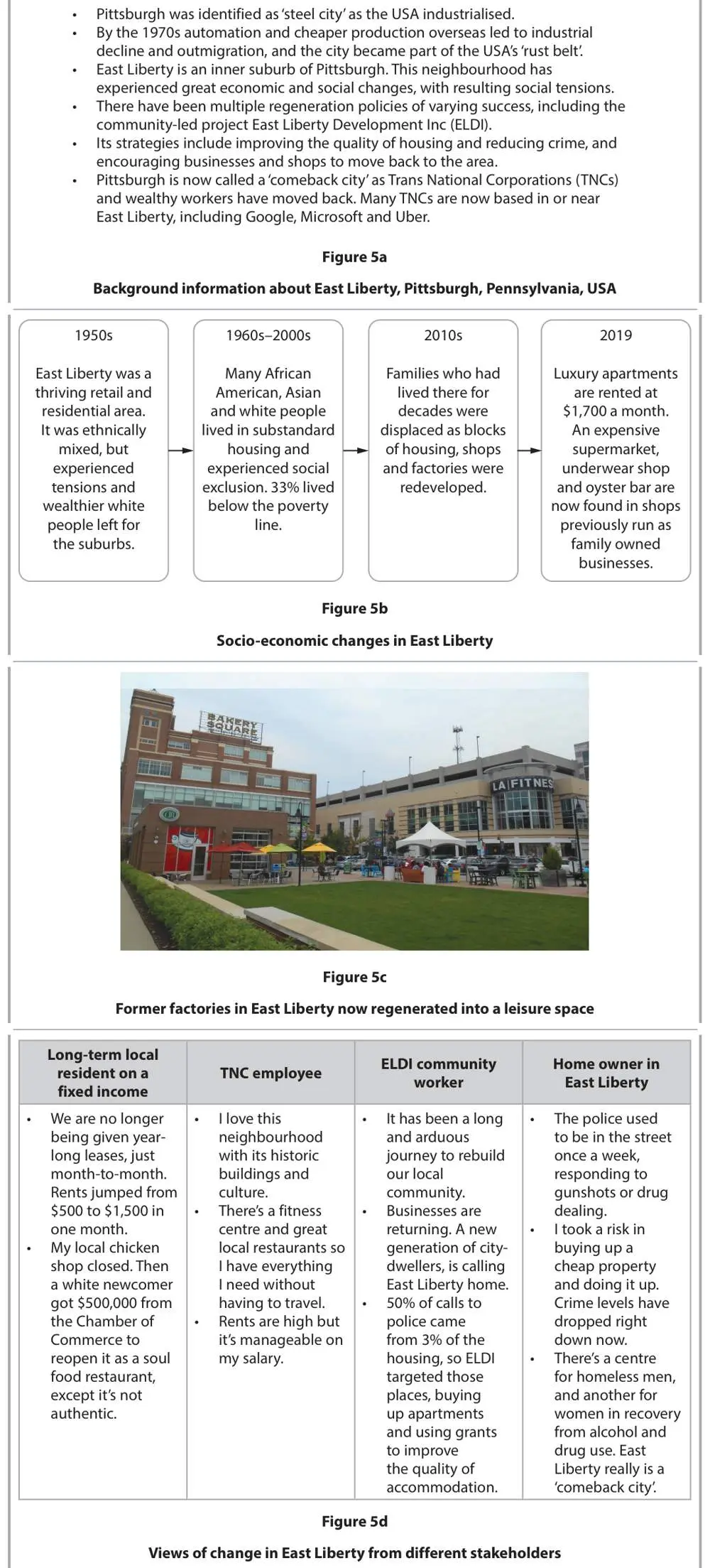
Resources for question 5Resource Booklet: Figure 5a, Figure 5b, Figure 5c, Figure 5d
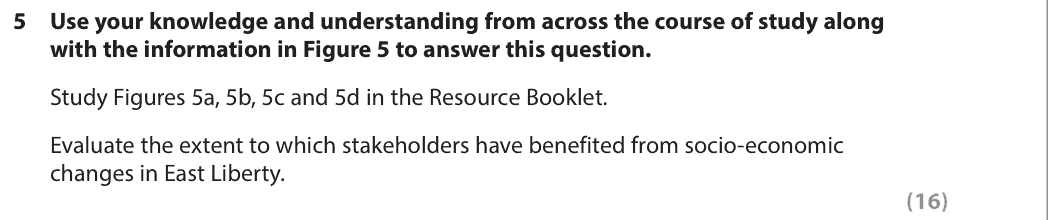
5 Use your knowledge and understanding from across the course of study along with the information in Figure 5 to answer this question. Study Figures 5a, 5b, 5c and 5d in the Resource Booklet. Evaluate the extent to which stakeholders have benefited from socio-economic changes in East Liberty. (16)
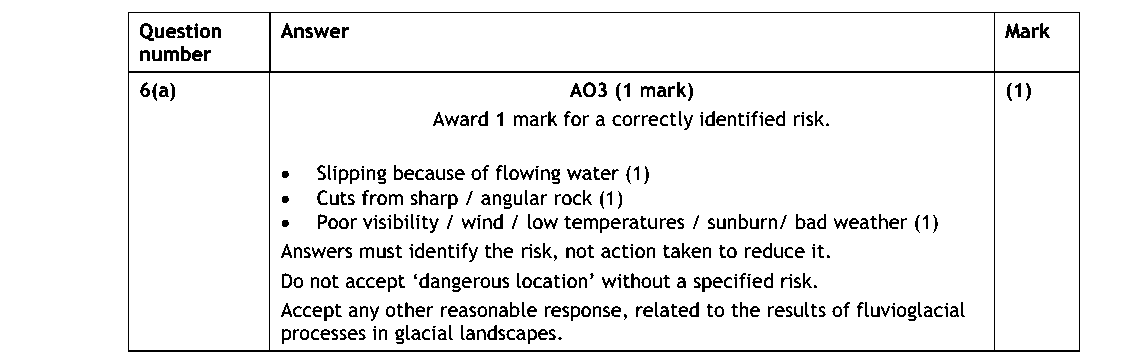
June 2022 · AS Paper 2 · Q6(a) 1 mark AO3=1 Fieldwork glacial landforms
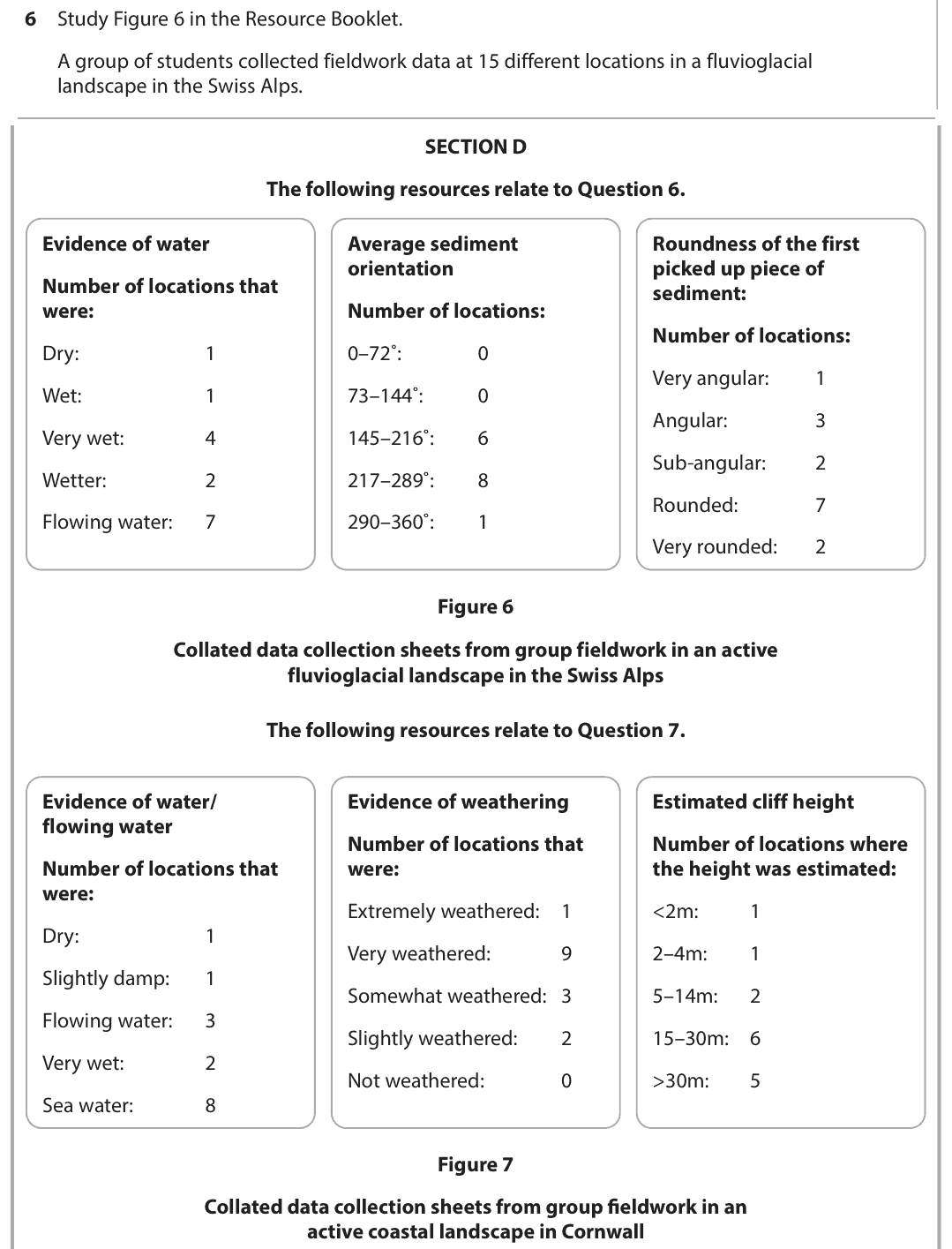
Resources for question 66 Study Figure 6 in the Resource Booklet. A group of students collected fieldwork data at 15 different locations in a fluvioglacial landscape in the Swiss Alps. Resource Booklet: Figure 6
(a) Identify one risk students might have had to consider when carrying out fieldwork in this environment. (1)
June 2022 · AS Paper 2 · Q6(b) 1 mark AO3=1 Fieldwork glacial landforms
Resources for question 66 Study Figure 6 in the Resource Booklet. A group of students collected fieldwork data at 15 different locations in a fluvioglacial landscape in the Swiss Alps. Resource Booklet: Figure 6
The students then collated their data about water and sediments. (b) Calculate the % of sites where flowing water was observed. Give your answer to one decimal place. (1) .............................................................. %
June 2022 · AS Paper 2 · Q6(c) 1 mark AO3=1 Fieldwork glacial landforms
Resources for question 66 Study Figure 6 in the Resource Booklet. A group of students collected fieldwork data at 15 different locations in a fluvioglacial landscape in the Swiss Alps. Resource Booklet: Figure 6
(c) Identify the modal class for the sediment orientation. (1)
June 2022 · AS Paper 2 · Q6(d) 2 marks AO3=2 Fieldwork glacial landforms
Resources for question 66 Study Figure 6 in the Resource Booklet. A group of students collected fieldwork data at 15 different locations in a fluvioglacial landscape in the Swiss Alps. Resource Booklet: Figure 6
(d) The students concluded that the landscape was shaped by fluvioglacial processes. Suggest why the primary data in Figure 6 shows that the conclusion might be a sensible one. (2)
June 2022 · AS Paper 2 · Q6(e) 4 marks AO3=4 Fieldwork glacial landforms
Resources for question 66 Study Figure 6 in the Resource Booklet. A group of students collected fieldwork data at 15 different locations in a fluvioglacial landscape in the Swiss Alps. Resource Booklet: Figure 6
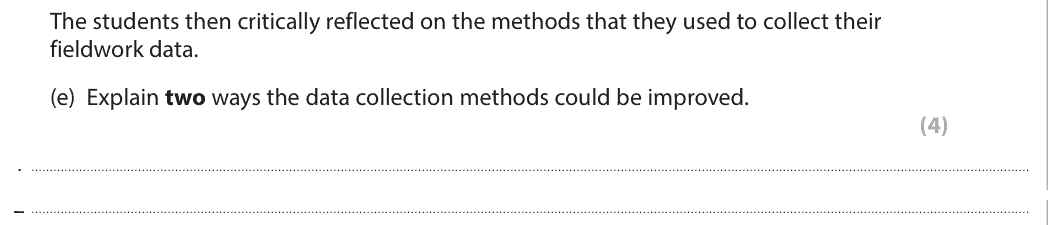
The students then critically reflected on the methods that they used to collect their fieldwork data. (e) Explain two ways the data collection methods could be improved. (4) 1 ................................................................................................................................................................................................................................................................................ 2 ................................................................................................................................................................................................................................................................................
June 2022 · AS Paper 2 · Q7(a) 1 mark AO3=1 Fieldwork coastal landforms
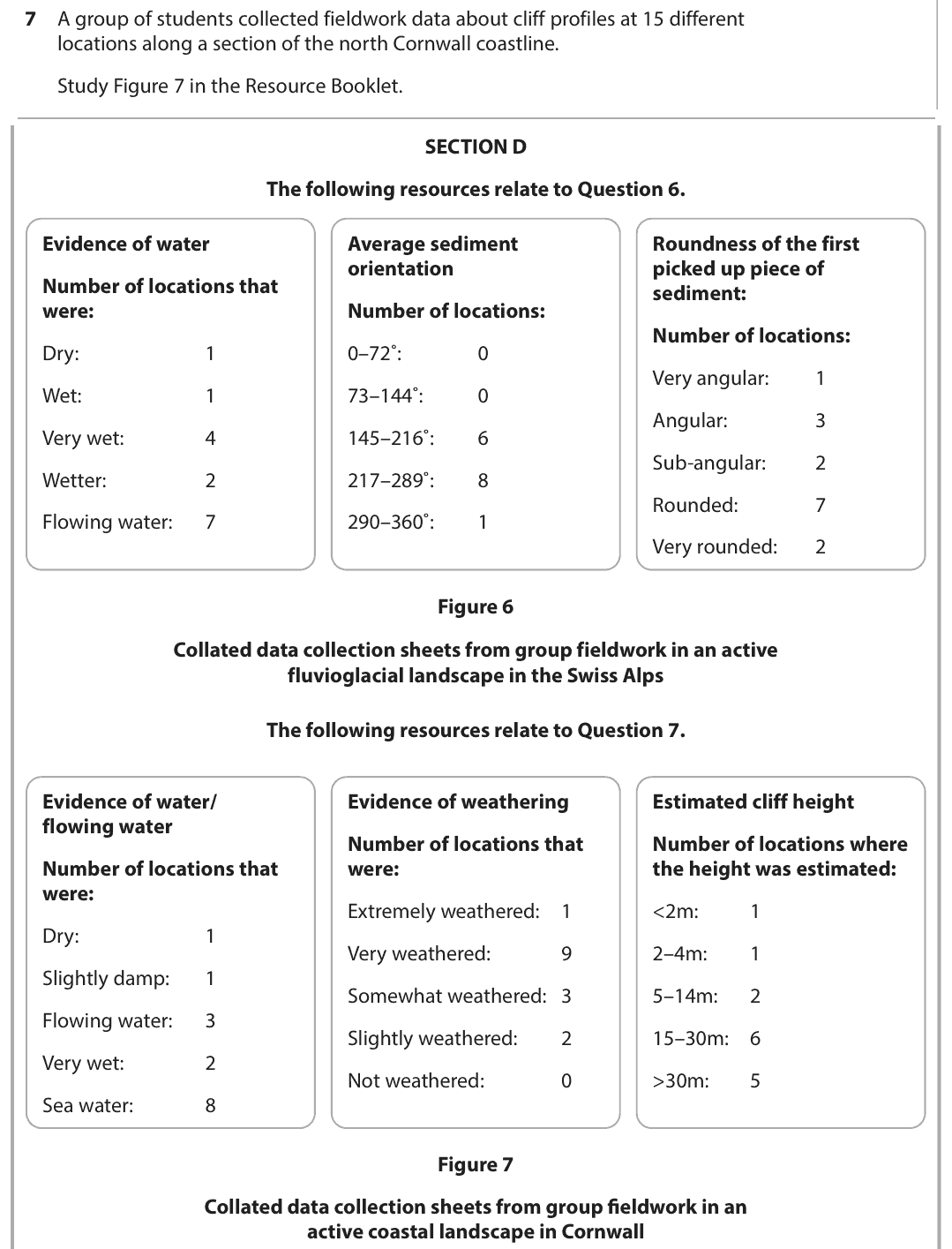
Resources for question 77 A group of students collected fieldwork data about cliff profiles at 15 different locations along a section of the north Cornwall coastline. Study Figure 7 in the Resource Booklet. Resource Booklet: Figure 7
(a) Identify one risk students might have had to consider when carrying out fieldwork in this environment. (1)
June 2022 · AS Paper 2 · Q7(b) 1 mark AO3=1 Fieldwork coastal landforms
Resources for question 77 A group of students collected fieldwork data about cliff profiles at 15 different locations along a section of the north Cornwall coastline. Study Figure 7 in the Resource Booklet. Resource Booklet: Figure 7
The students then collated their data about water, weathering and estimated cliff height. (b) Calculate the % of sites where sea water was observed. Give your answer to one decimal place. (1) .............................................................. %
June 2022 · AS Paper 2 · Q7(c) 1 mark AO3=1 Fieldwork coastal landforms
Resources for question 77 A group of students collected fieldwork data about cliff profiles at 15 different locations along a section of the north Cornwall coastline. Study Figure 7 in the Resource Booklet. Resource Booklet: Figure 7
(c) Identify the modal class for the evidence of weathering. (1)
June 2022 · AS Paper 2 · Q7(d) 2 marks AO3=2 Fieldwork coastal landforms
Resources for question 77 A group of students collected fieldwork data about cliff profiles at 15 different locations along a section of the north Cornwall coastline. Study Figure 7 in the Resource Booklet. Resource Booklet: Figure 7
(d) The students concluded that the coastal profile was heavily influenced by marine processes. Suggest one reason why the data shows this might be a sensible conclusion. (2)
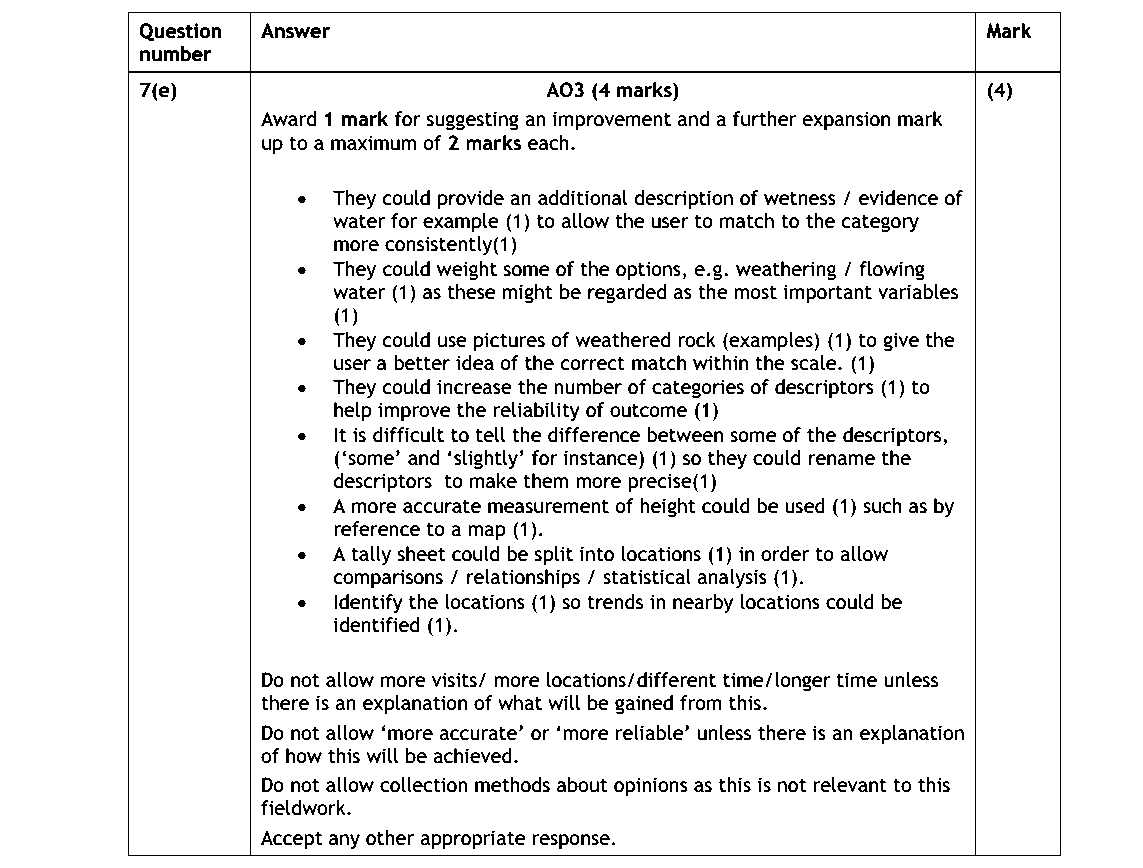
June 2022 · AS Paper 2 · Q7(e) 4 marks AO3=4 Fieldwork coastal landforms
Resources for question 77 A group of students collected fieldwork data about cliff profiles at 15 different locations along a section of the north Cornwall coastline. Study Figure 7 in the Resource Booklet. Resource Booklet: Figure 7
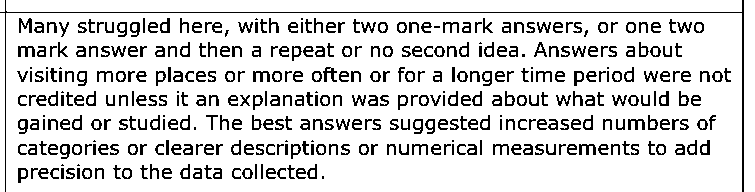
The students then critically reflected on the methods that they used to collect their fieldwork data. (e) Explain two ways the data collection methods could be improved. (4) 1 ................................................................................................................................................................................................................................................................................ 2 ................................................................................................................................................................................................................................................................................
June 2022 · AS Paper 2 · Q8(a) 2 marks AO3=2 Fieldwork Hard regenerating places variation
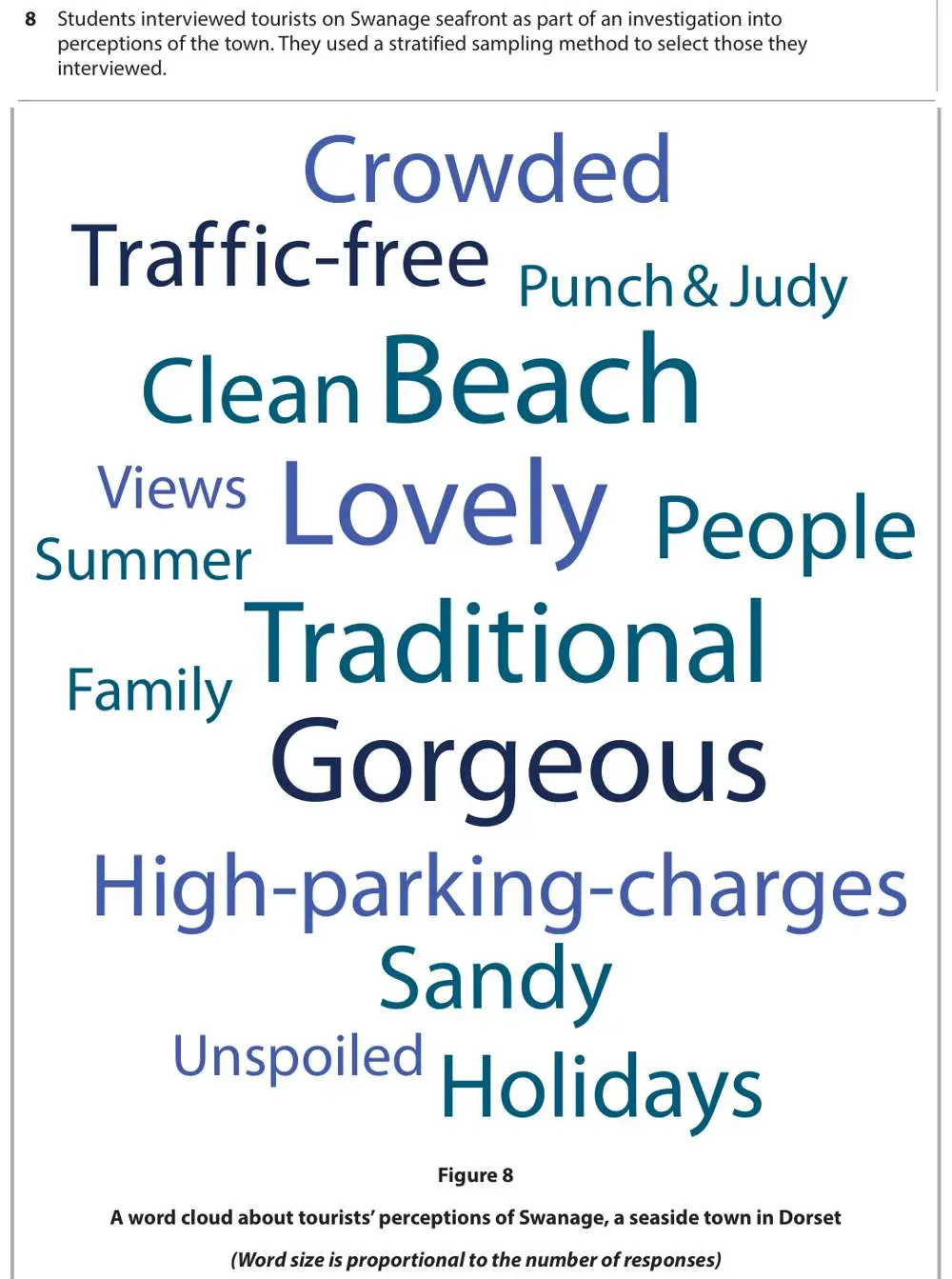
Resources for question 88 Students interviewed tourists on Swanage seafront as part of an investigation into perceptions of the town. They used a stratified sampling method to select those they interviewed. Resource Booklet: Figure 8
(a) Suggest why this method was chosen. (2)
June 2022 · AS Paper 2 · Q8(b)(i) 3 marks AO3=3 Fieldwork regenerating places variation
Resources for question 88 Students interviewed tourists on Swanage seafront as part of an investigation into perceptions of the town. They used a stratified sampling method to select those they interviewed. Resource Booklet: Figure 8
(b) Study Figure 8 in the Resource Booklet. This word cloud was created by a student to present and analyse responses to an open question about perceptions of Swanage. (i) Describe the findings shown in Figure 8. (3)
June 2022 · AS Paper 2 · Q8(b)(ii) 4 marks AO3=4 Fieldwork regenerating places variation
Resources for question 88 Students interviewed tourists on Swanage seafront as part of an investigation into perceptions of the town. They used a stratified sampling method to select those they interviewed. Resource Booklet: Figure 8
(b) Study Figure 8 in the Resource Booklet. This word cloud was created by a student to present and analyse responses to an open question about perceptions of Swanage. (ii) Explain one strength and one weakness of this method of data presentation. (4) Strength Weakness
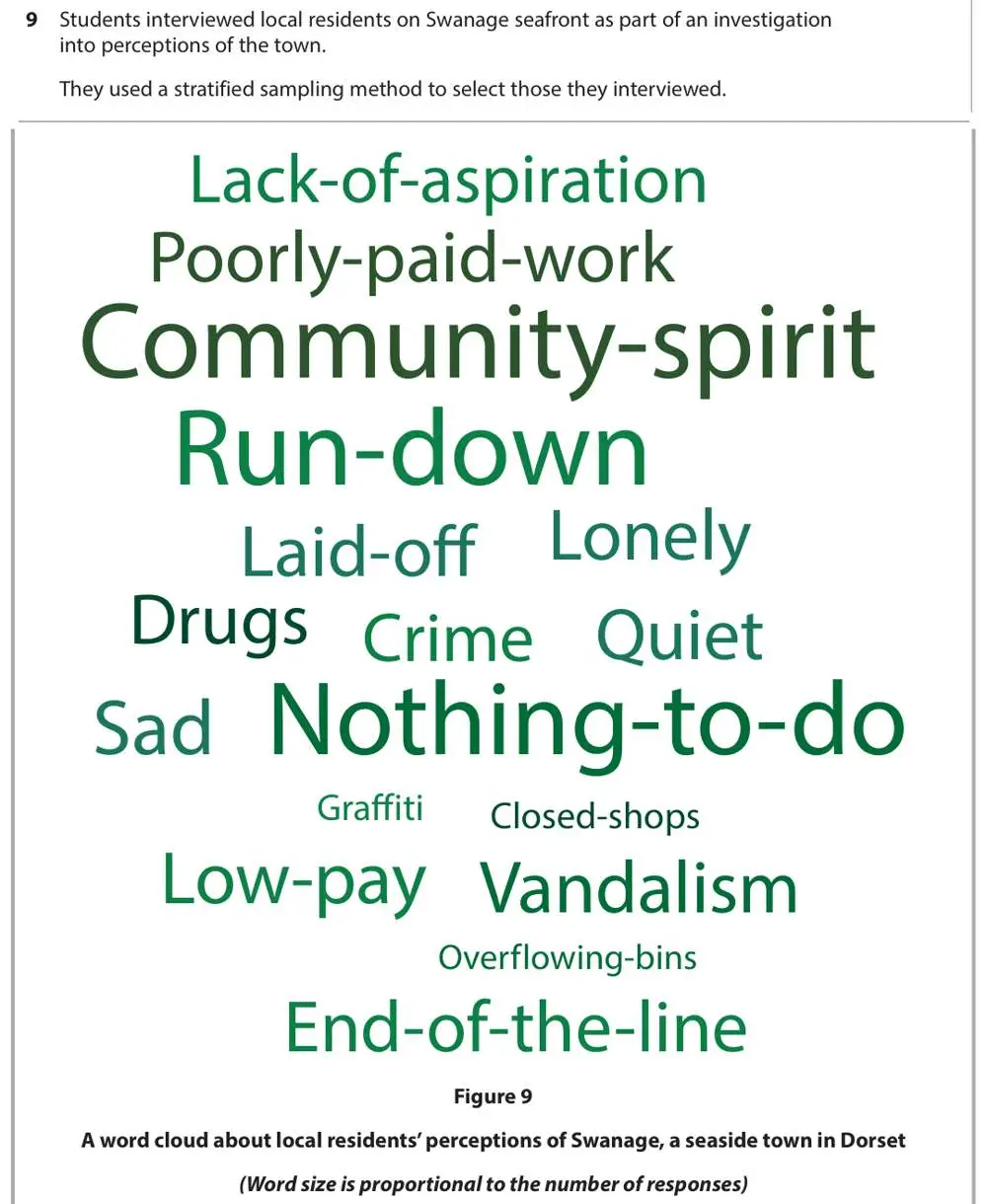
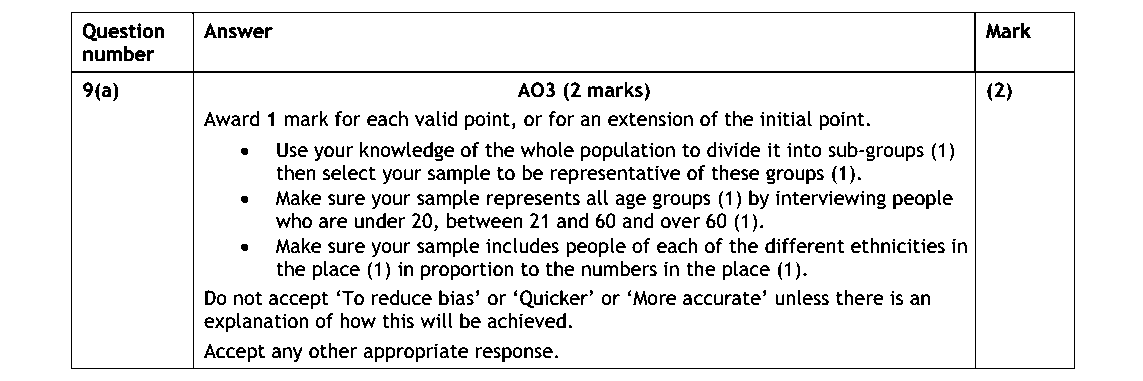
June 2022 · AS Paper 2 · Q9(a) 2 marks AO3=2 Fieldwork Hard diverse living spaces
Resources for question 99 Students interviewed local residents on Swanage seafront as part of an investigation into perceptions of the town. They used a stratified sampling method to select those they interviewed. Resource Booklet: Figure 9
(a) Suggest why this method was chosen. (2)
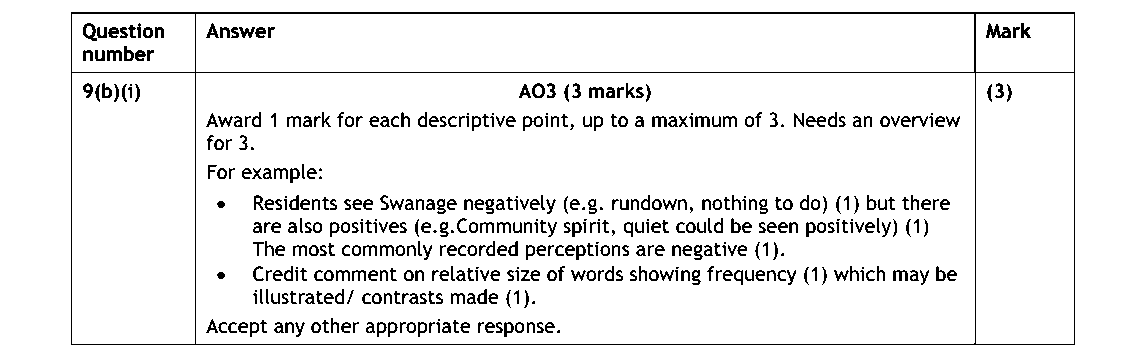
June 2022 · AS Paper 2 · Q9(b)(i) 3 marks AO3=3 Fieldwork diverse living spaces
Resources for question 99 Students interviewed local residents on Swanage seafront as part of an investigation into perceptions of the town. They used a stratified sampling method to select those they interviewed. Resource Booklet: Figure 9
(b) Study Figure 9 in the Resource Booklet. This word cloud was created by a student to present and analyse responses to an open question about perceptions of Swanage. (i) Describe the findings shown in Figure 9. (3)
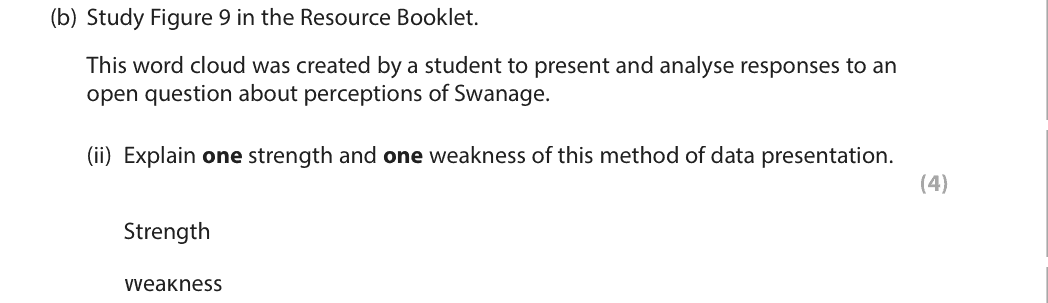
June 2022 · AS Paper 2 · Q9(b)(ii) 4 marks AO3=4 Fieldwork diverse living spaces
Resources for question 99 Students interviewed local residents on Swanage seafront as part of an investigation into perceptions of the town. They used a stratified sampling method to select those they interviewed. Resource Booklet: Figure 9
(b) Study Figure 9 in the Resource Booklet. This word cloud was created by a student to present and analyse responses to an open question about perceptions of Swanage. (ii) Explain one strength and one weakness of this method of data presentation. (4) Strength Weakness

Work with an Edexcel Geography tutor

Want a paper marked and gone through with you? Message us.

Prefer email? Send an enquiry

If you are under 18, please include a parent's contact details. Enquiries go to enquiries@alevelgeographytutor.com and are deleted once handled. All tutoring is online.