Examiner's comment
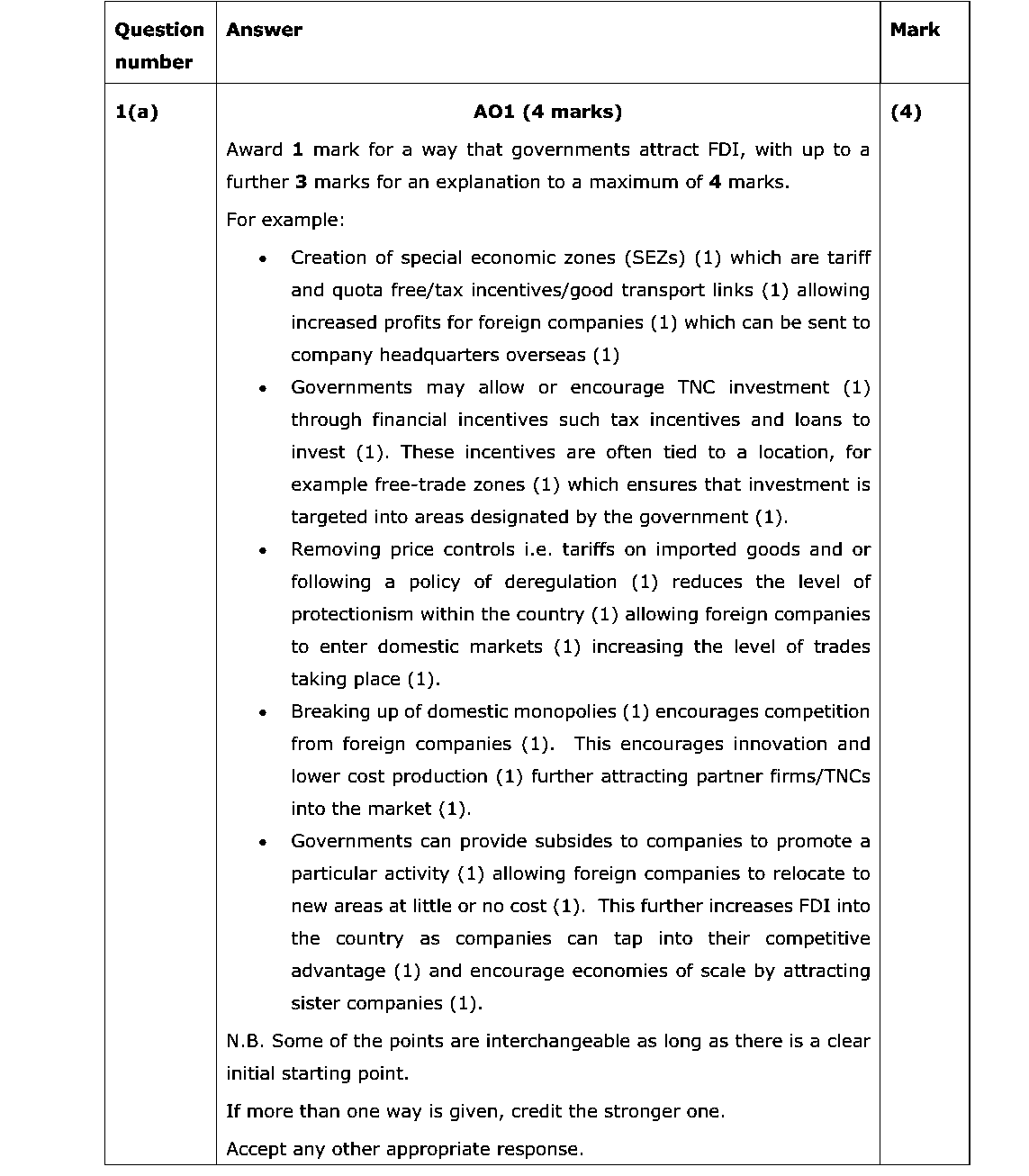
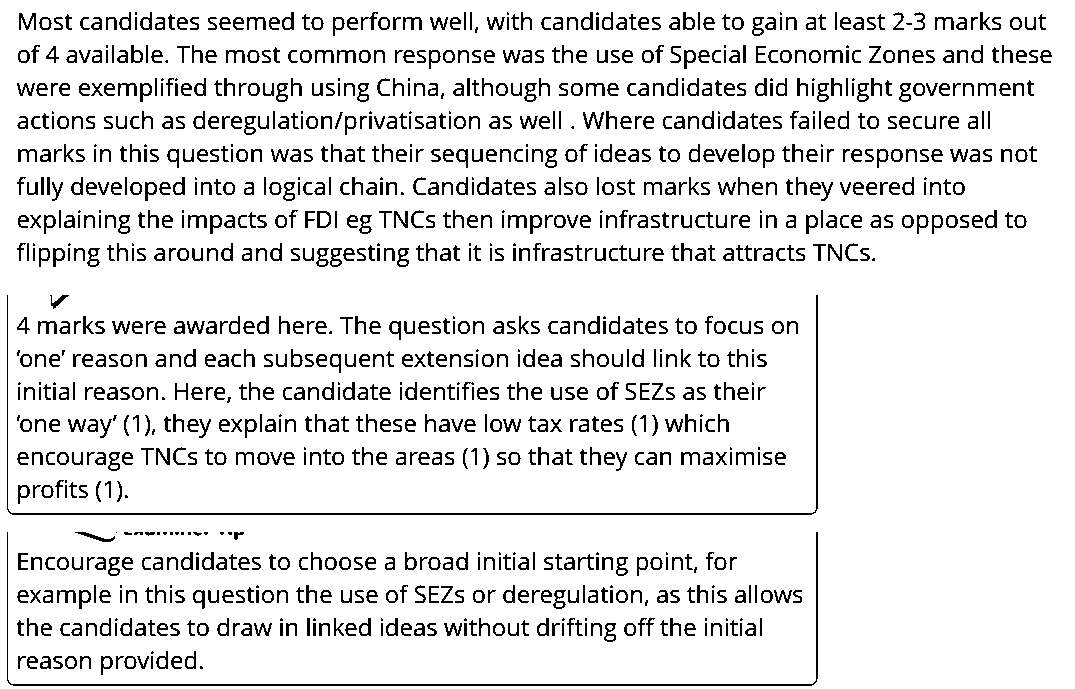
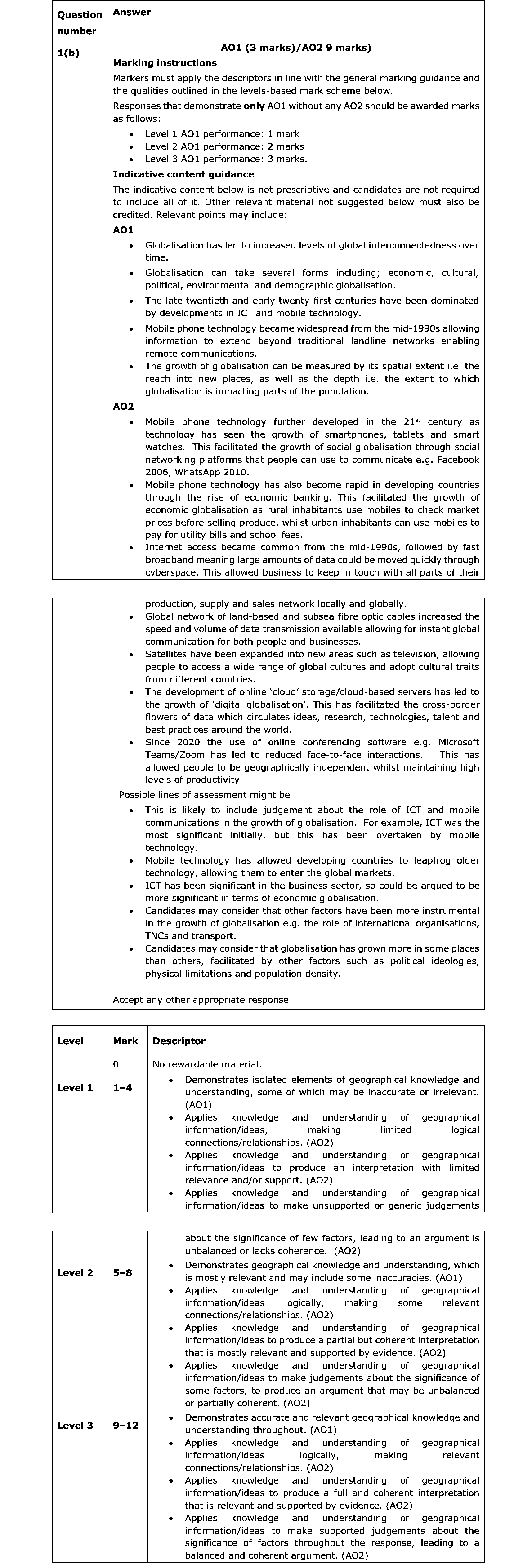
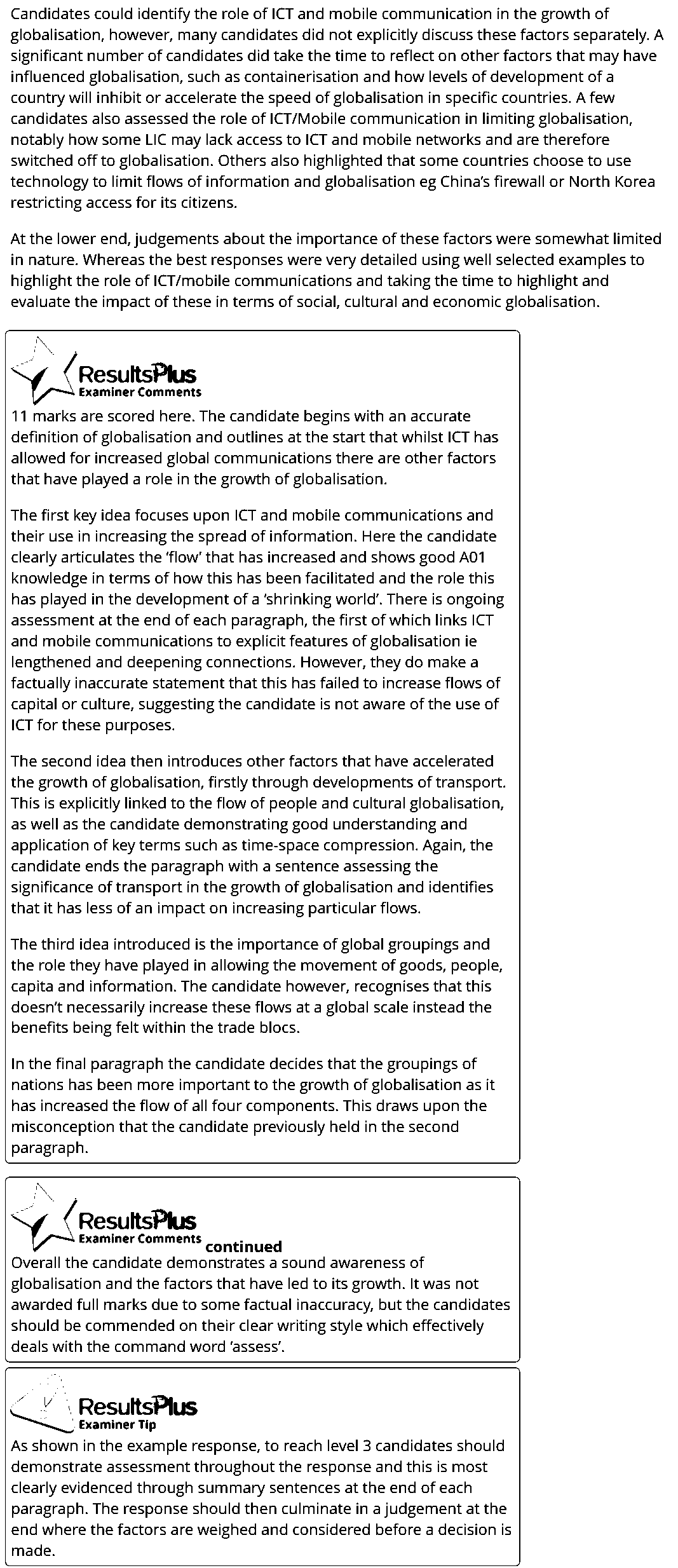
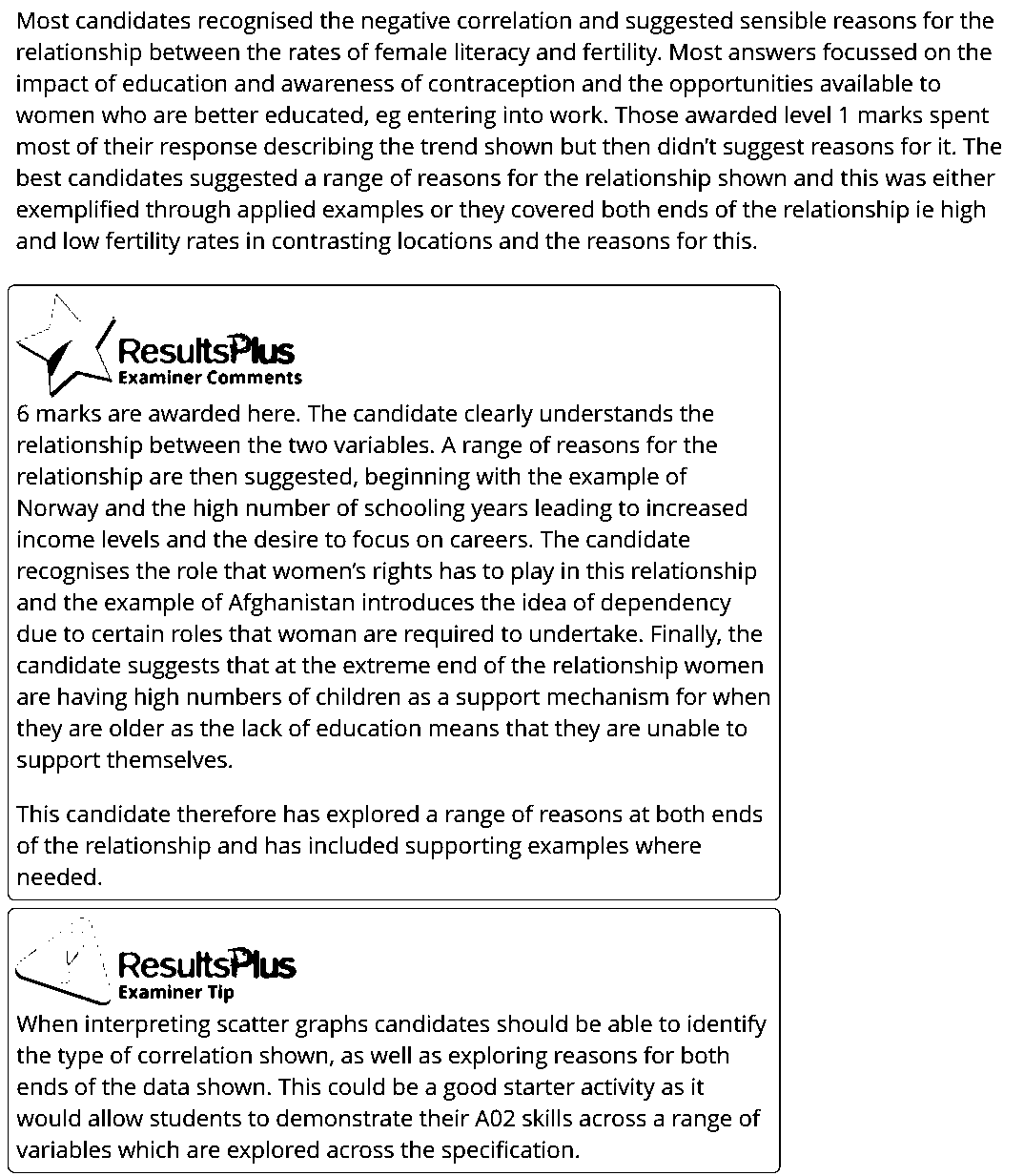
Candidates could identify the role of ICT and mobile communication in the growth of globalisation, however, many candidates did not explicitly discuss these factors separately. A significant number of candidates did take the time to reflect on other factors that may have influenced globalisation, such as containerisation and how levels of development of a country will inhibit or accelerate the speed of globalisation in specific countries. A few candidates also assessed the role of ICT/Mobile communication in limiting globalisation, notably how some LIC may lack access to ICT and mobile networks and are therefore switched off to globalisation. Others also highlighted that some countries choose to use technology to limit flows of information and globalisation eg China’s firewall or North Korea restricting access for its citizens. At the lower end, judgements about the importance of these factors were somewhat limited in nature. Whereas the best responses were very detailed using well selected examples to highlight the role of ICT/mobile communications and taking the time to highlight and evaluate the impact of these in terms of social, cultural and economic globalisation. 11 marks are scored here. The candidate begins with an accurate definition of globalisation and outlines at the start that whilst ICT has allowed for increased global communications there are other factors that have played a role in the growth of globalisation. The first key idea focuses upon ICT and mobile communications and their use in increasing the spread of information. Here the candidate clearly articulates the ‘flow’ that has increased and shows good A01 knowledge in terms of how this has been facilitated and the role this has played in the development of a ‘shrinking world’. There is ongoing assessment at the end of each paragraph, the first of which links ICT and mobile communications to explicit features of globalisation ie lengthened and deepening connections. However, they do make a factually inaccurate statement that this has failed to increase flows of capital or culture, suggesting the candidate is not aware of the use of ICT for these purposes. The second idea then introduces other factors that have accelerated the growth of globalisation, firstly through developments of transport. This is explicitly linked to the flow of people and cultural globalisation, as well as the candidate demonstrating good understanding and application of key terms such as time-space compression. Again, the candidate ends the paragraph with a sentence assessing the significance of transport in the growth of globalisation and identifies that it has less of an impact on increasing particular flows. The third idea introduced is the importance of global groupings and the role they have played in allowing the movement of goods, people, capita and information. The candidate however, recognises that this doesn’t necessarily increase these flows at a global scale instead the benefits being felt within the trade blocs. In the final paragraph the candidate decides that the groupings of nations has been more important to the growth of globalisation as it has increased the flow of all four components. This draws upon the misconception that the candidate previously held in the second paragraph. continued Overall the candidate demonstrates a sound awareness of globalisation and the factors that have led to its growth. It was not awarded full marks due to some factual inaccuracy, but the candidates should be commended on their clear writing style which effectively deals with the command word ‘assess’. As shown in the example response, to reach level 3 candidates should demonstrate assessment throughout the response and this is most clearly evidenced through summary sentences at the end of each paragraph. The response should then culminate in a judgement at the end where the factors are weighed and considered before a decision is made.
![Examiner's report extract for June 2022 Paper 2 question 1(b)]()