Examiner's comment
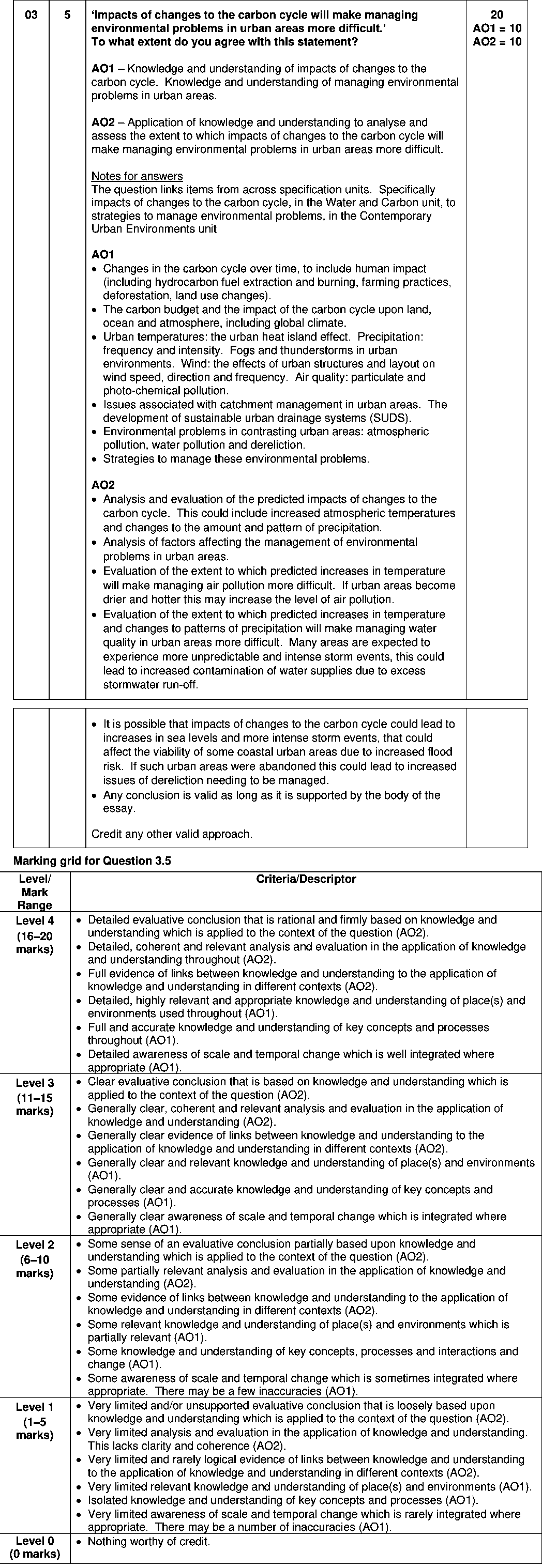
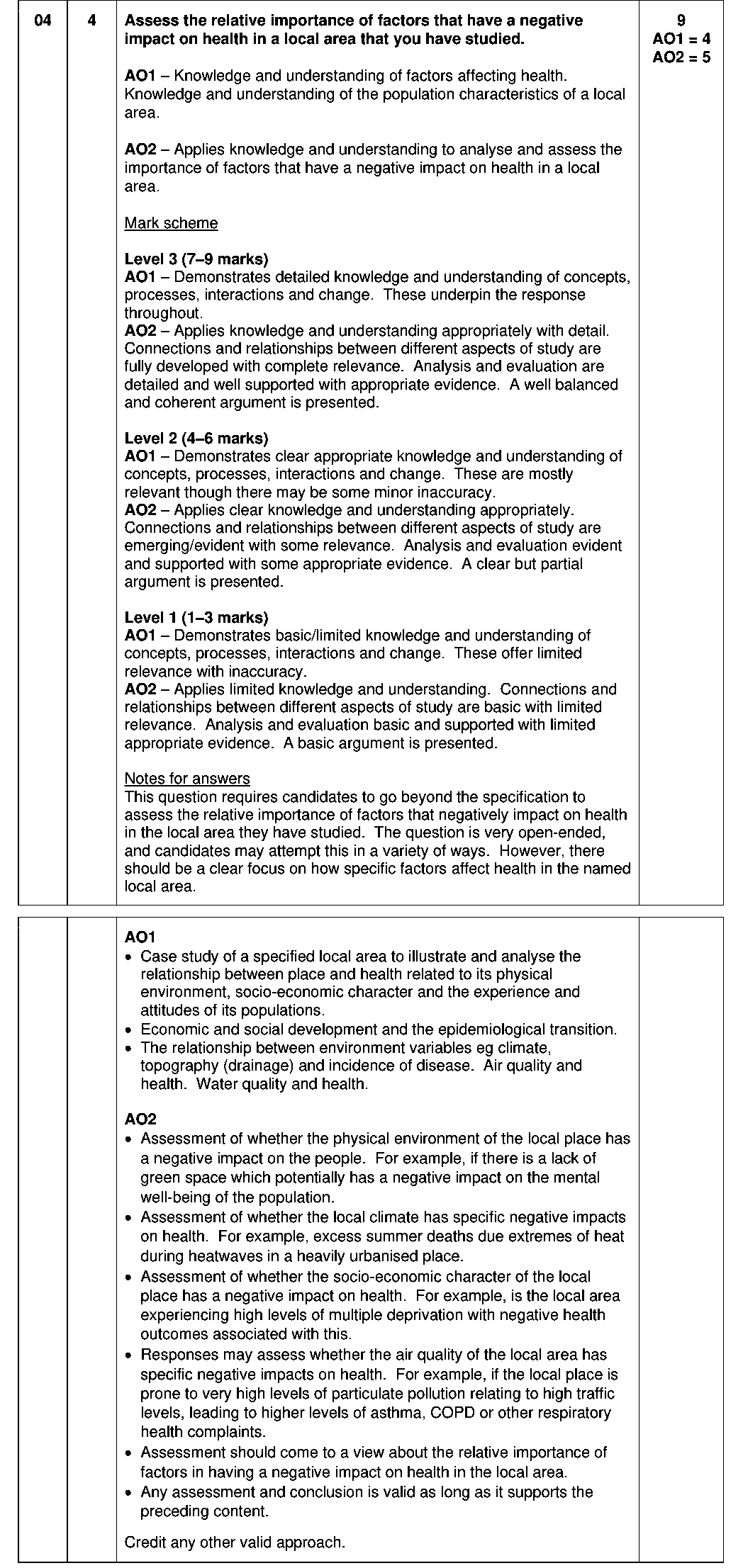
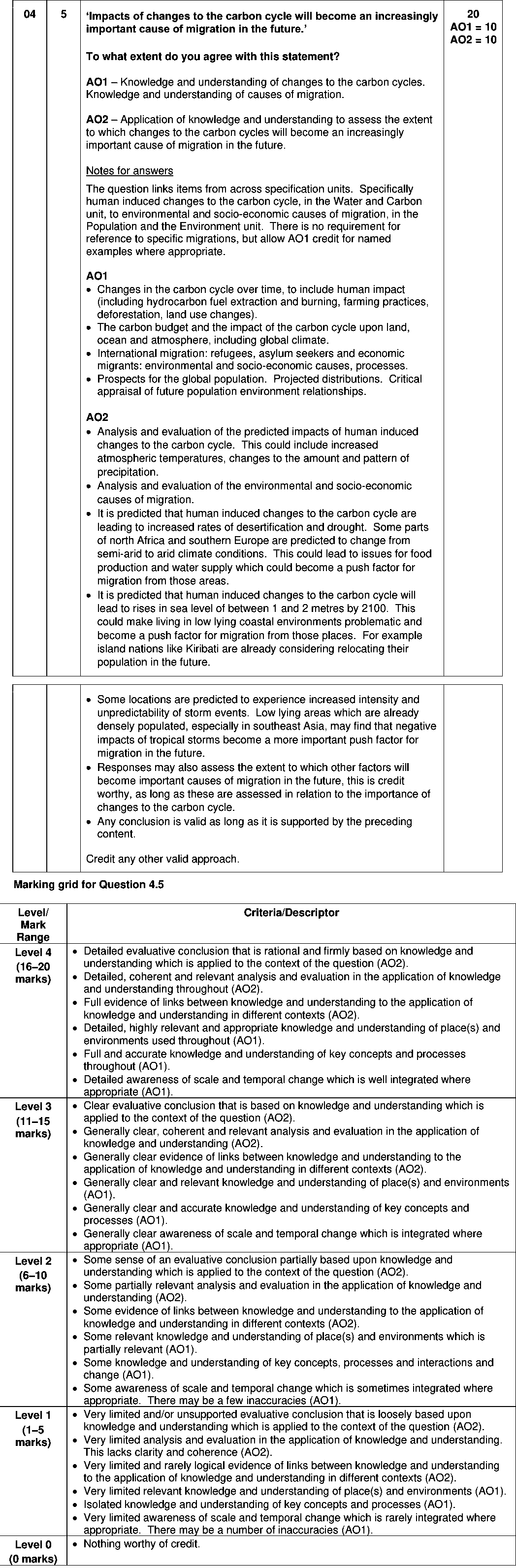
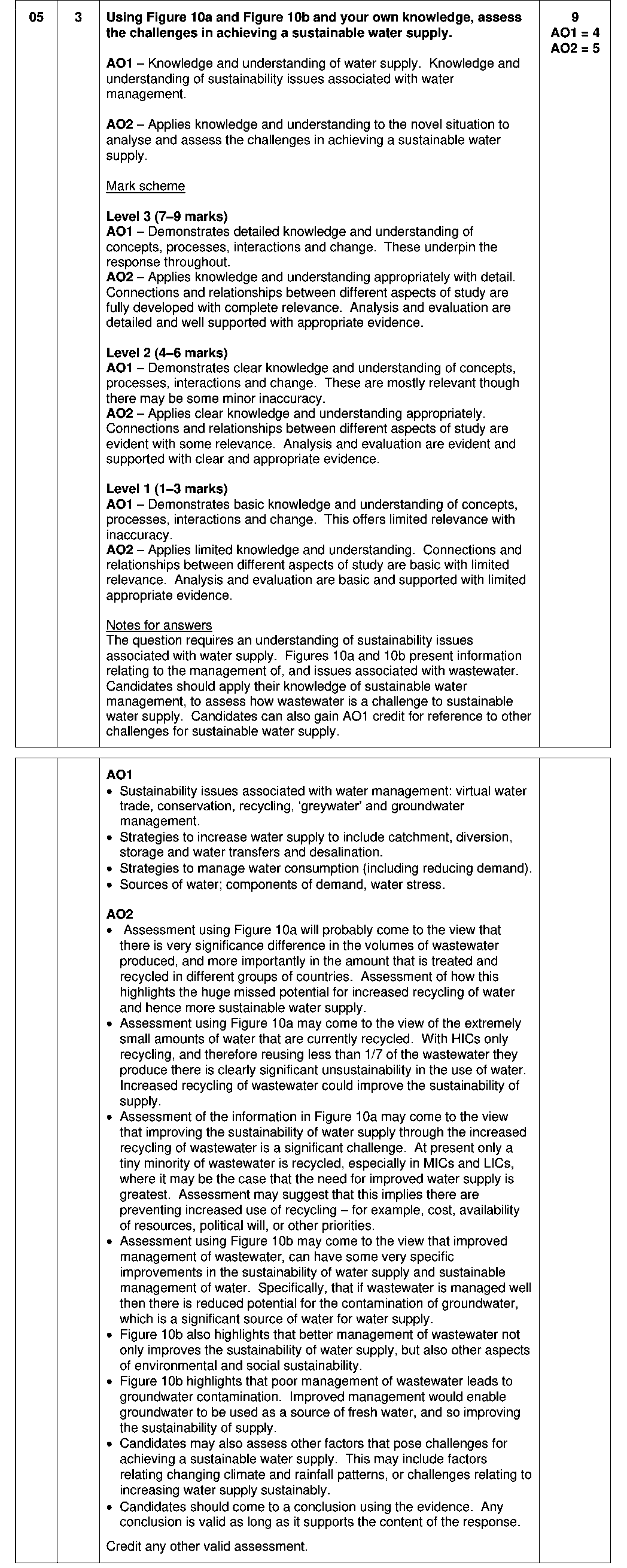
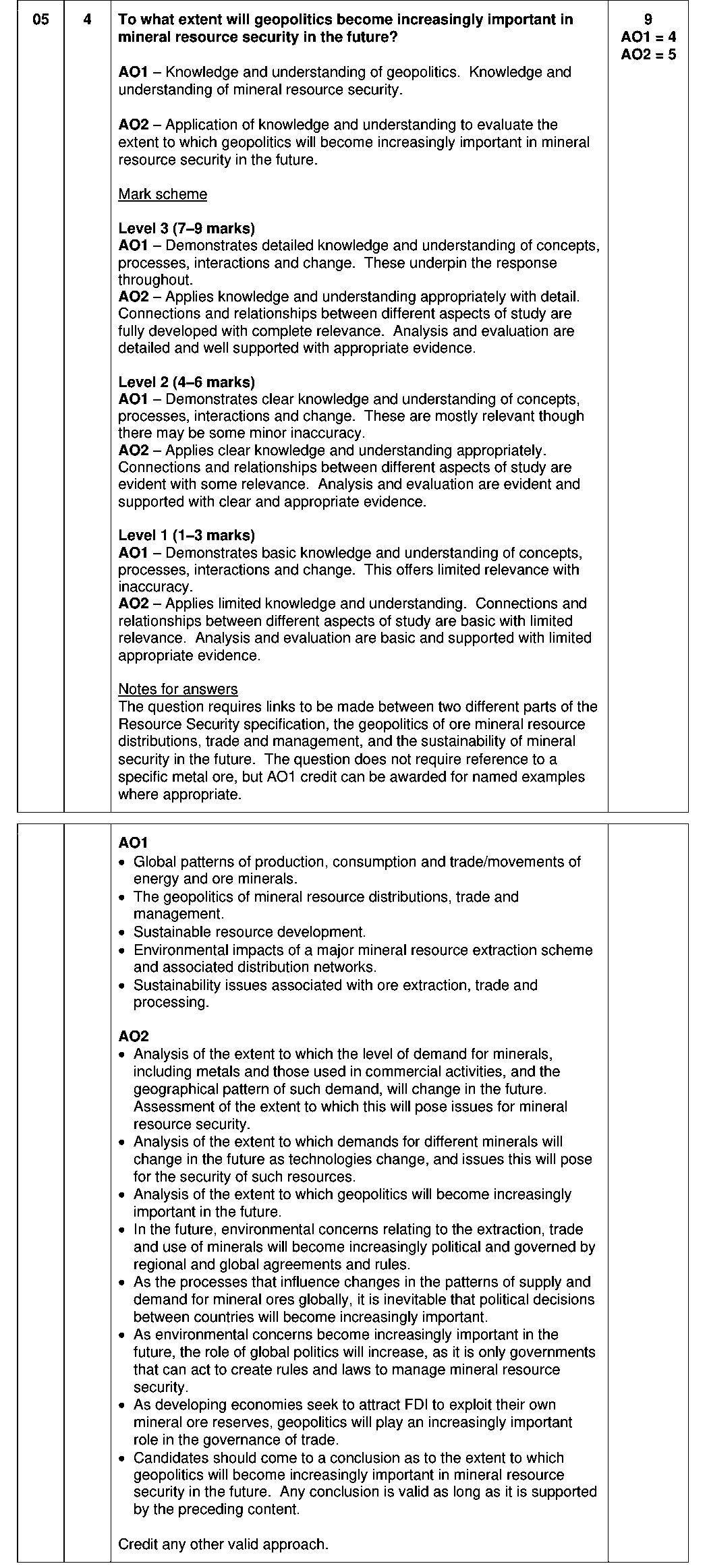
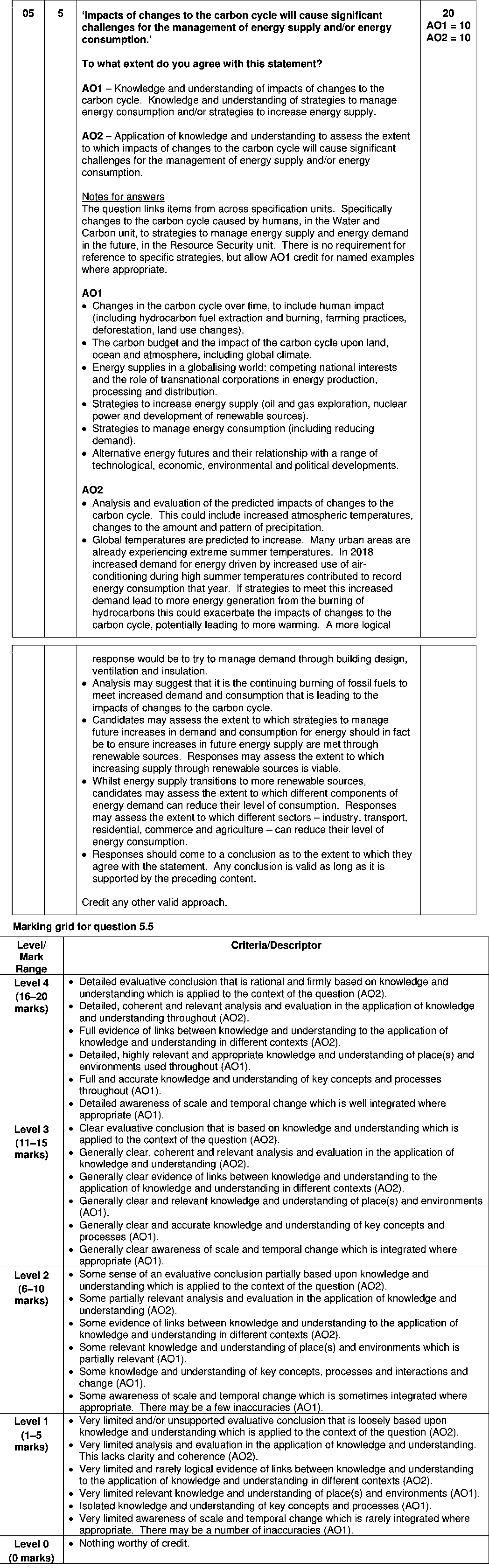
Question 04.5 had a mean score of over 12 and showed students had some clear knowledge and understanding of the possible impact of the changing carbon cycle on migration. Connections were drawn between increased carbon in the atmosphere, climate change, increased weather and climate related hazards, rising sea levels, impacts on agriculture, urban flooding and the possibility of climate related migration. There was evidence of good place knowledge here. Many focused on Pacific Island communities or sub-Saharan Africa. The 20-mark question in Section C required students to make synoptic links between physical and human themes and required students to make a connection between impacts of the changing carbon cycle taken from the physical geography core theme of water and carbon cycles, and an aspect of the human options. Questions 03.5, 04.5 and 05.5 all achieved mean marks within level 3. The synoptic question appears once each series in either Paper 1 or Paper 2 and makes links across specification content. In the 2025 series, the synoptic question appeared in the 20-mark questions in Section C for Paper 2. Depending on the optional topic studied, students were required to link aspects of the changing carbon cycle to one of the following themes: • Contemporary urban environments – managing environmental problems in urban areas. • Population and the environment – causes of migration. • Resource security – management of energy supply and/or consumption. The more successful responses to this question showed knowledge and understanding of changes within the carbon cycle, for example, such as increased atmospheric CO₂ resulting from fossil fuel combustion, leading to climate change and rising sea level. These changes were connected to the key aspect of the optional topic studied in each question with an evaluation of the question statement. Good responses made effective use of case studies to illustrate points made. Typically, they would have a clear structure and an evaluative conclusion. Some of the less successful responses to the synoptic question were not well-balanced in terms of the content from both areas of the specification. Some lack focus and there is a skill in crafting relatively concise answers that deal with the question directly whilst still showing some depth of knowledge and understanding. Student responses to the extended questions (20 marks) were often well structured and presented clear arguments with effective links to case studies. The 20-mark essays did highlight some areas for improvement. When answering 20-mark questions, students were more successful when the response continued with a single line of reasoning, compared to responses that try to offer a balanced argument or approach from different angles. This response links the impacts of changes to the carbon cycle to causes of migration. It has an assertive opening statement in the introduction. The response then goes on to make links between climate change, rising sea levels and migration from low lying and coastal communities such as The Netherlands. It connects changing rainfall patterns to possible impacts on agriculture and the consequences regarding migration. The student does offer an alternative perspective, which is not necessary, but credited. They show good synoptic thinking by integrating geographical theory into the response before finishing with a clear conclusion. This was also assessed as a Level 4 response as it is detailed with highly relevant and appropriate knowledge. It was given 20 marks. The response to question 04.5 shown below starts with an opinion (AO2), but the introduction is not particularly clear in terms of where the answer is going. There is some knowledge and understanding of the changing carbon budget and links to migration however there is no particular place focus. It refers to the impact on changing climate on agriculture and the links to migration, but apart from a reference to less developed countries there are no examples used. It finishes with a conclusion that rounds off the response. Overall, this was assessed as Level 2 and awarded 7 marks.