Examiner's comment
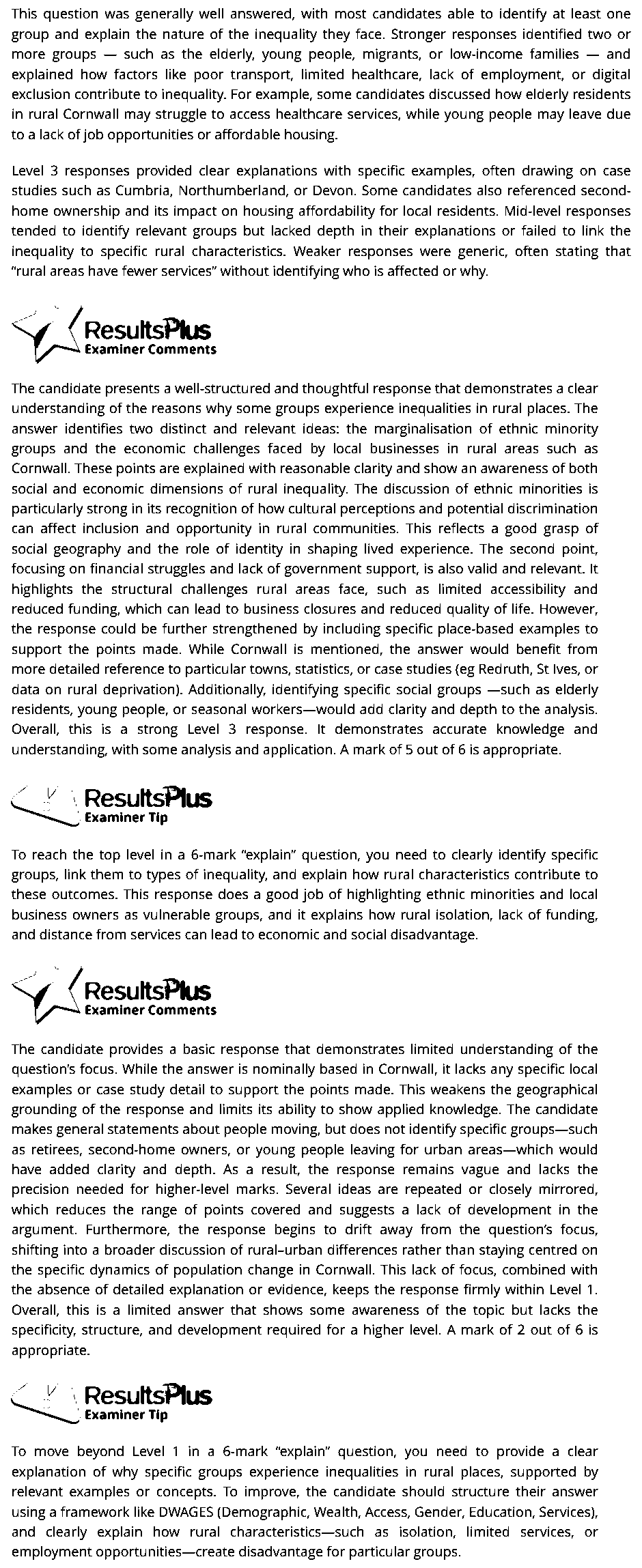
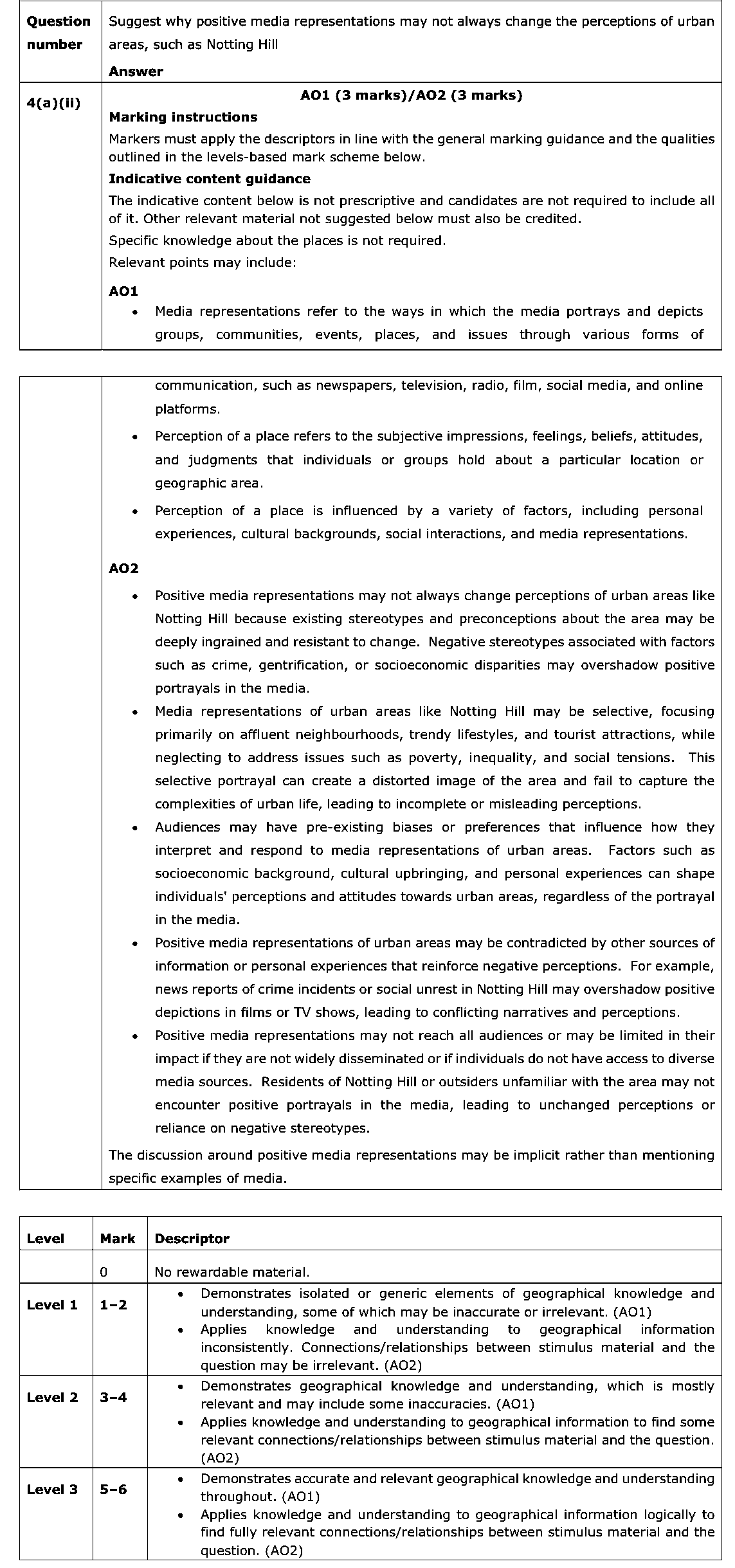
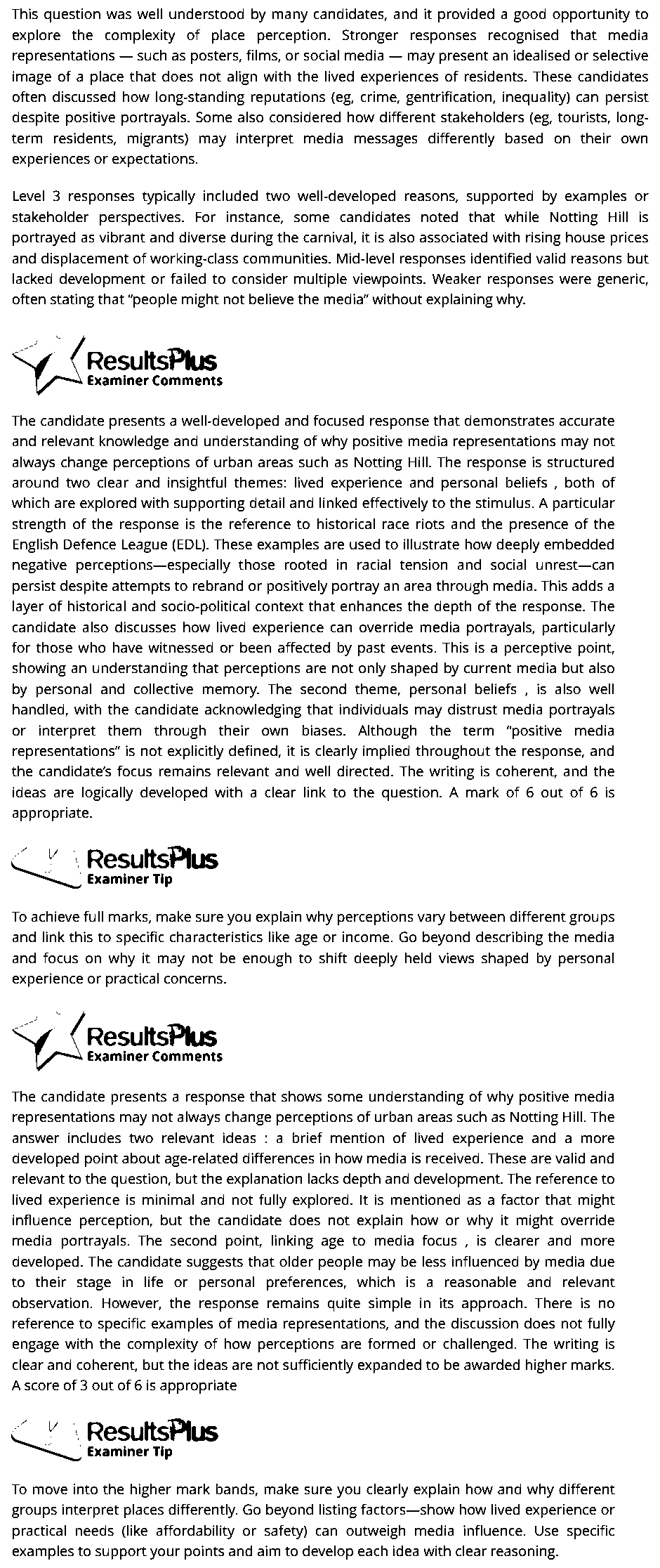
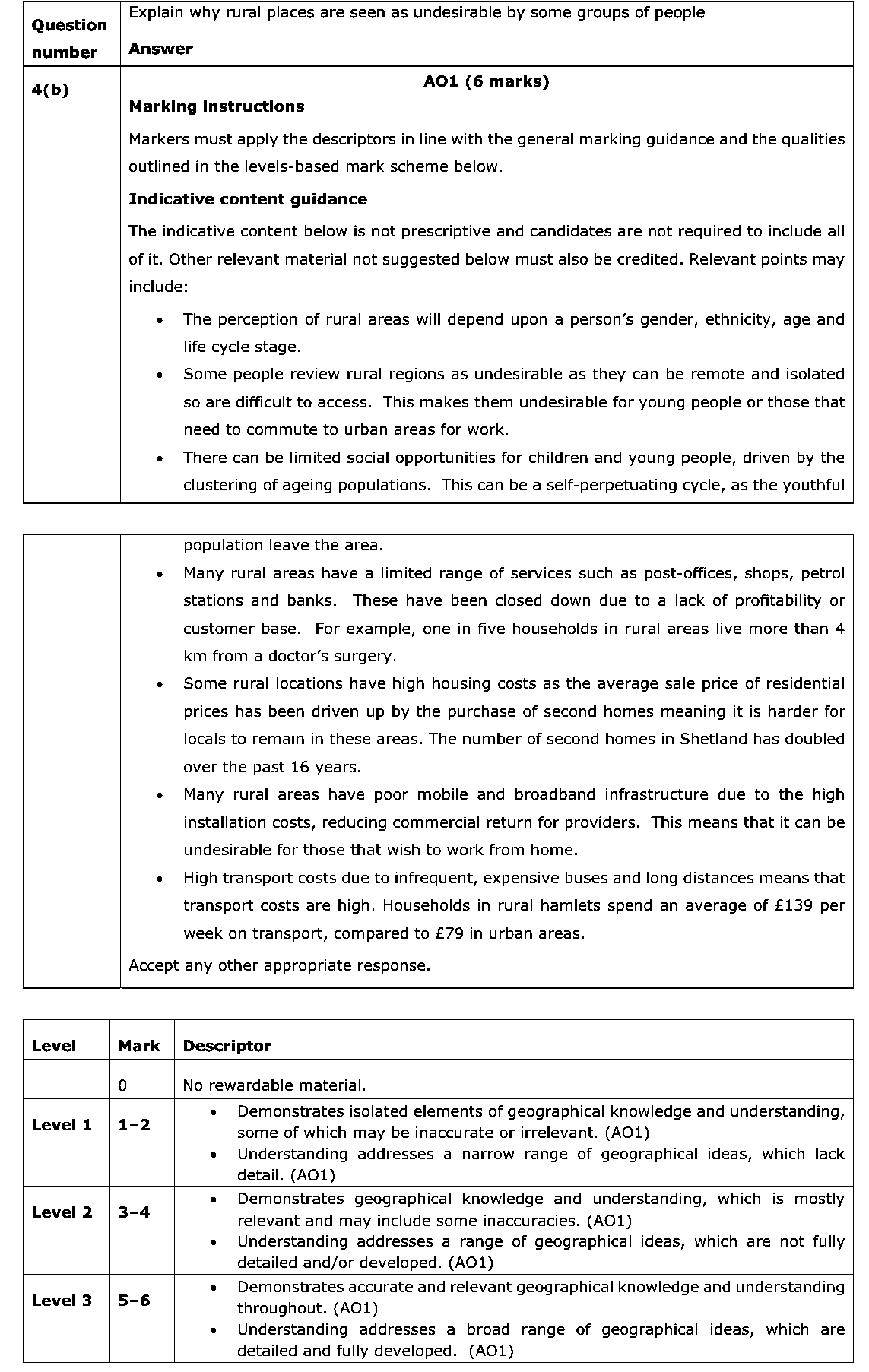
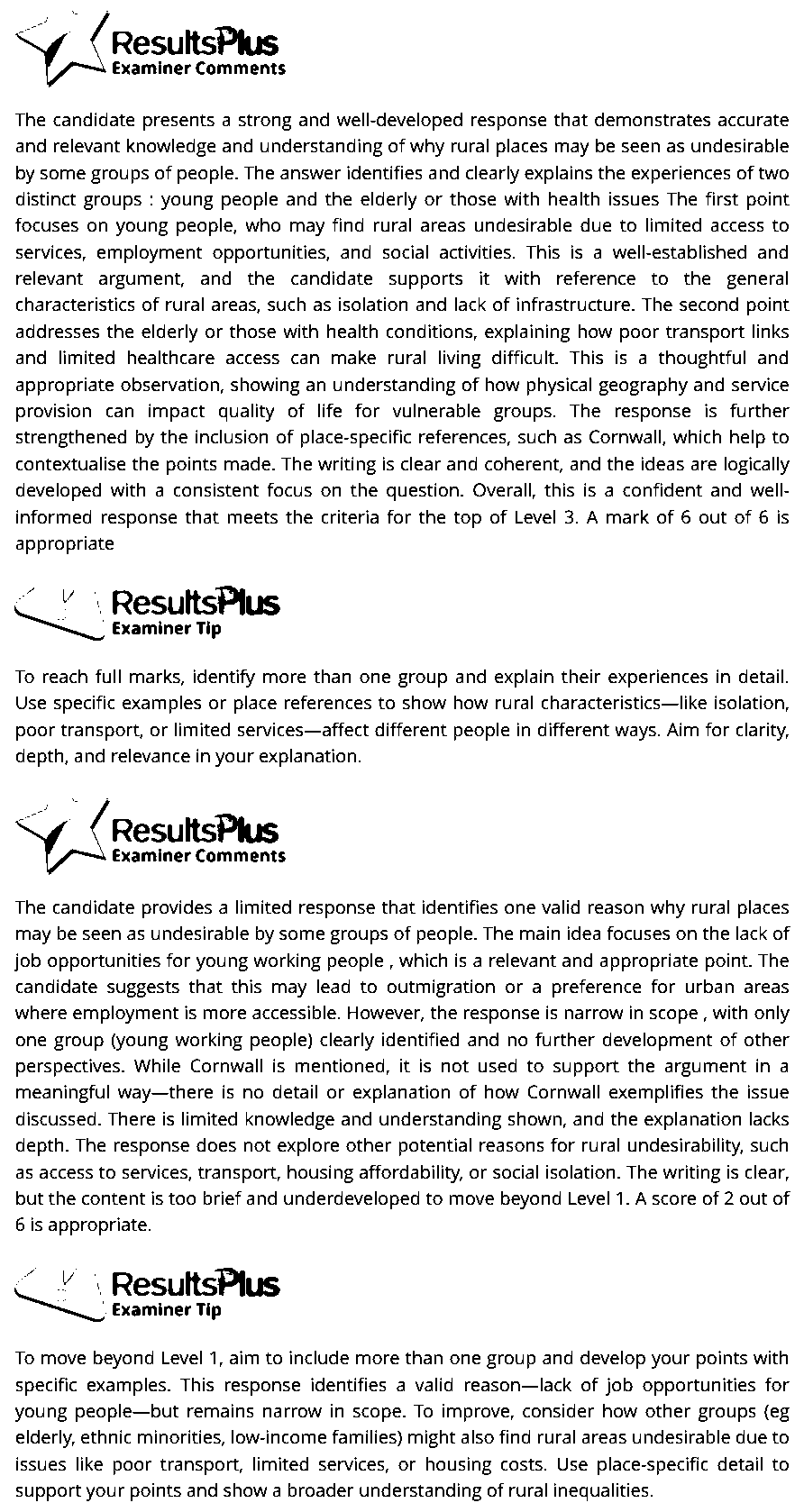
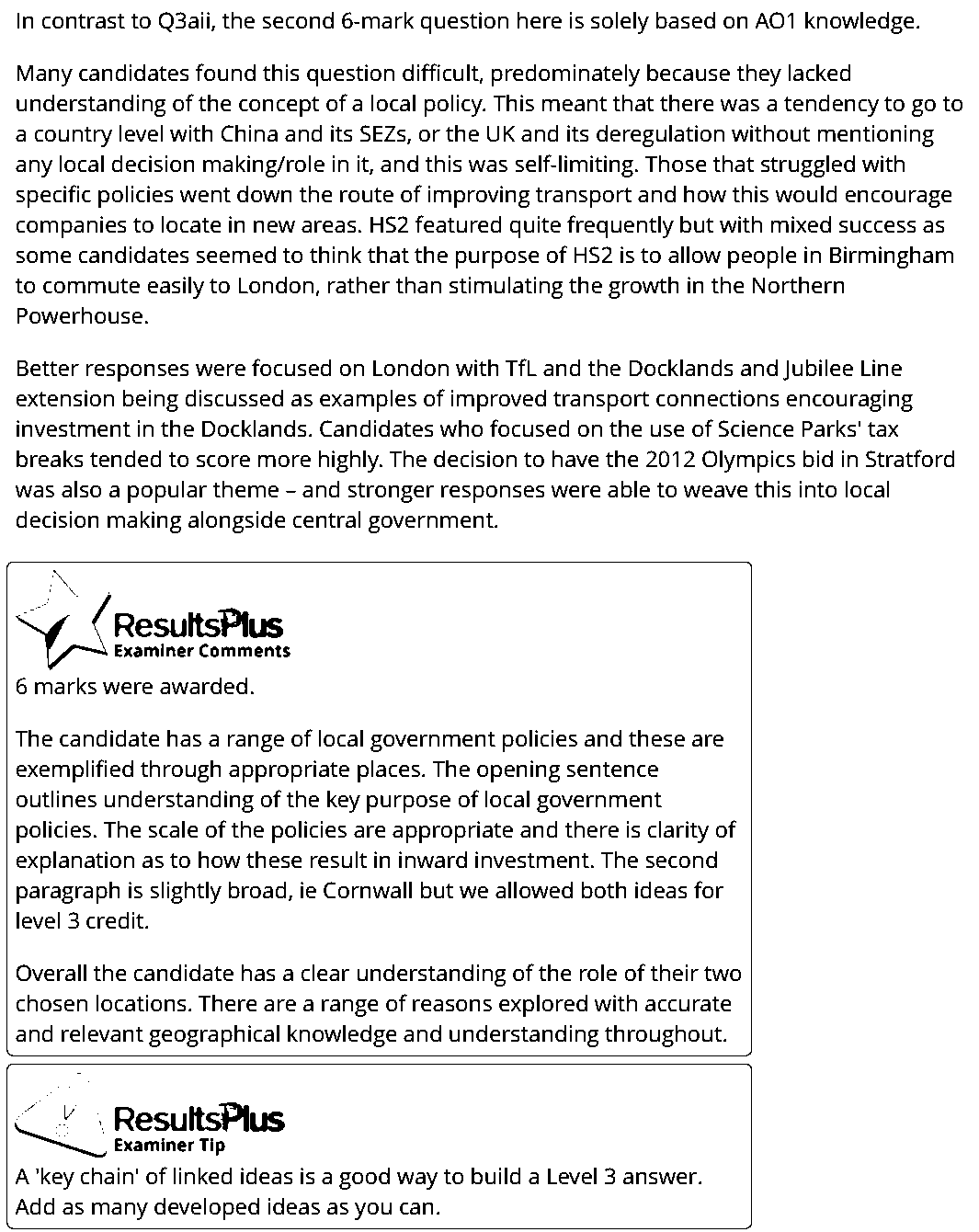
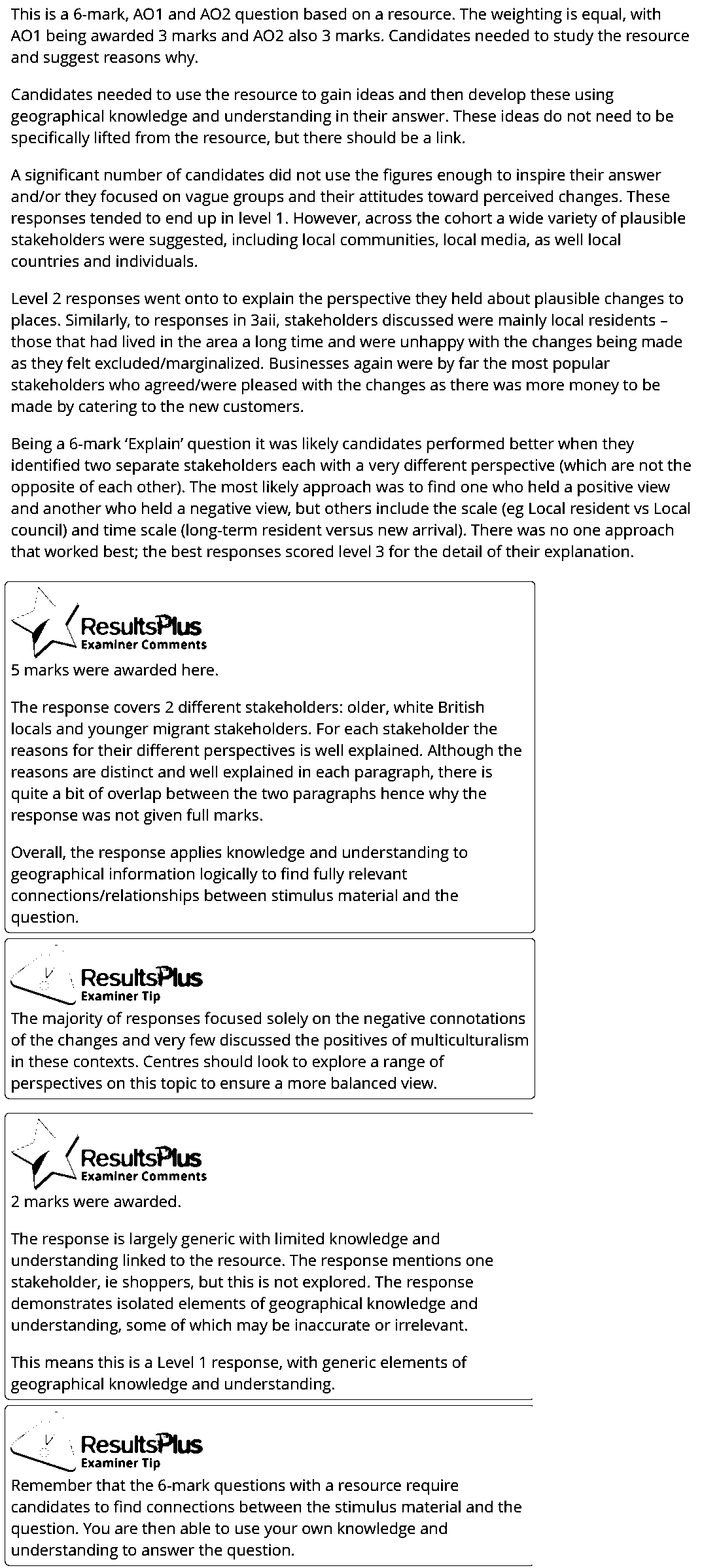
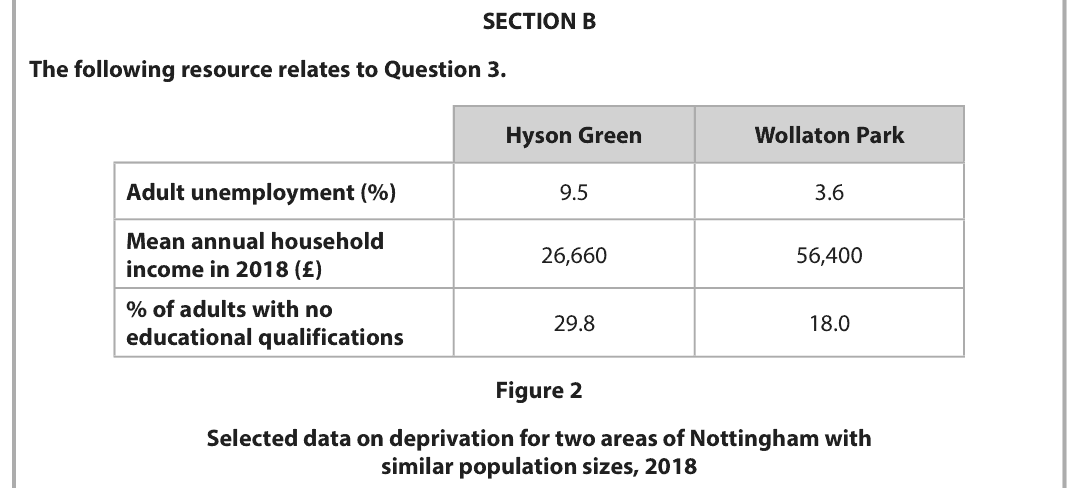
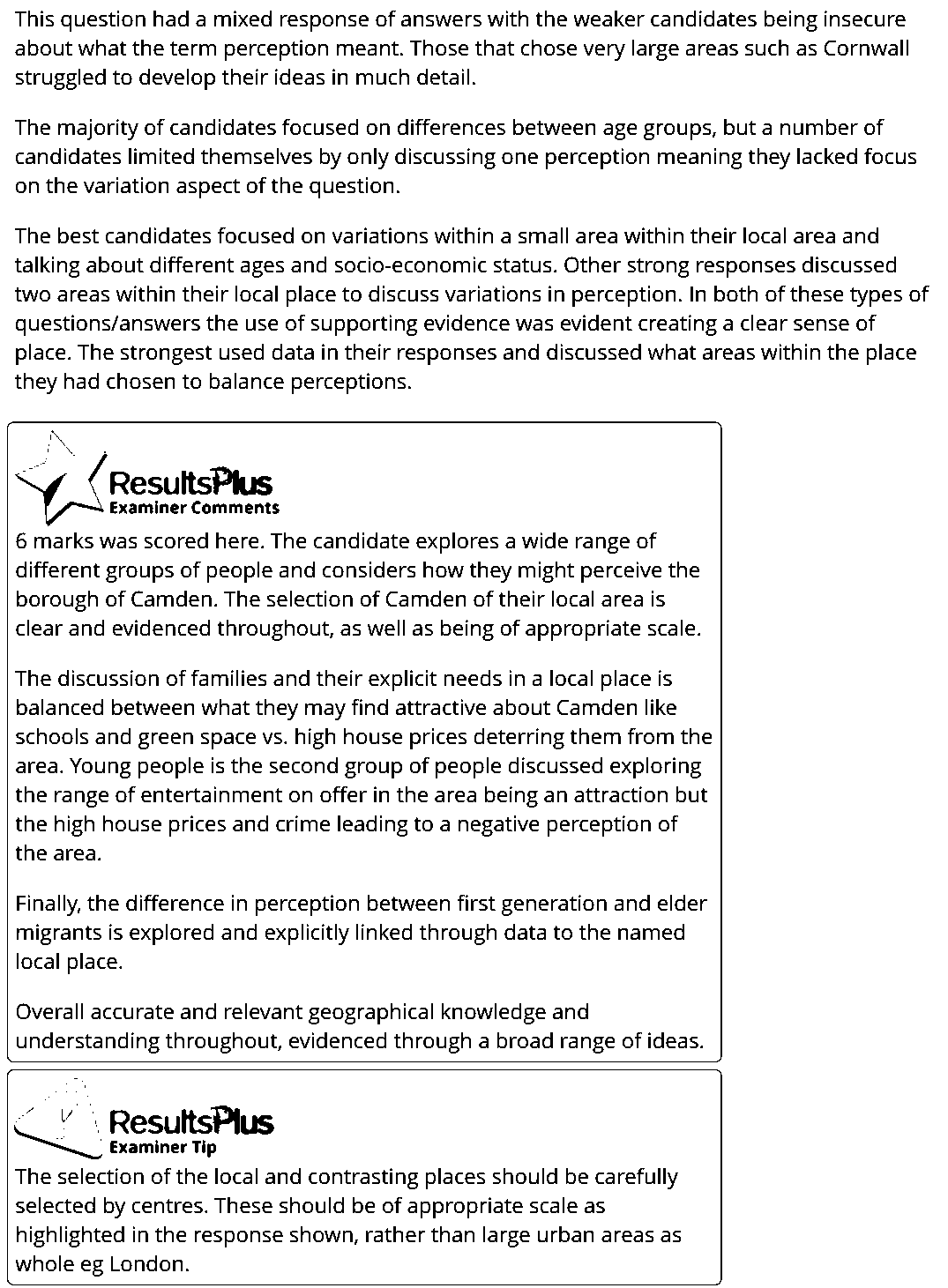
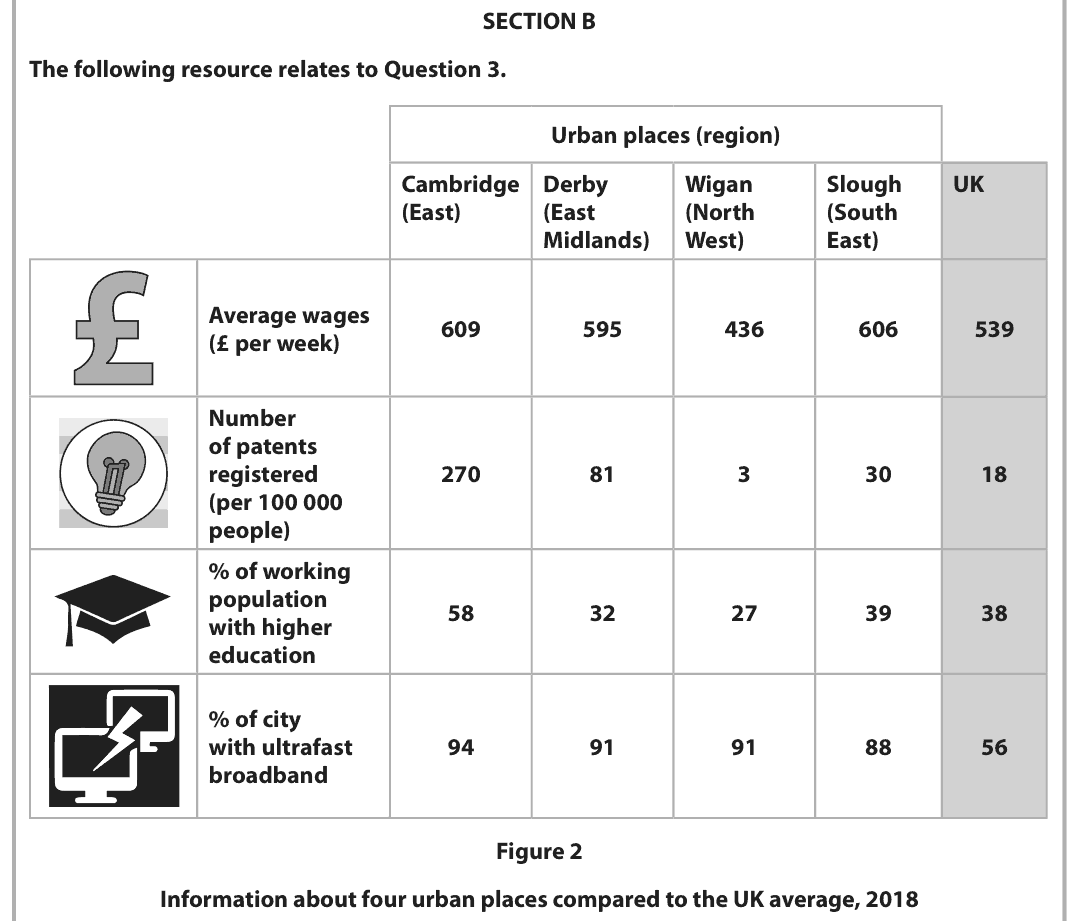
This question was generally well answered, with most candidates able to identify at least one group and explain the nature of the inequality they face. Stronger responses identified two or more groups — such as the elderly, young people, migrants, or low-income families — and explained how factors like poor transport, limited healthcare, lack of employment, or digital exclusion contribute to inequality. For example, some candidates discussed how elderly residents in rural Cornwall may struggle to access healthcare services, while young people may leave due to a lack of job opportunities or affordable housing. Level 3 responses provided clear explanations with specific examples, often drawing on case studies such as Cumbria, Northumberland, or Devon. Some candidates also referenced second- home ownership and its impact on housing affordability for local residents. Mid-level responses tended to identify relevant groups but lacked depth in their explanations or failed to link the inequality to specific rural characteristics. Weaker responses were generic, often stating that “rural areas have fewer services” without identifying who is affected or why. The candidate presents a well-structured and thoughtful response that demonstrates a clear understanding of the reasons why some groups experience inequalities in rural places. The answer identifies two distinct and relevant ideas: the marginalisation of ethnic minority groups and the economic challenges faced by local businesses in rural areas such as Cornwall. These points are explained with reasonable clarity and show an awareness of both social and economic dimensions of rural inequality. The discussion of ethnic minorities is particularly strong in its recognition of how cultural perceptions and potential discrimination can affect inclusion and opportunity in rural communities. This reflects a good grasp of social geography and the role of identity in shaping lived experience. The second point, focusing on financial struggles and lack of government support, is also valid and relevant. It highlights the structural challenges rural areas face, such as limited accessibility and reduced funding, which can lead to business closures and reduced quality of life. However, the response could be further strengthened by including specific place-based examples to support the points made. While Cornwall is mentioned, the answer would benefit from more detailed reference to particular towns, statistics, or case studies (eg Redruth, St Ives, or data on rural deprivation). Additionally, identifying specific social groups —such as elderly residents, young people, or seasonal workers—would add clarity and depth to the analysis. Overall, this is a strong Level 3 response. It demonstrates accurate knowledge and understanding, with some analysis and application. A mark of 5 out of 6 is appropriate. To reach the top level in a 6-mark “explain” question, you need to clearly identify specific groups, link them to types of inequality, and explain how rural characteristics contribute to these outcomes. This response does a good job of highlighting ethnic minorities and local business owners as vulnerable groups, and it explains how rural isolation, lack of funding, and distance from services can lead to economic and social disadvantage. The candidate provides a basic response that demonstrates limited understanding of the question’s focus. While the answer is nominally based in Cornwall, it lacks any specific local examples or case study detail to support the points made. This weakens the geographical grounding of the response and limits its ability to show applied knowledge. The candidate makes general statements about people moving, but does not identify specific groups—such as retirees, second-home owners, or young people leaving for urban areas—which would have added clarity and depth. As a result, the response remains vague and lacks the precision needed for higher-level marks. Several ideas are repeated or closely mirrored, which reduces the range of points covered and suggests a lack of development in the argument. Furthermore, the response begins to drift away from the question’s focus, shifting into a broader discussion of rural–urban differences rather than staying centred on the specific dynamics of population change in Cornwall. This lack of focus, combined with the absence of detailed explanation or evidence, keeps the response firmly within Level 1. Overall, this is a limited answer that shows some awareness of the topic but lacks the specificity, structure, and development required for a higher level. A mark of 2 out of 6 is appropriate. To move beyond Level 1 in a 6-mark “explain” question, you need to provide a clear explanation of why specific groups experience inequalities in rural places, supported by relevant examples or concepts. To improve, the candidate should structure their answer using a framework like DWAGES (Demographic, Wealth, Access, Gender, Education, Services), and clearly explain how rural characteristics—such as isolation, limited services, or employment opportunities—create disadvantage for particular groups.
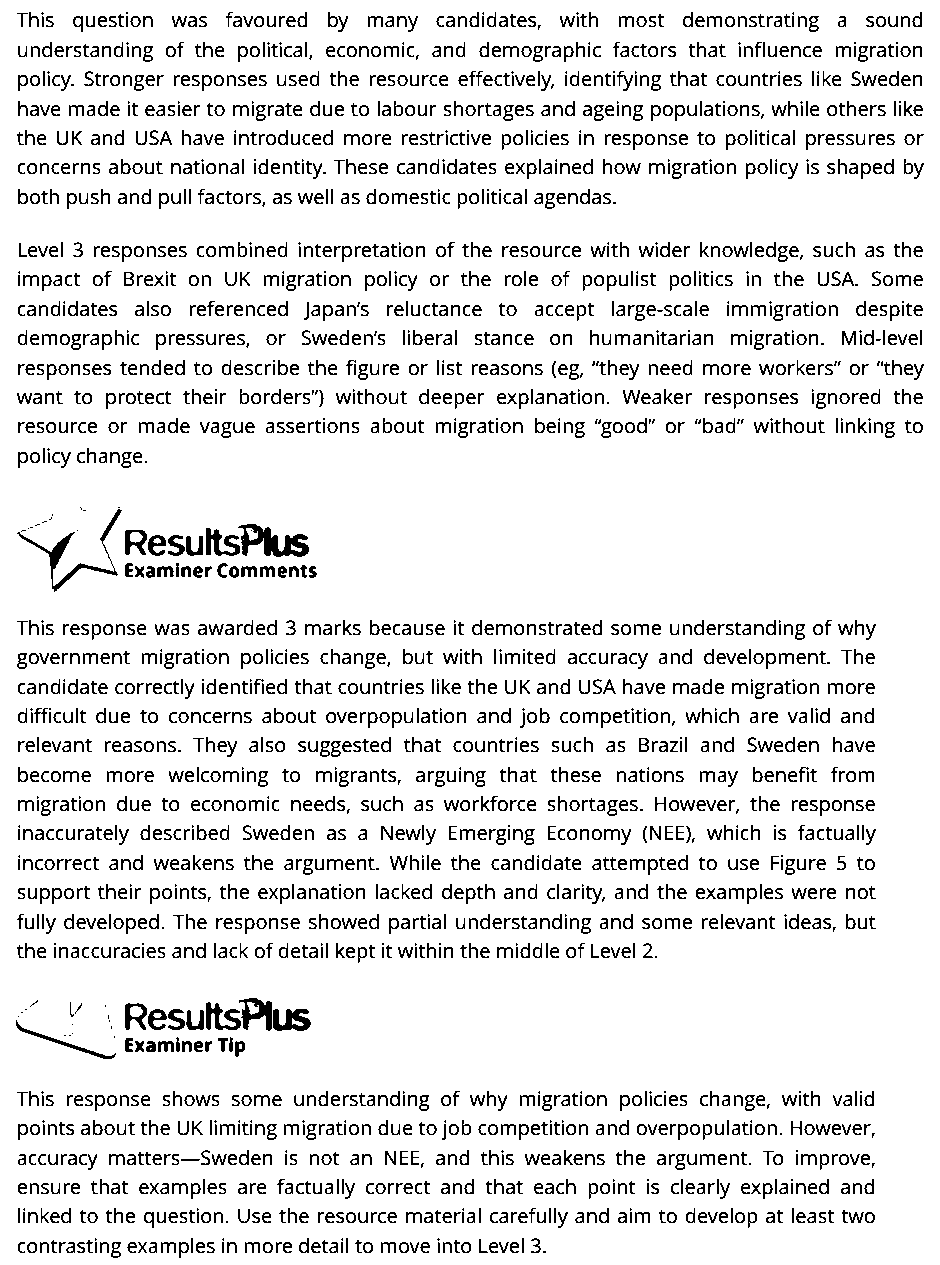
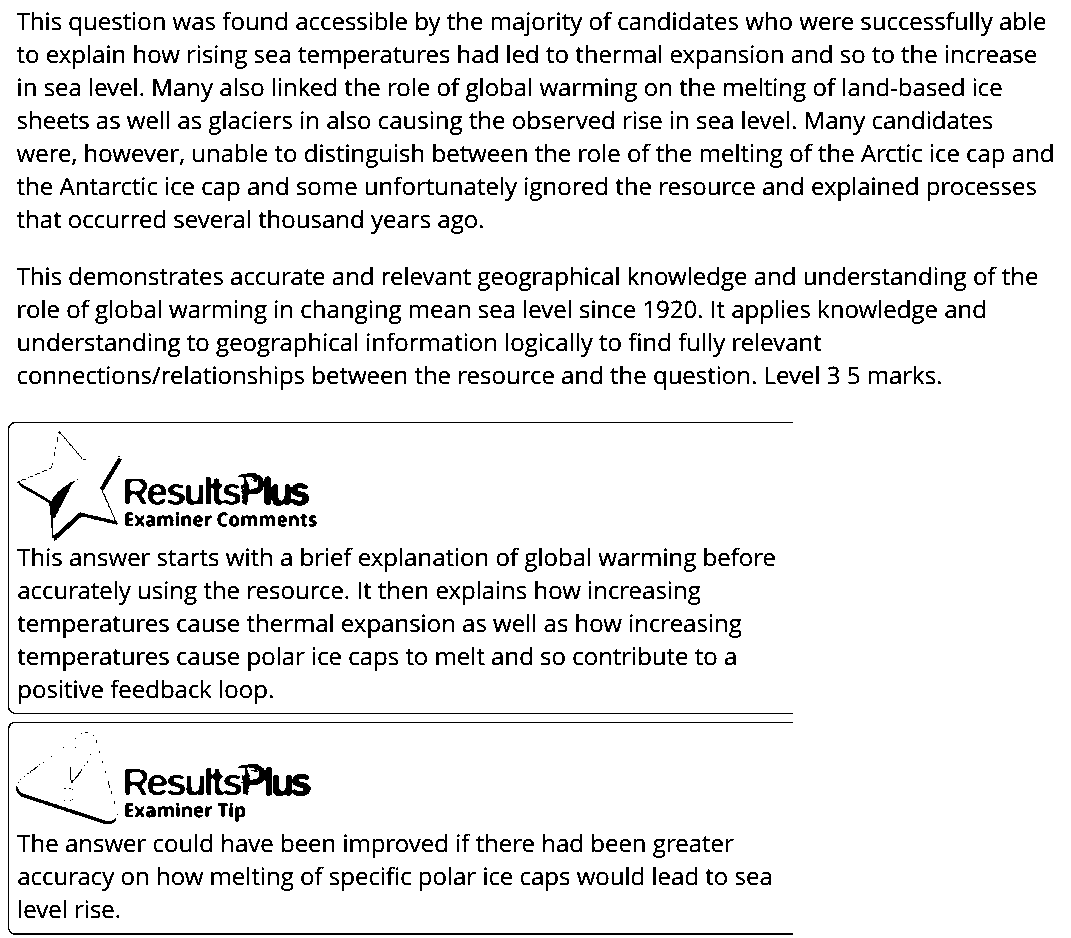
![Examiner's report extract for June 2025 Paper 2 question 3(b)]()